
Kirjahaku
Etsi kirjoja tekijän nimen, kirjan nimen tai ISBN:n perusteella.
1000 tulosta hakusanalla Kenneth R Terry

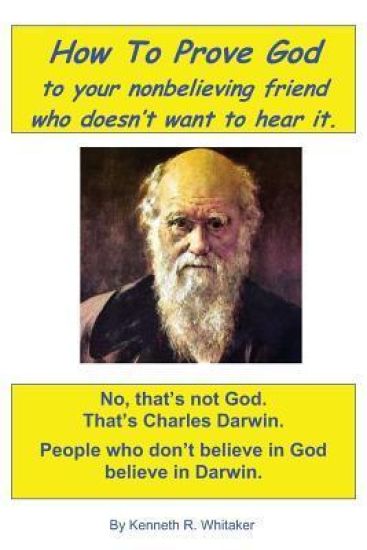
How To Prove God: to your nonbelieving friend who doesn't want to hear it
Kenneth R. Whitaker
Createspace Independent Publishing Platform
2013
nidottu
People who do not believe in God don't want any proof. You can't even talk to them. They don't want to hear it. So here's what you do: Most people who do not believe in God believe in evolution. Show them that evolution cannot possibly explain everything. While there can be no actual proof of God (short of seeing Him in person some day), it IS possible to disprove evolution. Find a few counterexamples, make your friends reconsider their basic assumptions, and they may reconsider the possibility of God. As Spock said on Star Trek, "If you eliminate the impossible, then whatever remains, however improbable, must be the truth." For Example... Ask your friend why giraffes are so tall. This is the evolutionist's centerpiece example in their narrative. They'll probably answer, "Because taller giraffes were able get to the high leaves during a drought. Survival of the fittest." This book gives TEN reasons why that answer does NOT explain why giraffes are so tall. The most compelling one is this: Being tall did NOT give an advantage A short giraffe could simply bend down and eat grass. We still have goats, horses, etc., which also did not die out. The problem is that evolutionists DON'T give this fable any thought. They tell each other this anecdote, which lets them hang onto their belief in evolution, which they can use to justify their nonbelief in God. Evolution Does Not Explain Everything Evolution can provide improvements, but it does not explain how things got started. Consider vision. Could a single mutation have caused an eyeball (complete with a lens and a retina), an optic nerve that could keep all the pixels straight, and a brain with pattern recognition? All at once? Very unlikely. These parts could not have arrived one at a time, either. An animal that was missing even one part would not have a system that almost worked; it would have a system that did not work at all. This dead-weight system would not have provided any advantage, and so would not have been carried forward until another mutation could provide the next part. Remember, for the evolutionist, it's all random. They don't believe that there was an Inventor that could design the system, diagnose a problem, and make a correction. Nor can evolution make gradual improvements to sneak up on these advances: INSTINCT: How can a baby's brain be hard-wired to know how to breathe, suck, and beat its heart? How did babies survive before these mutations? There's no time to learn these skills. DNA: Evolution could not even begin until DNA was up and running. The first cell with DNA needed to create that double-helix spiral structure. And it had to know how to specialize using that blueprint (become a finger? a heart valve?) And that first cell with DNA had to know how to replicate its DNA during a cell split, or it would be the LAST cell with DNA. One cell had to do all that? TWO SEXES: In the beginning, cells would split into two identical cells. Then there must have been TWO mutations in two different individual cells creating the first male and the first female. Two COMPLEMENTARY mutations In the same place and at the same time What Luck LIFE ITSELF: There was no primordial ooze. Even if the right chemicals happened to exist in one place, and even if a lucky bolt of lightning struck that pool, the simplest cell is just too complicated to have happened accidentally and randomly. Show your nonbelieving friends that evolution does not explain it all. Make them reconsider their assumptions. Make them reconsider the possibility of God.

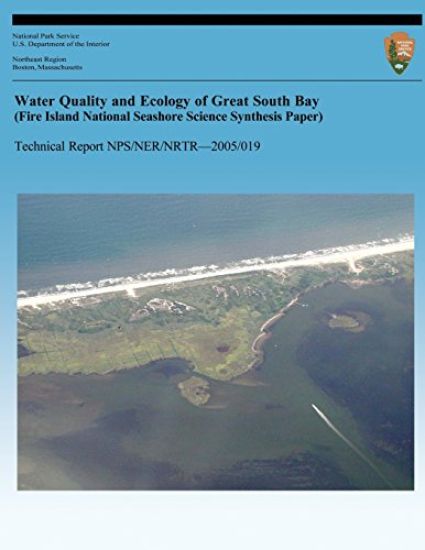
Water Quality and Ecology of Great South Bay (Fire Island National Seashore Science Synthesis Paper)
Kenneth R. Hinga
Createspace Independent Publishing Platform
2013
nidottu


Media Hypnosis in Advertising and Politics
Kenneth R. Graham
Createspace Independent Publishing Platform
2014
nidottu

Parting the Cosmic Veil describes our gradual awareness of a vast, previously concealed Universe. It is a story of expanding horizons and the discovery of invisible worlds, made possible with new technology and novel telescopes that have broadened our range of perception and sharpened our vision. Spacecraft have carried men to the Moon, and traveled throughout the Solar System, obtaining close-up views that have transformed the moons and planets from moving points of light to fascinating, diverse worlds. Modern technology has also enabled the detection of giant planets around other stars, taking us one step closer to the possible detection of life outside the Earth. Astronomers have used telescopes, operating at the visible wavelengths that we see with our eye, to reveal the true extent of the Milky Way and discover billions of remote galaxies that are rushing away from us in an expanding Universe. Each of these galaxies contains billions of stars wheeling around their massive central hub. Radio waves and X-rays, which lie beyond the range of visual perception, are used to detect a violent Universe, from exploding stars to gamma ray bursts and the Big Bang itself, with the associated discoveries of pulsars, black holes and quasars. Radio astronomers have also shown that the dark spaces between the stars contain vast tracts of cold hydrogen atoms and a host of molecules. Dark invisible matter has been discovered residing outside the shining stars and galaxies, outweighing them all. And a mysterious dark energy has also been found, which fills the nooks and crannies of seemingly empty space. The Cosmos is evolving, participating in ongoing processes of creation, destruction, and re-birth. But even though we are pushing the boundaries of knowledge closer to an understanding of the origins and destinies, of either the Universe or Life, the ultimate answers to these grand questions still lie hidden behind the Cosmic Veil.
Evaluation of Environmental Controls at a Homeless Shelter (Trinity Rescue Mission) Associated with a Tuberculosis Outbreak - Florida
Kenneth R. Mead; R. Brent Lawrence; Michael C. Beaty
Createspace Independent Publishing Platform
2013
nidottu

Evaluation of Environmental Controls at a Social Assistance Facility (Community Rehabilitation Center) Associated with a Tuberculosis Outbreak - Flori
Kenneth R. Mead; R. Brent Lawrence; Michael C. Beaty
Createspace Independent Publishing Platform
2013
nidottu




The Royal Masonic Cyclopaedia V1 is a comprehensive reference book written by Kenneth R. H. Mackenzie. This book is a detailed guide to the history, philosophy, and symbolism of Freemasonry, a fraternal organization with roots in the medieval stonemason guilds. The book covers a wide range of topics, including the origins of Freemasonry, its rituals and symbols, the different degrees and orders within the organization, and the influence of Freemasonry on art, literature, and culture. It also includes biographies of prominent Freemasons and a glossary of Masonic terms. The Royal Masonic Cyclopaedia V1 is an essential resource for anyone interested in the history and meaning of Freemasonry.This Is A New Release Of The Original 1877 Edition.This scarce antiquarian book is a facsimile reprint of the old original and may contain some imperfections such as library marks and notations. Because we believe this work is culturally important, we have made it available as part of our commitment for protecting, preserving, and promoting the world's literature in affordable, high quality, modern editions, that are true to their original work.