Kirjojen hintavertailu. Mukana 11 717 486 kirjaa ja 12 kauppaa.

Kirjahaku

Etsi kirjoja tekijän nimen, kirjan nimen tai ISBN:n perusteella.

1000 tulosta hakusanalla Laran Mithras

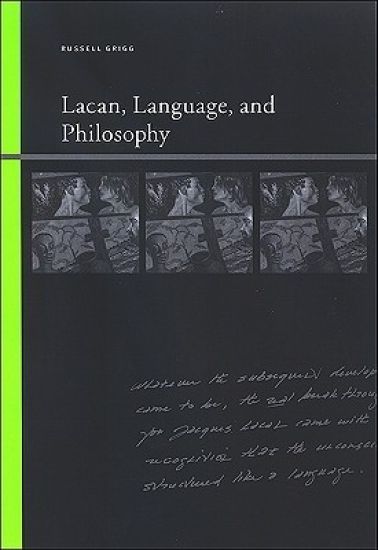
Lacan, Language, and Philosophy

Lacan, Language, and Philosophy

Russell Grigg

State University of New York Press
2009
pokkari
Clinical and philosophical perspectives on key issues and debates in Lacanian psychoanalysis.Lacan, Language, and Philosophy explores the linguistic turn in psychoanalysis taken by Jacques Lacan. Russell Grigg provides lively and accessible readings of Lacan and Freud that are grounded in clinical experience and informed by a background in analytic philosophy. He addresses key issues in Lacanian psychoanalysis, from the clinical (how psychosis results from the foreclosure of the signifier the Name-of-the Father; the father as a symbolic function; the place of transference) to the philosophical (the logic of the "pas-tout"; the link between the superego and Kant's categorical imperative; a critique of Žižek's account of radical change). Grigg's expertise and knowledge of psychoanalysis produce a major contribution to contemporary philosophical and psychoanalytic debates.
Lacan, Discourse, and Social Change

Lacan, Discourse, and Social Change

CORNELL UNIVERSITY PRESS
1993
sidottu
Convinced that cultural criticism need not merely be an academic exercise but can help improve people's lives, Mark Bracher proposes a method of cultural criticism which is based on the principles of psychoanalytic treatment and which aims to alter subjectivity and behavior.In this forceful and engagingly written book, Bracher first accounts for the failure of contemporary cultural criticism to achieve significant social impact. He then offers a model of analysis that draws on Lacan's theoretical insights into the structure of subjectivity and the psychological functions of discourse, asserting that the use of this model can promote collective psychological change. While cultural criticism has generally focused on texts, Bracher instead analyzes audiences' actual responses—to a variety of discourses from "high" as well as popular culture: the political speeches of Ronald Reagan and Jesse Jackson, anti-abortion propaganda, pornography, Keats's "To Autumn," and Conrad's Heart of Darkness. Through analyzing these responses, Bracher is able to uncover the unconscious identifications and fantasies of the respondents—an intervention that, he argues, has the potential for altering subjectivity. In his view, such a method of cultural criticism is both unusually powerful and ethnically defensible, since instead of attacking or upholding a group's values, it reveals the psychological conflicts manifest in responses to particular texts.Lacan, Discourse, and Social Change will be essential reading for students as well as specialists in such fields as cultural criticism, feminist theory, literary theory, psychoanalytic criticism, reader-response criticism, reader-response criticism, and Lacanian theory.
Lacan, Discourse, and Social Change

Lacan, Discourse, and Social Change

Mark Bracher

Cornell University Press
1993
pokkari
Convinced that cultural criticism need not merely be an academic exercise but can help improve people's lives, Mark Bracher proposes a method of cultural criticism which is based on the principles of psychoanalytic treatment and which aims to alter subjectivity and behavior.In this forceful and engagingly written book, Bracher first accounts for the failure of contemporary cultural criticism to achieve significant social impact. He then offers a model of analysis that draws on Lacan's theoretical insights into the structure of subjectivity and the psychological functions of discourse, asserting that the use of this model can promote collective psychological change. While cultural criticism has generally focused on texts, Bracher instead analyzes audiences' actual responses—to a variety of discourses from "high" as well as popular culture: the political speeches of Ronald Reagan and Jesse Jackson, anti-abortion propaganda, pornography, Keats's "To Autumn," and Conrad's Heart of Darkness. Through analyzing these responses, Bracher is able to uncover the unconscious identifications and fantasies of the respondents—an intervention that, he argues, has the potential for altering subjectivity. In his view, such a method of cultural criticism is both unusually powerful and ethnically defensible, since instead of attacking or upholding a group's values, it reveals the psychological conflicts manifest in responses to particular texts.Lacan, Discourse, and Social Change will be essential reading for students as well as specialists in such fields as cultural criticism, feminist theory, literary theory, psychoanalytic criticism, reader-response criticism, reader-response criticism, and Lacanian theory.
Lacan and the Matter of Origins

Lacan and the Matter of Origins

Shuli Barzilai

Stanford University Press
1999
sidottu
Lacan and the Matter of Origins traces the development of Lacan's thinking about the role of the mother in psychical formation. It examines the conceptual struggle throughout his work over issues of maternal agency in relation to the constitution of human subjectivity, and the theoretical, historical, and autobiographical reasons for this struggle. Lacan is widely held to emphasize the paternal dimension of human subjectivity and the phallic signifier. This book demonstrates that the mother occupies a crucial position in the Lacanian project, even if the maternal relation is not systematically theorized. The maternal figure appears as a Cheshire Cat who fades away and reappears at different times. The book traces the major shifts in Lacan's understanding of the maternal within an intertextual framework that includes Augustine, Klein, Kojève, and Rank. Pursuing in Lacan's writings the sometimes contradictory or unassimilable functions of the mother, the book closely tracks his variations on and departures from the Freudian definition of such concepts as primary identification, narcissism, castration, deferred action, and the death drive. Lacan's major contribution to twentieth-century thought emerges here in the context of his ostensibly loyal yet revisionist stance toward Freud as his major precursor in the psychoanalytic field. For those reading Lacan's often recondite work for the first time, Lacan and the Matter of Origins provides an accessible point of entry, with its clear explication of key terms together with their historical and conceptual background. For readers familiar with Lacanian theory, the book offers a reconceptualization of the evolution of his teachings from literary-critical, cultural, and biographical perspectives; it also presents a new approach to Lacan through the interplay of influences integral to the formation of his revisionary thought.
Lacan and the Matter of Origins

Lacan and the Matter of Origins

Shuli Barzilai

Stanford University Press
1999
pokkari
Lacan and the Matter of Origins traces the development of Lacan's thinking about the role of the mother in psychical formation. It examines the conceptual struggle throughout his work over issues of maternal agency in relation to the constitution of human subjectivity, and the theoretical, historical, and autobiographical reasons for this struggle. Lacan is widely held to emphasize the paternal dimension of human subjectivity and the phallic signifier. This book demonstrates that the mother occupies a crucial position in the Lacanian project, even if the maternal relation is not systematically theorized. The maternal figure appears as a Cheshire Cat who fades away and reappears at different times. The book traces the major shifts in Lacan's understanding of the maternal within an intertextual framework that includes Augustine, Klein, Kojève, and Rank. Pursuing in Lacan's writings the sometimes contradictory or unassimilable functions of the mother, the book closely tracks his variations on and departures from the Freudian definition of such concepts as primary identification, narcissism, castration, deferred action, and the death drive. Lacan's major contribution to twentieth-century thought emerges here in the context of his ostensibly loyal yet revisionist stance toward Freud as his major precursor in the psychoanalytic field. For those reading Lacan's often recondite work for the first time, Lacan and the Matter of Origins provides an accessible point of entry, with its clear explication of key terms together with their historical and conceptual background. For readers familiar with Lacanian theory, the book offers a reconceptualization of the evolution of his teachings from literary-critical, cultural, and biographical perspectives; it also presents a new approach to Lacan through the interplay of influences integral to the formation of his revisionary thought.
Lacan, Deleuze and World Politics

Lacan, Deleuze and World Politics

Andreja Zevnik

CRC Press Inc
2017
nidottu
This book aims to re-think the way in which the subject is inscribed in the modern political, and does so by exploring the potentiality of Lacano-Deleuzian theoretical framework. It concerns a different ontology and a non-dualist understanding of political and legal existence, by focusing on questions such as how to think alternative notions of political existence and what kind of political, social and legal order do these come to create.This investigation into political appearance of subjects through concepts of law, body and life is led and influenced by the thought of Gilles Deleuze and Jacques Lacan, as well as Alain Badiou, Antonio Negri and Slavoj Žižek. The book takes on various conceptualisations of life, explores the relationship between law and life and develops an alternative notion of legal and political existence in particular in the context of rights. On the back of Guantánamo’s legal and political discourses this work aims to show why and how the problems of world politics or the limitations of (human) rights discourse require an engagement with questions such as what it means to exist as a human being, what forms of life are politically recognised, which are not, and why this distinction.By pointing to a different ontology for thinking and understanding global politics and demonstrating how a trans-disciplinary and philosophical approaches can foster the debates in world politics, this book will be of interest to postgraduates and scholars working on critical normative ideas in international politics, critical security studies and critical legal studies.
Lacan To The Letter

Lacan To The Letter

Bruce Fink

University of Minnesota Press
2004
nidottu
An analysis of Lacan’s thought by way of a close, authoritative reading of his ÉcritsTo read Lacan closely is to follow him to the letter, to take him literally, making the wager that he comes right out and says what he means in many cases, though much of his argument must be reconstructed through a line-by-line examination. And this is precisely what Bruce Fink does in this ambitious book, a fine analysis of Lacan’s work on language and psychoanalytic treatment conducted on the basis of a very close reading of texts in his Écrits: A Selection. As a translator and renowned proponent of Lacan’s works, Fink is an especially adept and congenial guide through the complexities of Lacanian literature and concepts. He devotes considerable space to notions that have been particularly prone to misunderstanding, notions such as “the sliding of the signified under the signifier,” or that have gone seemingly unnoticed, such as “the ego is the metonymy of desire.” Fink also pays special attention to psychoanalytic concepts, like affect, that Lacan is sometimes thought to neglect, and to controversial concepts, like the phallus. From a parsing of Lacan’s claim that “commenting on a text is like doing an analysis,” to sustained readings of “The Instance of the Letter in the Unconscious,” “The Direction of the Treatment,” and “Subversion of the Subject” (with particular attention given to the Graph of Desire), Fink’s book is a work of unmatched subtlety, depth, and detail, providing a valuable new perspective on one of the twentieth century’s most important thinkers.
Lara Croft

Lara Croft

Astrid Deuber-Mankowsky; Sue-Ellen Case

University of Minnesota Press
2005
nidottu
Since the game Tomb Raider was first released in 1996, its protagonist Lara Croft has become an international celebrity. The virtual archaeologist-adventuress has been featured in various sequels to the original game, a line of action figures, two Hollywood films starring Angelina Jolie, forty comic books, a series of novels, and a variety of clothing, merchandise, and ephemera. She has appeared on the covers of Time and Newsweek, spawned innumerable Internet fan sites and a library of adulatory fan fiction, become a pornographic sex symbol, and even inspired a look-alike beauty pageant. Astrid Deuber-Mankowsky's groundbreaking study examines Lara Croft as a cyber heroine - a female body ubiquitously inhabited by game players, an icon of both female strength and male objectification, and the virtual future of fame. Despite Croft's prominence there have been few critical inquiries into her bridging of the boundary between virtual and real worlds or the extent to which she reflects and influences the image of women in digital media. First published in German and revised for this English-language edition, this book is an innovative analysis of the multimedia heroine, tracing the top-down marketing strategies and bottom-up frenzy that precipitated the Lara Croft phenomenon. For girls and women, Croft is a symbol of empowerment, a tough and self-assured riot grrl who has opened up the overwhelmingly masculinized world of computer gaming to female participants. At the same time, she personifies both heterosexual male fantasies and the twinned processes of globalization and cultural imperialism. Drawing on feminist and cultural studies, Deuber-Mankowsky sees Croft as symptomatic of the new media environment and its tendency to erase all qualitative difference, even sexual difference.
Lacan's Medievalism

Lacan's Medievalism

Erin Felicia Labbie

University of Minnesota Press
2006
nidottu
One of the foundational premises of Jacques Lacan's psychoanalytical project was that the history of philosophy concealed the history of desire, and one of the goals of his work was to show how desire is central to philosophical thinking.In Lacan's Medievalism, Erin Felicia Labbie demonstrates how Lacan's theory of desire is bound to his reading of medieval texts. She not only alters the relationship between psychoanalysis and medieval studies, but also illuminates the ways that premodern and postmodern epochs and ideologies share a concern with the subject, the unconscious, and language, thus challenging notions of strict epistemological cuts. Lacan's psychoanalytic work contributes to the medieval debate about universals by revealing how the unconscious relates to the category of the real. By analyzing the systematic adherence to dialectics and the idealization of the hard sciences, Lacan's Medievalism asserts that we must take into account the play of language and desire within the unconscious and literature in order to understand the way that we know things in the world and the manner in which order is determined.Erin Felicia Labbie is assistant professor of English at Bowling Green State University.
Lacan in Public

Lacan in Public

Christian Lundberg

The University of Alabama Press
2018
nidottu
Lacan in Public argues that Lacan’s contributions to the theory of rhetoric are substantial and revolutionary and that rhetoric is, in fact, the central concern of Lacan’s entire body of work.Scholars typically cite Jacques Lacan as a thinker primarily concerned with issues of desire, affect, politics, and pleasure. And though Lacan explicitly contends with some of the pivotal thinkers in the field of rhetoric, rhetoricians have been hesitant to embrace the French thinker both because his writing is difficult and because Lacan’s conception of rhetoric runs counter to the American traditions of rhetoric in composition and communication studies.Lacan’s conception of rhetoric, Christian Lundberg argues in Lacan in Public, upsets and extends the received wisdom of American rhetorical studies—that rhetoric is a science, rather than an art; that rhetoric is predicated not on the reciprocal exchange of meanings, but rather on the impossibility of such an exchange; and that rhetoric never achieves a correspondence with the real-world circumstances it attempts to describe.As Lundberg shows, Lacan’s work speaks directly to conversations at the center of current rhetorical scholarship, including debates regarding the nature of the public and public discourses, the materiality of rhetoric and agency, and the contours of a theory of persuasion.
Lacan and the Ghosts of Modernity

Lacan and the Ghosts of Modernity

Marshall Needleman Armintor

Peter Lang Publishing Inc
2004
sidottu
To understand the achievement of Jacques Lacan, one must turn to his roots. This book explores the grounding of Lacan's psychoanalytic work in the intellectual and artistic movements of the modernist period. More specifically, it examines masculine anxiety in the modernist novel in terms of Lacan's work on psychosis, masochism, and narcissism, viewed against the broader cultural context of the modernist era. In the process, this book illustrates how Lacan's intellectual apprenticeships and encounters (both real and imaginary) play out in his mature work, beginning with the first seminars of the 1950s. Like other thinkers of the early twentieth century, the trajectory of Lacan's psychoanalytic career is shaped by tendentious confrontations with peers, forebears, and intellectual traditions.
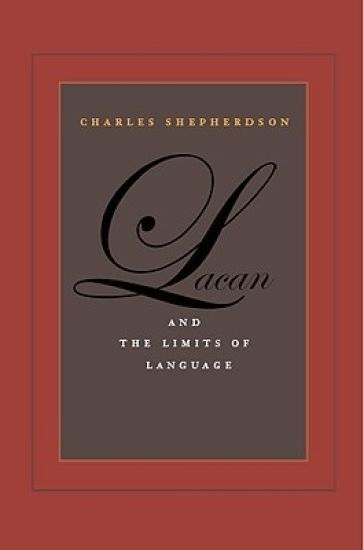
Lacan and the Limits of Language

Lacan and the Limits of Language

Charles Shepherdson

Fordham University Press
2008
sidottu
This book weaves together three themes at the intersection of Jacques Lacan and the philosophical tradition. The first is the question of time and memory. How do these problems call for a revision of Lacan's purported "ahistoricism," and how does the temporality of the subject in Lacan intersect with the questions of temporality initiated by Heidegger and then developed by contemporary French philosophy? The second question concerns the status of the body in Lacanian theory, especially in connection with emotion and affect, which Lacanian theory is commonly thought to ignore, but which the concept of jouissance was developed to address. Finally, it aims to explore, beyond the strict limits of Lacanian theory, possible points of intersection between psychoanalysis and other domains, including questions of race, biology, and evolutionary theory. By stressing the question of affect, the book shows how Lacan's position cannot be reduced to the structuralist models he nevertheless draws upon, and thus how the problem of the body may be understood as a formation that marks the limits of language. Exploring the anthropological category of "race" within a broadly evolutionary perspective, it shows how Lacan's elaboration of the "imaginary" and the "symbolic" might allow us to explain human physiological diversity without reducing it to a cultural or linguistic construction or allowing "race" to remain as a traditional biological category. Here again the questions of history and temporality are paramount, and open the possibility for a genuine dialogue between psychoanalysis and biology. Finally, the book engages literary texts. Antigone, Ovid's Metamorphoses, Hamlet, and even Wordsworth become the muses who oblige psychoanalysis and philosophy to listen once again to the provocations of poetry, which always disrupts our familiar notions of time and memory, of history and bodily or affective experience, and of subjectivity itself.
Lacan and the Limits of Language

Lacan and the Limits of Language

Charles Shepherdson

Fordham University Press
2008
pokkari
This book weaves together three themes at the intersection of Jacques Lacan and the philosophical tradition. The first is the question of time and memory. How do these problems call for a revision of Lacan's purported "ahistoricism," and how does the temporality of the subject in Lacan intersect with the questions of temporality initiated by Heidegger and then developed by contemporary French philosophy? The second question concerns the status of the body in Lacanian theory, especially in connection with emotion and affect, which Lacanian theory is commonly thought to ignore, but which the concept of jouissance was developed to address. Finally, it aims to explore, beyond the strict limits of Lacanian theory, possible points of intersection between psychoanalysis and other domains, including questions of race, biology, and evolutionary theory. By stressing the question of affect, the book shows how Lacan's position cannot be reduced to the structuralist models he nevertheless draws upon, and thus how the problem of the body may be understood as a formation that marks the limits of language. Exploring the anthropological category of "race" within a broadly evolutionary perspective, it shows how Lacan's elaboration of the "imaginary" and the "symbolic" might allow us to explain human physiological diversity without reducing it to a cultural or linguistic construction or allowing "race" to remain as a traditional biological category. Here again the questions of history and temporality are paramount, and open the possibility for a genuine dialogue between psychoanalysis and biology. Finally, the book engages literary texts. Antigone, Ovid's Metamorphoses, Hamlet, and even Wordsworth become the muses who oblige psychoanalysis and philosophy to listen once again to the provocations of poetry, which always disrupts our familiar notions of time and memory, of history and bodily or affective experience, and of subjectivity itself.
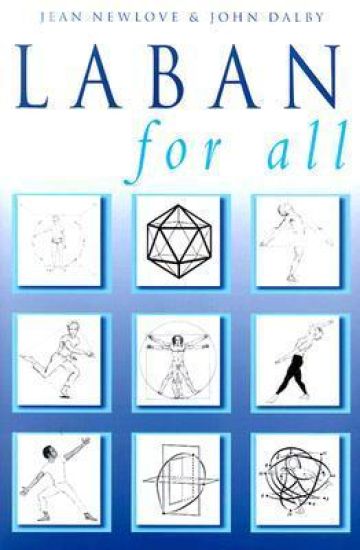
Laban for All

Laban for All

Jean Newlove; John Dalby

Routledge Member of the Taylor and Francis Group
2003
nidottu
Rudolf Laban was one of the great theorists and practitioners of movement. In Laban for All, expert teachers of Laban's techniques offer simplified version of his system that can be used by anyone, from beginners to pros. Extensively illustrated with John Dalby's line drawings and diagrams, Laban for All lays out the basic vocabulary of the Laban system and goes on to offer specific exercises.The result is a thorough - and thoroughly practical - grounding in the most important movement system in use today.
Once Upon Our Childhood: A novel by Lara Brown

Once Upon Our Childhood: A novel by Lara Brown

Lara Brown

Lara Brown Incorporated
2020
nidottu
The plan is simple for Lara and her best friends - make the most of their final high school year together before they part ways soon. Too bad secrets won't let them. A slow start to the school term leads to a steep drop into a rabbit hole of secrets rearing their ugly heads - think a hidden disorder, a predatory relationship, a second family, a shock diagnosis, a resurrected marriage, and more. The anticipated drama-free year goes off the rails as past and present secrets unravel at a breathless pace. The revelations spark a chain of unprecedented reactions that send the four friends reeling as they face impossible choices. They can sacrifice their friendships to keep carefully constructed houses of cards from falling. Or maybe it is past time to rip apart the frail safety nets woven by a pervasive culture of silence.Set in the brawling, cosmopolitan city of Lagos, Nigeria, Once Upon Our Childhood examines the hydra-headed nature of abuse through the raw, insightful, and sometimes, snarky voices of four diverse characters.