Kirjojen hintavertailu. Mukana 11 627 220 kirjaa ja 12 kauppaa.

Kirjahaku

Etsi kirjoja tekijän nimen, kirjan nimen tai ISBN:n perusteella.

1000 tulosta hakusanalla Lewis Hutton

The Idioms of the French and English Languages. ... By Lewis Chambaud
The 18th century was a wealth of knowledge, exploration and rapidly growing technology and expanding record-keeping made possible by advances in the printing press. In its determination to preserve the century of revolution, Gale initiated a revolution of its own: digitization of epic proportions to preserve these invaluable works in the largest archive of its kind. Now for the first time these high-quality digital copies of original 18th century manuscripts are available in print, making them highly accessible to libraries, undergraduate students, and independent scholars.Western literary study flows out of eighteenth-century works by Alexander Pope, Daniel Defoe, Henry Fielding, Frances Burney, Denis Diderot, Johann Gottfried Herder, Johann Wolfgang von Goethe, and others. Experience the birth of the modern novel, or compare the development of language using dictionaries and grammar discourses. ++++The below data was compiled from various identification fields in the bibliographic record of this title. This data is provided as an additional tool in helping to insure edition identification: ++++British LibraryT054009With a final advertisement leaf.London: printed for J. Nourse, 1751. iv,258, 2]p.; 12
The Happiness of man the Glory of God. A Sermon Preached Before the Honourable Trustees for Establishing the Colony of Georgia in America, ... March 15, 1743, ... By Lewis Bruce,
The 18th century was a wealth of knowledge, exploration and rapidly growing technology and expanding record-keeping made possible by advances in the printing press. In its determination to preserve the century of revolution, Gale initiated a revolution of its own: digitization of epic proportions to preserve these invaluable works in the largest archive of its kind. Now for the first time these high-quality digital copies of original 18th century manuscripts are available in print, making them highly accessible to libraries, undergraduate students, and independent scholars.The Age of Enlightenment profoundly enriched religious and philosophical understanding and continues to influence present-day thinking. Works collected here include masterpieces by David Hume, Immanuel Kant, and Jean-Jacques Rousseau, as well as religious sermons and moral debates on the issues of the day, such as the slave trade. The Age of Reason saw conflict between Protestantism and Catholicism transformed into one between faith and logic -- a debate that continues in the twenty-first century.++++The below data was compiled from various identification fields in the bibliographic record of this title. This data is provided as an additional tool in helping to insure edition identification: ++++British LibraryT035977Sig.D signed C. A variant has sig. D correctly signed.London: printed by Daniel Browne, 1744. 2],53, 1]p.; 4
An Account of Hedingham Castle, in the Country of Essex. By Lewis Majendie,
The 18th century was a wealth of knowledge, exploration and rapidly growing technology and expanding record-keeping made possible by advances in the printing press. In its determination to preserve the century of revolution, Gale initiated a revolution of its own: digitization of epic proportions to preserve these invaluable works in the largest archive of its kind. Now for the first time these high-quality digital copies of original 18th century manuscripts are available in print, making them highly accessible to libraries, undergraduate students, and independent scholars.The eighteenth-century fascination with Greek and Roman antiquity followed the systematic excavation of the ruins at Pompeii and Herculaneum in southern Italy; and after 1750 a neoclassical style dominated all artistic fields. The titles here trace developments in mostly English-language works on painting, sculpture, architecture, music, theater, and other disciplines. Instructional works on musical instruments, catalogs of art objects, comic operas, and more are also included. ++++The below data was compiled from various identification fields in the bibliographic record of this title. This data is provided as an additional tool in helping to insure edition identification: ++++British LibraryT099173With a half-title.London: printed by John Nichols, 1796. 4],15, 1]p., plates: ill; 2
Lewis Baboon Turned Honest, and John Bull Politician. Being the Fourth Part of Law is a Bottomless-pit. Printed From a Manuscript Found in the Cabinet of the Famous Sir Humphry Polesworth
The 18th century was a wealth of knowledge, exploration and rapidly growing technology and expanding record-keeping made possible by advances in the printing press. In its determination to preserve the century of revolution, Gale initiated a revolution of its own: digitization of epic proportions to preserve these invaluable works in the largest archive of its kind. Now for the first time these high-quality digital copies of original 18th century manuscripts are available in print, making them highly accessible to libraries, undergraduate students, and independent scholars.Delve into what it was like to live during the eighteenth century by reading the first-hand accounts of everyday people, including city dwellers and farmers, businessmen and bankers, artisans and merchants, artists and their patrons, politicians and their constituents. Original texts make the American, French, and Industrial revolutions vividly contemporary.++++The below data was compiled from various identification fields in the bibliographic record of this title. This data is provided as an additional tool in helping to insure edition identification: ++++Cambridge University LibraryN054994Anonymous. By John Arbuthnot. Sometimes also attributed to Jonathan Swift. With a final advertisement leaf.London: printed for John Morphew, 1712. 30, 2]p.; 8
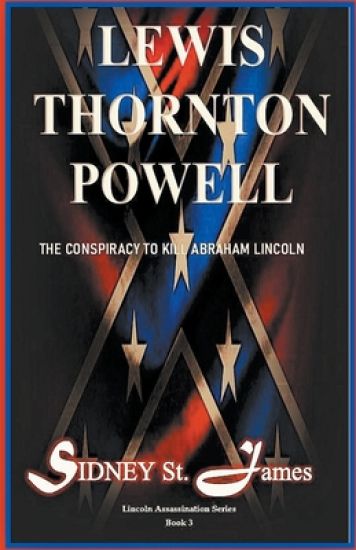
Lewis Thornton Powell - The Conspiracy to Kill Abraham Lincoln
Lewis Thornton PowellThe Conspiracy to Kill Abraham LincolnLincoln Assassination SeriesBook 3"Fourscore and seven years ago our fathers brought forth, on this continent, a new nation, conceived in liberty, and dedicated to the proposition that all men are created equal." - Abraham LincolnReporters were denied access to Lewis Thornton Powell and David "Davy" Herold, conspirators in the Lincoln Assassination while held captive on the USS Montauk. Furthermore, the press was held at bay, but not Alexander Gardner, a favorite photographer of the government in Washington City at the time.On April 27th, Gardner was busy taking photographs of those who had been arrested in the government's dragnet. Say a derogatory word against the government or Abe Lincoln, one could find themselves locked up in the slammer with three hundred others.Each of the prisoners were brought on deck and photographed in a few different poses. Far more photographs were taken of Lewis Powell than anyone else. He was a camera hound and gave his time to the celebrated photographer. Powell cooperated with Gardner's requests and posed sitting down, standing, with and without restraints, and modeling the overcoat and hat he wore the night of the Secretary of State Seward's attacks. The one used in most discussions was where he stood against the gun turret of the USS Saugus, staring right at the camera, relaxing in a calm manner.Powell was shackled with a form of manacles known as "lily irons," riveted handcuffs with two separate iron bands on each of his wrists, preventing him the ability to bend his wrist or use either of his hands. Like most of the male prisoners on board, he drug around with him a heavy iron ball at the end of a six foot long chain manacled to one of his legs.In LEWIS THORNTON POWELL - The Conspiracy to Kill Abraham Lincoln, a military tribunal, rather than a civilian court, was chosen as the prosecutorial venue. The government officials at the time thought the Commission might be more lenient in regards to the evidence allowing the court to get to the bottom of what they perceived as a vast conspiracy.Conviction required a simple majority of the judges, while imposition of the death sentence required a two-thirds majority. The only appeal available to the prisoners was to go directly to the President of the United States.From all indication, enough preliminary witnesses had placed Powell in the same room with Secretary of State Seward. Finding legal counsel was difficult, and after three days waiting, Powell was finally able to locate representation for the trial that began on May 12, 1865. William E. Doster took over representation for the defense of Lewis Powell. Doster was a graduate of Yale and Harvard and the former provost marshal for the District of Columbia.William Doster for the Defense opened his case on June 21st, 1865, for Lewis Thornton Powell. The weight of the evidence against Powell was so overwhelming, the Defense, instead of trying to disprove his guilt, characterizes Powell's actions as those of a soldier who aimed at the Secretary of State instead of the lesser corps of the Union.This court case in its entirety for Lewis Thornton Powell was brought to paper for the reader to determine from the evidence and the testimony of witnesses whether or not Lewis Thornton Powell should have been hung or be turned free.
Lewis Hamilton

Lewis Hamilton

Ryan G. Van Cleave

Capstone Global Library Ltd
2025
nidottu
Lewis Hamilton was just 23 years old when he won his first Formula One World Championship title. He has added many more to his name since then. He holds records for podium finishes, pole positions and more. Hamilton was the first Black F1 driver in history. He has faced racism. He has faced bullying. But he continues to rise to the challenge. Follow Hamilton’s road to success in this gripping biography that is sure to be a winner with all young sports fanatics.
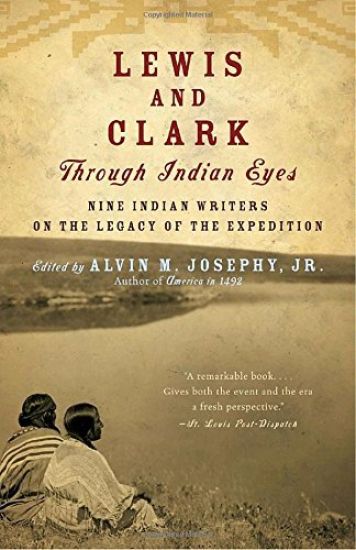
Lewis and Clark Through Indian Eyes: Nine Indian Writers on the Legacy of the Expedition
At the heart of this landmark collection of essays rests a single question: What impact, good or bad, immediate or long-range, did Lewis and Clark's journey have on the Indians whose homelands they traversed? The nine writers in this volume each provide their own unique answers; from Pulitzer prize-winner N. Scott Momaday, who offers a haunting essay evoking the voices of the past; to Debra Magpie Earling's illumination of her ancestral family, their survival, and the magic they use to this day; to Mark N. Trahant's attempt to trace his own blood back to Clark himself; and Roberta Conner's comparisons of the explorer's journals with the accounts of the expedition passed down to her. Incisive and compelling, these essays shed new light on our understanding of this landmark journey into the American West.
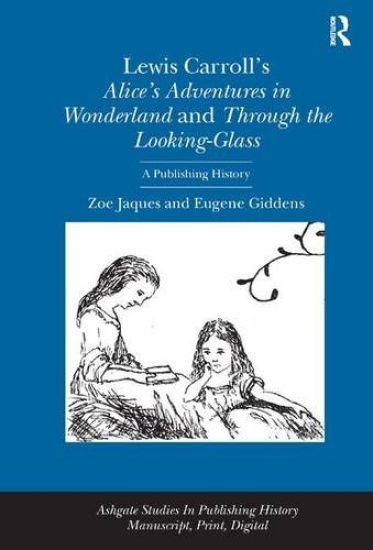
Lewis Carroll's Alice's Adventures in Wonderland and Through the Looking-Glass

Lewis Carroll's Alice's Adventures in Wonderland and Through the Looking-Glass

Zoe Jaques; Eugene Giddens

Ashgate Publishing Limited
2013
sidottu
Emerging in several different versions during the author's lifetime, Lewis Carroll's Alice novels have a publishing history almost as magical and mysterious as the stories themselves. Zoe Jaques and Eugene Giddens offer a detailed and nuanced account of the initial publication of Alice's Adventures in Wonderland and Through the Looking-Glass and investigate how their subsequent transformations through print, illustration, film, song, music videos, and even stamp-cases and biscuit tins affected the reception of these childhood favourites. The authors consider issues related to the orality of the original tale and its impact on subsequent transmission, the differences between the manuscripts and printed editions, and the politics of writing and publishing for children in the 1860s. In addition, they take account of Carroll's own responses to the books' popularity, including his writing of major adaptations and a significant body of meta-textual commentary, and his reactions to the staging of Alice in Wonderland. Attentive to the child reader, how changing notions of childhood identity and needs affected shifting narratives of the story, and the representation of the child's body by various illustrators, the authors also make a significant contribution to childhood studies.