Kirjojen hintavertailu. Mukana 11 699 587 kirjaa ja 12 kauppaa.

Kirjahaku

Etsi kirjoja tekijän nimen, kirjan nimen tai ISBN:n perusteella.

1000 tulosta hakusanalla Lyn Hack

Habits of the Heartland

Habits of the Heartland

Lyn C. Macgregor

Cornell University Press
2010
sidottu
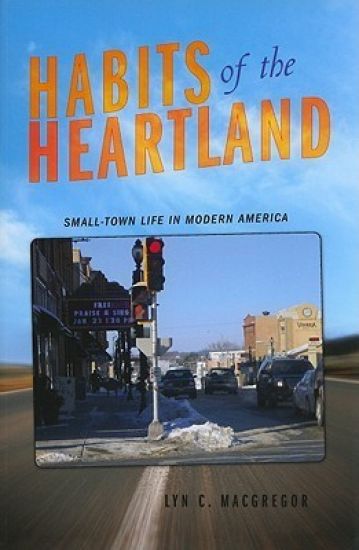
"So, how do Americans in a small town make community today? This book argues that there is more than one answer, and that despite the continued importance of small-town stuff traditionally associated with face-to-face communities, it makes no sense to think that contemporary technological, economic, and cultural shifts have had no impact on the ways Americans practice community life. Instead, I found that different Viroquans took different approaches to making community that reflected different confluences of moral logics—their senses of obligation to themselves, to their families, to Viroqua, and to the world beyond it, and about the importance of exercising personal agency. The biggest surprise was that these ideas about obligation and agency, and specifically about the degree to which it was necessary or good to try to bring one's life into precise conformance with a set of larger goals, turned out to have replaced more traditional markers of social belonging like occupation and ethnicity, in separating Viroquans into social groups."—from Habits of the Heartland Although most Americans no longer live in small towns, images of small-town life, and particularly of the mutual support and neighborliness to be found in such places, remain powerful in our culture. In Habits of the Heartland Lyn C. Macgregor investigates how the residents of Viroqua, Wisconsin, population 4,355, create a small-town community together. Macgregor lived in Viroqua for nearly two years. During that time she gathered data in public places, attended meetings, volunteered for civic organizations, talked to residents in their workplaces and homes, and worked as a bartender at the local American Legion post. Viroqua has all the outward hallmarks of the idealized American town; the kind of place where local merchants still occupy the shops on Main Street and everyone knows everyone else. On closer examination, one finds that the town contains three largely separate social groups: Alternatives, Main Streeters, and Regulars. These categories are not based on race or ethnic origins. Rather, social distinctions in Viroqua are based ultimately on residents' ideas about what a community is and why it matters. These ideas both reflect and shape their choices as consumers, whether at the grocery store, as parents of school-age children, or in the voting booth. Living with—and listening to—the town's residents taught Macgregor that while traditional ideas about "community," especially as it was connected with living in a small town, still provided an important organizing logic for peoples' lives, there were a variety of ways to understand and create community.
Habits of the Heartland

Habits of the Heartland

Lyn C. Macgregor

Cornell University Press
2010
pokkari
"So, how do Americans in a small town make community today? This book argues that there is more than one answer, and that despite the continued importance of small-town stuff traditionally associated with face-to-face communities, it makes no sense to think that contemporary technological, economic, and cultural shifts have had no impact on the ways Americans practice community life. Instead, I found that different Viroquans took different approaches to making community that reflected different confluences of moral logics—their senses of obligation to themselves, to their families, to Viroqua, and to the world beyond it, and about the importance of exercising personal agency. The biggest surprise was that these ideas about obligation and agency, and specifically about the degree to which it was necessary or good to try to bring one's life into precise conformance with a set of larger goals, turned out to have replaced more traditional markers of social belonging like occupation and ethnicity, in separating Viroquans into social groups."—from Habits of the Heartland Although most Americans no longer live in small towns, images of small-town life, and particularly of the mutual support and neighborliness to be found in such places, remain powerful in our culture. In Habits of the Heartland Lyn C. Macgregor investigates how the residents of Viroqua, Wisconsin, population 4,355, create a small-town community together. Macgregor lived in Viroqua for nearly two years. During that time she gathered data in public places, attended meetings, volunteered for civic organizations, talked to residents in their workplaces and homes, and worked as a bartender at the local American Legion post. Viroqua has all the outward hallmarks of the idealized American town; the kind of place where local merchants still occupy the shops on Main Street and everyone knows everyone else. On closer examination, one finds that the town contains three largely separate social groups: Alternatives, Main Streeters, and Regulars. These categories are not based on race or ethnic origins. Rather, social distinctions in Viroqua are based ultimately on residents' ideas about what a community is and why it matters. These ideas both reflect and shape their choices as consumers, whether at the grocery store, as parents of school-age children, or in the voting booth. Living with—and listening to—the town's residents taught Macgregor that while traditional ideas about "community," especially as it was connected with living in a small town, still provided an important organizing logic for peoples' lives, there were a variety of ways to understand and create community.
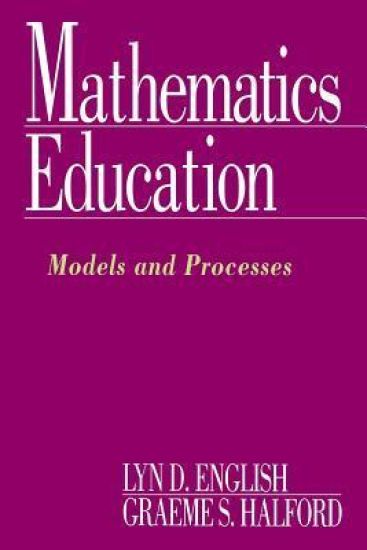
Mathematics Education

Mathematics Education

Lyn D. English; Graeme S. Halford

Routledge Member of the Taylor and Francis Group
1995
sidottu
To define better techniques of mathematics education, this book combines a knowledge of cognitive science with mathematics curriculum theory and research. The concept of the human reasoning process has been changed fundamentally by cognitive science in the last two decades. The role of memory retrieval, domain-specific and domain-general skills, analogy, and mental models is better understood now than previously. The authors believe that cognitive science provides the most accurate account thus far of the actual processes that people use in mathematics and offers the best potential for genuine increases in efficiency. As such, they suggest that a cognitive science approach enables constructivist ideas to be analyzed and further developed in the search for greater understanding of children's mathematical learning. Not simply an application of cognitive science, however, this book provides a new perspective on mathematics education by examining the nature of mathematical concepts and processes, how and why they are taught, why certain approaches appear more effective than others, and how children might be assisted to become more mathematically powerful. The authors use recent theories of analogy and knowledge representation -- combined with research on teaching practice -- to find ways of helping children form links and correspondences between different concepts, so as to overcome problems associated with fragmented knowledge. In so doing, they have capitalized on new insights into the values and limitations of using concrete teaching aids which can be analyzed in terms of analogy theory. In addition to addressing the role of understanding, the authors have analyzed skill acquisition models in terms of their implications for the development of mathematical competence. They place strong emphasis on the development of students' mathematical reasoning and problem solving skills to promote flexible use of knowledge. The book further demonstrates how children have a number of general problem solving skills at their disposal which they can apply independently to the solution of novel problems, resulting in the enhancement of their mathematical knowledge.
Mathematics Education

Mathematics Education

Lyn D. English; Graeme S. Halford

Routledge Member of the Taylor and Francis Group
1995
nidottu
To define better techniques of mathematics education, this book combines a knowledge of cognitive science with mathematics curriculum theory and research. The concept of the human reasoning process has been changed fundamentally by cognitive science in the last two decades. The role of memory retrieval, domain-specific and domain-general skills, analogy, and mental models is better understood now than previously. The authors believe that cognitive science provides the most accurate account thus far of the actual processes that people use in mathematics and offers the best potential for genuine increases in efficiency. As such, they suggest that a cognitive science approach enables constructivist ideas to be analyzed and further developed in the search for greater understanding of children's mathematical learning. Not simply an application of cognitive science, however, this book provides a new perspective on mathematics education by examining the nature of mathematical concepts and processes, how and why they are taught, why certain approaches appear more effective than others, and how children might be assisted to become more mathematically powerful. The authors use recent theories of analogy and knowledge representation -- combined with research on teaching practice -- to find ways of helping children form links and correspondences between different concepts, so as to overcome problems associated with fragmented knowledge. In so doing, they have capitalized on new insights into the values and limitations of using concrete teaching aids which can be analyzed in terms of analogy theory. In addition to addressing the role of understanding, the authors have analyzed skill acquisition models in terms of their implications for the development of mathematical competence. They place strong emphasis on the development of students' mathematical reasoning and problem solving skills to promote flexible use of knowledge. The book further demonstrates how children have a number of general problem solving skills at their disposal which they can apply independently to the solution of novel problems, resulting in the enhancement of their mathematical knowledge.
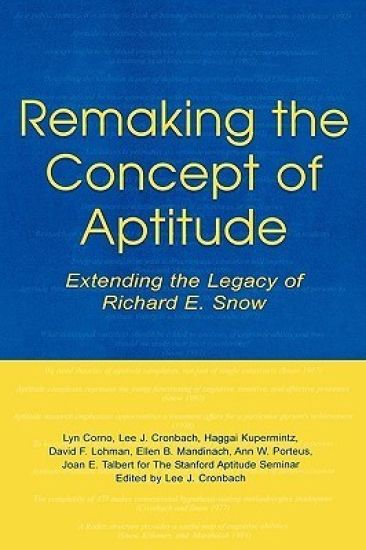
Remaking the Concept of Aptitude

Remaking the Concept of Aptitude

Lyn Corno; Lee J. Cronbach

Routledge Member of the Taylor and Francis Group
2001
sidottu
The unique perspective of Richard E. Snow, in recent years one of the most distinguished educational psychologists, integrates psychology of individual differences, cognitive psychology, and motivational psychology. This capstone book pulls together the findings of his own 35 years of research on aptitudes and those from (especially) European scholars, of which he had exceptional knowledge. A panel of experts and former associates completed this book after his death in 1997, expanding his notes on implications of the theory for instructional design and teaching practice. The panel developed Snow's ideas on where the field should go next, emphasizing promising research strategies. Viewing intelligence as education's most important product, as well as its most important raw material, Snow stressed the need to consider both cognitive skills and affective-motivational characteristics. In this book, previously unconnected research and scattered theoretical ideas are integrated into a dynamic model of aptitude. Understanding the transaction between person and situation was Snow's primary concern. This volume draws from diverse resources to construct a theoretical model of aptitude as a complex process of unfolding person-situation dynamics. Remaking the Concept of Aptitude: Extending the Legacy of Richard E. Snow: *presents historical and contemporary discussion of aptitude theory, illuminating recent ideas by pointing to their historic antecedents; *provides evidence of how sound research can have practical ramifications in classroom settings; *discusses the strengths and weaknesses of prominent research programs, including Gardner's "multiple intelligence," meta-analysis, ATI experiments, and information processing; *describes in detail specific research that has developed important concepts--for example, Czikszentmihalyi on "flow"; Lambrechts on success in stressful training; Sternberg on componential analysis; and Gibson on tailoring affordances to match motivations; and *keeps statistical complexities to a minimum, and includes a simply written Appendix that explains the interpretation of key technical concepts. By characterizing sound research in the field, this volume is useful for psychologists and educational researchers. It will also be instructive for teachers seeking to deepen their knowledge of the whole child and for parents of children facing standardized testing.
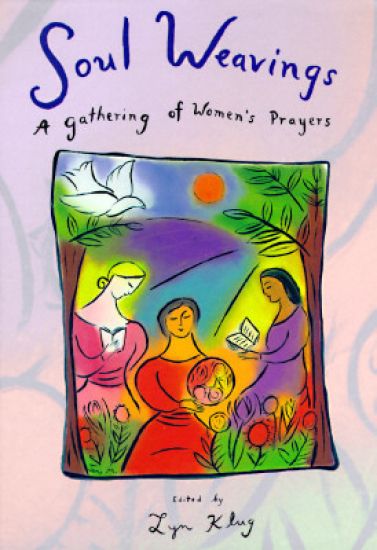
Soul Weavings

Soul Weavings

Lyn Klug

Augsburg Fortress
1996
sidottu
These rich, strong prayers reflect the needs and experiences of women of all ages. They are gathered from historic and contemporary women of faith from around the world.
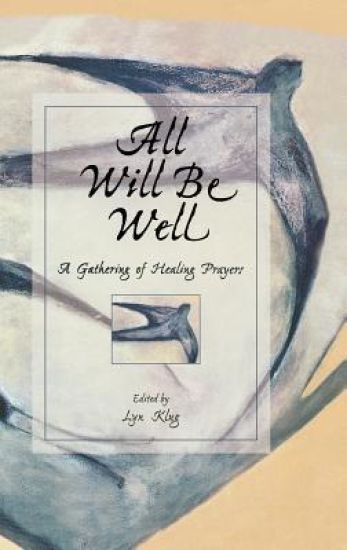
All Will Be Well

All Will Be Well

Lyn Klug

Augsburg Fortress
1998
sidottu
In an attractive gift format, this is a book for all in need of healing, for those who pray for others, for caregivers, pastors, counselors, Stephen ministers, and compassionate visitors. It points to God's healing power and promises that in God's time and in God's way, "all will be well." This gathering of 250 healing prayers from around the world and through the centuries includes prayers for: physical healing emotional healing forgiveness the healing of relationships compassion times of grief the dying expressing gratitude for healing We can learn from men and women of faith that include: Richard Foster Henri Nouwen Mother Teresa Desmond Tutu Dietrich Bonhoeffer Teresa of Avila Saint Augustine Flora Slosson Wuellner Leslie Weatherhead Miriam Therese Winter Herb Brokering Julian of Norwich Lewis Smedes Frederick Buechner
Spiritual Lemons

Spiritual Lemons

Lyn Brakeman

Augsburg Fortress
2004
pokkari
Putting body and bones to the biblical stories, Brakeman explores the passions of biblical women, such as Sarah's laughter, Jephthah's daughter's anger, and Martha's envy. Each of the eight chapters probes what these women might have felt and encourages women to name and claim their feelings. Includes suggestions for personal prayer and meditation, and ideas for group exercises.
The Allure of Immortality

The Allure of Immortality

Lyn Millner

University Press of Florida
2019
pokkari
For five days in December 1908 the body of Cyrus Teed lay in a bathtub at a beach house just south of Fort Myers, Florida. His followers, the Koreshans, waited for signs that he was coming back to life. They watched hieroglyphics emerge on his skin and observed what looked like the formation of a third arm. They saw his belly fall and rise with breath, even though his swollen tongue sealed his mouth. As his corpse turned black, they declared that their leader was transforming into the Egyptian god Horus.Teed was a charismatic and controversial guru who at the age of 30 had been "illuminated" by an angel in his electro-alchemical laboratory. At the turn of the twentieth century, surrounded by the marvels of the Second Industrial Revolution, he proclaimed himself a prophet and led 200 people out of Chicago and into a new age. Or so he promised.The Koreshans settled in a mosquito-infested scrubland and set to building a communal utopia inside what they believed was a hollow earth-with humans living on the inside crust and the entire universe contained within. According to Teed's socialist and millennialist teachings, if his people practiced celibacy and focused their love on him, he would return after death and they would all become immortal.Was Teed a visionary or villain, savior or two-bit charlatan? Why did his promises and his theory of "cellular cosmogony" persuade so many? In The Allure of Immortality, Lyn Millner weaves the many bizarre strands of Teed's life and those of his followers into a riveting story of angels, conmen, angry husbands, yellow journalism, and ultimately, hope.
The Allure of Immortality

The Allure of Immortality

Lyn Millner

University Press of Florida
2023
pokkari
Wall Street Journal’s Five Best Books About CultsThe true story of cult leader Cyrus Teed and his hollow earth theoryFor five days in December 1908 the body of Cyrus Teed lay in a bathtub at a beach house just south of Fort Myers, Florida. His followers, the Koreshans, waited for signs that he was coming back to life. They watched hieroglyphics emerge on his skin and observed what looked like the formation of a third arm. They saw his belly fall and rise with breath, even though his swollen tongue sealed his mouth. As his corpse turned black, they declared that their leader was transforming into the Egyptian god Horus. Teed was a charismatic and controversial guru who at the age of 30 had been "illuminated" by an angel in his electro-alchemical laboratory. At the turn of the twentieth century, surrounded by the marvels of the Second Industrial Revolution, he proclaimed himself a prophet and led 200 people out of Chicago and into a new age. Or so he promised.The Koreshans settled in a mosquito-infested scrubland and set to building a communal utopia inside what they believed was a hollow earth--with humans living on the inside crust and the entire universe contained within. According to Teed’s socialist and millennialist teachings, if his people practiced celibacy and focused their love on him, he would return after death and they would all become immortal.Was Teed a visionary or villain, savior or two-bit charlatan? Why did his promises and his theory of "cellular cosmogony" persuade so many? In The Allure of Immortality, Lyn Millner weaves the many bizarre strands of Teed's life and those of his followers into a riveting story of angels, conmen, angry husbands, yellow journalism, and ultimately, hope.
Teaching Macbeth: A Differentiated Approach

Teaching Macbeth: A Differentiated Approach

Lyn Fairchild Hawks

National Council of Teachers of English (Ncte
2022
nidottu
Macbeth, a story of ambition, terror, and conscience, speaks to our students and our era. Through differentiated instruction, Lyn Fairchild Hawks offers ways to engage students with different readiness levels and interests in this timeless tale of fear and courage, order and chaos, guilt and remorselessness. The book offers a wide range of exciting lesson ideas to challenge your learners and make Shakespeare relevant and meaningful to today's high school students. Including: Key scenes to teachBig ideas and essential questionsFilm analysis activitiesClose reading assignmentsPerformance activitiesPreassessments and summative assessments. Macbeth can come alive for all students through independent reading options linked by theme, activities and projects mirroring professional roles, and relevance "hooks" to meet students' interests. Also included are a unit calendar, DIY tips for lesson design, and a companion website with more than forty ready-to-use handouts.
Girlfighting

Girlfighting

Lyn Mikel Brown

New York University Press
2003
sidottu
A psychological analysis of young female aggression notes the pervasiveness of negative women stereotypes in fairy tales and pop culture, examining the ways in which society reinforces and nurtures mean behavior in girls through misogynistic practices, the establishment of unrealistic expectations, and the oppression of emotional expression. (Psychology & Self-Help)
Girlfighting

Girlfighting

Lyn Mikel Brown

New York University Press
2005
pokkari
Offers a developmental explanation for girlfighting and pathways to build girl allies For some time, reality TV, talk shows, soap-operas, and sitcoms have turned their spotlights on women and girls who thrive on competition and nastiness. Few fairytales lack the evil stepmother, wicked witch, or jealous sister. Even cartoons feature mean and sassy girls who only become sweet and innocent when adults appear. And recently, popular books and magazines have turned their gaze away from ways of positively influencing girls' independence and self-esteem and towards the topic of girls' meanness to other girls. What does this say about the way our culture views girlhood? How much do these portrayals affect the way girls view themselves? In Girlfighting, psychologist and educator Lyn Mikel Brown scrutinizes the way our culture nurtures and reinforces this sort of meanness in girls. She argues that the old adage "girls will be girls"—gossipy, competitive, cliquish, backstabbing— and the idea that fighting is part of a developmental stage or a rite-of-passage, are not acceptable explanations. Instead, she asserts, girls are discouraged from expressing strong feelings and are pressured to fulfill unrealistic expectations, to be popular, and struggle to find their way in a society that still reinforces gender stereotypes and places greater value on boys. Under such pressure, in their frustration and anger, girls (often unconsciously) find it less risky to take out their fears and anxieties on other girls instead of challenging the ways boys treat them, the way the media represents them, or the way the culture at large supports sexist practices. Girlfighting traces the changes in girls' thoughts, actions and feelings from childhood into young adulthood, providing the developmental understanding and theoretical explanation often lacking in other conversations. Through interviews with over 400 girls of diverse racial, economic, and geographic backgrounds, Brown chronicles the labyrinthine journey girls take from direct and outspoken children who like and trust other girls, to distrusting and competitive young women. She argues that this familiar pathway can and should be interrupted and provides ways to move beyond girlfighting to build girl allies and to support coalitions among girls. By allowing the voices of girls to be heard, Brown demonstrates the complex and often contradictory realities girls face, helping us to better understand and critique the socializing forces in their lives and challenging us to rethink the messages we send them.
Lola the Interpreter

Lola the Interpreter

Lyn Hejinian

WESLEYAN UNIVERSITY PRESS
2025
sidottu
The final book by the award-winning and celebrated writer Lyn HejinianLyn Hejinian's Lola the Interpreter is a prose poem in which an 'I' and a series of quasi-characters (including Lola) interpret one another, their quotidian lives, and the terms, categories, and presuppositions that allow fragments of experience to be extracted from the flux of perception and framed as objects of analysis. This work stands as a culmination of Hejinian's lifelong exploration of thought's infrastructure, threading through her oeuvre from A Thought is the Bride of What Thinking to My Life and A Border Comedy, to this, her last book. What perhaps marks Lola as a work of late style, of new experimentalism even at the twilight of Hejinian's life, is the extent to which the interpretation that at first seems to be generated out of discrete events transcends its ostensible occasion and becomes philosophy more broadly, a philosophy poised between a necessary skepticism toward the given or imposed and a life-affirming commitment to the emergent possibilities within the ever-shifting and uncertain domain of daily existence.
Lola the Interpreter

Lola the Interpreter

Lyn Hejinian

WESLEYAN UNIVERSITY PRESS
2025
nidottu
The final book by the award-winning and celebrated writer Lyn HejinianLyn Hejinian's Lola the Interpreter is a prose poem in which an 'I' and a series of quasi-characters (including Lola) interpret one another, their quotidian lives, and the terms, categories, and presuppositions that allow fragments of experience to be extracted from the flux of perception and framed as objects of analysis. This work stands as a culmination of Hejinian's lifelong exploration of thought's infrastructure, threading through her oeuvre from A Thought is the Bride of What Thinking to My Life and A Border Comedy, to this, her last book. What perhaps marks Lola as a work of late style, of new experimentalism even at the twilight of Hejinian's life, is the extent to which the interpretation that at first seems to be generated out of discrete events transcends its ostensible occasion and becomes philosophy more broadly, a philosophy poised between a necessary skepticism toward the given or imposed and a life-affirming commitment to the emergent possibilities within the ever-shifting and uncertain domain of daily existence.
My Life and My Life in the Nineties

My Life and My Life in the Nineties

Lyn Hejinian

Wesleyan University Press
2013
nidottu
Lyn Hejinian is among the most prominent of contemporary American poets. Her poem My Life has garnered accolades and fans inside and outside academia. First published in 1980, and revised in 1987 and 2002, My Life is now firmly established in the postmodern canon. This Wesleyan edition includes the 45-part prose poem sequence along with a closely related ten-part work titled My Life in the Nineties. An experimental intervention into the autobiographical genre, My Life explores the many ways in which language-the things people say and the ways they say them-shapes not only their identity, but also the very world around them.
Allegorical Moments

Allegorical Moments

Lyn Hejinian

WESLEYAN UNIVERSITY PRESS
2024
sidottu
Considers allegory as a catalyst of transformative thinking Allegorical Moments is a set of essays dedicated to rethinking allegory and arguing for its significance as a creative and critical response to sociopolitical, environmental, and existential turmoil affecting the contemporary world. Traditionally, allegorical interpretation was intended to express an orthodoxy and support an ideology. Hejinian attempts to liberate allegory from its dogmatic usages. Presenting modern and contemporary materials ranging from the novel to poetry to painting and cinema to activist poetry of the Occupy movement, each essay in the book "begins again" with different materials and from different perspectives. Hejinian's generative scholarship looks back to experimental modernism and forward into a future for a vital, wayward poetry resistant to the crushing global effects of neoliberalism.
Allegorical Moments

Allegorical Moments

Lyn Hejinian

WESLEYAN UNIVERSITY PRESS
2024
nidottu
_Allegorical Moments_ is a set of essays dedicated to rethinking allegory and arguing for its significance as a creative and critical response to sociopolitical, environmental, and existential turmoil affecting the contemporary world. Traditionally, allegorical interpretation was intended to express an orthodoxy and support an ideology. Hejinian attempts to liberate allegory from its dogmatic usages. Presenting modern and contemporary materials ranging from the novel to poetry to painting and cinema to activist poetry of the Occupy movement, each essay in the book "begins again" with different materials and from different perspectives. Hejinian's generative scholarship looks back to experimental modernism and forward into a future for a vital, wayward poetry resistant to the crushing global effects of neoliberalism. "A captivating and daunting work of criticism and theory in aesthetic activism. The writing, and the thinking behind it, is beautiful, coruscating, and ethically compelling. This book will raise your IQ about life, and not just about literature. A breathtaking achievement." ~James I. Porter, Stone Professor in Literature at the University of California, Berkeley "Hejinian delights in the obduracy of existence—Oppen's 'mineral fact.' Without abridging this otherness, she reveals it as the dialectical complement of her own and her authors' acts of interpretive intelligence. We get it all: 'the stuff of life' (Woolf) and the life—the relational principle, jostling contexts, particularizing contingencies—of stuff. Call to the Everyday = How to Begin Again and Again (Stein)." ~Marjorie Levinson, author of Thinking through Poetry: Field Reports on Romantic Lyric
Creative Planning Resource for Interconnected Teaching and Learning
Creative Planning Resource for Interconnected Teaching and Learning combines theories by such educational reformers as Banks, Clark, Considine, Cortes, Gardner, McCarthy, Marzano, Perrone, and Sizer to lay a foundation for interconnected teaching and learning for the whole child - as described in The Holistic Circle of Learning by Pewewardy - and across a balanced curriculum that includes media literacy, multiculturalism, and personal development. Rather than a prescriptive methods book, Creative Planning Resource for Interconnected Teaching and Learning assists preservice and inservice pre-K-12 teachers in planning backward about big ideas by utilizing a new spiraling design for creative planning and diverse groupings, resources, and strategies to access, process, produce, and evaluate understandings.