

Kirjahaku
Etsi kirjoja tekijän nimen, kirjan nimen tai ISBN:n perusteella.
1000 tulosta hakusanalla Mark B Mercer

AQA Psychology B A2
Mark Billingham; Brewer Kevin; Ladbrook Sarah; Messer David; Padley Howard; Standring Sue; Teahan Regina
Oxford University Press
2008
nidottu
Written by an experienced author team, our A2 Psychology B student book provides detailed coverage of the AQA A2 topics and approaches with How Science Works integrated throughout. Learning objectives provide guidance on what students will need to learn and understand in each topic. Difficult concepts are explained clearly through full colour diagrams and photographs with key terms defined. Case studies, practical activities, study tips and A2 extension materials help to develop key skills, promote independent learning and reinforce knowledge.



Journey inside the pages of Scripture to meet a personal God who enters individual lives and begins a creative work from the inside out. Shaped with the individual in mind, Immersion encourages simultaneous engagement both with the Word of God and with the God of the Word to become a new creation in Christ. Immersion, inspired by a fresh translation--the Common English Bible--stands firmly on Scripture and helps readers explore the emotional, spiritual, and intellectual needs of their personal faith. More importantly, they ll be able to discover God s revelation through readings and reflections."

Throughout the first year of the war in the Pacific during World War II the USAAF was relatively ineffective against ships. Indeed, warships in particular proved to be too elusive for conventional medium-level bombing. High-level attacks wasted bombs, and torpedo attacks required extensive training. But as 1942 closed, the Fifth Air Force developed new weapons and new tactics that were not just effective, they were deadly. A maintenance officer assigned to a B-25 unit found a way to fill the bombardier’s position with four 0.50-cal machine guns and strap an additional four 0.50s to the sides of the bomber, firing forward. Additionally, skip-bombing was developed. This called for mast-top height approaches flying the length of the target ship. If the bombs missed the target, they exploded in the water close enough to crush the sides. The technique worked perfectly when paired with “strafe” B-25s.Over the first two months of 1943, squadrons perfected these tactics. Then, in early March, Japan tried to reinforce their garrison in Lae, New Guinea, with a 16-ship convoy – eight transports guarded by eight destroyers. The Fifth Air Force pounced on the convoy in the Bismarck Sea. By March 5 all eight transports and four destroyers had been sunkThis volume examines the mechanics of skip-bombing combined with a strafing B-25, assessing the strengths and weaknesses of the combatants (B-25 versus destroyer), and revealing the results of the attacks and the reasons why these USAAF tactics were so successful.
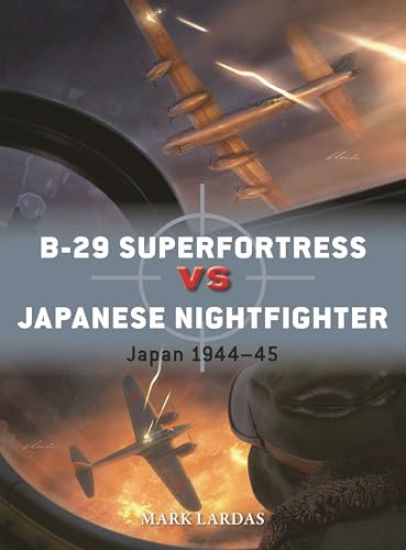
An illustrated study of the clashes between B-29s conducting night raids on Japan and the Japanese nightfighters protecting the Home Islands from 1944–45.The USAAF’s B-29-led strategic bombing offensive against Japan succeeded when XX Bomber Command switched from high-level daytime precision bombing to low-level night time area bombing. The latter tactic required Superfortresses to attack their target individually, without a formation or escorting fighters for protection. Despite this, Japanese nightfighters proved unable to stop the B-29s. In this study, Mark Lardas examines the capabilities of the aircraft involved, and reveals the conditions under which both sides fought. He evaluates the cutting-edge technology of both sides and how it affected the outcome of the battle. Maps, tactical diagrams, photographs and specially commissioned artwork bring the action to life as the individual US bombers and Japanese nightfighters fight a classic military duel.
Sharp # Flat b or Both?: The Guitarists Guide to the Circle of Fifths
Mark Reed
Createspace Independent Publishing Platform
2017
nidottu
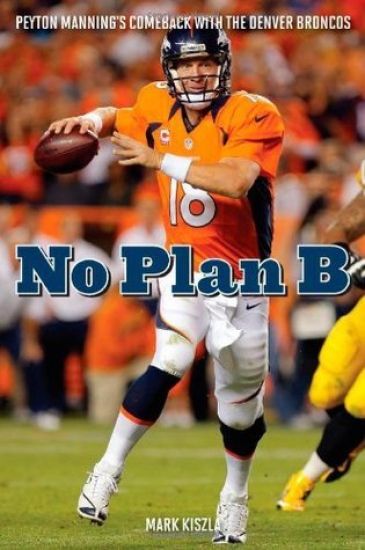
Peyton Manning won the Super Bowl, hosted Saturday Night Live, and threw 399 touchdown passes during 14 amazing years as an NFL quarterback. Then he got fired. Indianapolis no longer valued Manning, a four-time winner of the league’s Most Valuable Player award. Get this: The Colts cut the most-liked athlete in America. "And I’m glad they did," Denver Broncos executive John Elway said. The Broncos made the most buzz-worthy signing in the history of NFL free agency during March of 2012. Despite missing a season with a neck injury that threatened to end his brilliant career, Manning was acquired to lead the Broncos back to Super Bowl glory. "We don’t have a Plan B," Elway declared, as he presented Manning with an orange No. 18 jersey. "We’re going [with] Plan A!" Even for a quarterback as decorated as Manning, his task in Denver was daunting. At age 36, Manning had to relearn to throw the football with a right arm that had suffered extensive nerve damage. The new quarterback in town had to convert devout fans of Tim Tebow, who won games in the name of Jesus. A brutal early season schedule left the Broncos with a 2-3 record, as whispers grew the old Pro Bowler had lost his touch. What happened next is one of those great comeback stories that make us fall in love with sports. Manning went from washed up to nearly unbeatable. He led Denver to 11 consecutive victories to close the regular season. More important, Manning lifted the Broncos back to the elite status that had been slip-sliding away since Elway retired as quarterback in 1999. How did Manning do it? On the practice field, he can be a perfectionist who is a pain in the ass. On the team plane, he can be a comedian who has teammates rolling in the aisles. To get inside football’s most beautiful mind, award-winning journalist Mark Kiszla takes readers from raucous locker rooms to quiet film rooms for a behind-the-scenes look at Manning’s remarkable revival. Football is a violent game. Life can be a contact sport. Before moving to Denver, Manning was sacked 231 times by NFL defenders, but never harder than the 232nd, when Colts owner Jim Irsay hit him with a shot that shook the veteran QB to his core. So the toughest question for Manning was the same as the uncertainty facing any proud worker who has been slapped with a termination note: How does a man respond after he gets knocked on his butt? Manning is the master of the no-huddle offense. But, with his physical ability fading and anything less than a championship considered failure, Manning has never had to beat the clock with such urgency. There's no time to waste. No excuses. No looking back. No Plan B.
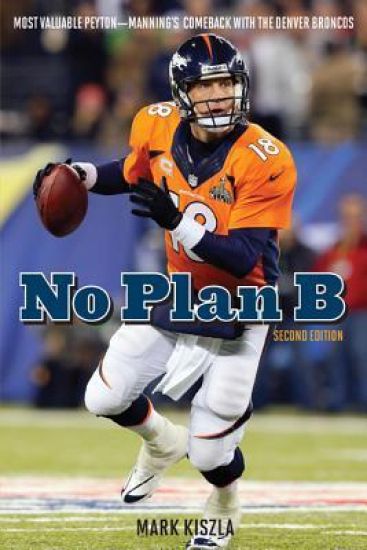
Peyton Manning is America’s quarterback. And America loves a great comeback story. Less than two years after Manning was fired from the Indianapolis Colts, he led the Denver Broncos to the Super Bowl and won pro football’s Most Valuable Player award for the fifth time. In 2013, Manning broke the league record for touchdown passes in a single season, despite a body weakened by multiple neck surgeries that threatened to end his career. Manning did it against all odds, in a manner inspirational to any football fan—or anybody who has ever lost a job and been forced to start over. This second edition of No Plan B follows Manning’s remarkable season with the Broncos on a wild ride to the championship game. Through it all, from the suspension of a star teammate to the heart ailment of his head coach, Manning carried the Broncos to 15 victories and, even in an agonizing defeat at the Super Bowl, reminded us why he is one of America’s most beloved role models. Retire? No way. At age 38, Manning’s lone goal is: Win it all.
College student personnel work was born during a period of reform in the United States; it was and remains today a unique American invention. To understand this peculiar phenomenon, it is helpful to consider the historical and cultural climate in which it was born and developed. This book describes student affairs as a child of this reform movement and illustrates how it has retained much of this early characteristic during its continued development. The early years of college student personnel occurred during the Progressive period, but it was not until 1937 that it would receive a clearly stated philosophy when a group of educators wrote The Student Personnel Point of View. This book traces the years that followed as the field struggled to achieve identity and legitimacy. It provides clear evidence of the continuation of an experimentalist philosophy in its development. Co-published with American College Personnel Association.
William B. Bowes investigates the Fourth Gospel as a creative reworking of Mark, situating John within the vibrant literary culture of late Second Temple Judaism. Rather than treating John as an isolated voice, Bowes argues that the Evangelist adopts compositional practices akin to Jewish texts categorized as Rewritten Scripture—works that extend authoritative tradition through interpretive rewriting. This approach reframes John not as independent but as an inspired interpreter who reshapes Mark for a later context and audience. Bowes begins by reviewing scholarly paradigms on John’s use of Mark and mapping these against Jewish methods of source reuse. Bowes then offers five detailed case studies comparing Johannine episodes with their Markan counterparts and with analogous Jewish texts. These include John 1’s portrayal of John the Baptist alongside Jubilees 1; the Temple disturbance in John 2 with Mark 11 and the Temple Scroll; the feeding of the five thousand in John 6 with Mark 6 and the Genesis Apocryphon; the Bethany anointing in John 12 with Mark 14 and Philo’s De Vita Mosis; and the Roman trial narrative in John 18–19 with Mark 15 and Josephus’ Jewish Antiquities. Through these comparisons, Bowes demonstrates how John employs additions, omissions, rearrangements, and theological reframing, all techniques characteristic of Jewish exegetical rewriting. By situating John’s Gospel within this Jewish literary milieu, Bowes illuminates its compositional logic and interpretive purpose, offering a fresh paradigm for understanding the origins of the Fourth Gospel and its complex interplay of similarity and difference with Mark.
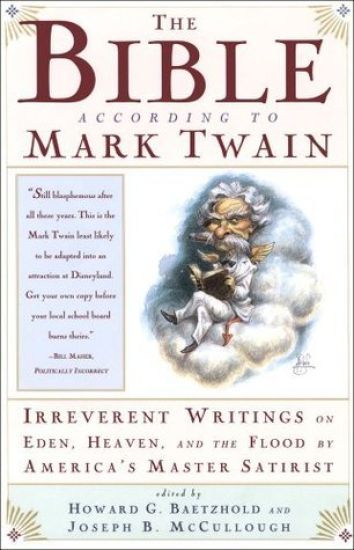
An indispensable and provocative compilation of witty essays dealing with Biblical stories and their inconsistencies from America's master satirist, Mark Twain. The Bible According to Mark Twain is a selection of essays spanning forty years of his writing career, which touch on and satirize stories and figures from the Bible. In his characteristic style, Twain illustrates the inherent comedy and inconsistencies found within Holy Scripture, simultaneously entertaining and provoking questions about man's place in the world and his relationship with God. An important installment in the Twain canon, this book is perfect for fans of America's master satirist.
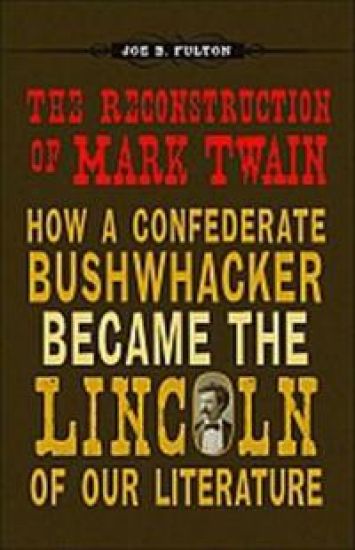
When Confederate forces fired on Fort Sumter in April 1861, thousands of patriotic southerners rushed to enlist for the Confederate cause. Samuel Langhorne Clemens, who grew up in the border state of Missouri in a slave-holding family, was among them. Clemens, who later achieved fame as the writer Mark Twain, served as second lieutenant in a Confederate militia, but only for two weeks, leading many to describe his loyalty to the Confederate cause as halfhearted at best. After all, Mark Twain's novel The Adventures of Huckleberry Finn (1885) and his numerous speeches celebrating Abraham Lincoln, with their trenchant call for racial justice, inspired his crowning as ""the Lincoln of our Literature."" In The Reconstruction of Mark Twain, Joe B. Fulton challenges these long-held assumptions about Twain's advocacy of the Union cause, arguing that Clemens traveled a long and arduous path, moving from pro-slavery, secession, and the Confederacy to pro-union, and racially enlightened. Scattered and long-neglected texts written by Clemens before, during, and immediately after the Civil War, Fulton shows, tout pro-southern sentiments critical of abolitionists, free blacks, and the North for failing to enforce the Fugitive Slave Act. These obscure works reveal the dynamic process that reconstructed Twain in parallel with and response to events on American battlefields and in American politics. Beginning with Clemens's youth in Missouri, Fulton tracks the writer's transformation through the turbulent Civil War years as a southern-leaning reporter in Nevada and San Francisco to his raucous burlesques written while he worked as a Washington correspondent during the impeachment crises of 1867--1868. Fulton concludes with the writer's emergence as the country's satirist-in-chief in the postwar era. By explaining the relationship between the author's early pro-southern writings and his later stance as a champion for racial justice throughout the world, Fulton provides a new perspective on Twain's views and on his deep involvement with Civil War politics.A deft blend of biography, history, and literary studies, The Reconstruction of Mark Twain offers a bold new assessment of the work of one of America's most celebrated writers.
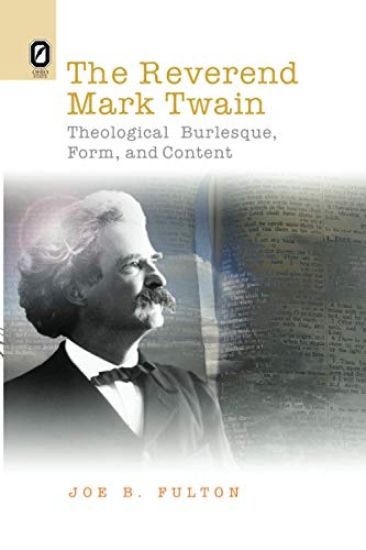
"I was made in His image," Mark Twain once said, "but have never been mistaken for Him." God may have made Mark Twain in His image, but Twain frequently remade himself by adopting divine personae as part of his literary burlesque. Readers were delighted, rather than fooled, when Twain adopted the image of religious vocation throughout his writing career: Theologian, Missionary, Priest, Preacher, Prophet, Saint, Brother Twain, Holy Samuel, the Bishop of New Jersey, and of course, the Reverend Mark Twain. Joe B. Fulton has not written a study of Samuel Langhorne Clemens's religious beliefs, but rather one about Twain's use of theological form and content in a number of his works-some well-known, others not so widely read. Twain adopted such religious personae to burlesque the religious literary genres associated with those vocations. He wrote catechisms, prophecies, psalms, and creeds, all in the theological tradition, but with a comic twist. Twain even wrote a burlesque life of Christ that has the son of God sporting blue jeans and cowboy boots. With his distinctive comic genius, Twain entered the religious dialogue of his time, employing the genres of belief as his vehicle for criticizing church and society. Twain's burlesques of religious form and content reveal a writer fully engaged with the religious ferment of his day. Works like The Innocents Abroad, Adventures of Huckleberry Finn, Personal Recollections of Joan of Arc, Roughing It, and What Is Man? are the productions of a writer skilled at adopting and adapting established literary and religious forms for his own purposes. Twain is sometimes viewed as a haphazard writer, but in The Reverend Mark Twain, Fulton demonstrates how carefully Twain studied established literary and theological genres to entertain-and criticize-his society.
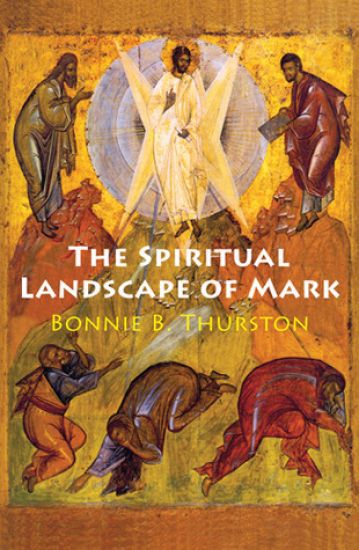
2009 Catholic Press Association Award Winner! To read the Gospel of Mark is to embark on a journey that begins in a desert and ends with a boulder rolled away from the tomb. In between, Jesus teaches his disciples, calls them to journey and learn what it means to follow him, and guides them to Jerusalem, the scene of the Passion.In The Spiritual Landscape of Mark, Bonnie Thurston has adapted a retreat that she gave to the Society of the Sacred Cross at Tymawr Convent in Wales, thereby inviting all of us to embark on this spiritual journey. Mark's gospel is full of places' desert, house, sea, valley, mountain, city, cross, garden and the winding roads between them. Thurston's prose invites us to go away to a quiet place and reflect awhile on what it means to be Jesus's disciple, to follow him across the hard landscape. Along the way there will be glimpses of his glory when he stills the storm and is transfigured on the mountain, when he heals the sick and feeds the hungry. Still, the primary lesson is the difficult way to which we are called, along with the great joy of knowing that Jesus has initiated the journey and leads us exactly where we need to go.Bonnie B. Thurston, PhD, lives in West Virginia in solitude. She is ordained in the Christian Church (Disciples of Christ) and the author of several books, including Philippians in the Sacra Pagina series and Religious Vows, the Sermon on the Mount, and Christian Living (Liturgical Press), and Preaching Mark (Fortress Press).

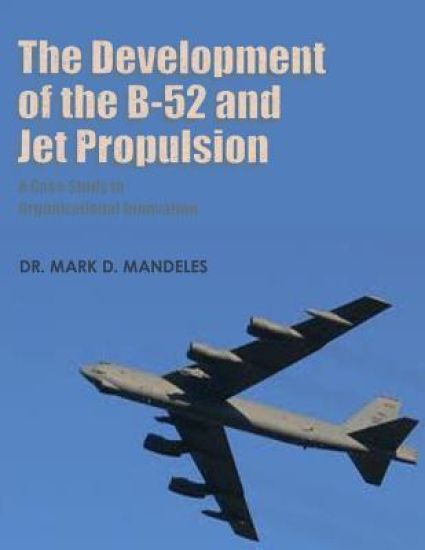
The Development of the B-52 and Jet Propulsion - A Case Study in Organizational Innovation
Mark D. Mandeles
Createspace Independent Publishing Platform
2012
nidottu
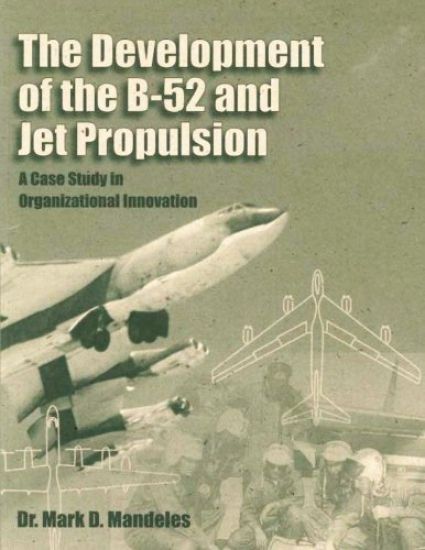
The Development of the B-52 and Jet Propulsion: A Case Study in Organizational Innovation
Mark D. Mandeles
Createspace Independent Publishing Platform
2012
nidottu