Kirjojen hintavertailu. Mukana 11 699 587 kirjaa ja 12 kauppaa.

Kirjahaku

Etsi kirjoja tekijän nimen, kirjan nimen tai ISBN:n perusteella.

1000 tulosta hakusanalla Mathias Jüsche

Adventure Running

Adventure Running

Mathias Eichler

Blurb
2019
pokkari
"Adventure Running - Exploring Olympia's Trails" offers a visually engaging way to discover the outdoors in the backyard of Washington State's capitol city. From local trails in city parks, training runs in surrounding State Parks to long adventure runs in Olympic and Mount Rainier National Park, Mathias Eichler shares the best trails, highlights the most fun routes and invites you to step off the pavement and embrace the dirt. Mathias believes Trail Running is the most accessible adventure sport. Without the need for a a ton of gear, just a few basic tips and tricks you're on your way to explore the outdoors on foot. Go fast or slow and you'll see your neighborhood parks in a new light. As seasons change and in any weather, embrace your yearning for adventure.
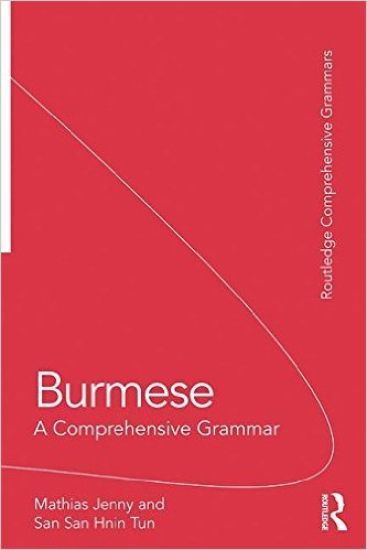
Burmese

Burmese

Mathias Jenny; San San Hnin Tun

Routledge
2016
sidottu
Burmese: A Comprehensive Grammar is a complete reference guide to modern Burmese grammar. It presents a fresh and thorough description of the language, concentrating on the real patterns of use in modern Burmese. The volume is organized to promote a thorough understanding of Burmese grammar. It offers a stimulating analysis of the complexities of the language, with clear explanations. Throughout, the emphasis is on Burmese as used by present-day native speakers. Features include: detailed treatment of the common grammatical structures and parts of speech particular attention to areas of confusion and difficulty all examples given in Burmese script, IPA phonetic transcription, and English glossary of linguistic terminology The Grammar is the ideal reference source for intermediate to advanced learners and users of Burmese and will remain the standard reference work for years to come.
Burmese

Burmese

Mathias Jenny; San San Hnin Tun

Routledge
2016
nidottu
Burmese: A Comprehensive Grammar is a complete reference guide to modern Burmese grammar. It presents a fresh and thorough description of the language, concentrating on the real patterns of use in modern Burmese. The volume is organized to promote a thorough understanding of Burmese grammar. It offers a stimulating analysis of the complexities of the language, with clear explanations. Throughout, the emphasis is on Burmese as used by present-day native speakers. Features include: detailed treatment of the common grammatical structures and parts of speech particular attention to areas of confusion and difficulty all examples given in Burmese script, IPA phonetic transcription, and English glossary of linguistic terminology The Grammar is the ideal reference source for intermediate to advanced learners and users of Burmese and will remain the standard reference work for years to come.
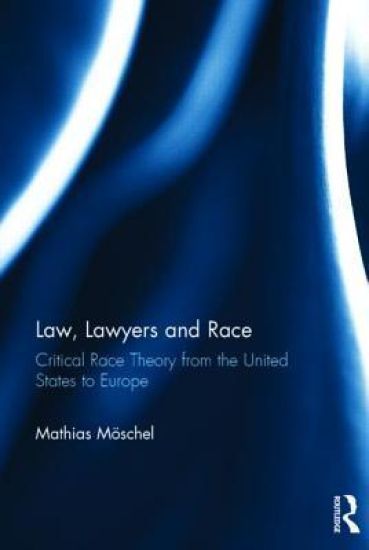
Law, Lawyers and Race

Law, Lawyers and Race

Mathias Möschel

Routledge
2014
sidottu
Critical Race Theory (CRT) is virtually unheard of in European scholarship, especially among legal scholars. Law, Lawyers and Race: Critical Race Theory from the United States to Europe endeavours to fill this gap by providing an overview of the definition and consequences of CRT developed in American scholarship and describing its transplantation and application in the continental European context. The CRT approach adopted in this book illustrates the reasons why the relationship between race and law in European civil law jurisdictions is far from anodyne. Law plays a critical role in the construction, subordination and discrimination against racial minorities in Europe, making it comparable, albeit in slightly different ways, to the American experience of racial discrimination. Anti-Semitism, Islamophobia, anti-Roma and anti-Black racism constitute a fundamental factor, often tacitly accepted, in the relationship between law and race in Europe. Consequently, the broadly shared anti-race and anti-racist position is problematic because it acts to the detriment of victims of racism while privileging the White, Christian, male majority.This book is an original exploration of the relationship between law and race. As such it crosses the disciplinary divide, furthering both legal scholarship and research in Race and Ethnicity Studies.
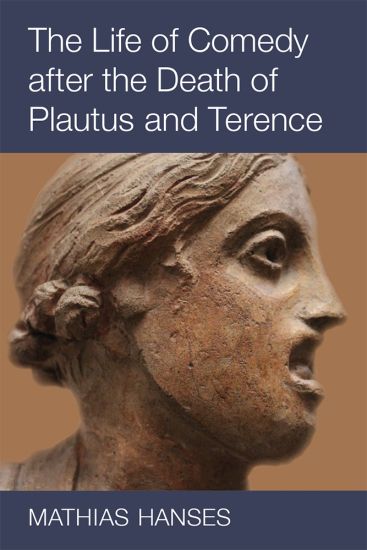
The Life of Comedy after the Death of Plautus and Terence

The Life of Comedy after the Death of Plautus and Terence

Mathias Hanses

The University of Michigan Press
2020
sidottu
The Life of Comedy after the Death of Plautus and Terence documents the ongoing popularity of Roman comedies, and shows that they continued to be performed in the late Republic and early Imperial periods of Rome. Playwrights Plautus and Terence impressed audiences with stock characters as the young-man-in-love, the trickster slave, the greedy pimp, the prostitute, and many others. A wide range of spectators visited Roman theaters, including even the most privileged members of Roman society: orators like Cicero, satirists like Horace and Juvenal, and love poets like Catullus and Ovid. They all put comedy’s varied characters to new and creative uses in their own works, as they tried to make sense of their own lives and those of the people around them by suggesting comparisons to the standard personality types of Roman comedy. Scholars have commonly believed that the plays fell out of favor with theatrical audiences by the end of the first century BCE, but The Life of Comedy demonstrates that performances of these comedies continued at least until the turn of the second century CE. Mathias Hanses traces the plays’ reception in Latin literature from the late first century BCE to the early second century CE, and shines a bright light on the relationships between comic texts and the works of contemporary and later Latin writers.
Science and Society 1600–1900

Science and Society 1600–1900

Mathias Peter

Cambridge University Press
2008
pokkari
Most books on the history of science have been `internal' in their scope and objectives - plotting progress within different branches of science as the frontiers of knowledge about formal scientific relationships get pushed back by intellectual advance. The history of science is thus seen primarily as a record of progressive intellectual discovery at the hands of individual genius. What might be called the 'external relations' of science - investigating the impact of scientific knowledge upon its wider historical context (and the impact of that context upon the development of science) - has received much less attention. The unifying theme of this book, as its title indicates, is the relationship between science and society.
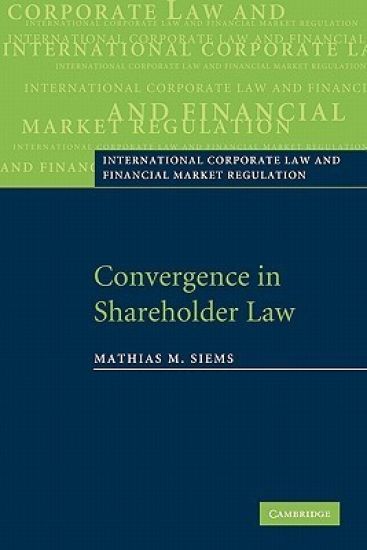
Convergence in Shareholder Law

Convergence in Shareholder Law

Mathias M. Siems

Cambridge University Press
2011
pokkari
On the one hand, it can be argued that the increasing economic and political interdependence of countries has led to the convergence of national legal systems. On the other hand, advocates of the counterhypothesis maintain that this development is both unrealistic and unnecessary. Mathias M. Siems examines the company law of the UK, the USA, Germany, France, Japan and China to see how this issue affects shareholder law. The author subsequently analyses economic and political factors which may or may not lead to convergence, and assesses the extent of this development. Convergence of Shareholder Law not only provides a thorough comparative legal analysis but also shows how company law interconnects with political forces and economic development and helps in evaluating whether harmonisation and shareholder protection should be enhanced.
Convergence in Shareholder Law

Convergence in Shareholder Law

Mathias M. Siems

Cambridge University Press
2007
sidottu
On the one hand, it can be argued that the increasing economic and political interdependence of countries has led to the convergence of national legal systems. On the other hand, advocates of the counterhypothesis maintain that this development is both unrealistic and unnecessary. Mathias M. Siems examines the company law of the UK, the USA, Germany, France, Japan and China to see how this issue affects shareholder law. The author subsequently analyses economic and political factors which may or may not lead to convergence, and assesses the extent of this development. Convergence of Shareholder Law not only provides a thorough comparative legal analysis but also shows how company law interconnects with political forces and economic development and helps in evaluating whether harmonisation and shareholder protection should be enhanced.
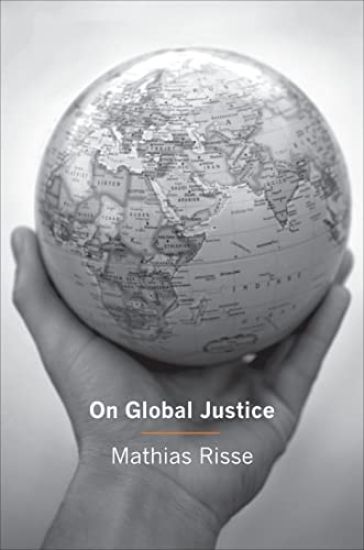
On Global Justice

On Global Justice

Mathias Risse

Princeton University Press
2012
sidottu
Debates about global justice have traditionally fallen into two camps. Statists believe that principles of justice can only be held among those who share a state. Those who fall outside this realm are merely owed charity. Cosmopolitans, on the other hand, believe that justice applies equally among all human beings. On Global Justice shifts the terms of this debate and shows how both views are unsatisfactory. Stressing humanity's collective ownership of the earth, Mathias Risse offers a new theory of global distributive justice--what he calls pluralist internationalism--where in different contexts, different principles of justice apply. Arguing that statists and cosmopolitans seek overarching answers to problems that vary too widely for one single justice relationship, Risse explores who should have how much of what we all need and care about, ranging from income and rights to spaces and resources of the earth. He acknowledges that especially demanding redistributive principles apply among those who share a country, but those who share a country also have obligations of justice to those who do not because of a universal humanity, common political and economic orders, and a linked global trading system. Risse's inquiries about ownership of the earth give insights into immigration, obligations to future generations, and obligations arising from climate change. He considers issues such as fairness in trade, responsibilities of the WTO, intellectual property rights, labor rights, whether there ought to be states at all, and global inequality, and he develops a new foundational theory of human rights.
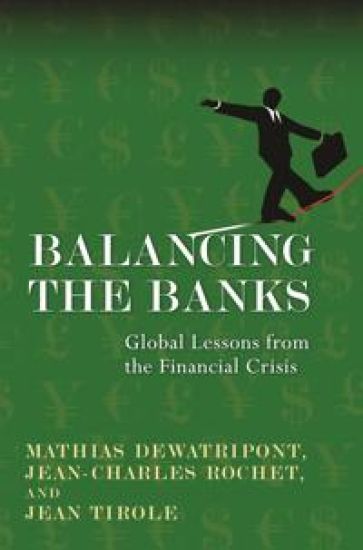
Balancing the Banks

Balancing the Banks

Mathias Dewatripont; Jean-Charles Rochet; Jean Tirole

Princeton University Press
2010
sidottu
The financial crisis that began in 2007 in the United States swept the world, producing substantial bank failures and forcing unprecedented state aid for the crippled global financial system. Bringing together three leading financial economists to provide an international perspective, Balancing the Banks draws critical lessons from the causes of the crisis and proposes important regulatory reforms, including sound guidelines for the ways in which distressed banks might be dealt with in the future. While some recent policy moves go in the right direction, others, the book argues, are not sufficient to prevent another crisis. The authors show the necessity of an adaptive prudential regulatory system that can better address financial innovation. Stressing the numerous and complex challenges faced by politicians, finance professionals, and regulators, and calling for reinforced international coordination (for example, in the treatment of distressed banks), the authors put forth a number of principles to deal with issues regarding the economic incentives of financial institutions, the impact of economic shocks, and the role of political constraints. Offering a global perspective, Balancing the Banks should be read by anyone concerned with solving the current crisis and preventing another such calamity in the future.
On Global Justice

On Global Justice

Mathias Risse

Princeton University Press
2015
pokkari
Debates about global justice have traditionally fallen into two camps. Statists believe that principles of justice can only be held among those who share a state. Those who fall outside this realm are merely owed charity. Cosmopolitans, on the other hand, believe that justice applies equally among all human beings. On Global Justice shifts the terms of this debate and shows how both views are unsatisfactory. Stressing humanity's collective ownership of the earth, Mathias Risse offers a new theory of global distributive justice--what he calls pluralist internationalism--where in different contexts, different principles of justice apply. Arguing that statists and cosmopolitans seek overarching answers to problems that vary too widely for one single justice relationship, Risse explores who should have how much of what we all need and care about, ranging from income and rights to spaces and resources of the earth. He acknowledges that especially demanding redistributive principles apply among those who share a country, but those who share a country also have obligations of justice to those who do not because of a universal humanity, common political and economic orders, and a linked global trading system. Risse's inquiries about ownership of the earth give insights into immigration, obligations to future generations, and obligations arising from climate change. He considers issues such as fairness in trade, responsibilities of the WTO, intellectual property rights, labor rights, whether there ought to be states at all, and global inequality, and he develops a new foundational theory of human rights.
Balancing the Banks

Balancing the Banks

Mathias Dewatripont; Jean-Charles Rochet; Jean Tirole

Princeton University Press
2015
pokkari
The financial crisis that began in 2007 in the United States swept the world, producing substantial bank failures and forcing unprecedented state aid for the crippled global financial system. Bringing together three leading financial economists to provide an international perspective, Balancing the Banks draws critical lessons from the causes of the crisis and proposes important regulatory reforms, including sound guidelines for the ways in which distressed banks might be dealt with in the future. While some recent policy moves go in the right direction, others, the book argues, are not sufficient to prevent another crisis. The authors show the necessity of an adaptive prudential regulatory system that can better address financial innovation. Stressing the numerous and complex challenges faced by politicians, finance professionals, and regulators, and calling for reinforced international coordination (for example, in the treatment of distressed banks), the authors put forth a number of principles to deal with issues regarding the economic incentives of financial institutions, the impact of economic shocks, and the role of political constraints. Offering a global perspective, Balancing the Banks should be read by anyone concerned with solving the current crisis and preventing another such calamity in the future.
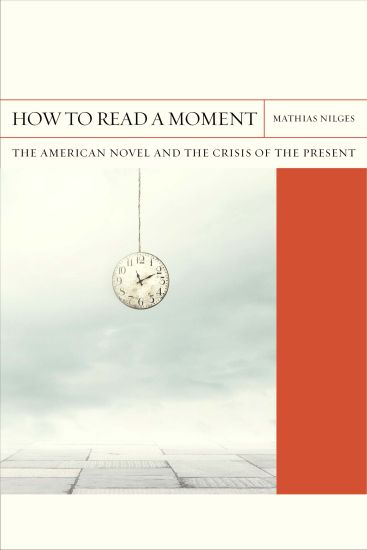
How to Read a Moment

How to Read a Moment

Mathias Nilges

Northwestern University Press
2021
nidottu
In How to Read a Moment, Mathias Nilges shows that time is inseparable from the stories we tell about it, demonstrating that the contemporary American novel offers new ways to make sense of the temporality that governs our present.“Time is a thing that grows scarcer every day,” observes one of Don DeLillo’s characters. “The future is gone,” The Baffler argues. “Where’s my hoverboard!?” a meme demands. Contemporary capitalism, a system that insists that everything happen at once, creates problems for social thought and narrative alike. After all, how does one tell the time of instantaneity? In this moment of on-demand service and instant trading, it has become difficult to imagine the future.The novel emerged as the art form of a rapidly changing modern world, a way of telling time in its progress. Nilges argues that this historical mission is renewed today through works that understand contemporaneity as a form of time shaping that props up our material world and cultural imagination. But the contemporary American novel does not simply associate our present with a crisis of futurity. Through analyses of works by authors such as DeLillo, Jennifer Egan, Charles Yu, and Colson Whitehead, Nilges illustrates that the novel presents ways to make sense of the temporality that controls our purportedly fully contemporary world. In so doing, the novel recovers a sense of possibility and hope, forwarding a dazzling argument for its own importance today.
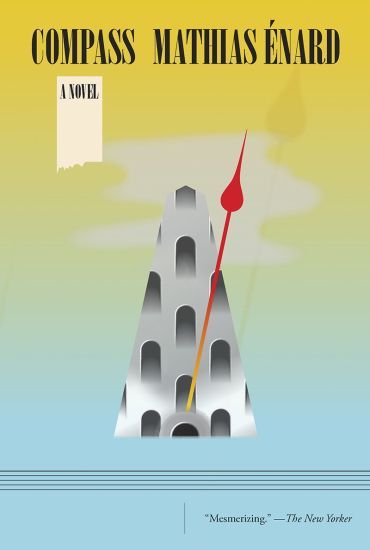
Compass

Compass

Mathias Énard

NEW DIRECTIONS PUBLISHING CORPORATION
2017
sidottu
Winner of the Prix Goncourt (France), the Leipzig Prize (Germany), Premio Von Rezzori (Italy), shortlisted for the 2017 International Man Booker Prize, shortlisted for the Dublin Literary Award As night falls over Vienna, Franz Ritter, an insomniac musicologist, takes to his sickbed with an unspecified illness and spends a restless night drifting between dreams and memories, revisiting the important chapters of his life: his ongoing fascination with the Middle East and his numerous travels to Istanbul, Aleppo, Damascus, and Tehran, as well as the various writers, artists, musicians, academics, orientalists, and explorers who populate this vast dreamscape. At the center of these memories is his elusive, unrequited love, Sarah, a fiercely intelligent French scholar caught in the intricate tension between Europe and the Middle East.With exhilarating prose and sweeping erudition, Mathias nard pulls astonishing elements from disparate sources--nineteenth-century composers and esoteric orientalists, Balzac and Agatha Christie--and binds them together in a most magical way.
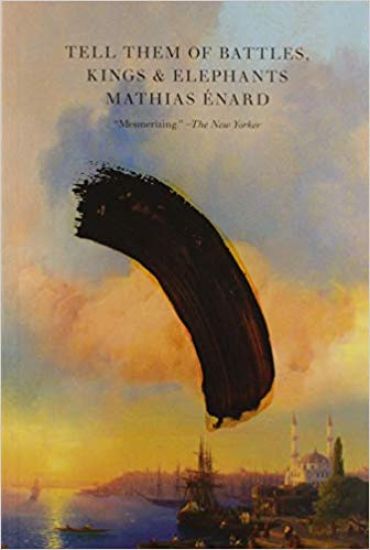
Tell Them of Battles, Kings, and Elephants

Tell Them of Battles, Kings, and Elephants

Mathias Enard

New Directions Publishing Corporation
2018
sidottu
In 1506, Michelangelo--a young but already renowned sculptor--is invited by the Sultan of Constantinople to design a bridge over the Golden Horn. The sultan has offered, alongside an enormous payment, the promise of immortality, since Leonardo da Vinci's design had been rejected: "You will surpass him in glory if you accept, for you will succeed where he has failed, and you will give the world a monument without equal."Michelangelo, after some hesitation, flees Rome and an irritated Pope Julius II--whose commission he leaves unfinished--and arrives in Constantinople for this truly epic project. Once there, he explores the beauty and wonder of the Ottoman Empire, sketching and describing his impressions along the way, and becomes immersed in cloak-and-dagger palace intrigues as he struggles to create what could be his greatest architectural masterwork.Tell Them of Battles, Kings, and Elephants--constructed from real historical fragments--is a story about why stories are told, why bridges are built, and how seemingly unmatched pieces, seen from the opposite sides of civilization, can mirror one another.
Compass

Compass

Mathias Enard

New Directions Publishing Corporation
2018
nidottu
On the shortlist for the 2017 Man Booker International PrizeAs night falls over Vienna, Franz Ritter, an insomniac musicologist, takes to his sickbed with an unspecified illness and spends a restless night drifting between dreams and memories, revisiting the important chapters of his life: his ongoing fascination with the Middle East and his numerous travels to Istanbul, Aleppo, Damascus, and Tehran, as well as the various writers, artists, musicians, academics, orientalists, and explorers who populate this vast dreamscape. At the center of these memories is his elusive, unrequited love, Sarah, a fiercely intelligent French scholar caught in the intricate tension between Europe and the Middle East.With exhilarating prose and sweeping erudition, Mathias nard pulls astonishing elements from disparate sources--nineteenth-century composers and esoteric orientalists, Balzac and Agatha Christie--and binds them together in a most magical way.
Tell Them of Battles, Kings, and Elephants

Tell Them of Battles, Kings, and Elephants

Mathias Énard

NEW DIRECTIONS PUBLISHING CORPORATION
2019
nidottu
In 1506, Michelangelo--a young but already renowned sculptor--is invited by the sultan of Constantinople to design a bridge over the Golden Horn. The sultan has offered, along with an enormous payment, the promise of immortality, since Leonardo da Vinci's design was rejected: "You will surpass him in glory if you accept, for you will succeed where he has failed, and you will give the world a monument without equal." Michelangelo, after some hesitation, flees Rome and an irritated Pope Julius II--whose commission he leaves unfinished--and arrives in Constantinople for this truly epic project. Once there, he explores the beauty and wonder of the Ottoman Empire, sketching and describing his impressions along the way, as he struggles to create what could be his greatest architectural masterwork. Tell Them of Battles, Kings, and Elephants--constructed from real historical fragments--is a thrilling page-turner about why stories are told, why bridges are built, and how seemingly unmatched fragments, seen from the opposite sides of civilization, can mirror one another.