Kirjahaku
Etsi kirjoja tekijän nimen, kirjan nimen tai ISBN:n perusteella.
1000 tulosta hakusanalla Matteo Carcassi
Life perspectives of autistic teen. A thought provoking and inspirational collection of writings, insights and poetry from the perspective of someone living a life different from most. "Sometimes my life is masked by Autism Spectrum Disorder. Writing gives me moments of being known, despite that mask" Matteo. In this book, Matteo, shares his gift of poetry and words to inspire and enlighten us after almost 12 years of silence. His trapped intelligence released, he shares amazing insights on love, God, finding happiness and the gifts of autism. Through a miraculous discovery, Matteo's mother was finally able to communicate with her son, exposing a well of intelligence and heart way beyond her imagination. Here, Matteo's first book, is the light and culmination of locked up thoughts and messages. His messages are enlightening to say the least, about life, love, autism, and God. This book is filled with laughter and joy written letter by letter on a letter board straight from Matteo's heart to the reader. He gives incredible insight and tips on raising and befriending an autistic child or autistic adult. This poetry and writings lie in the areas of nature, music, art, God and spirituality, autism, life and love. Matteo's words are touching, enlightening and life changing. Matteo wrote this book through pointing at a letter board using the RPM system one letter at a time.

Now see how much brighter and more colorful life can be, when we open our minds and let in new ideas. This little storybook may be short and concise, but relays a big, bold pertinent message. Life doesn't always have to be about right or wrong, black or white. There are many different, colorful ways to experience it Enjoy. Happily Yours, MatteoMatteo ("Teo") Musso is a 14 year-old young man with autism. His vocal abilities are ever-increasing, but for now, he continues to communicate through his letter board, expressing himself beautifully, one letter at a time. He lives with his parents in northern California.This is Matteo's second book. Enjoy more information about Matteo's life and views in his first book, Handbook of Us: Understanding and Accepting People with Autism.Making of Loveland: "I created the artwork for this book and for the text, I point to one letter at a time and Mom takes dictation for me. That's how this book was born. Please feel it and love each other." Teo"Simple, yet oh so powerful Love Land shines a light on embracing non-judgment and unconditional love for all. Hold this treasure close to your heart." Eric T. Richter, Publisher, Maui Vision Magazine
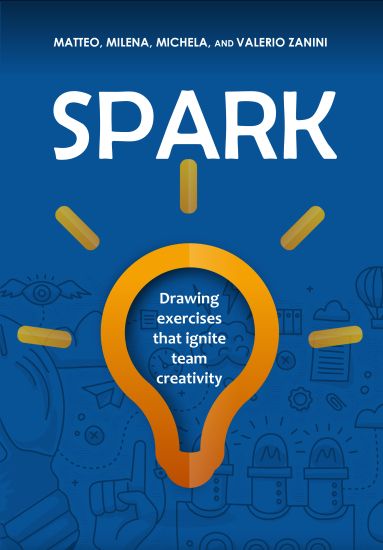
Used by teams and in business settings of all kinds, this book describes creative exercises that foster team-building and warm up the right side of your brain - the creative side. Grab a pencil, a marker, or a pen, and get started. Share these exercises with your team, and enjoy the creative energy. We call this the "Spark".
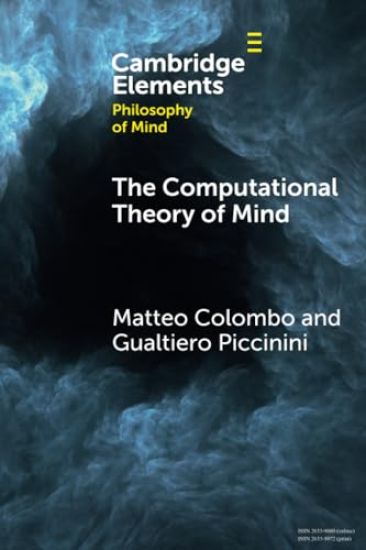
The Computational Theory of Mind
Matteo Colombo; Gualtiero Piccinini
Cambridge University Press
2023
pokkari
The Computational Theory of Mind says that the mind is a computing system. It has a long history going back to the idea that thought is a kind of computation. Its modern incarnation relies on analogies with contemporary computing technology and the use of computational models. It comes in many versions, some more plausible than others. This Element supports the theory primarily by its contribution to solving the mind-body problem, its ability to explain mental phenomena, and the success of computational modelling and artificial intelligence. To be turned into an adequate theory, it needs to be made compatible with the tractability of cognition, the situatedness and dynamical aspects of the mind, the way the brain works, intentionality, and consciousness.
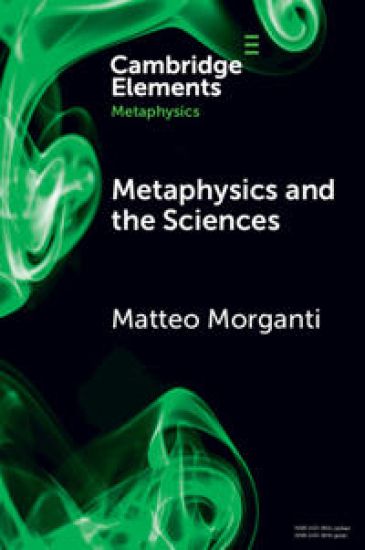
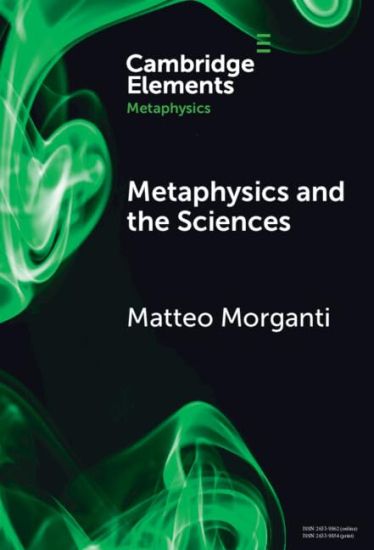
This Element presents and critically examines the relationship between metaphysics and the sciences. Section 1 provides a brief introduction. Section 2 looks at the methodological issues that arise when metaphysics and science get into contact, which is a much-debated aspect of the larger dispute concerning philosophical 'naturalism' and 'anti-naturalism'. A taxonomy of possible views is offered. Section 3 looks more specifically at milder forms of naturalism about metaphysics, which attempt in various ways to make it 'continuous' with science while preserving some degree of autonomy for it. Section 4 adds some reflections on what might be regarded as the most pressing open problem when it comes to doing scientifically oriented metaphysics (but also when practising metaphysics or science in isolation): the problem concerning theory choice and the value of non-empirical factors in determining which explanation of certain phenomena should be preferred.
The Computational Theory of Mind
Matteo Colombo; Gualtiero Piccinini
Cambridge University Press
2023
sidottu
The Computational Theory of Mind says that the mind is a computing system. It has a long history going back to the idea that thought is a kind of computation. Its modern incarnation relies on analogies with contemporary computing technology and the use of computational models. It comes in many versions, some more plausible than others. This Element supports the theory primarily by its contribution to solving the mind-body problem, its ability to explain mental phenomena, and the success of computational modelling and artificial intelligence. To be turned into an adequate theory, it needs to be made compatible with the tractability of cognition, the situatedness and dynamical aspects of the mind, the way the brain works, intentionality, and consciousness.
This Element presents and critically examines the relationship between metaphysics and the sciences. Section 1 provides a brief introduction. Section 2 looks at the methodological issues that arise when metaphysics and science get into contact, which is a much-debated aspect of the larger dispute concerning philosophical 'naturalism' and 'anti-naturalism'. A taxonomy of possible views is offered. Section 3 looks more specifically at milder forms of naturalism about metaphysics, which attempt in various ways to make it 'continuous' with science while preserving some degree of autonomy for it. Section 4 adds some reflections on what might be regarded as the most pressing open problem when it comes to doing scientifically oriented metaphysics (but also when practising metaphysics or science in isolation): the problem concerning theory choice and the value of non-empirical factors in determining which explanation of certain phenomena should be preferred.
The Many Lives of Täsfa ?eyon
Matteo Salvadore; James De Lorenzi; Deresse Ayenachew Woldetsadik
Cambridge University Press
2025
sidottu
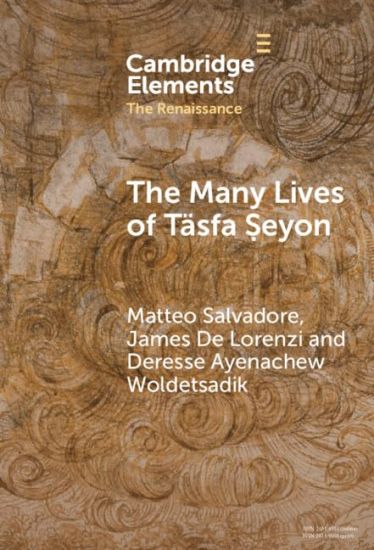
This Element examines the life and legacy of the sixteenth-century Ethiopian intellectual Täsfa ?eyon. It reconstructs his formative years in the Horn of Africa and his diasporic life in the Holy Land and Italian peninsula, where he emerged as a prominent intermediary figure at Santo Stefano degli Abissini, an Ethiopian monastery within the Vatican. He became a librarian, copyist, teacher, translator, author, and community leader, as well as a prominent advisor to European humanist scholars and Tridentine Church authorities concerned with the emerging field of philologia sacra as it pertained to Ethiopian Orthodox (täwa?edo) Christianity. The Element reconstructs his wide-ranging contacts with the Roman Curia and emerging orientalist academy, and then scrutinizes his editio princeps of the Ge'ez Gospels. A final section traces his modern influence, erasure, and rediscovery by later generations of European, Ethiopian, and Eritrean intellectuals.
The Many Lives of Täsfa ?eyon
Matteo Salvadore; James De Lorenzi; Deresse Ayenachew Woldetsadik
Cambridge University Press
2025
pokkari
This Element examines the life and legacy of the sixteenth-century Ethiopian intellectual Täsfa ?eyon. It reconstructs his formative years in the Horn of Africa and his diasporic life in the Holy Land and Italian peninsula, where he emerged as a prominent intermediary figure at Santo Stefano degli Abissini, an Ethiopian monastery within the Vatican. He became a librarian, copyist, teacher, translator, author, and community leader, as well as a prominent advisor to European humanist scholars and Tridentine Church authorities concerned with the emerging field of philologia sacra as it pertained to Ethiopian Orthodox (täwa?edo) Christianity. The Element reconstructs his wide-ranging contacts with the Roman Curia and emerging orientalist academy, and then scrutinizes his editio princeps of the Ge'ez Gospels. A final section traces his modern influence, erasure, and rediscovery by later generations of European, Ethiopian, and Eritrean intellectuals.
Trust, Discourse, and Corporate Corruption
Matteo Fuoli; Adam Nix; Alicia Wickert; Annina Van Riper
Cambridge University Press
2025
nidottu
In this Element, the authors propose a new framework for studying how trust is built and manipulated in discourse and apply it to one of the most notorious cases of corporate misconduct in history: the Enron fraud. The framework outlines the discursive strategies speakers commonly use to manage trust, providing a tool for examining how language shapes relationships and enables wrongdoing in both physical and digital environments. The analysis, which focuses on a previously unexplored corpus of telephone conversations involving Enron traders, uncovers the discursive mechanisms through which Enron managed trust both internally and externally while manipulating California's energy markets. The findings not only provide novel insights into the Enron case but also advance our understanding of the linguistic and pragmatic foundations of trust and the relationship between discourse, trust, and corporate corruption. This title is also available as Open Access on Cambridge Core.
Trust, Discourse, and Corporate Corruption
Matteo Fuoli; Adam Nix; Alicia Wickert; Annina Van Riper
Cambridge University Press
2025
sidottu
In this Element, the authors propose a new framework for studying how trust is built and manipulated in discourse and apply it to one of the most notorious cases of corporate misconduct in history: the Enron fraud. The framework outlines the discursive strategies speakers commonly use to manage trust, providing a tool for examining how language shapes relationships and enables wrongdoing in both physical and digital environments. The analysis, which focuses on a previously unexplored corpus of telephone conversations involving Enron traders, uncovers the discursive mechanisms through which Enron managed trust both internally and externally while manipulating California's energy markets. The findings not only provide novel insights into the Enron case but also advance our understanding of the linguistic and pragmatic foundations of trust and the relationship between discourse, trust, and corporate corruption. This title is also available as Open Access on Cambridge Core.
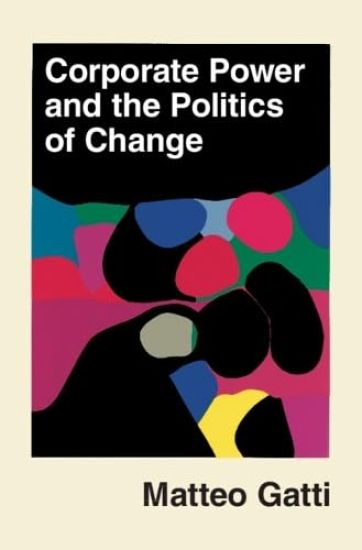
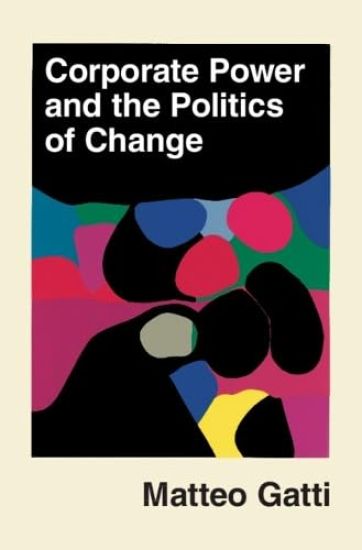
In Corporate Power and the Politics of Change, Matteo Gatti examines how corporations have taken on roles traditionally reserved for governments – advocating on social issues, setting internal norms, and stepping in where public institutions fall short. This phenomenon, called corporate governing, takes two forms: socioeconomic advocacy, when companies take public stances, and government substitution, when they deliver services or protections the state does not provide. Drawing on legal doctrine and insights from the social sciences, Gatti shows how this shift reflects broader pressures within firms and deep dysfunction outside them. The rise of corporate governing has also triggered political, legal, and cultural backlash that challenges its legitimacy and reach. Clear-eyed and timely, this book offers a framework for understanding how corporate power reshapes policymaking and what that means for business and democracy.
De Sphaera of Johannes De Sacrobosco in the Early Modern Period
Matteo Valleriani
Saint Philip Street Press
2020
pokkari
This open access book explores commentaries on an influential text of pre-Copernican astronomy in Europe. It features essays that take a close look at key intellectuals and how they engaged with the main ideas of this qualitative introduction to geocentric cosmology. Johannes de Sacrobosco compiled his Tractatus de sphaera during the thirteenth century in the frame of his teaching activities at the then recently founded University of Paris. It soon became a mandatory text all over Europe. As a result, a tradition of commentaries to the text was soon established and flourished until the second half of the 17th century. Here, readers will find an informative overview of these commentaries complete with a rich context. The essays explore the educational and social backgrounds of the writers. They also detail how their careers developed after the publication of their commentaries, the institutions and patrons they were affiliated with, what their agenda was, and whether and how they actually accomplished it. The editor of this collection considers these scientific commentaries as genuine scientific works. The contributors investigate them here not only in reference to the work on which it comments but also, and especially, as independent scientific contributions that are socially, institutionally, and intellectually contextualized around their authors. This work was published by Saint Philip Street Press pursuant to a Creative Commons license permitting commercial use. All rights not granted by the work's license are retained by the author or authors.
De Sphaera of Johannes De Sacrobosco in the Early Modern Period
Matteo Valleriani
Saint Philip Street Press
2020
sidottu
This open access book explores commentaries on an influential text of pre-Copernican astronomy in Europe. It features essays that take a close look at key intellectuals and how they engaged with the main ideas of this qualitative introduction to geocentric cosmology. Johannes de Sacrobosco compiled his Tractatus de sphaera during the thirteenth century in the frame of his teaching activities at the then recently founded University of Paris. It soon became a mandatory text all over Europe. As a result, a tradition of commentaries to the text was soon established and flourished until the second half of the 17th century. Here, readers will find an informative overview of these commentaries complete with a rich context. The essays explore the educational and social backgrounds of the writers. They also detail how their careers developed after the publication of their commentaries, the institutions and patrons they were affiliated with, what their agenda was, and whether and how they actually accomplished it. The editor of this collection considers these scientific commentaries as genuine scientific works. The contributors investigate them here not only in reference to the work on which it comments but also, and especially, as independent scientific contributions that are socially, institutionally, and intellectually contextualized around their authors. This work was published by Saint Philip Street Press pursuant to a Creative Commons license permitting commercial use. All rights not granted by the work's license are retained by the author or authors.
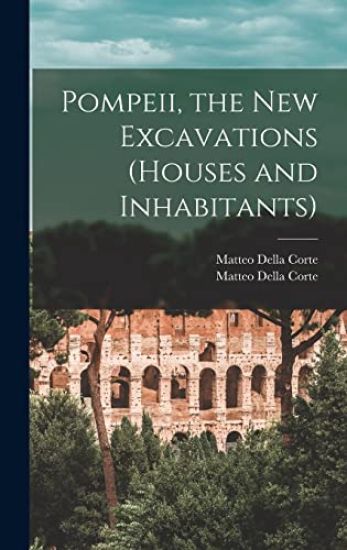
Pompeii, the New Excavations (houses and Inhabitants)
Matteo Della Corte
Hassell Street Press
2021
sidottu
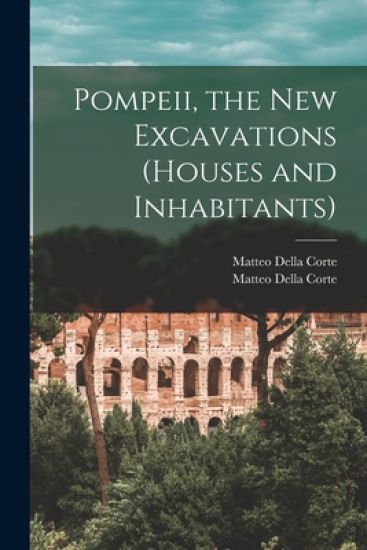
Pompeii, the New Excavations (houses and Inhabitants)
Matteo Della Corte
Hassell Street Press
2021
nidottu