Kirjojen hintavertailu. Mukana 12 390 323 kirjaa ja 12 kauppaa.

Kirjahaku

Etsi kirjoja tekijän nimen, kirjan nimen tai ISBN:n perusteella.

1000 tulosta hakusanalla Milka Dimitrowska

Milk Supply of Chicago and Twenty-six Other Cities
This work has been selected by scholars as being culturally important, and is part of the knowledge base of civilization as we know it. This work was reproduced from the original artifact, and remains as true to the original work as possible. Therefore, you will see the original copyright references, library stamps (as most of these works have been housed in our most important libraries around the world), and other notations in the work.This work is in the public domain in the United States of America, and possibly other nations. Within the United States, you may freely copy and distribute this work, as no entity (individual or corporate) has a copyright on the body of the work.As a reproduction of a historical artifact, this work may contain missing or blurred pages, poor pictures, errant marks, etc. Scholars believe, and we concur, that this work is important enough to be preserved, reproduced, and made generally available to the public. We appreciate your support of the preservation process, and thank you for being an important part of keeping this knowledge alive and relevant.

Milk Consumption in Illinois Schools, 1954-1966
This work has been selected by scholars as being culturally important, and is part of the knowledge base of civilization as we know it. This work was reproduced from the original artifact, and remains as true to the original work as possible. Therefore, you will see the original copyright references, library stamps (as most of these works have been housed in our most important libraries around the world), and other notations in the work.This work is in the public domain in the United States of America, and possibly other nations. Within the United States, you may freely copy and distribute this work, as no entity (individual or corporate) has a copyright on the body of the work.As a reproduction of a historical artifact, this work may contain missing or blurred pages, poor pictures, errant marks, etc. Scholars believe, and we concur, that this work is important enough to be preserved, reproduced, and made generally available to the public. We appreciate your support of the preservation process, and thank you for being an important part of keeping this knowledge alive and relevant.
Milk for Manufacturing Purposes and its Production and Processing - Recommended Requirements
The (regulatory agency of the State)1 shall administer the provisions of this Act and is hereby authorized: to establish and promulgate rules and regulations for milk for manufacturing purposes, its production, transportation, grading, use, processing, and the packaging, labeling and storage of dairy products made therefrom; to inspect dairy farms and dairy plants; to certify dairy farms for the production and sale of milk for manufacturing purposes and to license dairy plants to handle and process milk for manufacturing purposes, in conformity with basic requirements and specifications prescribed by such rules and regulations as may be issued hereunder in effectuation of the intent hereof; to require the keeping of appropriate books and records by plants licensed hereunder; and to license qualified milk graders and bulk milk collectors.
Milk Processing and Quality Management

Milk Processing and Quality Management

Wiley-Blackwell (an imprint of John Wiley Sons Ltd)
2008
sidottu
The Society of Dairy Technology (SDT) has joined with Wiley-Blackwell to produce a series of technical dairy-related handbooks providing an invaluable resource for all those involved in the dairy industry; from practitioners to technologists working in both traditional and modern large-scale dairy operations. The fifth volume in the series, Milk Processing and Quality Management, provides timely and comprehensive guidance on the processing of liquid milks by bringing together contributions from leading experts around the globe. This important book covers all major aspects of hygienic milk production, storage and processing and other key topics such as: Microbiology of raw and market milksQuality controlInternational legislationSafetyHACCP in milk processing All those involved in the dairy industry including food scientists, food technologists, food microbiologists, food safety enforcement personnel, quality control personnel, dairy industry equipment suppliers and food ingredient companies should find much of interest in this commercially important book which will also provide libraries in dairy and food research establishments with a valuable reference for this important area.
Milk Fed

Milk Fed

Melissa Broder

Bloomsbury Publishing PLC
2022
nidottu
A scathingly funny, wildly erotic and fiercely imaginative story about food, sex and god from the Women's Prize longlisted author of The Pisces A STYLIST, INDEPENDENT, THE WEEK AND RED HIGHLIGHT FOR 2021 'Sexy and fun and a little weird ... This riot of carnal pleasure will make you laugh as well as gasp' The Times'A revelation ... Melissa Broder has produced one of the strangest and sexiest novels of the new year ... Exhilarating' Entertainment Weekly'A luscious, heartbreaking story of self-discovery through the relentless pursuit of desire. I couldn’t get enough of this devastating and extremely sexy book' Carmen Maria Machado, author of Her Body and Other PartiesRachel is twenty-four, a lapsed Jew who has made calorie restriction her religion. By day, she maintains an illusion of control by way of obsessive food rituals. At night, she pedals nowhere on the elliptical machine. Then Rachel meets Miriam, a young Orthodox Jewish woman intent upon feeding her. Rachel is suddenly and powerfully entranced by Miriam – by her sundaes and her body, her faith and her family – and as the two grow closer, Rachel embarks on a journey marked by mirrors, mysticism, mothers, milk, and honey.Pairing superlative emotional insight with unabashed vivid fantasy, Melissa Broder tells a tale of appetites: of physical hunger, of sexual desire, of spiritual longing. Milk Fed is a tender and riotously funny meditation on love, certitude, and the question of what we are all being fed, from one of our major writers on the psyche – both sacred and profane.
Milk

Milk

Stuart Patton

AldineTransaction
2005
nidottu
Milk is the one food that sustains life and promotes growth in all newborn mammals, including the human infant. By its very nature, milk is nutritious. Despite this, it has received surprisingly little attention from those interested in the cultural impact of food. In this fascinating volume, Stuart Patton convincingly argues that milk has become of such importance and has so many health and cultural implications that everyone should have a basic understanding of it. This book provides this much-needed introduction. Patton's approach to his subject is comprehensive. He begins with how milk is made in the lactating cell, and proceeds to the basics of cheese making and ice cream manufacture. He also gives extensive consideration to human milk, including breasts, lactation, and infant feeding. Pro and con arguments about the healthfulness of cows' milk are discussed at length and with documentation. Patton explores the growing gap between the public's impressions of milk, and known facts about milk and dairy foods. He argues that the layperson's understanding of milk has deteriorated as a result of propaganda from activists anxious to destroy milk's favorable image, misinformation in the media, and scare implications from medical research hypotheses.
Milk

Milk

Michael L. Power; Jay Schulkin

Johns Hopkins University Press
2016
sidottu
After drawing its first breath, every newborn mammal turns his or her complete attention to obtaining milk. This primal act was once thought to stem from a basic fact: milk provides the initial source of calories and nutrients for all mammalian young. But it turns out that milk is a much more complicated biochemical cocktail and provides benefits beyond nutrition. In this fascinating book, biologists Michael L. Power and Jay Schulkin reveal this liquid's evolutionary history and show how its ingredients have changed over many millions of years to become a potent elixir. Power and Schulkin walk readers through the early origins of the mammary gland and describe the incredible diversification of milk among the various mammalian lineages. After revealing the roots of lactation, the authors describe the substances that naturally occur in milk and discuss their biological functions. They reveal that mothers pass along numerous biochemical signals to their babies through milk. The authors explain how milk boosts an infant's immune system, affects an infant's metabolism and physiology, and helps inoculate and feed the baby's gut microbiome. Throughout the book, the authors weave in stories from studies of other species, explaining how comparative research sheds light on human lactation. The authors then turn their attention to the fascinating topic of cross-species milk consumption-something only practiced by certain humans who evolved an ability to retain lactase synthesis into adulthood. The first book to discuss milk from a comparative and evolutionary perspective, Power and Schulkin's masterpiece reveals the rich biological story of the common thread that connects all mammals.
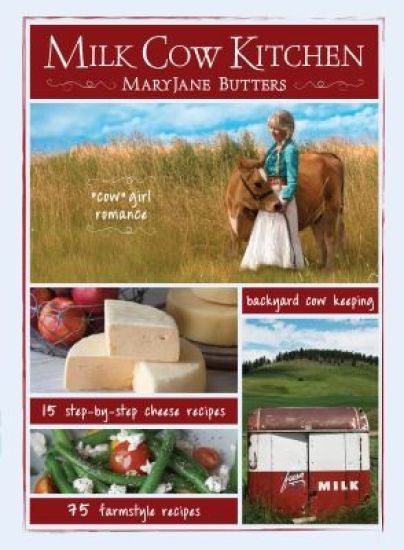
Milk Cow Kitchen

Milk Cow Kitchen

MaryJane Butters

GIBBS M. SMITH INC
2022
nidottu
Cowgirl romance, backyard cow keeping, farmstyle meals, and cheese recipes from MaryJane Butters.MaryJane Butters wants YOU to have a cow--that "pet" cow you've always fantasized about. You know, that gorgeous "beau"vine grazing outside your kitchen window. What would it feel like to bring a bucket of fresh milk into your kitchen and turn it into butter, your own yogurt, sour cream, and artisan cheeses like Manchego? MaryJane's 5th book, in an all new, paperback format, Milk Cow Kitchen, is two parts cookbook (20 step-by-step cheese recipes and 50 farmstyle meals), one part milk cow how-to, and three parts play
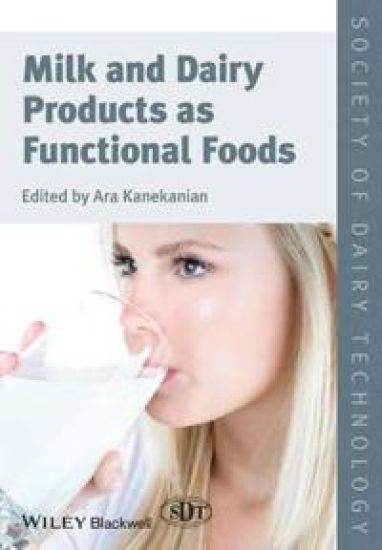
Milk and Dairy Products as Functional Foods

Milk and Dairy Products as Functional Foods

Wiley-Blackwell (an imprint of John Wiley Sons Ltd)
2014
sidottu
There continues to be strong interest within the food industry in developing new products which offer functional health benefits to the consumer. The premium prices that can be charged make these added-value products lucrative for manufacturers, and they are also commercially popular. Dairy foods are central to this sector: they are good delivery systems for functional foods (yoghurts, milk drinks, spreads) and are also rich in compounds which can be extracted and used as functional ingredients in other food types. Milk and Dairy Products as Functional Foods draws together a wealth of information regarding the functional health benefits of milk and dairy products. It examines the physiological role and the claimed health effects of dairy constituents such as proteins, bioactive peptides, conjugated linoleic acid (CLA), omega 3 fatty acids vitamin D and calcium. These constituents have been shown to be, for example, anticarcinogenic, anti-inflammatory, antihypertensive, hypocholesterolemic, immune-modulating and antimicrobial. This book examines the evidence for these claims, and investigates practical approaches for utilising these attributes. The book is aimed at dairy scientists and technologists in industry and academia, general food scientists and technologists, microbiologists and nutritionists together with all those involved in the formulation and production of functional food products.
Milk Transport

Milk Transport

Nigel Scaife

Amberley Publishing
2019
nidottu
Distribution of milk started from cow houses in the city, or farms using horses and carts. Later, milk was collected in milk churns, which the farmer left on a milk stand at the farm gate and which were collected by a lorry for delivery to the dairy. Milk also used to be moved on the railways, from sidings to dairies around the country. The Milk Marketing Board (MMB) was formed in 1933 and sold the milk to the dairies on behalf of the farmers. In the early years, the milk industry also saw some big names including Co-Op, Express, Unigate and United Dairies, who all had their own transport. In 1993 the government ordered the abolishment of the MMB to allow free competition in the milk industry. This gave the dairies a chance to have their own transport to move bulk milk. At the same time the company Milk Marque was formed, which had the job of moving all the milk which wasn’t supplied directly to the dairy companies. Using 180 rare and previously unpublished images, Nigel Scaife tells the story of transport and milk.