Kirjojen hintavertailu. Mukana 12 016 292 kirjaa ja 12 kauppaa.

Kirjahaku

Etsi kirjoja tekijän nimen, kirjan nimen tai ISBN:n perusteella.

1000 tulosta hakusanalla Moser Oliver Perry

The Peninsula: A Story of the Olympic Country in Words and Photographs

The Peninsula: A Story of the Olympic Country in Words and Photographs

Don Moser; Wallace Earle Stegner

Literary Licensing, LLC
2011
sidottu
""The Peninsula: A Story Of The Olympic Country In Words And Photographs"" by Don Moser is a beautifully crafted book that takes readers on a journey through the stunning Olympic Peninsula. Through a combination of vivid imagery and compelling storytelling, Moser provides a comprehensive overview of the region's history, culture, and natural beauty. This book is perfect for anyone who loves exploring new places, as it offers a wealth of information about the Olympic Peninsula's diverse landscapes, wildlife, and local communities. Whether you're a seasoned traveler or simply looking for inspiration for your next adventure, ""The Peninsula"" is a must-read. With its stunning photographs and engaging prose, this book is sure to capture the hearts and imaginations of readers everywhere.This scarce antiquarian book is a facsimile reprint of the old original and may contain some imperfections such as library marks and notations. Because we believe this work is culturally important, we have made it available as part of our commitment for protecting, preserving, and promoting the world's literature in affordable, high quality, modern editions, that are true to their original work.
Eine Entscheidung Fürs Leben
Eva sagte, sie sei eine Frau. Die Psychiatrie, sie sei ein geisteskranker Mann! Eva, sie hatte einen Geburtsfehler. Die Aerzte, sie sei verruckt! Eva wollte Chirurgie. Das System bot Psychotherapie an! Eva wollte die Chirurgie trotzdem... Als es endlich erlaubt wurde, nannten sie es einen 'Geschlechtswechsel'! Sie sagten, man gehe als Mann hinein und komme als Frau heraus! Eva sagte, niemand kann mit einem Skalpell Frauen aus Mannern machen, alles was wir konnen ist, einer weiblich identifizierten Person ein Leben als Frau geben... Heute sagten die Psychiater auch, Eva sei eine Frau. Bis sie im Archiv auf Beweise fur die Operation stossen. Dann ist sie wieder verruckt! Aber wer hat hier nun wirklich nicht mehr alle Eier in der Tute? Folgen sie einem Lebensweg, den wenige Menschen gehen und entdecken sie, was es bedeutet, von einer Gesellschaft und einem medizinischen System behandelt zu werden, das Transsexualitaet in etwa so verzerrt sieht, wie es moeglich ist, und entscheiden sie selber!
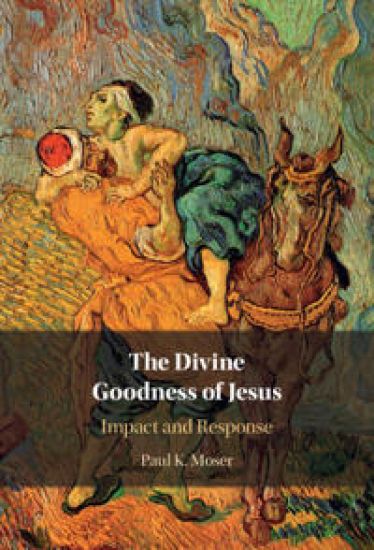
The Divine Goodness of Jesus

The Divine Goodness of Jesus

Paul Moser

Cambridge University Press
2021
sidottu
In this book, Paul Moser explores Jesus' role as God's filial inquirer and clarifies a method of inquiry regarding Jesus, one that offers a compelling explanation regarding his experiential impact and his audience's response. Moser's method values the roles of history and moral/religious experience in inquiry about him, and it saves inquirers from distorting biases in their inquiry. His study illuminates Jesus' puzzling features, including his challenging question for inquirers of him (Who do you say I am?), his distinctive experience of God as father, his reference to himself as 'the son of man', his attitude toward his suffering and death, his unique role in the kingdom of God, and his understanding of his allegedly miraculous signs and of his parables and good news. The book also makes sense of evidence for the reality and the main purpose of Jesus.
The Upside-Down World: Meetings with the Dutch Masters

The Upside-Down World: Meetings with the Dutch Masters

Benjamin Moser

Liveright Publishing Corporation
2023
sidottu
Arriving as a young writer in an ancient Dutch town, Benjamin Moser found himself visiting--casually at first, and then more and more obsessively--the country's great museums. Inside these old buildings, he discovered the remains of the Dutch Golden Age and began to unearth the strange, inspiring, and terrifying stories of the artists who gave shape to one of the most luminous moments in the history of human creativity. Beyond the sainted Rembrandt--who harbored a startling darkness--and the mysterious Vermeer, whose true subject, it turned out, was lurking in plain sight, Moser got to know a whole galaxy of geniuses: the doomed virtuoso Carel Fabritius, the anguished wunderkind Jan Lievens, the deaf prodigy Hendrik Avercamp. And through their artwork, he got to know their country, too: from the translucent churches of Pieter Saenredam to Paulus Potter's muddy barnyards, and from Pieter de Hooch's cozy hearths to Jacob van Ruisdael's tragic trees.Year after year, as he tried to make a life for himself in the Netherlands, Moser found friends among these centuries-dead artists. And he found that they, too, were struggling with the same questions that he was. Why do we make art? What even is art, anyway--and what is an artist? What does it mean to succeed as an artist, and what does it mean to fail? Is art a consolation--or a mortal danger? The Upside-Down World is an invitation to ask these questions, and to turn them on their heads: to look, and then to look again. This is Holland and its great artists as we've never seen them before. And it's a sumptuously illustrated, highly personal coming-of-age-story, twenty years in the making: a revealing self-portrait by one of the most acclaimed writers of his generation.
Harlequin

Harlequin

Justus Möser

Gale Ecco, Print Editions
2018
sidottu
The 18th century was a wealth of knowledge, exploration and rapidly growing technology and expanding record-keeping made possible by advances in the printing press. In its determination to preserve the century of revolution, Gale initiated a revolution of its own: digitization of epic proportions to preserve these invaluable works in the largest archive of its kind. Now for the first time these high-quality digital copies of original 18th century manuscripts are available in print, making them highly accessible to libraries, undergraduate students, and independent scholars.Western literary study flows out of eighteenth-century works by Alexander Pope, Daniel Defoe, Henry Fielding, Frances Burney, Denis Diderot, Johann Gottfried Herder, Johann Wolfgang von Goethe, and others. Experience the birth of the modern novel, or compare the development of language using dictionaries and grammar discourses. ++++The below data was compiled from various identification fields in the bibliographic record of this title. This data is provided as an additional tool in helping to insure edition identification: ++++British LibraryT036019With a half-title.London: printed and sold by W. Nicoll; T. Becket and P.A. De Hondt; and Mr. Drybutter, 1766. xv, 1],104p., plate; 8
A Letter to the Reverend Vicar of Savoy

A Letter to the Reverend Vicar of Savoy

Justus Möser

Gale Ecco, Print Editions
2018
sidottu
The 18th century was a wealth of knowledge, exploration and rapidly growing technology and expanding record-keeping made possible by advances in the printing press. In its determination to preserve the century of revolution, Gale initiated a revolution of its own: digitization of epic proportions to preserve these invaluable works in the largest archive of its kind. Now for the first time these high-quality digital copies of original 18th century manuscripts are available in print, making them highly accessible to libraries, undergraduate students, and independent scholars.The Age of Enlightenment profoundly enriched religious and philosophical understanding and continues to influence present-day thinking. Works collected here include masterpieces by David Hume, Immanuel Kant, and Jean-Jacques Rousseau, as well as religious sermons and moral debates on the issues of the day, such as the slave trade. The Age of Reason saw conflict between Protestantism and Catholicism transformed into one between faith and logic -- a debate that continues in the twenty-first century.++++The below data was compiled from various identification fields in the bibliographic record of this title. This data is provided as an additional tool in helping to insure edition identification: ++++John Rylands University Library of ManchesterT169923With a half-title.London: printed, and sold by W. Nicoll, and R. Main, 1766. 4],39, 1]p.; 8
Lucifer and Mammon, an Historical Sketch of the Last and Present Century; With Characters, Anecdotes, &c
The 18th century was a wealth of knowledge, exploration and rapidly growing technology and expanding record-keeping made possible by advances in the printing press. In its determination to preserve the century of revolution, Gale initiated a revolution of its own: digitization of epic proportions to preserve these invaluable works in the largest archive of its kind. Now for the first time these high-quality digital copies of original 18th century manuscripts are available in print, making them highly accessible to libraries, undergraduate students, and independent scholars.Rich in titles on English life and social history, this collection spans the world as it was known to eighteenth-century historians and explorers. Titles include a wealth of travel accounts and diaries, histories of nations from throughout the world, and maps and charts of a world that was still being discovered. Students of the War of American Independence will find fascinating accounts from the British side of conflict. ++++The below data was compiled from various identification fields in the bibliographic record of this title. This data is provided as an additional tool in helping to insure edition identification: ++++Library of CongressN034010Anonymous. By Joseph Moser. With a page of errata and three final advertisement pages.London: printed for J. Owen, and H. D. Symonds, 1793. 296, 4]p.; 12
The Meal-tub Plot; or, Remarks Upon the Powder tax. By a Barber
The 18th century was a wealth of knowledge, exploration and rapidly growing technology and expanding record-keeping made possible by advances in the printing press. In its determination to preserve the century of revolution, Gale initiated a revolution of its own: digitization of epic proportions to preserve these invaluable works in the largest archive of its kind. Now for the first time these high-quality digital copies of original 18th century manuscripts are available in print, making them highly accessible to libraries, undergraduate students, and independent scholars.Delve into what it was like to live during the eighteenth century by reading the first-hand accounts of everyday people, including city dwellers and farmers, businessmen and bankers, artisans and merchants, artists and their patrons, politicians and their constituents. Original texts make the American, French, and Industrial revolutions vividly contemporary.++++The below data was compiled from various identification fields in the bibliographic record of this title. This data is provided as an additional tool in helping to insure edition identification: ++++Cambridge University LibraryT171951Attributed to Joseph Moser.London: printed for Allen and West; and Owen, 1795. 16p.; 8
The American Red Cross from Clara Barton to the New Deal

The American Red Cross from Clara Barton to the New Deal

Marian Moser Jones

Johns Hopkins University Press
2013
sidottu
In dark skirts and bloodied boots, Clara Barton fearlessly ventured on to Civil War battlefields to tend to wounded soldiers. She later worked with civilians in Europe during the Franco-Prussian War, lobbied legislators to ratify the Geneva conventions, and founded and ran the American Red Cross. "The American Red Cross from Clara Barton to the New Deal" tells the story of the charitable organization from its start in 1881, through its humanitarian aid during wars, natural disasters, and the Depression, to its relief efforts of the 1930s. Marian Moser Jones illustrates the tension between the organization's founding principles of humanity and neutrality and the political, economic, and moral pressures that sometimes caused it to favor one group at the expense of another. This expansive book narrates the stories of: U.S. natural disasters such as the Jacksonville yellow fever epidemic of 1888, the Sea Islands hurricane of 1893, and the 1906 San Francisco earthquake; crises abroad, including the 1892 Russian famine and the Armenian massacres of 1895-96; efforts to help civilians affected by the civil war in Cuba; power struggles within the American Red Cross leadership and subsequent alliances with the American government; the organization's expansion during World War I; race riots in East St. Louis, Chicago, and Tulsa between 1917 and 1921; help for African American and white Southerners after the Mississippi flood of 1927; and relief projects during the Dust Bowl and after the New Deal. An epilogue relates the history of the American Red Cross since the beginning of World War II and illuminates the organization's current practices as well as its international reputation.