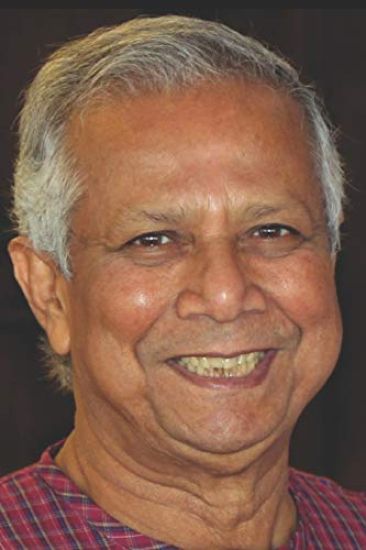
A university professor turned conventional banking on its head and helped lift millions out of poverty. His work, predominantly with rural women, and the creation of a bank to serve their needs, resulted in Dr Muhammad Yunus and Grameen Bank being jointly awarded the Nobel Peace Prize in 2006. His model of microcredit, lending to poor people who have no collateral, has been replicated worldwide; not always with success, and not without its critics. His supporters look upon him as a saviour and believe his approach is the most viable way of eradicating global poverty, while his opponents accuse him of taking credit for other people's ideas and maintain he traps people in a cycle of debt from which they may never escape. His achievements have also been rewarded with the Presidential Medal of Freedom in 2009 and the Congressional Gold Medal in 2013. Yet instead of acknowledging his work and embracing him as the nation's favourite son, the Bangladeshi government unceremoniously removed him from the bank he founded and publicly disparaged his accomplishments. He also challenges companies to change the way they operate. He has embarked on a crusade, talking to world leaders and addressing huge crowds, to put across his belief that social business is the solution for eliminating unemployment across the globe.Who is this charismatic yet controversial figure; the banker with the status of a rock star? Is he a saint or a sinner, or possibly something between the two? This book reflects upon the life and work of Muhammad Yunus and places it alongside the anti-poverty measures established by his peers, and within the political and social agenda of his native country.
This book tells the story of the Prophet Muhammad as an inspirational role model for anyone who wants to be extraordinary.You will learn how Muhammad shaped his personality as a child, dealt with the universal challenges of adolescence while a teenager, and then emerged as a leader in his community as a young adult. The book deliberately avoids the language of historical narration used in typical biographies of the Prophet in favor of a more informal, down-to-earth approach. In this book, the reader will get a completely different view of Muhammad and hopefully will see how Muhammad addressed our own daily challenges, inspiring us to excel in confronting these challenges. "I enjoyed reading this book and recommend it to everyone who wants to be inspired by Muhammad, the greatest of mankind."Mirza Yawar Baig, author of Presenting Islam Today.
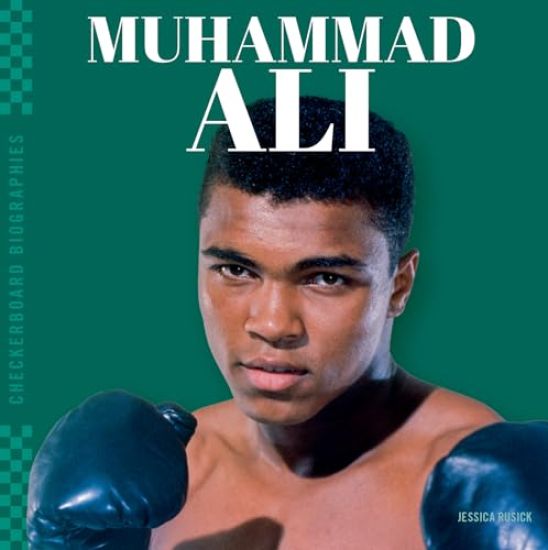
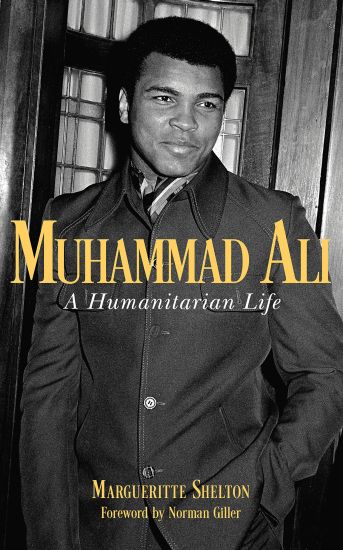
Muhammad Ali: A Humanitarian Life is the first biography of this iconic champion to chronicle his rise as a great humanitarian alongside his rise as a fighter, revealing the profound influence Ali had both in and out of the ring and that will endure for ages to come.
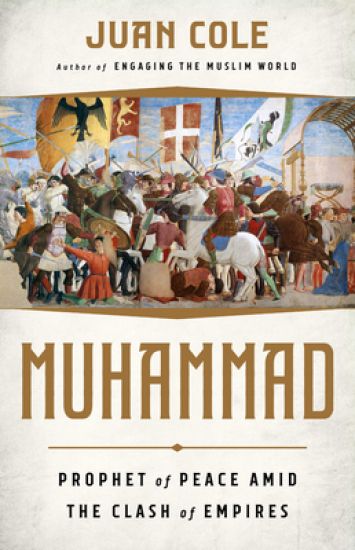
In the midst of the dramatic seventh-century war between two empires, Muhammad was a spiritual seeker in search of community and sanctuary. Many observers stereotype Islam and its scripture as inherently extreme or violent-a narrative that has overshadowed the truth of its roots. In this masterfully told account, preeminent Middle East expert Juan Cole takes us back to Islam's-and the Prophet Muhammad's-origin story. Cole shows how Muhammad came of age in an era of unparalleled violence. The eastern Roman Empire and the Sasanian Empire of Iran fought savagely throughout the Near East and Asia Minor. Muhammad's profound distress at the carnage of his times led him to envision an alternative movement, one firmly grounded in peace. The religion Muhammad founded, Islam, spread widely during his lifetime, relying on soft power instead of military might, and sought armistices even when militarily attacked. Cole sheds light on this forgotten history, reminding us that in the Qur'an, the legacy of that spiritual message endures. A vibrant history that brings to life the fascinating and complex world of the Prophet, Muhammad is the story of how peace is the rule and not the exception for one of the world's most practiced religions.