Kirjojen hintavertailu. Mukana 11 627 220 kirjaa ja 12 kauppaa.

Kirjahaku

Etsi kirjoja tekijän nimen, kirjan nimen tai ISBN:n perusteella.

1000 tulosta hakusanalla Notes Magiques

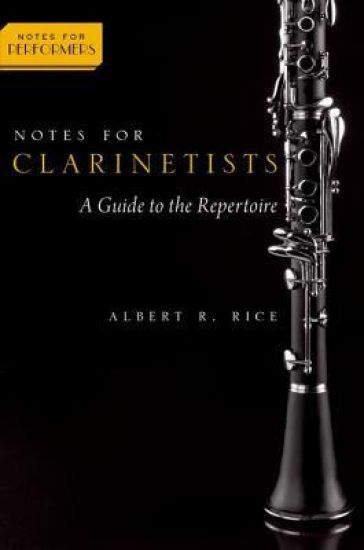
Notes for Clarinetists

Notes for Clarinetists

Rice Albert

Oxford University Press Inc
2017
sidottu
Notes for Clarinetists: A Guide to the Repertoire offers important historical and analytical information about thirty-five of the best-known pieces written for the instrument. Numerous contextual and theoretical insights make it an essential resource for professional, amateur, and student clarinetists. With engaging prose supported by fact-filled analytical charts, the book offers rich biographical information and informative analyses to help clarinetists gain a more complete understanding of Three Pieces for Clarinet Solo by Igor Stravinsky, Aaron Copland's Concerto for Clarinet, String Orchestra, Harp, and Piano, Robert Schumann's Fantasy Pieces for Clarinet and Piano, Op. 73. and Time Pieces for Clarinet and Piano, Op. 43. by Robert Muczynski, among many others. With close attention to matters of context, style, and harmonic and formal analysis, Albert Rice explores a significant portion of the repertoire, and offers a faithful and comprehensive guide that includes works by Boulez, Brahms, and Mozart to Hindemith, Poulenc, and Stamitz. Rice includes biographical information on each composer and highlights history's impact on the creation and performance of important works for clarinet. Intended as a starting point for connecting performance studies with scholarship, Rice's analysis will help clarinetists gain a more complete picture of a given work. Its valuable insights make it essential to musicians preparing and presenting programs, and its detailed historical information about the work and composer will encourage readers to explore other works in a similarly analytical way. Covering concertos, chamber pieces, and works for solo clarinet, Rice presents Notes for Clarinetists as an indispensable handbook for students and professionals alike.
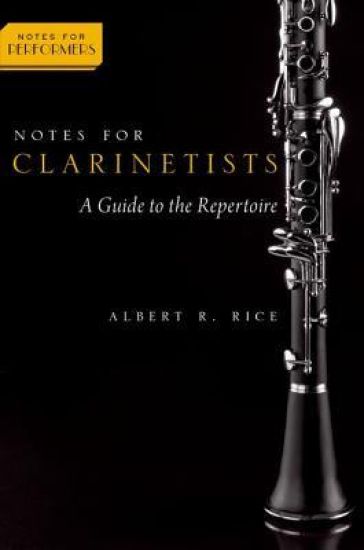
Notes for Clarinetists

Notes for Clarinetists

Rice Albert

Oxford University Press Inc
2017
nidottu
Notes for Clarinetists: A Guide to the Repertoire offers important historical and analytical information about thirty-five of the best-known pieces written for the instrument. Numerous contextual and theoretical insights make it an essential resource for professional, amateur, and student clarinetists. With engaging prose supported by fact-filled analytical charts, the book offers rich biographical information and informative analyses to help clarinetists gain a more complete understanding of Three Pieces for Clarinet Solo by Igor Stravinsky, Aaron Copland's Concerto for Clarinet, String Orchestra, Harp, and Piano, Robert Schumann's Fantasy Pieces for Clarinet and Piano, Op. 73. and Time Pieces for Clarinet and Piano, Op. 43. by Robert Muczynski, among many others. With close attention to matters of context, style, and harmonic and formal analysis, Albert Rice explores a significant portion of the repertoire, and offers a faithful and comprehensive guide that includes works by Boulez, Brahms, and Mozart to Hindemith, Poulenc, and Stamitz. Rice includes biographical information on each composer and highlights history's impact on the creation and performance of important works for clarinet. Intended as a starting point for connecting performance studies with scholarship, Rice's analysis will help clarinetists gain a more complete picture of a given work. Its valuable insights make it essential to musicians preparing and presenting programs, and its detailed historical information about the work and composer will encourage readers to explore other works in a similarly analytical way. Covering concertos, chamber pieces, and works for solo clarinet, Rice presents Notes for Clarinetists as an indispensable handbook for students and professionals alike.
Notes for Violists

Notes for Violists

David M. Bynog

Oxford University Press Inc
2021
sidottu
Notes for Violists: A Guide to the Repertoire offers historical and analytical information about thirty-five of the best-known pieces for the instrument, making it an essential resource for professional, amateur, and student violists alike. With engaging prose supported by fact-filled analytical charts, the book offers rich biographical information and insightful analyses that help violists gain a more complete understanding of pieces like Béla Bartók's Concerto for Viola and Orchestra, Rebecca Clarke's Sonata for Viola and Piano, Robert Schumann's Märchenbilder for Viola and Piano, op. 113, Carl Stamitz's Concerto for Viola and Orchestra in D Major, Igor Stravinsky's Élégie for Viola or Violin Unaccompanied, and thirty other masterpieces. This comprehensive guide to key pieces from the viola repertoire from the eighteenth through the twentieth century covers concertos, chamber pieces, and works for solo viola by a wide range of composers, including Bach, Telemann, Mozart, Hoffmeister, Walton, and Hindemith. Author David M. Bynog not only offers clear structural analyses of these compositions but also situates them in their historical contexts as he highlights crucial biographical information on composers and explores the circumstances of the development and performance of each work. By connecting performance studies with scholarship, this indispensable handbook for students and professionals allows readers to gain a more complete picture of each work and encourages them to approach other compositions in a similarly analytical manner.
Notes for Violists

Notes for Violists

David M. Bynog

Oxford University Press Inc
2021
nidottu
Notes for Violists: A Guide to the Repertoire offers historical and analytical information about thirty-five of the best-known pieces for the instrument, making it an essential resource for professional, amateur, and student violists alike. With engaging prose supported by fact-filled analytical charts, the book offers rich biographical information and insightful analyses that help violists gain a more complete understanding of pieces like Béla Bartók's Concerto for Viola and Orchestra, Rebecca Clarke's Sonata for Viola and Piano, Robert Schumann's Märchenbilder for Viola and Piano, op. 113, Carl Stamitz's Concerto for Viola and Orchestra in D Major, Igor Stravinsky's Élégie for Viola or Violin Unaccompanied, and thirty other masterpieces. This comprehensive guide to key pieces from the viola repertoire from the eighteenth through the twentieth century covers concertos, chamber pieces, and works for solo viola by a wide range of composers, including Bach, Telemann, Mozart, Hoffmeister, Walton, and Hindemith. Author David M. Bynog not only offers clear structural analyses of these compositions but also situates them in their historical contexts as he highlights crucial biographical information on composers and explores the circumstances of the development and performance of each work. By connecting performance studies with scholarship, this indispensable handbook for students and professionals allows readers to gain a more complete picture of each work and encourages them to approach other compositions in a similarly analytical manner.
Notes for Oboists

Notes for Oboists

Nora Anderson Lewis

OXFORD UNIVERSITY PRESS INC
2025
nidottu
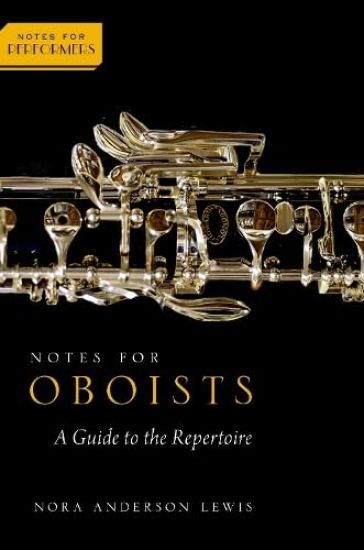
Notes for Oboists: A Guide to the Repertoire is an essential resource for professional, amateur, and student oboists that collects the important historical and analytical information for thirty-five of the best-known pieces composed for the instrument. These works span the eighteenth through the twenty-first century and include sonatas, concertos, chamber music, and works for solo oboe by a wide range of composers. Chapters will cover compositions such as Alessandro Marcello's Concerto in D Minor, Robert Schumann's Three Romances Op. 94, Francis Poulenc's Sonata for Oboe and Piano, Isang Yun's Piri for Oboe Solo, Reena Esmail's Jhula Jhule for Oboe and Piano, and thirty other treasures of the oboe repertoire. Writing in engaging and accessible prose supported by fact-filled analytical charts, Nora A. Lewis offers rich biographical information on individual composers, historical context for compositions (such as the circumstances for its development), as well as clear structural analyses to help oboists gain a deeper understanding of well-known repertoire. In offering both historical/biographical as well as musicological insight, Notes for Oboists connects performance studies with scholarship, allowing readers to build a more complete picture of the music and encourage them to approach other compositions in a similarly analytical manner.
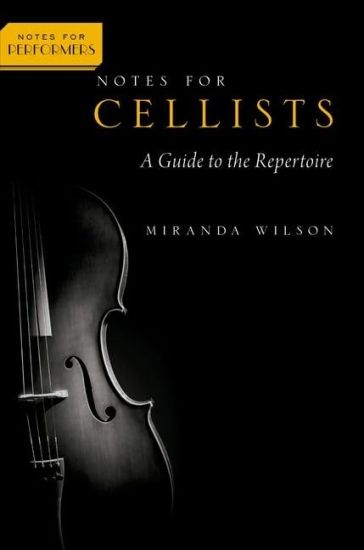
Notes for Cellists

Notes for Cellists

Miranda Wilson

OXFORD UNIVERSITY PRESS INC
2024
nidottu
Notes for Cellists: A Guide to the Repertoire is an essential resource for anyone seeking to enrich their understanding of cello music. Written by cellist and cello professor Miranda Wilson, this book explores the world of cello repertoire with analytical overviews and background information on compositions spanning five centuries. In an engaging and accessible style, Notes for Cellists guides readers through the repertoire, providing detailed insights into the lives of composers and the cellists who inspired them. From Bach and Beethoven to contemporary works by living composers, Notes for Cellists offers historical and analytical contexts for over three dozen works. Whether you're a student, professional, teacher, college faculty member, amateur player, or simply an enthusiast of the cello, Notes for Cellists is an indispensable tool. With extended program notes on the essentials of cello repertoire, this book serves as a guide for reference or a starting point for further research.
Notes and Comments on Cases in International Law, Commercial Law, and Arbitration
F.A. Mann is considered to be one of the finest British lawyers of this century, esteemed as an international jurist and as a practising solicitor. He combined a thriving and prestigious practice with a prolific output of writing and teaching, with much of his work centering on the inter-relationship of international and national law. Among his publications are Studies in International Law (OUP, 1973), Further Studies in International Law (OUP, 1990), and Foreign Affairs in English Courts (OUP, 1986). He died in September 1991, whilst at work on the proofs of the fifth edition of his virtually canonical work, The Legal Aspect of Money Notes and Comments on Cases in International Law represents some of the finest of his writing on such diverse topics as Anglo-American Legal Harmony, Bills of Exchange and the Conflict of Laws, the Spycatcher case, Austrian Nationality, and English Procedural Law and Foreign Arbitrations. Throughout his career his case notes were regarded as models of intellectual acuity: constantly stimulating and rigorous in their analysis and style. This new collection of his work will gain a fresh audience for his writing, and should be found on the bookshelves of every lawyer with a serious interest in international law.
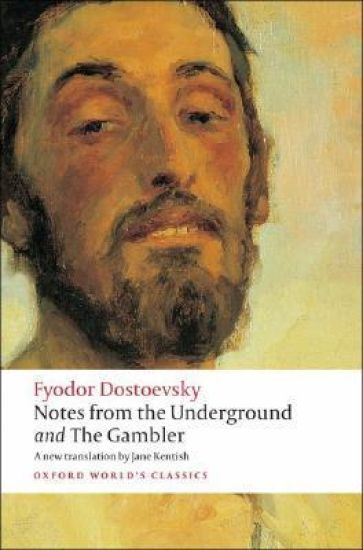
Notes from the Underground, and The Gambler

Notes from the Underground, and The Gambler

Fyodor Dostoevsky

Oxford University Press
2008
nidottu
Notes from the Underground (1864) is one of the most profound works of nineteenth-century literature. A probing, speculative book, often regarded as a forerunner of the Existentialist movement, it examines the important political and philosophical questions that were current in Russia and Europe at the time. The Gambler (1866), set in the fictional town of Roulettenberg, explores the compulsive nature of gambling, one of the author's own vices and a subject he describes with extraordinary acumen and drama. Specially commissioned for the World's Classics, this new translation includes a full editorial apparatus. ABOUT THE SERIES: For over 100 years Oxford World's Classics has made available the widest range of literature from around the globe. Each affordable volume reflects Oxford's commitment to scholarship, providing the most accurate text plus a wealth of other valuable features, including expert introductions by leading authorities, helpful notes to clarify the text, up-to-date bibliographies for further study, and much more.
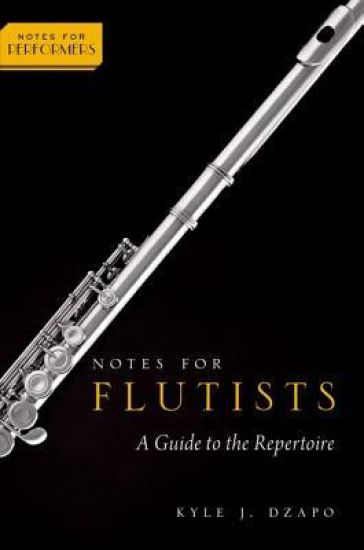
Notes for Flutists

Notes for Flutists

Dr. Kyle Dzapo

Oxford University Press Inc
2016
sidottu
Notes for Flutists: A Guide to the Repertoire offers important historical and analytical information about three dozen of the best-known pieces written for the instrument. Its contextual and theoretical insights make it an indispensable resource for professional, amateur, and student flutists. With engaging prose supported by fact-filled analytical charts, the book offers rich biographical information and informative analyses to help flutists gain a morecomplete understanding of J. S. Bach's Sonata in B minor, Reinecke's Undine Sonata, Faure's Fantaisie, Hindemith's Sonata for Flute and Piano, Copland's Duo for Flute and Piano, and 30 other masterpieces. Offering a faithful and comprehensive resource for understanding the context in which the repertory was composed, Notes for Flutists details in clear, chronological order flute repertoire from Georg Philipp Telemann, Gabriel Faure, Claude Debussy, Luciano Berio to Robert Muczynski and Aaron Copland. Kyle J. Dzapo offers rich biographical information on each composer and highlights history's impact on the creation and performance of notable works for flute. Aimed as a startingpoint for connecting performance studies with scholarship, Dr. Dzapo's analysis will help flutists gain a more complete picture of a given work. Its contextual and theoretical insights make it essential to musicians preparing and presenting programs, and detailed historical information about the work and composer willencourage and equip readers with the desire and insights to explore other works in a similarly analytical way. Lending insights to both solo flute and chamber pieces, Dzapo presents Notes for Flutists as an accessible music theory and analysis resource, making it indispensible for students and professionals alike.
Notes for Flutists

Notes for Flutists

Dr. Kyle Dzapo

Oxford University Press Inc
2016
nidottu
Notes for Flutists: A Guide to the Repertoire offers important historical and analytical information about three dozen of the best-known pieces written for the instrument. Its contextual and theoretical insights make it an indispensable resource for professional, amateur, and student flutists. With engaging prose supported by fact-filled analytical charts, the book offers rich biographical information and informative analyses to help flutists gain a morecomplete understanding of J. S. Bach's Sonata in B minor, Reinecke's Undine Sonata, Faure's Fantaisie, Hindemith's Sonata for Flute and Piano, Copland's Duo for Flute and Piano, and 30 other masterpieces. Offering a faithful and comprehensive resource for understanding the context in which the repertory was composed, Notes for Flutists details in clear, chronological order flute repertoire from Georg Philipp Telemann, Gabriel Faure, Claude Debussy, Luciano Berio to Robert Muczynski and Aaron Copland. Kyle J. Dzapo offers rich biographical information on each composer and highlights history's impact on the creation and performance of notable works for flute. Aimed as a startingpoint for connecting performance studies with scholarship, Dr. Dzapo's analysis will help flutists gain a more complete picture of a given work. Its contextual and theoretical insights make it essential to musicians preparing and presenting programs, and detailed historical information about the work and composer willencourage and equip readers with the desire and insights to explore other works in a similarly analytical way. Lending insights to both solo flute and chamber pieces, Dzapo presents Notes for Flutists as an accessible music theory and analysis resource, making it indispensible for students and professionals alike.
Notes on Quantum Mechanics

Notes on Quantum Mechanics

Enrico Fermi

University of Chicago Press
1995
nidottu
The lecture notes presented here in facsimile were prepared by Enrico Fermi for students taking his course at the University of Chicago in 1954. They provide examples of his ability to lecture simply and clearly on the most essential aspects of quantum mechanics. At the close of each lecture, Fermi created a single problem for his students. These challenging exercises were not included in Fermi's notes but were preserved in the notes of his students. This second edition includes a set of these assigned problems as compiled by one of his former students, Robert A. Schluter.
Notes from a Wayward Son PB

Notes from a Wayward Son PB

Andrew Walker

James Clarke Co Ltd
2020
nidottu
Andrew Walker is one of the most remarkable scholars I have met across the years.'' William J. Abraham This ''miscellany'' puts readers around the table with a teacher who has provided the church with wisdom and passion and introduces a new voice to the ongoing conversation about the relationship between the gospel and culture. Andrew Walker's ''ecclesial intelligence'' and broad interdisciplinary approach to theology and sociology will undoubtedly capture the imagination of many who are curious about the church's mission in the modern West. Notes from a Wayward Son represents a broad sampling of Walker's writings from a distinguished forty-five-year career--from explorations of Pentecostalism and Charismatic Renewal to Eastern Orthodoxy, C. S. Lewis, and Deep Church; from the impact of modernity on the ecclesia to mission and ecumenism in the West today. In a world and a church often driven by the latest fashions, Walker's is a voice to which we will want to listen!