
Kirjahaku
Etsi kirjoja tekijän nimen, kirjan nimen tai ISBN:n perusteella.
1000 tulosta hakusanalla Oral Sumner Coad
Oral Health Care Access, An Issue of Dental Clinics
Gary A. Colangelo
W B Saunders Co Ltd
2009
sidottu
An important, timely issue on access to oral health care. Topics include: ethics, the dental workforce, non-dental health professionals providing access to dental care for low-income and minority patients, dental health care finance, third party reimbursement for dental care and access to dental care, managing clinical risk, teledentistry, private sector response, dental insurance, improving patient retention, expanding the dental workforce through dental therapists, and much more!

Oral History in Your Library
Cyns Nelson; Adam Speirs; R. David Lankes
Libraries Unlimited Inc
2018
nidottu
Discover the true value and exciting possibilities of oral history in the library: learn new and compelling ways to engage your patrons by sharing personal and community history with them.Have you thought about creating a collection to capture the experiences of your community? Perhaps you already have an oral history collection, but it's gathering dust. In either case, this book can help. After outlining what it means to effectively create oral history content, the author discusses how to establish public access to your collection, how to promote the content to your community, and how to use oral history in your library programs. Collaborating with other organizations, working with volunteers, and funding initiatives are a few of the other topics covered. Brimming with ideas and practical advice, the guide is meant to inspire and empower, taking the hassle out of oral history and replacing it with embracing oral history's power and the tools to bring it into your library. If you have an oral history collection, this book will help you to maximize its potential. If you don't have one, this book will show you how your library could benefit from one, what it can help your library to accomplish, and how to get started. If you're seeking a path to community engagement, start here.
Oral Delivery of Macromolecular Drugs
Springer-Verlag New York Inc.
2009
sidottu
Recent and rapid progress in the field of biotechnology has resulted in an increasing number of novel macromolecular drugs with great promise for further advanced research and clinical application. However, the delivery of these macromolecular drugs by routes other than the parenteral route is difficult. The pipeline of macromolecular drugs derived from biotechnology presents a challenging opportunity to develop practical dosage forms that could be dosed via the oral route. Given this, the successful oral delivery of macromolecular drugs presents an enormous opportunity. Oral Delivery of Macromolecular Drugs will provide an overview of the innovative oral delivery technologies that have demonstrated success in human testing and will go on to cite the challenges, strategies, and future trends that are to be expected.
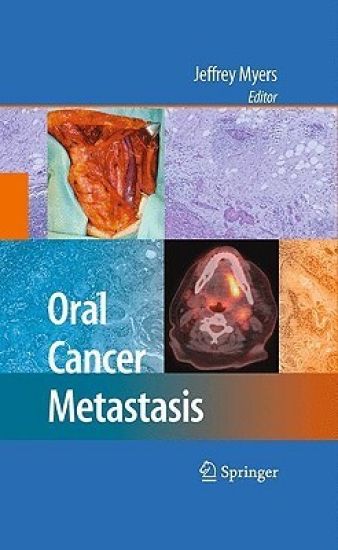
Oral Cancer Metastasis
Springer-Verlag New York Inc.
2009
sidottu
Squamous cell carcinoma of the oral cavity (SCCOC) is one of the most prevalent tumors of the head and neck region. Despite improvements in treatment, the survival of patients with SCCOC has not significantly improved over the past several decades. Most frequently, treatment failure takes the form of local and regional recurrences, but as disease control in these areas improves, SCCOC treatment failures more commonly occur as distant metastasis. The presence of cervical lymph node metastasis is the most reliable adverse prognostic factor in patients with SCCOC, and extracapsular spread (ECS) of cervical lymph nodes metastasis is a particularly reliable predictor of regional and distant recurrence and death from disease. Decisions regarding elective and therapeutic management of cervical lymph node metastases are made mainly on clinical grounds as we cannot always predict cervical lymph node metastasis from the size and extent of invasion of the primary tumors. Therefore the treatment of the neck disease in the management of SCCOC remains controversial. The promise of using biomarker-based treatment decisions has yet to be fully realized due to our poor understanding of the mechanisms of regional and distant metastases of SCCOC. We will summarize the current status of investigations into SCCOC metastases and potential of these studies to impact basic research investigators and clinicians confronting SCCOC in the future.
Oral Tolerance
Springer-Verlag New York Inc.
2010
nidottu
Oral tolerance is a major immunological property of the gastrointestinal mucosa. It plays a critical role in immune defence by preventing inflammatory and allergic responses to dietary and non pathogenic microbial antigens. The interest in oral tolerance has been renewed in the recent years, due to novel insights on its cellular mechanisms and potential clinical applications in the treatment of autoimmune diseases. Oral Tolerance: Cellular and Molecular Basis, Clinical Aspects, and Therapeutic Potential, has been designed as a concise yet comprehensive overview of the newest fundamental and clinical advances in the field. Based on the outstanding contribution of world experts, this book will be helpful to students, clinicians, and researchers working in mucosal immunology and gastroenterology. The first part of this volume describes the structure and functions of the gastrointestinal mucosa and the fundamental features and mechanisms of oral tolerance, including the role of T cells, cytokines, IgA antibodies, and bacterial antigens. The second part explores the clinical implications of the disruption of oral tolerance in Inflammatory Bowel Diseases, food and milk allergies, and coeliac disease in particular. The final chapter focuses on the clinical potential of oral tolerance as a promising therapeutic tool.

Oral Formulaic Language in the Biblical Psalms
Robert Culley
University of Toronto Press
1967
pokkari
In Oral Formulaic Language in the Biblical Psalms, Robert C. Culley discusses dynamics involved in oral composition of poetry, particularly regarding Biblical poetry, including the characteristic of parallelism, both as a composition device and as a framework within which other compositional aids would be necessary for a poet "writing" orally. Formulas, together with such devices as standard word-pairs, aided poets in composing regular lines within a literary tradition whose primary characteristic was parallelism of ideas. "Poets use formulas to build lines," Culley explains; "the line and the colon, of which the line generally has two, are the most common formal divisions of Hebrew poetry to which possible formulas and formulaic phrases would conform."
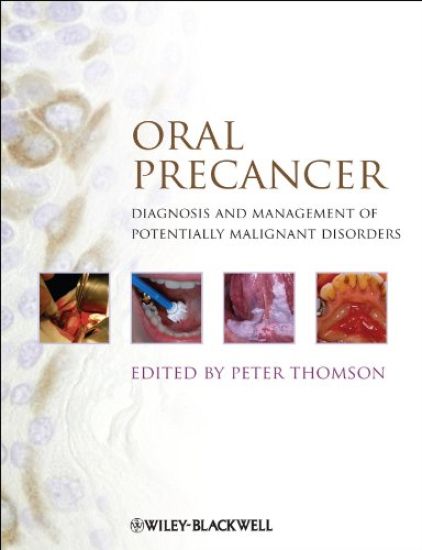
Oral Precancer
Wiley-Blackwell (an imprint of John Wiley Sons Ltd)
2012
sidottu
Without early detection, oral cancer is deadly. Protect your patients by applying the latest clinical interventions. Rates of new oral cancer cases continue to increase and mortality rates remain alarmingly high. Oralcancer may be preceded by clinically identifiable precancerous changes in the oral mucosa, which offer a therapeutic window of opportunity to intervene and halt disease progression to carcinoma development. Written and edited by prominent researchers in the field, Oral Precancer: Reviews current scientific research on precancer conditions of the oral cavity providing evidence-based analysis of the nature and behavior of potentially malignant and deforming oral diseasesExplains the principles of prevention, diagnosis and management of potentially malignant disorders of the oral cavityDetails a practical and reliable interventional treatment strategy to facilitate early diagnosis and effective treatment of both precancer and early invasive carcinomaContains a chapter devoted to illustrative case histories, high-quality, color, clinical photos, reference sections in each chapter listing relevant review articles, and more From start to finish, Oral Precancer offers undergraduate students, clinicians, and professors an invaluable resource to minimise the morbidity and mortality of this most significant and life threatening of oral conditions.
Oral Transmission in Judaism and Christianity
Thomas Meyer
Createspace Independent Publishing Platform
2010
nidottu
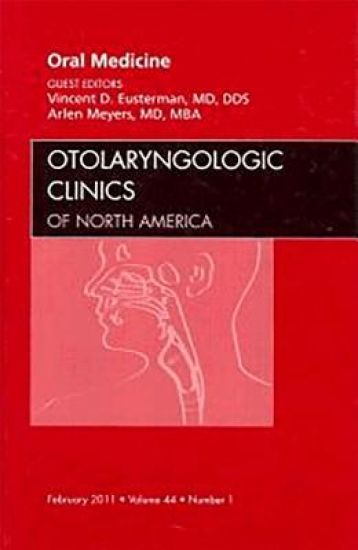
Oral Medicine, An Issue of Otolaryngologic Clinics
Arlen Meyers; Vincent Eusterman
W B Saunders Co Ltd
2010
sidottu
Topics include: History and physical exam and diagnostic tests and procedures; Oral manifestations of smokeless tobacco use; Infections; Recurrent oral ulcerations; Lichen planus; White lesions; Vesiculobullous eruptions; Common oral manifestations of systemic disease; Oral manifestations of hematologic and nutritional diseases; Burning mouth syndrome; Early detection of premalignant lesions and oral cancer; Taste disorders; Candidiasis
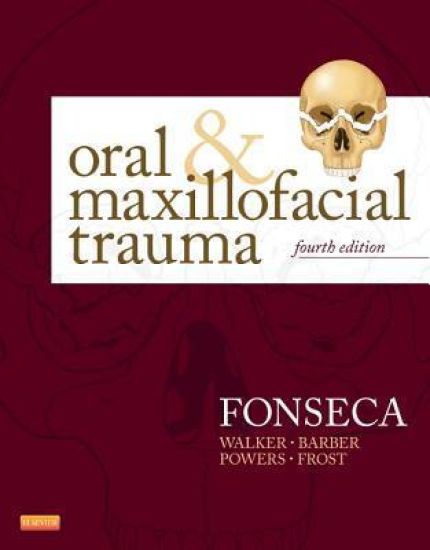
Oral and Maxillofacial Trauma
Raymond J. Fonseca; H. Dexter Barber; Michael P. Powers; David E. Frost
W B Saunders Co Ltd
2012
sidottu
**Selected for Doody’s Core Titles® 2024 in Trauma Surgery** Describing the diagnosis and management of maxillofacial and associated traumatic injuries step by step, Oral and Maxillofacial Trauma, 4th Edition takes you beyond the surgical management of head and neck trauma to cover the general management of traumatic injuries, systemic evaluation of the trauma patient, and special considerations associated with maxillofacial trauma patient care. New to this edition are over 700 full-color illustrations showing details of traumatic injuries and their treatment. Edited by head and neck trauma expert Dr. Raymond J. Fonseca, along with over 80 highly respected contributors, this comprehensive reference provides all of the information you need to offer the best care possible to maxillofacial trauma patients. One-of-a-kind, comprehensive chapters cover current research literature with topics including advances in maxillofacial trauma surgery, nonpenetrating chest trauma, metabolic response to trauma, maxillofacial prosthetics, and the societal impact of maxillofacial trauma. Coverage of emerging topics includes firearm injuries, neurologic injuries (the leading cause of death from trauma), wound healing, airway management, shock, and nasal fractures, so you can work confidently with team members from other disciplines such as neurologists, anesthesiologists, and orthopedists. Over 80 expert contributors represent the specialties of oral and maxillofacial surgery, anesthesiology, and otolaryngology. UPDATED content reflects current thinking and the latest techniques in the management of traumatic injuries. NEW full-color illustrations and design highlight clinical areas and show details of injuries and their treatment. NEW! Streamlined, single-volume format makes information easier to access and the book easier to carry.
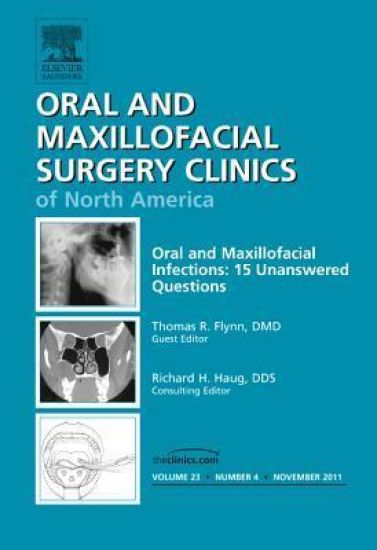
Oral and Maxillofacial Infections: 15 Unanswered Questions, An Issue of Oral and Maxillofacial Surgery Clinics
Thomas R. Flynn
W B Saunders Co Ltd
2012
sidottu
This special issue will review the many unanswered questions regarding oral and maxillofacial infections. Questions include: Should we extract teeth in the presence of infection? Should we wait for development of an abscess before we perform incision and drainage? What are the antibiotics of choice for odontogenic infections, and how long should the treatment course last? Is clindamycin losing its effectiveness in odontogenic infections? Should we use prophylactic antibiotics for removal of erupted teeth, impacted teeth, dental implants, or other dentoalveolar surgery? How can we as dentists minimize our contribution to the problem of antibiotic resistance? How will culture and antibiotic sensitivity testing be done in the foreseeable future? How can osteomyelitis of the jaws be diagnosed at the earliest possible time? How should the practicing oral and maxillofacial surgeon manage cases of odontogenic deep neck infections that extend beyond his/her area of expertise? Do dental infections really cause central nervous system infections? What are the lessons we can glean from review of recent closed malpractice cases involving oral and maxillofacial infections? How do we manage oral infections in the severely immunocompromised host, such as in chemotherapy for blood cancers or in bone marrow transplant patients? What is the role of biofilms in severe head and neck infections? How strong is the evidence supporting oral inflammation as a cause of systemic disease?

ORAL LITERACY INSTRUCTIONAL STRATEGIES
MACMILLAN EDUCATION IC
2015
muu

ORAL LITERACY INSTRUCTIONAL STRATEGIES
MACMILLAN EDUCATION IC
2015
muu

ORAL LIT NURSERY RHYME AND CHANTS
MACMILLAN EDUCATION ELT
2015
nidottu

ORAL LITERACY POETRY BIG BOOK 2
MACMILLAN EDUCATION ELT
2016
nidottu

Oral Oncology
Springer-Verlag New York Inc.
2011
nidottu
A multidisciplinary approach to the problems related to the diagnosis, treat ment, and rehabilitation of patients with oral cancer and precancer is reflected in the various specialties of the authors who contributed to this book. Today, patients with tumors of the oral cavity are dealt with preferably by a team of specialists who have been properly trained in the field of oncology, who have learned to appreciate each other's knowledge and experience, and who are able to operate as an integrated team. This book is intended for use by every physician and dentist involved in the diagnosis and management of oral cancer. It is 'presented in such a way as to be useful for both the physician in training as well as the specialist in the field of head and neck oncology. The text concentrates on the common as well as the unusual aspects. For those who look for more detailed information, an exten sive list of references is provided at the end of each chapter. It should be emphasized that treatment policies may vary not only in differ ent parts of the world, but also from institution to institution, depending on the expertise of the members of the oncologic team and the available facilities. I. VAN DER W AAL AND G. B. SNOW, editors.
Oral Complications of Cancer Chemotherapy
Springer-Verlag New York Inc.
2011
nidottu
This new work on oral complications of cancer chemotherapy is edited by two dentists who have made pioneering contributions in this previously neglected area. Their efforts have established the invaluable role of the dentist in oncologic research and cancer patient management. The editors have collected nine chapters that will be of interest to dentists and dental hygienists, oncology nurses, and all physicians treating cancer patients with chemo therapeutic agents. Background chapters on oral complications of cancer chemotherapy, the pharmacology of chemotherapeutic agents, and principles of infection management and prevention set the stage for more specific chapters focusing on prevention and treatment of chemotherapy induced oral and dental disorders. Valuable contributions to the supportive care of the cancer patient are contained in this book. A full comprehension of this book, coupled with an appreciation for advances in other areas of supportive care, such as antiemetic therapy and pain control, will allow all those involved in cancer treatment to be more successful. Peter H. Wiernik, M.D. Emil Frei, M.D.

Oral Cytology
Springer-Verlag New York Inc.
2012
sidottu
Oral Cytology: A Concise Guide provides a state-of-the-art review of the major issues specific to the field of oral cytology. The sections of the book have been structured to review the complexities of sample collection, manual/automated analysis, pitfalls, gray zones and controversies in diagnosis, as well as, issues not covered by other available materials. Recent advancements in ancillary techniques like DNA ploidy, image analysis and molecular biology are discussed in detail. This useful text is extensively illustrated with patient and microscopic pictures, which will further highlight the clinical application. Throughout the text, simultaneous inclusion of both cytologic and histologic images will allow cyto-histological correlation. Readers will find descriptions of techniques offering greater simplicity, speed, patient comfort and cost effectiveness, as well as improved diagnostic precision. This bench-side reference is a unique and valuable resource in the field of oral cytology, both for those currently in training and clinicians dealing with the diagnosis of oral lesions.