Kirjojen hintavertailu. Mukana 11 699 587 kirjaa ja 12 kauppaa.

Kirjahaku

Etsi kirjoja tekijän nimen, kirjan nimen tai ISBN:n perusteella.

1000 tulosta hakusanalla PAUL LINNET; Sue Hendra

Paul Ricoeur

Paul Ricoeur

Charles E. Reagan

University of Chicago Press
1998
nidottu
One of the major intellectual figures of the twentieth century, Paul Ricoeur has influenced a generation of thinkers. In this, the first philosophically informed biography of Ricoeur, student, colleague, and confidant Charles E. Reagan provides an unusually accessible look at both the philosophy of this extraordinary thinker and the pivotal experiences that influenced his development."A valuable introduction to Ricoeur; highly recommended."—Library Journal"[A] lively introduction to the life and thought of one of this century's most notable philosophers."—Norman Wirzba, Christian Century"Reagan lucidly explains Ricoeur's difficult philosophy while shining overdue light on the personality behind it."—Carlin Romano, Philadelphia Inquirer"Combines biographical and philosophical essays with a more personal memoir that makes Ricoeur's humane and magnanimous nature abundantly evident. Four revealing interviews, coupled with photographs, and an extensive bibliography of primary and secondary sources, complete this illuminating study."—Choice
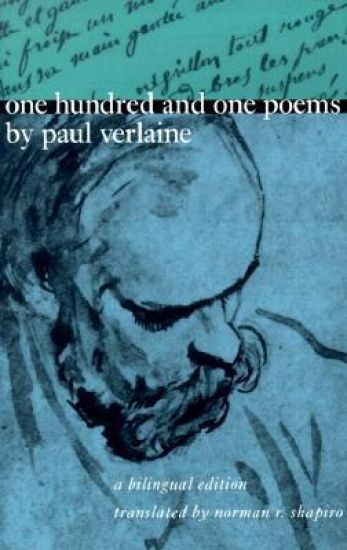
One Hundred and One Poems by Paul Verlaine

One Hundred and One Poems by Paul Verlaine

Paul Verlaine

University of Chicago Press
2000
nidottu
French poet Paul Verlaine was a major representative of the symbolist movement during the latter half of the 19th century. Norman Shapiro's translations seek to display Verlaine's ability to transform into verse the essence of everyday life and make evident the reasons for his renown in France and throughout the Western world. This selection provides the reader with a cross-section of Verlaine's repertoire. Shapiro has included a number of the poet's early works, showing him at his most capricious and lyrical; many poems from his middle period, which reflect his on-again, off-again conversion to Catholicism after his tumultuous relationship with Arthur Rimbaud; and poems from his late period, when he fell prey to poverty, dissipation, and disease. These later poems, rarely anthologized, and for the most part little known, mark an important shift in Verlaine's style and exhibit the biting wit and deep sincerity that characterize this entire collection. Biographical introductions and notes help explain the circumstances that gave rise to Verlaine's work. By spanning the poet's entire life work, Shapiro presents to scholars, students, and general readers of poetry the full range of Verlaine's achievement.
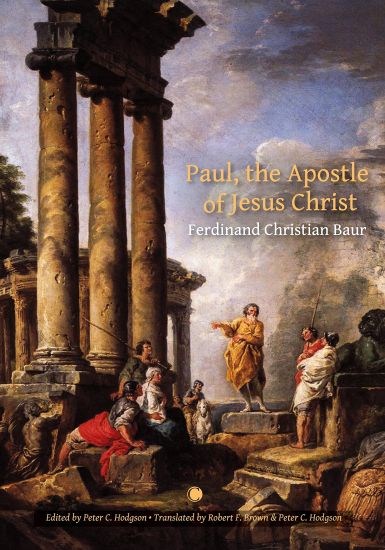
Paul, the Apostle of Christ

Paul, the Apostle of Christ

Ferdinand Christian Baur

JAMES CLARKE CO LTD
2023
nidottu
F.C. Baur's monumental study Paul, the Apostle of Jesus Christ (1845) is one of the greatest works of all time on the Apostle to the Gentiles. Laying the basis for modern Pauline scholarship, its three sections in turn thoroughly deconstruct the account of Paul found in Acts, examine the authentic, deuteron-Pauline and Pastoral Epistles, and draw the various strands of Paul's thought into a cohesive whole. In the first two parts Baur's historical-critical skills are at their finest, while in the third the influence of Hegel and Schleiermacher can be seen as Baur presents a comprehensive synthesis of Pauline theology. Since the original nineteenth-century English translation of Baur's masterpiece is no longer adequate, Hodgson and Brown's new edition will serve as the definitive resource for future scholarship. They not only present a new translation of the German, but also provide critical annotations and translations of all the scriptural passages originally quoted in Greek. Baur on Paul becomes truly available in English for the first time.
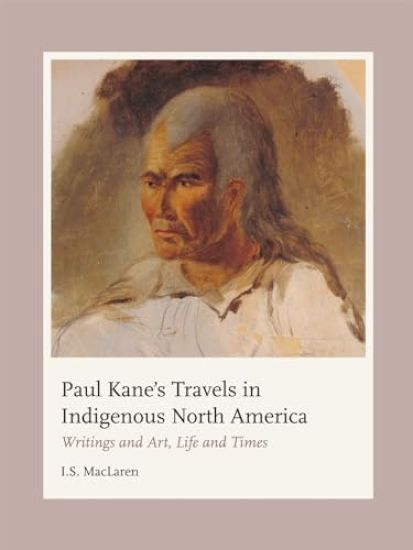
Paul Kane's Travels in Indigenous North America

Paul Kane's Travels in Indigenous North America

I.S. MacLaren

MCGILL-QUEEN'S UNIVERSITY PRESS
2024
sidottu
This is a four-volume set with a slip case.Paul Kane has been called the founding father of Canadian art, and Wanderings of an Artist among the Indians of North America a classic of Canadian literature. Yet his studio canvases are stereotypically generic, and his book is infamous: in word and in image, it depicts vain, vengeful, vicious, violent, and vanishing Indigenous people, disregarding its subjects’ lived experiences and providing little of ethnohistorical significance. Paul Kane’s Travels in Indigenous North America rediscovers the primary fieldwork underlying Kane’s studio art and book and the process by which his sketches and field writings evolved into damaging stereotypes with significant authority in the nineteenth century, in both popular and learned circles.In 1845 Kane travelled from Toronto to Lake Huron and Wisconsin; he continued from 1846 to 1848 to the upper Great Lakes, to the Prairies, across the Rockies, down the Columbia River, and through Oregon Territory to Puget Sound and Vancouver Island. The sketches he made constitute the first visual record of Indigenous life all the way from the Great Lakes to the Pacific Ocean. Paul Kane’s Travels in Indigenous North America, which reproduces nearly all his sketches as well as transcriptions of all his field writings, reveals him as a curious traveller fascinated by Indigenous lifeways. Together with a transcription of a draft manuscript for the book, which is not in his handwriting, the text of the first edition of Wanderings of an Artist, and a revised catalogue raisonné, these materials contextualize his travels in fur-trade history, book history, art history, and ethnohistory, offering scholarly understandings of the lives and histories of the real people Kane described and depicted while providing an authoritative biographical portrait of the artist. I.S. MacLaren reconstructs the colonial processes that turned Kane’s unique encounters with Indigenous peoples into benighted stereotypes, teaching us valuable lessons about what we thought we knew about Kane, how he let himself be turned into an Indian hater, and how historical society endowed him with authority.A painstaking, panoramic exploration, Paul Kane’s Travels in Indigenous North America also studies the artist’s oeuvre in terms of his contemporaries, his technique, and the complicated history of the provenance of the works. The whole lays the groundwork for future discussions of the pertinence of Paul Kane’s documentary record to Indigenous studies in North America.This is a shrink-wrapped four-volume set.Paul Kane has been called the founding father of Canadian art, and Wanderings of an Artist among the Indians of North America a classic of Canadian literature. Yet his studio canvases are stereotypically generic, and his book is infamous: in word and in image, it depicts vain, vengeful, vicious, violent, and vanishing Indigenous people, disregarding its subjects’ lived experiences and providing little of ethnohistorical significance. Paul Kane’s Travels in Indigenous North America rediscovers the primary fieldwork underlying Kane’s studio art and book and the process by which his sketches and field writings evolved into damaging stereotypes with significant authority in the nineteenth century, in both popular and learned circles.In 1845 Kane travelled from Toronto to Lake Huron and Wisconsin; he continued from 1846 to 1848 to the upper Great Lakes, to the Prairies, across the Rockies, down the Columbia River, and through Oregon Territory to Puget Sound and Vancouver Island. The sketches he made constitute the first visual record of Indigenous life all the way from the Great Lakes to the Pacific Ocean. Paul Kane’s Travels in Indigenous North America, which reproduces nearly all his sketches as well as transcriptions of all his field writings, reveals him as a curious traveller fascinated by Indigenous lifeways. Together with a transcription of a draft manuscript for the book, which is not in his handwriting, the text of the first edition of Wanderings of an Artist, and a revised catalogue raisonné, these materials contextualize his travels in fur-trade history, book history, art history, and ethnohistory, offering scholarly understandings of the lives and histories of the real people Kane described and depicted while providing an authoritative biographical portrait of the artist. I.S. MacLaren reconstructs the colonial processes that turned Kane’s unique encounters with Indigenous peoples into benighted stereotypes, teaching us valuable lessons about what we thought we knew about Kane, how he let himself be turned into an Indian hater, and how historical society endowed him with authority.A painstaking, panoramic exploration, Paul Kane’s Travels in Indigenous North America also studies the artist’s oeuvre in terms of his contemporaries, his technique, and the complicated history of the provenance of the works. The whole lays the groundwork for future discussions of the pertinence of Paul Kane’s documentary record to Indigenous studies in North America.This is a shrink-wrapped four-volume set.Paul Kane has been called the founding father of Canadian art, and Wanderings of an Artist among the Indians of North America a classic of Canadian literature. Yet his studio canvases are stereotypically generic, and his book is infamous: in word and in image, it depicts vain, vengeful, vicious, violent, and vanishing Indigenous people, disregarding its subjects’ lived experiences and providing little of ethnohistorical significance. Paul Kane’s Travels in Indigenous North America rediscovers the primary fieldwork underlying Kane’s studio art and book and the process by which his sketches and field writings evolved into damaging stereotypes with significant authority in the nineteenth century, in both popular and learned circles.In 1845 Kane travelled from Toronto to Lake Huron and Wisconsin; he continued from 1846 to 1848 to the upper Great Lakes, to the Prairies, across the Rockies, down the Columbia River, and through Oregon Territory to Puget Sound and Vancouver Island. The sketches he made constitute the first visual record of Indigenous life all the way from the Great Lakes to the Pacific Ocean. Paul Kane’s Travels in Indigenous North America, which reproduces nearly all his sketches as well as transcriptions of all his field writings, reveals him as a curious traveller fascinated by Indigenous lifeways. Together with a transcription of a draft manuscript for the book, which is not in his handwriting, the text of the first edition of Wanderings of an Artist, and a revised catalogue raisonné, these materials contextualize his travels in fur-trade history, book history, art history, and ethnohistory, offering scholarly understandings of the lives and histories of the real people Kane described and depicted while providing an authoritative biographical portrait of the artist. I.S. MacLaren reconstructs the colonial processes that turned Kane’s unique encounters with Indigenous peoples into benighted stereotypes, teaching us valuable lessons about what we thought we knew about Kane, how he let himself be turned into an Indian hater, and how historical society endowed him with authority.A painstaking, panoramic exploration, Paul Kane’s Travels in Indigenous North America also studies the artist’s oeuvre in terms of his contemporaries, his technique, and the complicated history of the provenance of the works. The whole lays the groundwork for future discussions of the pertinence of Paul Kane’s documentary record to Indigenous studies in North America.
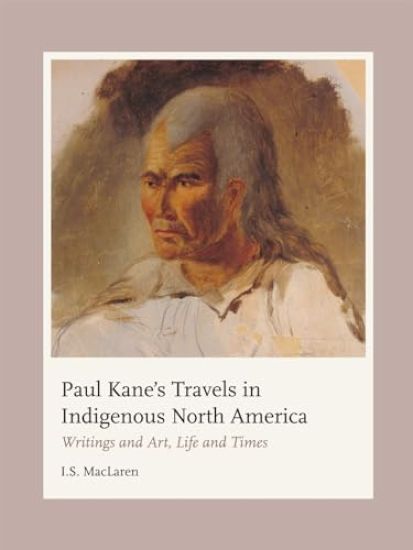
Paul Kane's Travels in Indigenous North America

Paul Kane's Travels in Indigenous North America

I.S. MacLaren

MCGILL-QUEEN'S UNIVERSITY PRESS
2024
sidottu
This is a shrink-wrapped four-volume set.Paul Kane has been called the founding father of Canadian art, and Wanderings of an Artist among the Indians of North America a classic of Canadian literature. Yet his studio canvases are stereotypically generic, and his book is infamous: in word and in image, it depicts vain, vengeful, vicious, violent, and vanishing Indigenous people, disregarding its subjects’ lived experiences and providing little of ethnohistorical significance. Paul Kane’s Travels in Indigenous North America rediscovers the primary fieldwork underlying Kane’s studio art and book and the process by which his sketches and field writings evolved into damaging stereotypes with significant authority in the nineteenth century, in both popular and learned circles.In 1845 Kane travelled from Toronto to Lake Huron and Wisconsin; he continued from 1846 to 1848 to the upper Great Lakes, to the Prairies, across the Rockies, down the Columbia River, and through Oregon Territory to Puget Sound and Vancouver Island. The sketches he made constitute the first visual record of Indigenous life all the way from the Great Lakes to the Pacific Ocean. Paul Kane’s Travels in Indigenous North America, which reproduces nearly all his sketches as well as transcriptions of all his field writings, reveals him as a curious traveller fascinated by Indigenous lifeways. Together with a transcription of a draft manuscript for the book, which is not in his handwriting, the text of the first edition of Wanderings of an Artist, and a revised catalogue raisonné, these materials contextualize his travels in fur-trade history, book history, art history, and ethnohistory, offering scholarly understandings of the lives and histories of the real people Kane described and depicted while providing an authoritative biographical portrait of the artist. I.S. MacLaren reconstructs the colonial processes that turned Kane’s unique encounters with Indigenous peoples into benighted stereotypes, teaching us valuable lessons about what we thought we knew about Kane, how he let himself be turned into an Indian hater, and how historical society endowed him with authority.A painstaking, panoramic exploration, Paul Kane’s Travels in Indigenous North America also studies the artist’s oeuvre in terms of his contemporaries, his technique, and the complicated history of the provenance of the works. The whole lays the groundwork for future discussions of the pertinence of Paul Kane’s documentary record to Indigenous studies in North America.
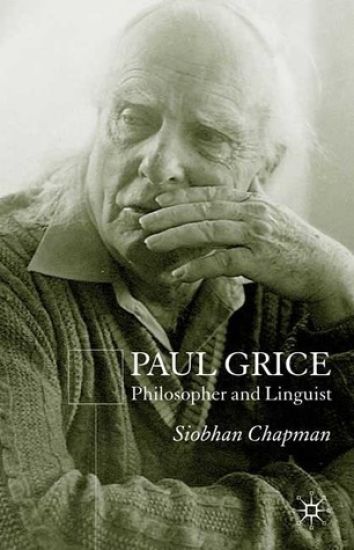
Paul Grice

Paul Grice

S. Chapman

Palgrave Macmillan
2005
nidottu
Paul Grice (1913-1988) is best known for his psychological account of meaning, and for his theory of conversational implicature, although these form only part of a large and diverse body of work. This is the first book to consider Grice's work as a whole. Drawing on the range of his published writing, and also on unpublished manuscripts, lectures and notes, Siobhan Chapman discusses the development of Grice's ideas and relates his work to the major events of his intellectual and professional life.
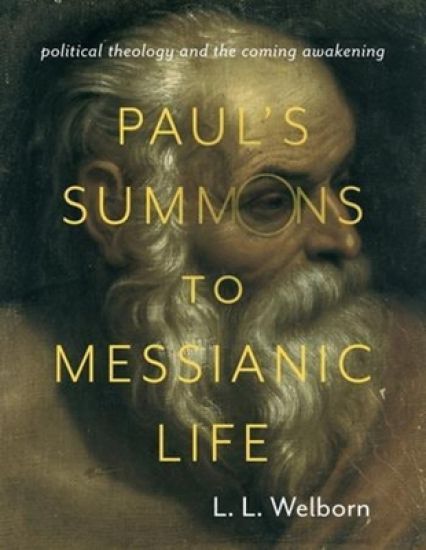
Paul's Summons to Messianic Life

Paul's Summons to Messianic Life

L. L. Welborn

Columbia University Press
2015
sidottu
Taubes, Badiou, Agamben, Zizek, Reinhard, and Santner have found in the Apostle Paul's emphasis on neighbor-love a positive paradigm for politics. By thoroughly reexamining Pauline eschatology, L. L. Welborn suggests that neighbor-love depends upon an orientation toward the messianic event, which Paul describes as the "now time" and which he imagines as "awakening." Welborn compares the Pauline dialectic of awakening to attempts by Hellenistic philosophers to rouse their contemporaries from moral lethargy and to the Marxist idea of class consciousness, emphasizing the apostle's radical spirit and moral relevance.
Paul's Summons to Messianic Life

Paul's Summons to Messianic Life

L. L. Welborn

Columbia University Press
2015
pokkari
Taubes, Badiou, Agamben, Zizek, Reinhard, and Santner have found in the Apostle Paul's emphasis on neighbor-love a positive paradigm for politics. By thoroughly reexamining Pauline eschatology, L. L. Welborn suggests that neighbor-love depends upon an orientation toward the messianic event, which Paul describes as the "now time" and which he imagines as "awakening." Welborn compares the Pauline dialectic of awakening to attempts by Hellenistic philosophers to rouse their contemporaries from moral lethargy and to the Marxist idea of class consciousness, emphasizing the apostle's radical spirit and moral relevance.
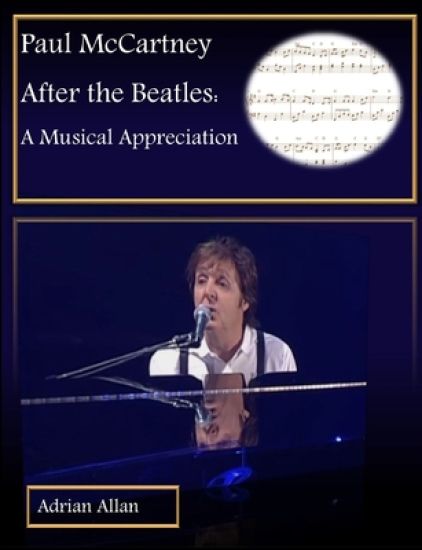
Paul McCartney After the Beatles: A Musical Appreciation
This is a musical analysis of Paul McCartney from 1970 to today. It is aimed at students of popular music theory; educators; musicians; and aspiring songwriters. It will also appeal to the general Beatles and McCartney fan who wishes to understand music on a deeper level - A beginner's guide to music theory and glossary are provided. Eighty of McCartney's post-Beatles songs are discussed in the format of short, but accessible essays. For each song, full details are provided concerning date of release; place of recording; instrumentation; and key signature. The description for each song details the musical techniques that McCartney uses, such as chord patterns; structure; use of instruments; vocal harmony; tonality; and key changes. In addition, every chapter details his life and work in each decade. A conclusion identifies the main characteristics of McCartney's style. The appendix details every recording location used. An invaluable guide to the music of the world's most successful songwriter.
Paul McCartney After The Beatles: A Musical Appreciation Volume Two
This second volume covers a further fifty songs from Paul McCartney's career after The Beatles. McCartney's work is reviewed in the context of musical trends since 1970. Each song is in the format of a short essay, with regard to tonality, key signature, instrumentation, harmony, modulation and dynamics. The book also includes an examination of McCartney's bass guitar playing both during and after The Beatles; an extended introduction to compositional devices such as secondary dominants, circles of fifths and the Mixolydian mode. For those without a background in music theory, the book includes an extensive index with an explanation of terms and specific examples from songs. The book concludes with two extended essays; one of McCartney's compositional style and the other on McCartney's cultural influence since 1970. There is an extensive interview with Wings' drummer Geoff Britton as well as fan anecdotes. At over 170k words, this is the most thorough study of McCartney's post-Beatles work ever to be printed.
Paul Rehbein, German Criminal Police, 1941-1945
Rehbein is a fictional character yet he was involved in the turmoil of the Eastern Front which was not generally known to western historians, yet, he survived. North Africa, Yugoslavia, the Berlin underworld, Smolensk/Katyn, Warsaw, Breslau and Soviet captivity encapsulated Rehbein's criminal investigations 1941-45
Paul McCartney After the Beatles: A Musical Appreciation
This is a musical analysis of Paul McCartney from 1970 to today. It is aimed at students of popular music theory; educators; musicians; and aspiring songwriters. It will also appeal to the general Beatles and McCartney fan who wishes to understand music on a deeper level - A beginner's guide to music theory and glossary are provided. Eighty of McCartney's post-Beatles songs are discussed in the format of short, but accessible essays. For each song, full details are provided concerning date of release; place of recording; instrumentation; and key signature. The description for each song details the musical techniques that McCartney uses, such as chord patterns; structure; use of instruments; vocal harmony; tonality; and key changes. In addition, every chapter details his life and work in each decade. A conclusion identifies the main characteristics of McCartney's style. The appendix details every recording location used. An invaluable guide to the music of the world's most successful songwriter.
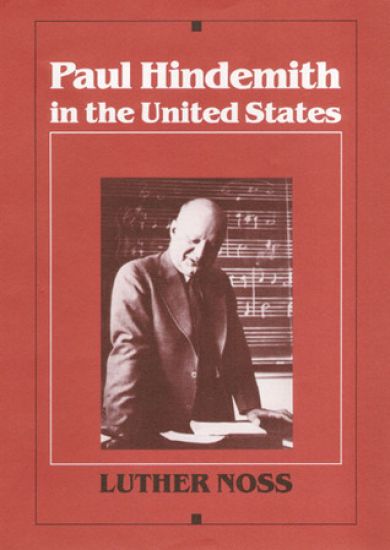
Paul Hindemith in the United States

Paul Hindemith in the United States

Luther Noss

University of Illinois Press
1989
sidottu
Paul Hindemith (1895–1963) was one of the most influential musicians and composers of the twentieth century. His wide-ranging musical interests and prodigious gifts connected him to music as varied as neoclassicism, the avant garde, and chamber pieces for unusual groupings of instruments. The uncertainties of life under the Nazi regime led Hindemith to move to the United States in 1940. There, he taught at Yale University and composed celebrated works like Symphonic Metamorphosis of Themes by Carl Maria von Weber. Concentrating upon the composer's first three US concert tours and his thirteen years at Yale, Luther Noss brings to life a observant, energetic, stubborn, and wry personality. Hindemith's journals offer detailed commentary on his experiences at Tanglewood while Noss draws on archives to describe the composer's groundbreaking Collegium concerts, classes, controversial plans to reorganize the School of Music, and other activities. Noss also delves into professional activity that included a huge number of commissions, writing four theory textbooks, an expansion of his Charles Eliot Norton Lectures, and numerous world premieres and other events.
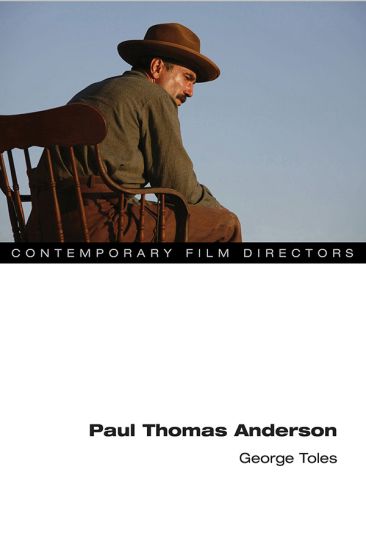
Paul Thomas Anderson

Paul Thomas Anderson

George Toles

University of Illinois Press
2016
sidottu
Since his explosive debut with the indie sensation Hard Eight , Paul Thomas Anderson has established himself as one of contemporary cinema's most exciting artists. His 2002 feature Punch-Drunk Love radically reimagined the romantic comedy. Critics hailed There Will Be Blood as a key film of the new millennium. In The Master , Anderson jarred audiences with dreamy amorphousness and a departure from conventional story mechanics. Acclaimed film scholar and screenwriter George Toles approaches these three films in particular, and Anderson's oeuvre in general, with a focus on the role of emergence and the production of the unaccountable. Anderson, Toles shows, is an artist obsessed with history, workplaces, and environments but also intrigued by spaces as projections of the people who dwell within. Toles follows Anderson from the open narratives of Boogie Nights and Magnolia through the pivot that led to his more recent films, Janus-faced masterpieces that orbit around isolated central characters--and advance Anderson's journey into allegory and myth. Blending penetrative analysis with a deep knowledge of filmic storytelling, Paul Thomas Anderson tours an important filmmaker's ever-deepening landscape of disconnection.
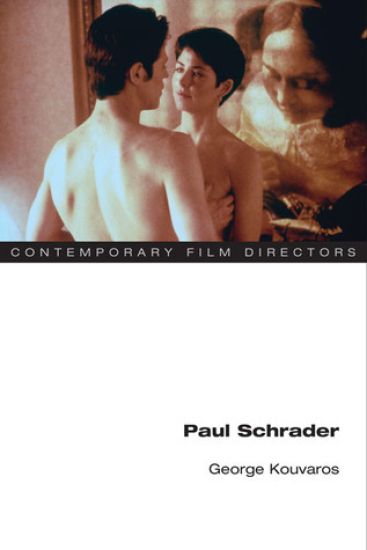
Paul Schrader

Paul Schrader

George Kouvaros

University of Illinois Press
2008
nidottu
As the first full-length study on Paul Schrader's films, this book examines the different styles of his work and the multiple influences on which it draws. A defining feature of Schrader's career is his capacity to engage in a range of collaborations and production contexts while returning to a consistent set of themes, character types, and dramatic scenarios. Going beyond the affirmation of a directorial vision, Schrader creates a cinema driven by issues of obsession, memory, and the difficult nature of experience. Representative of a new generation of American writer-directors of the 1970s, Schrader's films highlight the tension between old and new ways of telling a story and between the maintenance of commercial formulas and openness to individual expression. George Kouvaros draws on a personal interview conducted with Schrader and the director's prior commentary to trace common motivations and impulses behind such well-known films as Light Sleeper, American Gigolo, Affliction, Auto Focus, Taxi Driver, and Patty Hearst. Kouvaros reads Schrader's films not only in terms of a number of important themes such as male obsession and estrangement, but also in regard to harder to define issues that include melancholia, trauma, and the complex linkages of violence and guilt that bind individuals to places and each other.
Paul Thomas Anderson

Paul Thomas Anderson

George Toles

University of Illinois Press
2016
nidottu
Since his explosive debut with the indie sensation Hard Eight , Paul Thomas Anderson has established himself as one of contemporary cinema's most exciting artists. His 2002 feature Punch-Drunk Love radically reimagined the romantic comedy. Critics hailed There Will Be Blood as a key film of the new millennium. In The Master , Anderson jarred audiences with dreamy amorphousness and a departure from conventional story mechanics. Acclaimed film scholar and screenwriter George Toles approaches these three films in particular, and Anderson's oeuvre in general, with a focus on the role of emergence and the production of the unaccountable. Anderson, Toles shows, is an artist obsessed with history, workplaces, and environments but also intrigued by spaces as projections of the people who dwell within. Toles follows Anderson from the open narratives of Boogie Nights and Magnolia through the pivot that led to his more recent films, Janus-faced masterpieces that orbit around isolated central characters--and advance Anderson's journey into allegory and myth. Blending penetrative analysis with a deep knowledge of filmic storytelling, Paul Thomas Anderson tours an important filmmaker's ever-deepening landscape of disconnection.