Kirjojen hintavertailu. Mukana 11 342 296 kirjaa ja 12 kauppaa.

Kirjahaku

Etsi kirjoja tekijän nimen, kirjan nimen tai ISBN:n perusteella.

1000 tulosta hakusanalla Philip Stuart

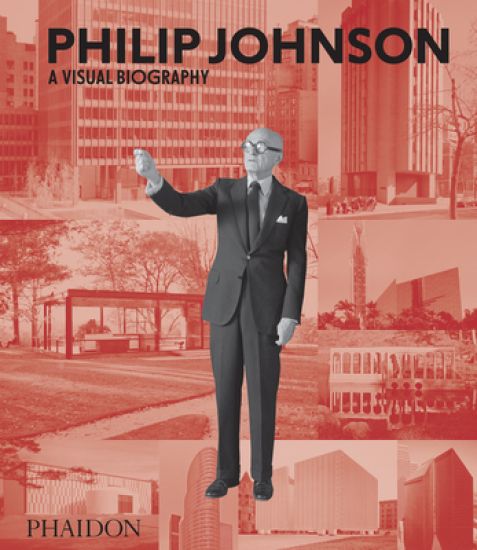
Philip Johnson

Philip Johnson

Ian Volner

Phaidon Press Ltd
2020
sidottu
A spectacular visual biography of one of the most celebrated architects and cultural icons of the twentieth century With his elegant suits and trademark round black glasses, Philip Johnson - a witty, wealthy, and well-connected architect - was for many years the most powerful figure in the society and politics of his profession. This impressively illustrated book traces his seven decades of larger-than-life influence, innovation, and controversy in the realm of architecture and beyond. Hundreds of images and documents, many published here for the first time, trace the remarkable life and career of a true legend.
Philip of Macedon

Philip of Macedon

N.G.L. Hammond

Bristol Classical Press
1998
nidottu
Philip was a genius of extraordinary versatility. Inheriting a kingdom near to collapse, he made Macedonia the greatest military power in the Western world and left to his son Alexander the strongest state in Eastern Europe. This book gives full attention to the Macedonian state and the Macedonian people who made Philip's success possible, and to the high level of culture and of artistic skills revealed by recent archaeological discoveries.
Philip of Spain and the Netherlands

Philip of Spain and the Netherlands

C.J. Cadoux

JAMES CLARKE CO LTD
2023
nidottu
In Philip of Spain and the Netherlands, C.J. Cadoux discusses the expression of moral judgements regarding leading figures in major historical events. Indeed, Cadoux, using the case of the Dutch Revolt, questions whether it is possible at all to assess moral quality without adequate knowledge of the relevant facts, at least. First published in 1947, Cadoux's approach presents all history, whether national or personal, from a disinterested approach. This consistency of approach allows for a clear and concise depiction of events and persons that is not skewed by an overbearing opinion. He posits that in the great struggle between Spain and the Netherlands in the sixteenth century, a new ethic of Christian mercy is discernible. Cadoux concludes his book by asking the reader 'in whose behaviour there can be seen some promise of better and humaner things?', reinforcing the inherent difficulty that remains when passing moral judgement.
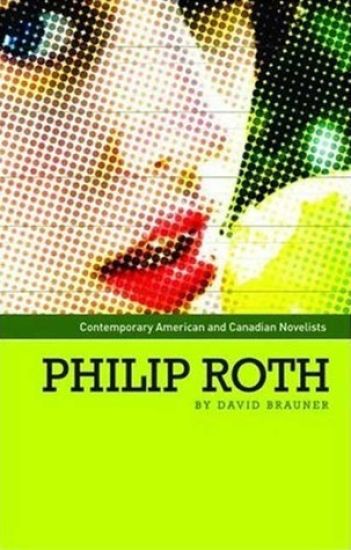
Philip Roth

Philip Roth

David Brauner

Manchester University Press
2007
sidottu
This is a groundbreaking study of the most important contemporary American novelist, Philip Roth. Reading the author alongside a number of his contemporaries, and focusing particularly on his later fiction, this book offers a highly accessible, informative and persuasive view of Roth as an intellectually adventurous and stylistically brilliant writer who constantly reinvents himself in surprising ways. At the heart of this book are a number of detailed and nuanced readings of Roth’s works both in terms of their relationships with each other and with fiction by Nathaniel Hawthorne, Thomas Pynchon, Tim O’Brien, Brett Easton Ellis, Stanley Elkin, Howard Jacobson and Jonathan Safran Foer. Brauner identifies as a thread running through all of Roth’s work the use of paradox, both as a rhetorical device and as an organising intellectual and ideological principle.
Philip Roth

Philip Roth

David Brauner

Manchester University Press
2007
nidottu
This is a groundbreaking study of the most important contemporary American novelist, Philip Roth. Reading the author alongside a number of his contemporaries, and focusing particularly on his later fiction, this book offers a highly accessible, informative and persuasive view of Roth as an intellectually adventurous and stylistically brilliant writer who constantly reinvents himself in surprising ways. At the heart of this book are a number of detailed and nuanced readings of Roth’s works both in terms of their relationships with each other and with fiction by Nathaniel Hawthorne, Thomas Pynchon, Tim O’Brien, Brett Easton Ellis, Stanley Elkin, Howard Jacobson and Jonathan Safran Foer. Brauner identifies as a thread running through all of Roth’s work the use of paradox, both as a rhetorical device and as an organising intellectual and ideological principle.
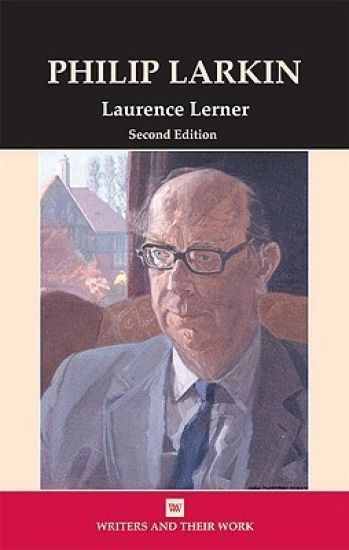
Philip Larkin

Philip Larkin

Laurence Lerner

Northcote House Publishers Ltd
2004
nidottu
Philip Larkin is one of the finest English poets of our time. His poetic personality – nostalgic, wry, melancholy, ironic, witty and haunting – has appealed to a far wider audience than that of literary specialists, while also winning the respect of leading critics and fellow poets. Lerner’s study relates poetry to Larkin’s life, and to the literary and social environment of post-war Britain; discusses the Larkin persona, and Larkin’s relation to literary criticism; and above all seeks to guide readers to a full appreciation of the power and subtlety of Larkin’s best poems.
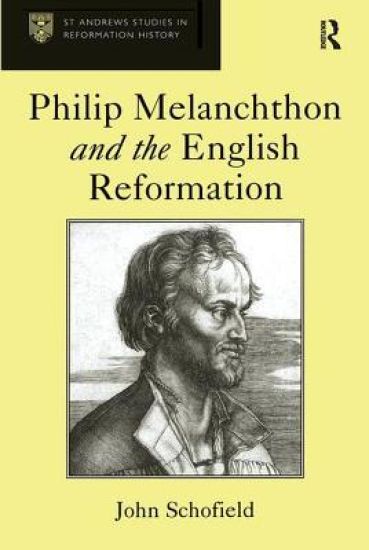
Philip Melanchthon and the English Reformation

Philip Melanchthon and the English Reformation

John Schofield

Ashgate Publishing Limited
2006
sidottu
This book explores the hitherto neglected relationship between the English Reformation and the Lutheran scholar Philip Melanchthon (1497-1560). It looks at how Henry, following his break with Rome, flirted with Lutheranism as a doctrine to replace Catholicism, before the eventual collapse of the policy and its replacement with a more moderate reform programme under Cranmer. It then goes on to investigate how Melanchthon, as the leading proponent of Lutheranism influenced successive royal governments, both positively and negatively, as they struggled to impose their own brand of doctrinal conformity on the English church. By refracting the well known narrative of the English Reformation through the lens of Melanchthon, new light is shed on many events that have puzzled historians. The study provides fascinating new perspectives on such questions as why Henry suddenly abandoned his Lutheran policy, why Cromwell fell from power in 1540 and even insights into Elizabeth's personal beliefs. By tying events in England into the context of the wider European Reformation, through the work of Philip Melanchthon, this book offers fresh insights into the nature and development of early evangelical Protestantism.
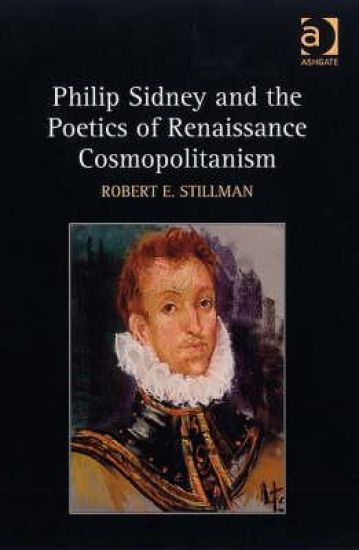
Philip Sidney and the Poetics of Renaissance Cosmopolitanism

Philip Sidney and the Poetics of Renaissance Cosmopolitanism

Robert E. Stillman

Ashgate Publishing Limited
2008
sidottu
Celebrations of literary fictions as autonomous worlds appeared first in the Renaissance and were occasioned, paradoxically, by their power to remedy the ills of history. Robert E. Stillman explores this paradox in relation to Philip Sidney's Defence of Poesy, the first Renaissance text to argue for the preeminence of poetry as an autonomous form of knowledge in the public domain. Offering a fresh interpretation of Sidney's celebration of fiction-making, Stillman locates the origins of his poetics inside a neglected historical community: the intellectual elite associated with Philip Melanchthon (leader of the German Reformation after Luther), the so-called Philippists. As a challenge to traditional Anglo-centric scholarship, his study demonstrates how Sidney's education by Continental Philippists enabled him to dignify fiction-making as a compelling form of public discourse-compelling because of its promotion of powerful new concepts about reading and writing, its ecumenical piety, and its political ambition to secure through natural law (from universal 'Ideas') freedom from the tyranny of confessional warfare. Intellectually ambitious and wide-ranging, this study draws together various elements of contemporary scholarship in literary, religious, and political history in order to afford a broader understanding of the Defence and the cultural context inside which Sidney produced both his poetry and his poetics.
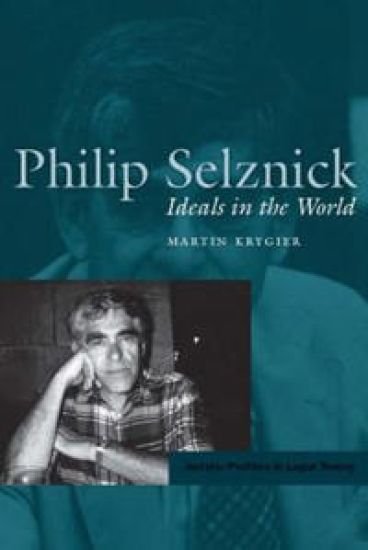
Philip Selznick

Philip Selznick

Martin Krygier

Stanford University Press
2012
sidottu
Philip Selznick's wide-ranging writings engaged with fundamental questions concerning society, politics, institutions, law, and morals. Never confined by a single discipline or approach, he proved himself a major figure across a range of fields including sociology, organizations and institutions, leadership, political science, sociology of law, political theory, and social philosophy. This volume, the first book-length treatment of Selznick's ideas, discusses Selznick's various intellectual contributions. Reading across Selznick's work, one appreciates the coherence of his fundamental preoccupations—with the social conditions for frustration and the vindication of values and ideas. Exploring Selznick's insights into the nature and quality of institutional, legal, and social life, the book also examines his particular ways of thinking, concerns, values, and sensibility. Martin Krygier brings to light the coherence of Selznick's fundamental preoccupations, allowing readers to fully engage with his unique insights and distinctive moral-intellectual sensibility.
The Philip K. Dick Reader

The Philip K. Dick Reader

Philip K. Dick

Citadel Press
2016
nidottu
Includes the stories that inspired the movies Total Recall, Screamers, Minority Report, Paycheck, and Next-More than anyone else in the field, Mr. Dick really puts you inside people's minds.- --The Wall Street JournalThe Philip K. Dick Reader Many thousands of readers consider Philip K. Dick the greatest science fiction mind on any planet. Since his untimely death in 1982, interest in Dick's works has continued to mount, and his reputation has been further enhanced by a growing body of critical attention. The Philip K. Dick Award is now given annually to a distinguished work of science fiction, and the Philip K. Dick Society is devoted to the study and promulgation of his works.Dick won the prestigious Hugo Award for the best novel of 1963 for The Man in the High Castle. In the last year of his life, the film Blade Runner was made from his novel Do Androids Dream of Electric Sheep?This collection includes some of Dick's earliest short and medium-length fiction, including We Can Remember It for You Wholesale (the story that inspired the motion picture Total Recall), Second Variety (which inspired the motion picture Screamers), Paycheck, The Minority Report, and twenty more.
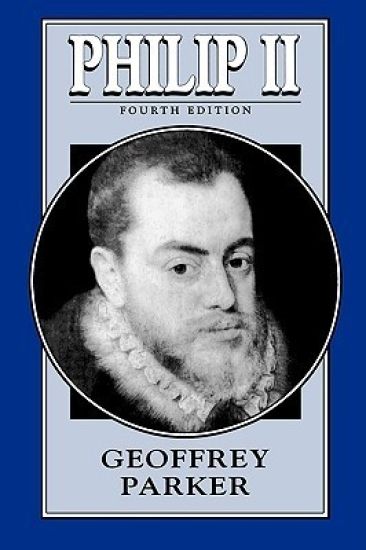
Philip II

Philip II

Geoffrey Parker

Open Court Publishing Co ,U.S.
2002
pokkari
In order to understand Spanish America, one must begin with Philip II, who at one time controlled a quarter of the world's population. This new edition is brought up to date with new material including photos, map and charts, and an essay in which the author evaluates new works about this "obsessed personality." "A well-managed and impressively clear story." - The New York Times
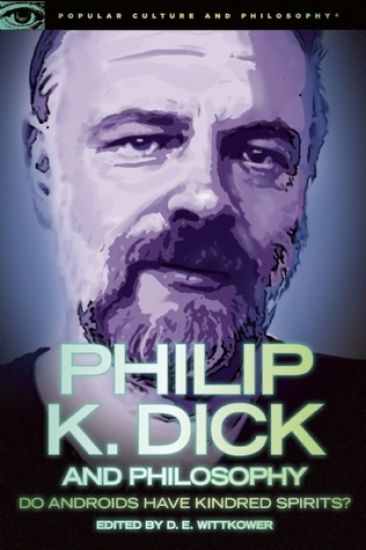
Philip K. Dick and Philosophy

Philip K. Dick and Philosophy

Open Court Publishing Co ,U.S.
2011
pokkari
Science fiction writer Philip K. Dick (1928--1982) is the giant imagination behind so much recent popular culture--both movies directly based on his writings, such as Blade Runner (based on the novel Do Androids Dream of Electric Sheep?), Total Recall, Minority Report, and The Adjustment Bureau plus cult favorites such as A Scanner Darkly, Imposter, Next, Screamers, and Paycheck and works revealing his powerful influence, such as The Matrix and Inception. With the much anticipated forthcoming publication in 2011 of volume 1 of Exegesis, his journal of spiritual visions and paranoic investigations, Dick is fast becoming a major influence in the world of popular spirituality and occult thinking. In Philip K. Dick and Philosophy: Who Adjusts the Adjustment Bureau?, twenty Dick fans and professional thinkers confront the fascinating and frightening ideas raised by Dick's mind-blowing fantasies. Is there an alien world behind the everyday reality we experience? If androids can pass as human, should they be given the same consideration as humans? Do psychotics have insights into a mystical reality? Would knowledge of the future free us or enslave us? This volume will also include Dick's short story "Adjustment Team," on which The Adjustment Bureau is based. Philip K. Dick and Philosophy explores the ideas of Philip K. Dick in the same way that he did: with an earnest desire to understand the truth of the world, but without falsely equating earnestness with a dry seriousness. Dick's work was replete with whimsical and absurdist presentations of the greatest challenges to reason and to humanity--paradox, futility, paranoia, and failure--and even at his darkest times he was able to keep some perspective and humor, as for example in choosing to name himself 'Horselover Fat' in VALIS at the same time as he relates his personal religious epiphanies, crises, and delusions. With the same earnest whimsy, we approach Philip K. Dick as a philosopher like ourselves--one who wrote almost entirely in thought-experiments and semi-fictional world-building, but who engaged with many of the greatest questions of philosophy throughout the Euro-American tradition. Philip K. Dick and Philosophy has much to offer for both serious fans who have read many of his novels and stories, and for those who may have just recently learned his name, and realized that his work has been the inspiration for several well-known and thought-provoking films. Most chapters start with one or more of the movies based on Dick's writing. From here, the authors delve deeper into the issues by bringing in philosophers' perspectives and by bringing in Dick's written work. The book invites the reader with a casual familiarity with Dick to get to know his work, and invites the reader with little familiarity with philosophy to learn more. At the same time, we have new perspectives and challenging connections and interpretations for even the most hard-core Dick fans, even though we never speak to "insiders" only. To maximize public interest, the book prominently addresses the most widely-known films, as well as those with the most significant fan followings: Blade Runner, Total Recall, Minority Report, A Scanner Darkly, and The Adjustment Bureau. Along with these "big five" films, a few chapters address his last novels, especially VALIS, which have a significant cult following of their own. There are also chapters which address short stories and novels which are currently planned for adaptation: Radio Free Albemuth (film completed, awaiting distribution), The Man in the High Castle (in development by Ridley Scott for BBC mini-series), and "King of the Elves" (Disney, planned for release in 2012).
Philip Roth Considered

Philip Roth Considered

Steven Milowitz

CRC Press Inc
2000
sidottu
This book comprehensively surveys Philip Roth's published and unpublished works, focusing on the thematic unity which binds them together: the memory of the Holocaust and the altered universe born of that memory. The Holocaust is understood as the orienting event for Roth's fiction and non-fiction, the force that surrounds the characters and the narratives at all times. Roth's obsession with questions of the Holocaust, questions of responsibility, meaning, and powerlessness, explains his recurring discussion of entrapment, dehumanization, nihilism, guilt, and coercion.The concentrationary universe of the title is defined, in this work, as not only the universe of camps, but also the universe that exists after the devastation. Moral and philosophical norms are revoked in this new world. Roth's early works are presented on a desolate landscape. The introduction explicates this landscape, specifically by invoking an early play of Roth's, a play which is set in a Jewish ghetto during the Holocaust. This unpublished work introduces the historical period that shapes the visions of Roth's future protagonists.The next three chapters study Roth's relentless excavation of the dilemmas of fathers, mothers, authority figures, and the inner discord of need and purpose. These seemingly quotidian problems are exacerbated and intensified by the Holocaust's shadowy presence. No relationship, no effort at fulfillment, no action is untempered by history in Roth's varied fictions.Chapters four and five look directly at Roth's allusions to the Holocaust. They explore, through each of Roth's works, how the Holocaust-thematic -the play of ideology and nihilism-and the Holocaust-pattern -the idea of the past encroaching upon the present -work through Roth's career, informing his readers not only of his fascination with the Holocaust, but of his particularly human way of dealing with it.The last chapter briefly summarizes the findings of the previous chapter and connects Roth's specific concentrationary universe to the larger world. The linguistic clues of Roth's novels are revealed and investigated, pointing to Roth's celebration of ambiguity and individuality as parts of an imperfect formula for writing and living in the debased aftermath of the Holocaust.
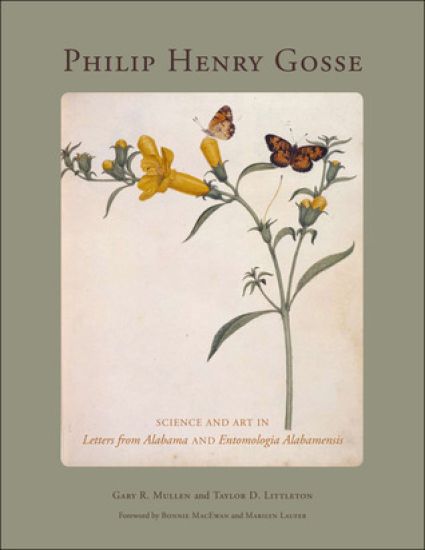
Philip Henry Gosse

Philip Henry Gosse

Gary Mullen; Taylor Littleton

The University of Alabama Press
2010
sidottu
Philip Henry Gosse’s detailed watercolors of Alabama’s native insects and plants represent a landmark in the annals of American natural history. Offered for the first time are the complete full-color illustrations from Gosse’s Entomologia Alabamensis, along with a biographical essay placing Gosse’s work in the context of his long and fruitful life. Born in 1810 in Worcester, England, the young Philip Henry Gosse developed a passion for the natural world. Having learned the basics of miniature portraiture from his father, Gosse quickly took for his artistic subjects the flourishing marine life he discovered along the English coast. In May, 1838, Gosse took a teaching job in Dallas County, Alabama. For the next eight months he collected the insect specimens that he would preserve in the beautifully detailed watercolors of Entomologia Alabamensis. In addition, he composed a highly personalized chronology of his life in a frontier culture, published eventually as Letters from Alabama. Following his return to England, Gosse went on to publish more than 40 books, producing some of the 19th century’s finest illustrations of insects and marine organisms. Today, he is remembered as a popular writer of science for the general public and as a passionate artist whose work in Alabama and elsewhere captured and revealed the beauty and vitality of the natural world. Copublication with the Jule Collins Smith Museum of Fine Art and Auburn University Libraries.
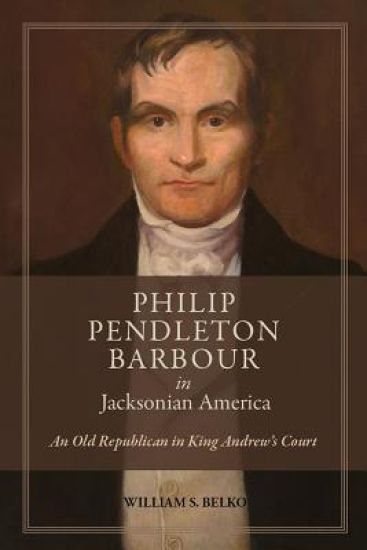
Philip Pendleton Barbour in Jacksonian America

Philip Pendleton Barbour in Jacksonian America

William S. Belko

The University of Alabama Press
2016
sidottu
William S. Belko’s Phillip Pendleton Barbour in Jacksonian America provides the first comprehensive biography of a pivotal yet nearly forgotten statesman who made numerous key contributions to a transformative period of early American history.Barbour, a Virginia lawyer, participated in America’s transition from a mostly republican government to a truer majority democracy, notably while serving as the twelfth Speaker of the United States House of Representatives and later as an associate justice of the United States Supreme Court. After being elected to the US Congress during the War of 1812, Barbour also emerged as one of the foremost champions of states’ rights, consistently and energetically fighting against expansions of federal powers. He, along with other Jeffersonian Old Republicans, opposed federal plans for a national tariff and internal improvements. Later, Barbour became one of the first Jeffersonian politicians to join the Jacksonian Democrats in Jackson’s war against a national bank.Barbour continued to make crucial strides in support of states’ rights after taking his seat on the United States Supreme Court in 1836 under Chief Justice Roger Taney. He contributed to the Charles River Bridge v. Warren Bridge and Briscoe v. Bank of Kentucky decisions, which bolstered states’ rights. He also delivered the opinion of the court in New York v. Miln, which provided the basis for the State Police Powers Doctrine.Expertly interweaving biography, history, political science, and jurisprudence, Phillip Pendleton Barbour in Jacksonian America remembers the man whose personal life and career were emblematic of the decades in which the United States moved from the Age of Jefferson to the Age of Jackson, contributing to developments that continue to animate American politics today.
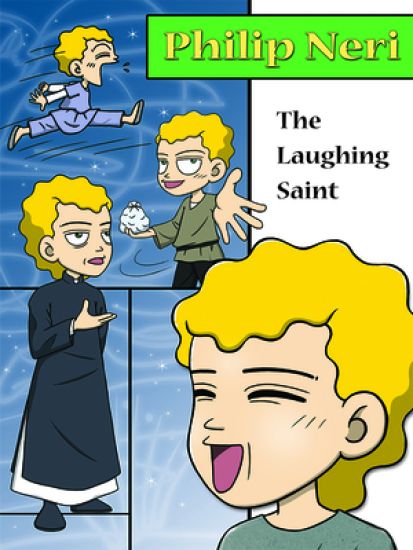
Philip Neri, the Laughing Saint

Philip Neri, the Laughing Saint

Hyeon-Ju Lee

Pauline Books Media
2015
nidottu
Saint Philip Neri's story is told in a full-color, graphic novel biography for children ages 9-12. When he goes to live with his uncle to learn business skills, he experiences a religious conversion. Enthusiastic Philip then moves to Rome to study under the Augustinian rule, dedicating his time and energy to helping the poor. This loveable saint, patron of joy and laughter, comes alive for young readers as he inspires them to live out Christ's call in their own lives.
Philip Juras: The Southern Frontier

Philip Juras: The Southern Frontier

Philip Juras

University of Georgia Press
2015
pokkari
Presenting stunning reproductions of oil paintings by landscape artist Philip Juras, this exhibition catalogue offers a glimpse of the presettlement southern wilderness as late eighteenth-century naturalist William Bartram would have experienced it during his famed travels through the region. Juras’s work combines direct observation with historical, scientific, and natural history research to depict, and in some cases reimagine, landscapes as they appeared in the 1770s. Juras spent years researching Bartram and revisiting important sites the naturalist wrote about in his celebrated Travels. Juras’s paintings recreate the lost southern frontier for contemporary viewers in much the same way that nineteenth century American landscape painters like Albert Bierstadt and Thomas Moran brought the western frontier to the consciousness of the rapidly industrializing East.Juras’s work explores many of the important and imperiled ecosystems that remain in the South today. These little-known, remnant natural communities, depicted in well-researched and meticulous paintings, are further illuminated by essays placing them in the context of Bartram’s legacy and the American landscape movement. The catalogue features more than sixty reproductions of Juras’s paintings. Presented with essays by the artist as well as Dorinda Dallmeyer, director of the Environmental Ethics Certificate Program at the University of Georgia; Holly Koons McCullough, director of Collections and Exhibitions at the Telfair Museum of Art; and Janisse Ray, lauded poet and environmental advocate, the catalogue provides readers with a rare glimpse of the Southern frontier before its essence was irrevocably altered by European settlement.