Kirjojen hintavertailu. Mukana 11 342 296 kirjaa ja 12 kauppaa.

Kirjahaku

Etsi kirjoja tekijän nimen, kirjan nimen tai ISBN:n perusteella.

1000 tulosta hakusanalla RICHARD EDW DENNETT

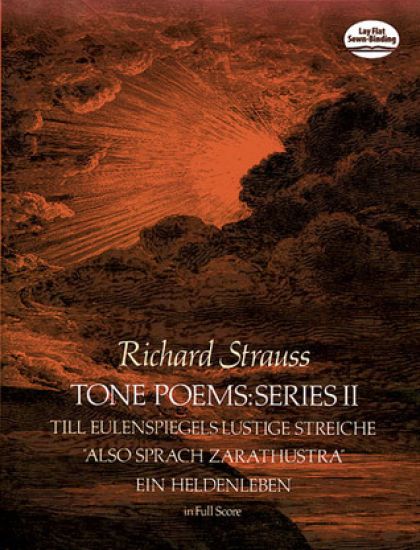
Richard Strauss

Richard Strauss

Strauss Richard

Dover Publications Inc.
2008
nidottu
Three important orchestral works, including very popular "Till Eulenspiegel's Merry Pranks," reproduced in full score from original editions. This volume and its companion volume make available for the first time in convenient, inexpensive editions all the important Strauss tone poems. Study score.
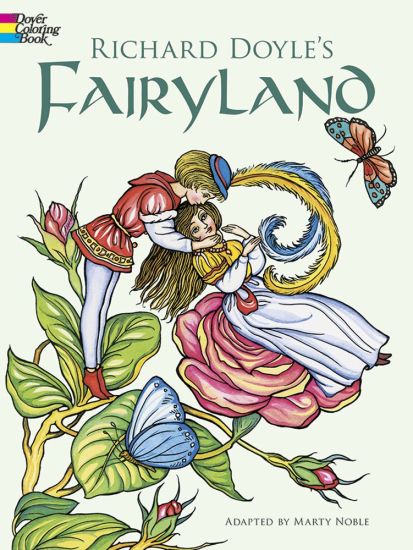
Richard Doyle's Fairyland Coloring Book

Richard Doyle's Fairyland Coloring Book

Richard Doyle

Dover Publications Inc.
2002
nidottu
Famed for his charming illustrations of elves, fairies, and gnomes, the prominent Victorian artist Richard Doyle (1824-1883) produced a host of these delightful characters for The Princess Nobody: A Tale of Fairyland, a book he created with British author Andrew Lang in 1884.Illustrator Marty Noble has skillfully adapted 29 of the English artist's most delightful watercolors from that enchanting book. Brimming with a multitude of nature s tiniest creatures of the air, field, and stream, the collection also features pixies, imps, and a petite princess and an equally diminutive prince. These captivating figures can be brought to life by colorists and fairyland devotees as they apply their own hues to enchanting scenes of mischievous sprites at play. Captions accompany each illustration."
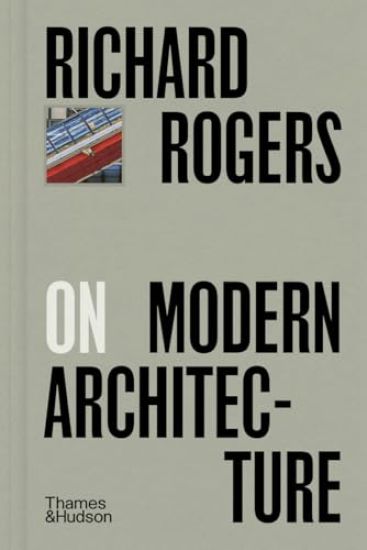
Richard Rogers on Modern Architecture

Richard Rogers on Modern Architecture

Richard Rogers

THAMES HUDSON LTD
2025
sidottu
‘Thames & Hudson’s new, affordable, covetable ‘Pocket Perspectives’: beautifully illustrated essays by canonical writers’ Financial Times A manifesto for the future of architectural practice and the necessity of good design to modern life, by renowned British architect Richard Rogers. Written in what architect Richard Rogers regarded as a moment of crisis in modern architecture, this essay considers how the way we build – and live – might change for the better. Poor design, monotony and inhuman scale are, Roger argues, not the results of a lack of talent nor the failures of the Modern Movement, but of a surrender to exploitative economic systems and inconsiderate business interests. Best known for his work on the Pompidou Centre in Paris, the European Court of Human Rights in Strasbourg and the Lloyd's building and Millennium Dome in London, Rogers was perhaps the most original and inventive architect of his time, and was a frequent commentator on the contemporary scene. As a practitioner, he was in the best position possible to appreciate how economic forces can create – or frustrate – good design. A succinct summary of his design philosophies, Richard Rogers on Modern Architecture continues to be a powerful manifesto.
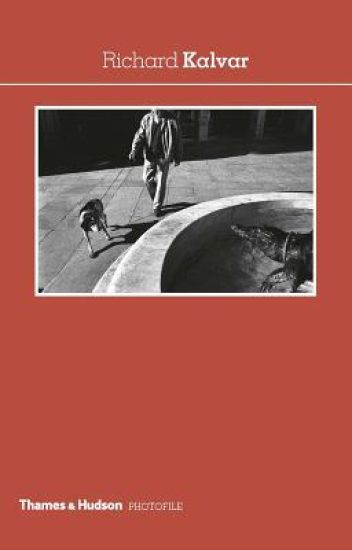
Richard Kalvar

Richard Kalvar

Thames Hudson Ltd
2019
nidottu
A member of the celebrated Magnum agency, Richard Kalvar has spent more than four decades building up a diverse body of work that is characterized by a finely honed sense of observation. Born in Brooklyn, New York, in 1944, he has travelled all over the world, capturing fleeting details and moments of absurdity. His images suggest glimpses into untold stories, reflecting an idiosyncratic approach to the act and practice of photography.
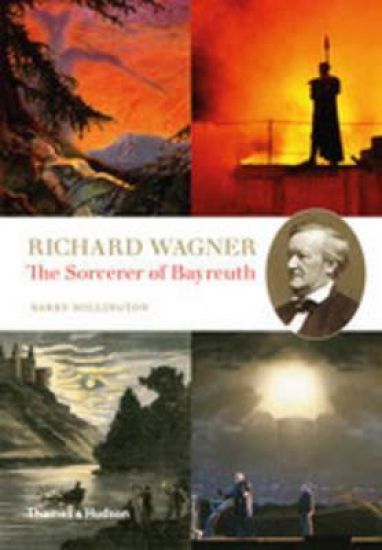
Richard Wagner

Richard Wagner

Barry Millington

Thames Hudson Ltd
2012
sidottu
Richard Wagner is one of the influential and also the polarizing composers in the history of music. Over the course of his long career, he produced a stream of spellbinding works that challenged musical convention through their experimentation, paving the way for modernism. This title offers an overview of Wagners life, work and times.
Richard Long

Richard Long

Richard Long

THAMES HUDSON LTD
2021
sidottu
Richard Long has been at the forefront of land art for more than half a century. A pioneer of conceptual practices in the 1960s, his expanded approach to sculpture has consistently taken the medium out of the studio into the natural world and around the globe, using time, space, distance, navigation, perception, the elements and the geological forces that have shaped the landscape around us as both his tools and his vocabulary. Many Rivers to Cross is a thorough overview of Long's career, selected by the artist himself and spanning the late 1960s to the present day. It covers his practice in all its forms – walks, photographs, text works, large installations, mud works and drawings, including some early unpublished works as well as many seminal and celebrated projects. A number of short ‘back stories’ written by Long not only provide insight into the context and creation of key works, but also evoke the sense of freedom and adventure of an epic journey across foreign landscapes. Texts include a recent conversation between Long and internationally acclaimed composer and musician Nitin Sawhney; a dialogue about the recreation of Muddy Water Circle (1994) at Frieze Masters in London with Lisson Gallery in 2013; and a discussion with curator Alkistis Dimaki on the occasion of the presentation of Athens Slate Line at the Acropolis, Athens, in summer 2020. The book also includes documentation of works presented internationally in museums and galleries. Using earth, rocks, sticks and other natural materials and forces ranging from water and gravity to clouds and constellations of stars, over the course of his distinguished career Long has represented the primal relationship between humankind, art and the landscape. In a modern, post-industrial, digital world, his poetic and often profound practice is a poignant reminder of the origins of life, of human development and civilization, and of the fundamental, primordial drive to create.
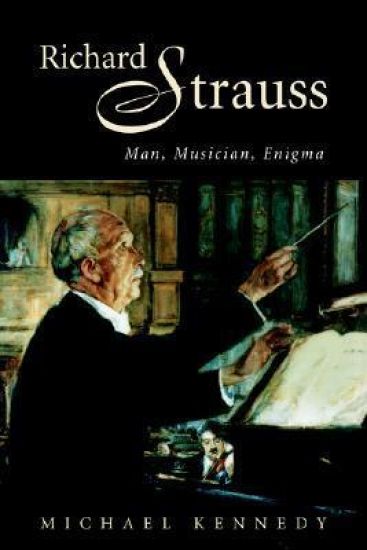
Richard Strauss

Richard Strauss

Michael Kennedy

Cambridge University Press
2006
pokkari
This book re-evaluates a figure whom the author considers to be the greatest composer of the twentieth century. Kennedy deals fully with Strauss's life as leading composer and national figure in the Third Reich, during which he was both fêted and cold-shouldered by the authorities. In putting this period into perspective he draws heavily on hitherto ignored material, including Strauss's own letters and diaries. In addition he reveals much about Strauss's long, happy but tempestuous marriage to the soprano Pauline de Ahna as well as tracing the important relationships to his librettists Hugo von Hofmannsthal, Stefan Zweig, Joseph Gregor and Clemens Krauss. Kennedy reassesses the man and the music, revealing a picture of a level-headed, practical and extremely versatile musician - a great conductor as well as a great composer.
Richard Rolle and the Invention of Authority

Richard Rolle and the Invention of Authority

Nicholas Watson

Cambridge University Press
2007
pokkari
This 1991 book is a literary study of the career of Richard Rolle (d.1349), a Yorkshire hermit and mystic who was one of the most widely read English writers of the late Middle Ages. Nicholas Watson proposes a chronology of Rolle's writings, and offers a literary analyses of a number of his works. He shows how Rolle's career, as a writer of passionate religious works in Latin and later in English, has as its principal focus the establishment of his own spiritual authority. The book also addresses wider issues, suggesting an alternative way of looking at mystical writing in general and challenging the prevailing view of the relationship between medieval and renaissance attitudes to authors and authority.
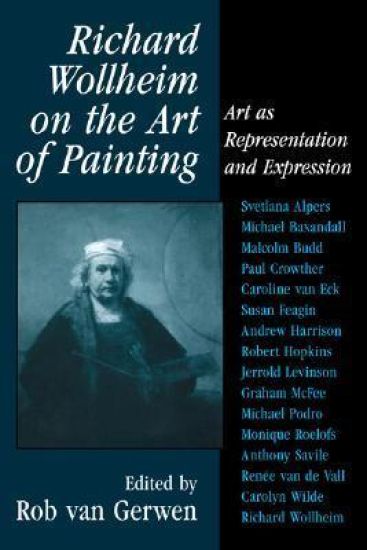
Richard Wollheim on the Art of Painting
Richard Wollheim is one of the dominant figures in the philosophy of art, whose work has shown not only how paintings create their effects but why they remain important to us. His influential writings have focused on two core, interrelated questions: How do paintings depict? and how do they express feelings? In this collection of essays a distinguished group of thinkers in the fields of art history and philosophical aesthetics offers a critical assessment of Wollheim's theory of art. Among the themes under discussion are Wollheim's explanation of pictorial representation in terms of seeing-in, his views of artistic expression as a type of complex projection, and his notion of the internal spectator. In the final essay Wollheim himself responds to the contributors. This book will be eagerly sought out by all serious students of the theory of art, whether in departments of philosophy or art history.
The Sophismata of Richard Kilvington

The Sophismata of Richard Kilvington

Richard Kilvington

Cambridge University Press
2011
pokkari
Richard Kilvington was an obscure fourteenth-century philosopher whose Sophismata deal with a series of logic-linguistic conundrums of a sort which featured extensively in philosophical discussions of this period. Originally published in 1990, this was the first ever translation or edition of his work. As well as an introduction to Kilvington's work, the editors provide a detailed commentary. This edition will prove of considerable interest to historians of medieval philosophy who will realise from the evidence presented here that Kilvington deserves to be studied just as seriously as Duns Scotus or William of Ockham.
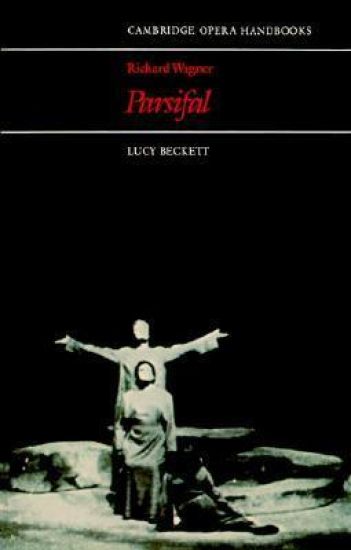
Richard Wagner: Parsifal

Richard Wagner: Parsifal

Beckett Lucy

Cambridge University Press
1981
pokkari
In this book Lucy Beckett gives a comprehensive account of Wagner’s last and strangest opera. The literary sources of this work, its many links with Wagner’s life and thought, its libretto, music and stage history, are all thoroughly examined. There is a full commentary, with extensive quotation, on the work’s critical history, and finally, a fresh assessment of its place in the Wagner canon and of its unique quality as a music drama that is both modern and Christian. Full references, a bibliography and a discography are provided. A special chapter of musical analysis is contributed by Arnold Whittall.
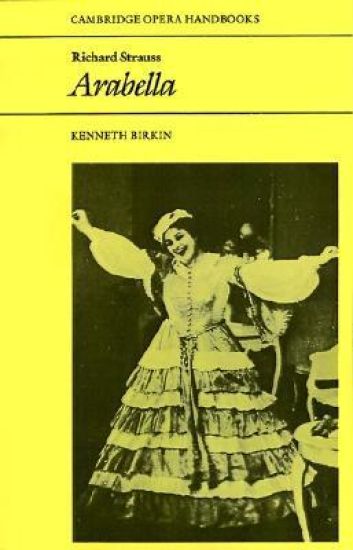
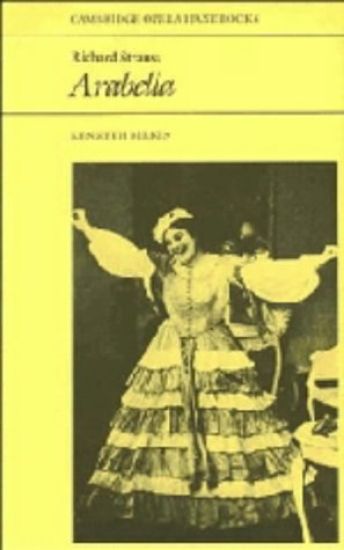
Richard Strauss: Arabella

Richard Strauss: Arabella

Birkin Kenneth

Cambridge University Press
1989
pokkari
This is the first comprehensive guide to Richard Strauss’s Arabella. The opening chapters explore the literary background of the work, and examine the Strauss–Hofmannsthal collaboration. Arabella is seen as the culmination of specific ideas and techniques: an attempt to win something of the subtlety of the spoken theatre for the operatic stage and to find a balance between words and music. A full synopsis of the work provides an insight into the psychological motivation of the drama and an impression of the musical shape and substance of the opera. More detailed analytical comment considers Strauss’s ‘long-range’ tonal procedures and his use of key and Motiv for characterisation, allusion and particular expressive purposes. Special features of this guide are a comentary on one of the Strauss Arabella sketchbooks and an investigation of a series of as yet unpublished letters from Strauss to Böhm, Krauss and Fanto.
The Sophismata of Richard Kilvington

The Sophismata of Richard Kilvington

Richard Kilvington; Norman Kretzmann; Barbara E. Kretzmann

Cambridge University Press
1990
sidottu
Richard Kilvington was an obscure fourteenth-century philosopher whose Sophismata deal with a series of logic-linguistic conundrums of a sort which featured extensively in philosophical discussions of this period. This is the first ever translation or edition of his work. As well as an introduction to Kilvington's work, the editors provide a detailed commentary. This edition will prove of considerable interest to historians of medieval philosophy who will realise from the evidence presented here that Kilvington deserves to be studied just as seriously as Duns Scotus or William of Ockham.
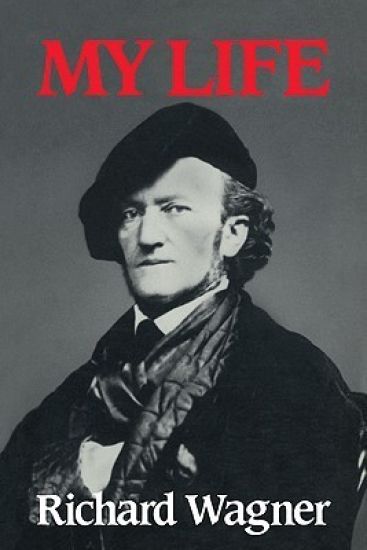
Richard Wagner: My Life

Richard Wagner: My Life

Richard Wagner

Cambridge University Press
1987
pokkari
This reprint is of the first English paperback edition of Richard Wagner's autobiography. This is a primary document of enormous importance for all Wagner enthusiasts, being virtually the sole source of information of the composer's childhood and youth. Written for Wagner's second wife, Cosima, and his patron, King Ludwig II, the autobiography runs from the composer's birth up to the eve of his fifty-first birthday in 1864. Given the intended readership and the circumstances of its composition it is hardly surprising that Wagner should either omit or distort facts from time to time: he does not linger over previous affairs, he portrays his relationship with his first wife, Minna, as a good deal more distant than it really was and he plays down his involvement in the Dresden uprising of 1849. Despite all this, the book presents a panoramic view of Wagner's times and contemporaries and offers a unique perspective on the operas themselves. This translation is of the complete edition published in Munich in 1963 and based on the manuscript in the Wagner Archives in Bayreuth. Wagner's slips of memory are noted, as are references to obscure names and events.
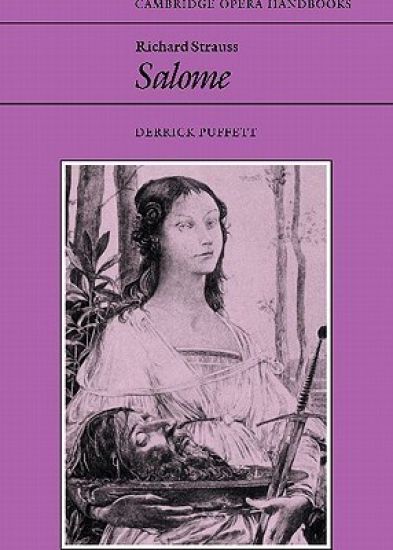
Richard Strauss: Salome

Richard Strauss: Salome

Cambridge University Press
1989
pokkari
This full-length study of Salome is the first in English since Lawrence Gilman’s introductory guide of 1907. The handbook presents an informative collection of historical, critical and analytical studies of one of Strauss’s most familiar operas. Classic essays by Mario Praz and Richard Ellmann cover the literary background. How Strauss adopted Wilde’s play for his libretto is discussed by Roland Tenschert in a fascinating essay which has been updated by Derrick Puffett. In three central analytical chapters, Derrick Puffett considers Salome in relation to Wagnerian music drama, Tethys Carpenter examines its tonal and dramatic structure, and Craig Ayrey analyses the final monologue. The last part of the book moves from analysis to criticism, with a review by John Williamson of the opera’s critical reception and an interpretative essay by Robin Holloway. The book also contains a synopsis, bibliography, and discography; Strauss’s little-known scenario for the ‘Dance of the Seven Veils’ is reprinted as an appendix.
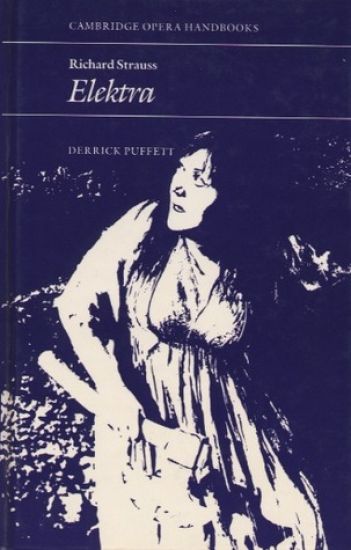
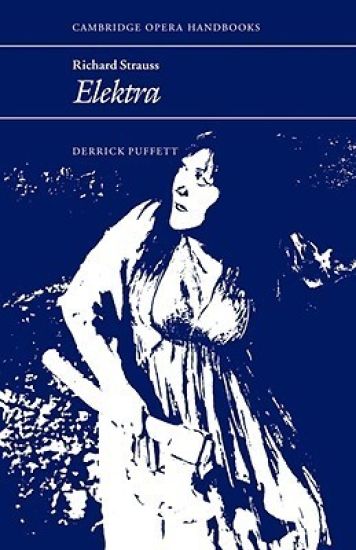
Richard Strauss

Richard Strauss

Cambridge University Press
1990
pokkari
The contributions to this handbook bring together a full-length study of Elektra in English. The volume examines the many facets of one of Richard Strauss's most complex operas. First, P. E. Easterling surveys the mythological background, while Karen Forsyth discusses Hofmannsthal's adaptation of his sources. The second part brings the music to the fore. Derrick Puffett offers an introductory essay and synopsis; Arnold Whittall considers the tonal and dramatic structure of the composition; Tethys Carpenter explores the musical language of the work in detail, with special focus given to part of the Klytaemnestra scene. The third part of the volume offers two contrasting critical essays: Carolyn Abbate provides an interpretation informed by her recent work on narrative, and Robin Holloway analyses Strauss's orchestration of the opera. The book also contains a discography and an appendix of excerpts from the Strauss-Hofmannsthal correspondence.