

Kirjahaku
Etsi kirjoja tekijän nimen, kirjan nimen tai ISBN:n perusteella.
1000 tulosta hakusanalla Rahul Mehta
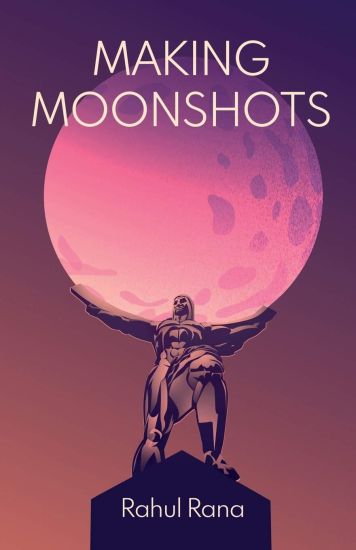
In Making Moonshots, investor and operator Rahul Rana asks the question: Why should we live in a world of incremental scientific and technological progress when the human race has proven in past eras that we are capable of so much more? The world faces major problems. It is time for conventional thinkers to stand aside and give way to the crazy ones, the contrarians, the radically creative geniuses who work outside the box to create massive breakthroughs. In what is both a prescription for building successful deeptech startups and a call to arms to generate highly moral, deeply influential solutions that will positively affect the lives of billions, this book will teach you: The mindsets and philosophies of the greatest trailblazers of the past and present.Actionable strategies fueled by moonshot thinking.The complex ecosystem and all of its necessary moving parts for creating environments conducive to deeptech business operations. A tangible and reasonable course for entrepreneurs that will result in sustainable profitability and extraordinary global-changing results.Rana predicts a new golden age is about to erupt in modern times. Dare to dream bigger. Let's make some moonshots.

An overview with descriptions of the alternatives to fossil fuels is provided. Sufficient details are given to enable the reader to proceeed with constructing or developing items like a biogas digester, designing a wind turbine, solar heater and other simple technologies. Alternative sources of Energy are not Hi-Tech, and even a layman can understand the principles involved. The Enabling of Rural Technologies should be the aim of even the Multinational Corporations. Every Indian citizen is enjoined by the Constitution to protect the Environment, and one of the essential tools is the knowledge of how alternative sources of Enenrgy could be used. It is hoped that such a study would be of use to students and the general reader.

From the Man Asian Prize-shortlisted author Rahul Bhattacharya, a breathtaking novel about a woman forging a life for herself on the railways of 20th century India. In a country rapidly modernizing after Independence, Animesh Chitol bends his caste title into a quirky surname, moves his family to the brand-new township of Bhombalpur Railway Workshop, and throws in his lot with an optimism-filled future. Then tragedy strikes. Into the empty space left by his wife's passing grows Chitol's only daughter, the middle child, Charu. As India moves from steam to diesel locomotives, through a great strike and state repression, Charu flees to Bombay, alarmed by her narrow prospects. There she quests for the means to live on her own terms. Amidst the everyday discriminations of modern India, Charu forges her own destiny, becoming a railway woman and census enumerator who keeps her heart open-sometimes guilelessly-to her country's vast possibility. Sweeping, elegiac, and at times wonderfully comic, Railsong is one woman's coming of age and a beautifully complex love letter to the finely wrought world of the Indian railways and a country beset by religious and political upheaval.

Challenges postcolonial readings of European representations of India in the seventeenth century. Sapra argues that instead of representing all natives as barbaric ""others"", the English drew parallels, especially between themselves and the Mughal aristocracy, associating with them as partners in trade and potential allies in war.
The Limits of Orientalism: Seventeenth-Century Representations of India challenges the recent postcolonial readings of European, predominantly English, representations of India in the seventeenth century. Following Edward Said’s discourse of “Orientalism,” most postcolonial analyses of the seventeenth-century representations of India argue that the natives are represented as barbaric or exotic “others,” imagining these representations as products of colonial ideology. Such approaches tend to offer a homogeneous idea of the “native” and usually equate it with the term “Indian.” Sapra, however, argues that instead of representing all natives as barbaric “others,” the English drew parallels, especially between themselves and the Mughal aristocracy, associating with them as partners in trade and potential allies in war. While the Muslims are from the outset largely portrayed as highly civilized and cultured, early European writers tended to be more conflicted with Hindus, their first highly negative views undergoing a transformation that brings into question any straightforward Orientalist reading of the texts and anticipates the complexity of later representations of the indigenous peoples of the sub-continent.Sapra’s theoretical and methodological approach is influenced by such writers as Aijaz Ahmad and Denis Porter, who have highlighted powerful alternatives to Said’s discourse of “Orientalism.” Sapra historicizes European representations of the indigenous to draw attention to the contrasting approaches of the Portuguese, the Dutch and the English in relation to seventeenth-century India, effectively undermining comfortable notions of a homogenous “West.” Unlike the Portuguese, for whom the idea of a dynasty and the conversion of heathens went hand in hand with the idea of trade, for the Dutch and the English the primary consideration was commercial. In keeping with the commercial approach of the English East India Company, most English travelers, instead of representing the Muslims as barbaric “others,” highlight the compatibility between the two cultures and consistently praise the Mughal empire for its religious tolerance. In the representations of the Hindus, Sapra demonstrates that most writers, even while denigrating the Hindu religion, appreciate the civilized society of the Hindus. Moreover, in the representations of sati or widow-burning, a distinction needs to be made between the patriarchal and the Orientalist points of views, which are at variance with each other. The tension between the patriarchal and the Orientalist positions challenges Gayatri Chakravorty Spivak’s analysis of sati in “Can the Subaltern Speak?” which has become the standard model for most postcolonial appraisals of European representations of sati. The book highlights the lacuna in postcolonial readings by providing access to selections of commonly unavailable early-modern writings by Thomas Roe, Edward Terry, Henry Lord, Thomas Coryate, Alexander Hamilton and other the records of the East India Company, which makes the book vital for students of theory, European and South-Asian history, and Renaissance literatures. Published by University of Delaware Press. Distributed worldwide by Rutgers University Press.
Aarav is an orphan and lives in Delhi. He is passionate about writing and dreams of becoming a bestselling author one day. One day, he meets Rihana and they fall madly in love. Now, Aarav's dream becomes Rihana's dream.But despite their best efforts, no publisher agrees to publish his novel. Finally, Mr. Bajaj of Bajaj Publications sets a condition that the day Aarav became famous, he will print his novel. To realize Rihana's dream and become a bestselling author, Aarav crosses all limits of craziness.

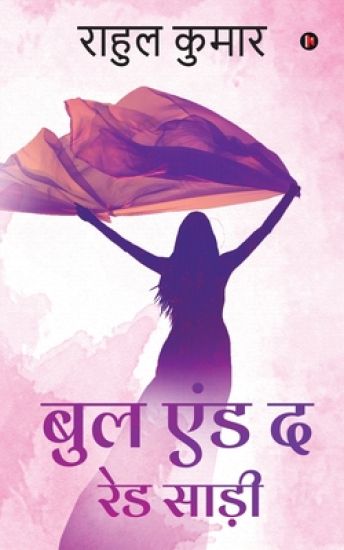
Every level of our life presents different challenges to us. To Face the challenges at each level, we are required to become a different us. In this book, correct diagnosis for the various issues that an Indian youth faces in his life have been made and solutions in simple language have been suggested for the same.Common myths regarding various challenges have also been broken down that often cause stagnation and regress in our life. Young mind always strives to do away with the mark practices and keep going forward while determining the peripheries of the new times. This book is an ode to the spirit of the youthful valour.Another beautiful feature of this book is that the views presented by its author have been made in the form of beautiful poems and songs.This book demonstrates the hopeful overview of the youthful mind and aspires to attract those of kind.

Great tool for women empowerment and social justice. Must read book for people believing in the Constitution of India.-India TodayThe book forces everyone to question that these social evils like female feticide, tradition of dowry, discrimination in the fields of education and occupation, and domestic violence are the consequences a woman has to face just because she is a woman or because of existing social orders. -Dainik JagranAn ode to the unswervingly passionate spirit of youthful valor.-NDTVAlthough the book contains only 94 pages and won't take much time to read, but it will definitely leave an ever-lasting impact on your life. -The SilenceInteresting compilation of articles and poetry on women empowerment, personal liberty, social harmony and justice, better form, personal religious practice. -New Delhi TimesFB Twitter Insta / irahul93
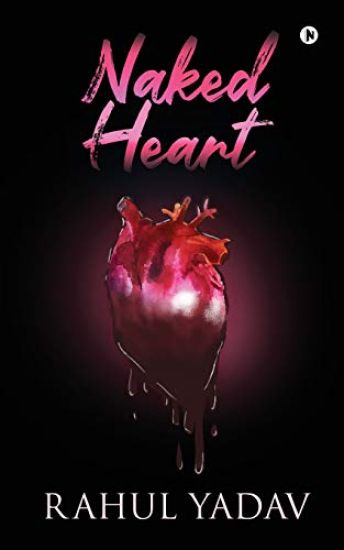
The heart is naked and can never be covered. It clearly reveals one's feelings, emotions, love, romance and pain. Each poem here takes you through the journey of life phases, where the heart always suffers but still cannot hide and has to be open. This is not just a book but a Naked Heart in your hands.