BLThe first full-length analysis of the rhetorical and preaching theories of Ramon Llull, the thirteenth century lay philosopher and theologian Johnston demonstrates how Llull adapted commonplace ideas of courtly speech and popular sermons in order to create a unitary art of secular and sacred eloquence, and shows that Llull exemplifies the development of intellectual and spiritual ideals among the growing class of educated lay people in the later Middle Ages.
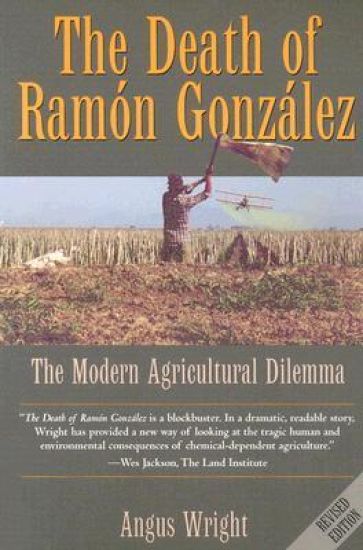
The Death of Ramón González has become a benchmark book since its publication in 1990. It has been taught in undergraduate and graduate courses in every social science discipline, sustainable and alternative agriculture, environmental studies, ecology, ethnic studies, public health, and Mexican, Latin American, and environmental history. The book has also been used at the University of California-Santa Cruz as a model of interdisciplinary work and at the University of Iowa as a model of fine journalism, and has inspired numerous other books, theses, films, and investigative journalism pieces. This revised edition of The Death of Ramón González updates the science and politics of pesticides and agricultural development. In a new afterword, Angus Wright reconsiders the book's central ideas within the context of globalization, trade liberalization, and NAFTA, showing that in many ways what he called "the modern agricultural dilemma" should now be thought of as a "twenty-first century dilemma" that involves far more than agriculture.
Ramon Perez de Ayala's (1880-1962) was a Spanish author of poetry, literary essays, criticism, novels, and short stories. This study analyzes how de Ayala adapted conceptual topics into his fiction and analyzes the central themes of his novels.
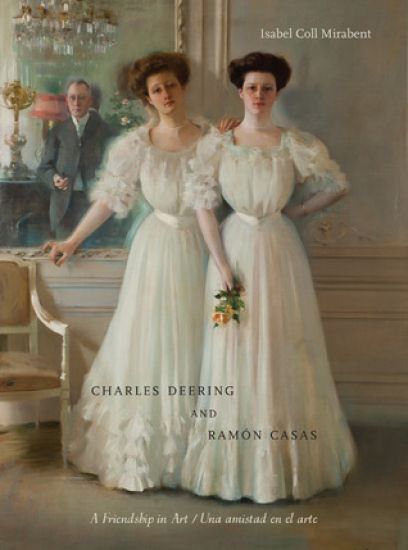
This lavishly illustrated, bilingual art book presents drawings by Ramón Casas in the Charles Deering McCormick Library of Special Collections at the Northwestern University Library and oil paintings by Casas from private collections and the Art Institute of Chicago. Charles Deering and Ramón Casas follows the development and dramatic dissolution of a three-way friendship that connected the Spanish painter Ramón Casas (1866–1932); the Chicago industrialist Charles Deering (1852–1927), who was a collector and admirer of Casas’s work as well as a patron of Northwestern University; and the Spanish artist Miguel Utrillo (1862–1934), Casas’s lifelong friend and the father of the French painter Maurice Utrillo. Casas introduced Deering to Sitges, a beach town near Barcelona, Spain, where the latter created a palatial estate with a museum to house his art collection. Miguel Utrillo served as director of the museum. The text explores the treasures housed at Maricel and what happened among the three men that led Casas to abandon Utrillo and Deering to depart Spain, taking his art collection with him.
This book is an imaginary conversation with Juan Ramon Jimenez. William Kluback follows the journey of Juan Ramon and Platero, to adventure into the world, speaking of what it means to confront the foibles and opinions of human beings. Confronting the poet, the author seeks not merely to describe and analyze poetry and prose, but to ponder the affects they have on his thoughts. In other words, the author imagines Juan Ramon present; he wants to respond to his presence."
This work has been selected by scholars as being culturally important and is part of the knowledge base of civilization as we know it.This work is in the public domain in the United States of America, and possibly other nations. Within the United States, you may freely copy and distribute this work, as no entity (individual or corporate) has a copyright on the body of the work.Scholars believe, and we concur, that this work is important enough to be preserved, reproduced, and made generally available to the public. To ensure a quality reading experience, this work has been proofread and republished using a format that seamlessly blends the original graphical elements with text in an easy-to-read typeface.We appreciate your support of the preservation process, and thank you for being an important part of keeping this knowledge alive and relevant.
This work has been selected by scholars as being culturally important and is part of the knowledge base of civilization as we know it.This work is in the public domain in the United States of America, and possibly other nations. Within the United States, you may freely copy and distribute this work, as no entity (individual or corporate) has a copyright on the body of the work.Scholars believe, and we concur, that this work is important enough to be preserved, reproduced, and made generally available to the public. To ensure a quality reading experience, this work has been proofread and republished using a format that seamlessly blends the original graphical elements with text in an easy-to-read typeface.We appreciate your support of the preservation process, and thank you for being an important part of keeping this knowledge alive and relevant.
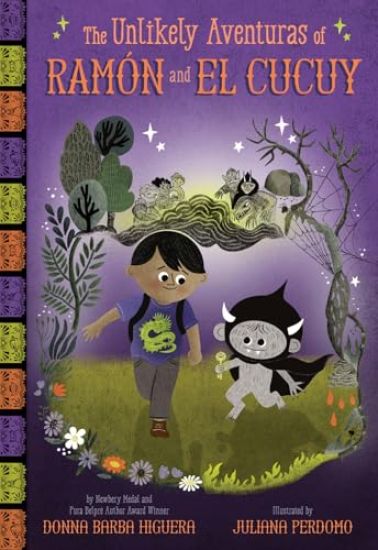
A young monster befriends the human child he's been assigned to scare in this spooky-funny chapter book debut from Newbery Medal-winning author Donna Barba Higuera, with illustrations throughout by Juliana Perdomo It's a monster's ancient duty to inflict unimaginable horrors on misbehaving kids. But when a young cucuy who's anxious to prove himself is sent to the human world to terrorize his first child, the naughty ni o isn't scared by glowing eyes, sharp talons, or even disgusting breath. Instead, he's preoccupied with worries about his first day at a new school. Can the little cucuy prove himself as a fierce boogeyman? As he soon learns from his human, maybe some things are scarier than creatures under the bed . . . and maybe even a monster could use a friend. Featuring two-color illustrations throughout, this first chapter book from Newbery Medal-winning author Donna Barba Higuera and acclaimed artist Juliana Perdomo delightfully blends sly humor, light spookiness, and lots of heart, and is perfect for fans of Jon Klassen's The Skull. More Aventuras with Ram n and El Cucuy (Picture Books): El Cucuy Is Scared, Too It's Navidad, El Cucuy
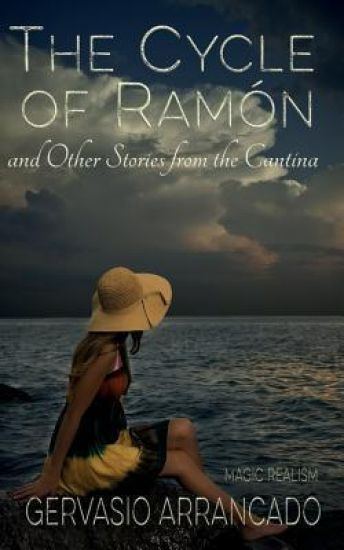
This is a collection of magic realism short stories. In the title story, sometimes letting go just isn't possible. You've loved the same soul down through the ages, but just before you can be together forever, he is ripped away yet again. The eerily weeping heavens combine with the sea and a departed love to ease the burden of the one who has been left behind. "Carmen, Whose Face Was Cracked, the kindest and most beautiful woman in all of Mexico suffers a cracked face, and it has nothing to do with vanity. In "The Rabbit & the Priest," drought has ravaged crops, killed stock and left the villagers hungry. What can one rabbit do to help? In "The Dawn of Rigoberto," an orphan grows to be the tallest, strongest, wisest and kindest man in the fishing village of Agua Rocosa. His mother wandered off within weeks of his birth & is rumored to be a witch, but has gained goddess status with many of the villagers. Nearing her death & as he obtains his thirty-third year, she gives him the gift of his father and much about his life becomes clear. And in the oldest of these stories, "The Storyteller," Juan-Carlos Salaz r, to keep his customers entertained, relates stories of the magic that permeates that area where reality folds into imagination. There is a wind that lost its way among the rocks on the hillside, clouds so overcome with grief and sorrow that they overpower the sun and take vengeance on the village, raindrops so large they force birds to take cover or walk, and heat so severe that the only boarding house in the village spontaneously combusts and burns to the ground, leaving no sign that it ever existed. Magic is in the air If you've enjoyed the works of Gabriel Garc a M rquez and Isabel Allende, you'll enjoy these stories from the cantina.
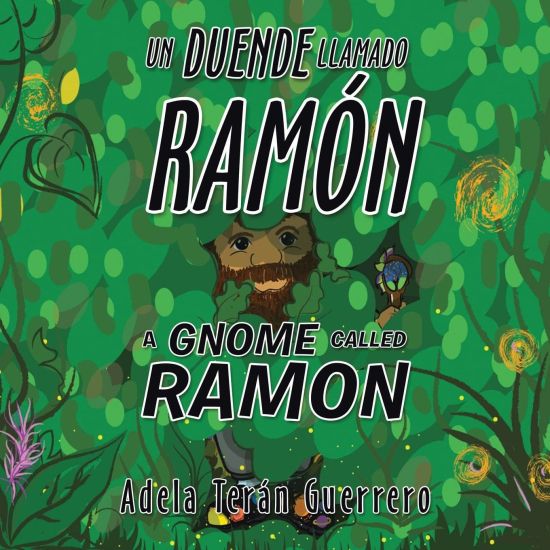
Un duende llamado Ram n, es la evocaci n de una infancia m gica que trasciende las monta as para iluminar las noches de los ni os que sue an con un mejor destino para nuestro planeta y su hermosa naturaleza. A gnome called Ram n, is the evocation of a magical childhood that goes beyond the mountains to lighten up the nights of the children that dream of a better destiny for our planet and its wonderful nature. Gracias por tu atenci n, que tengas una feliz y productiva semana, Adela Ter n Guerrero
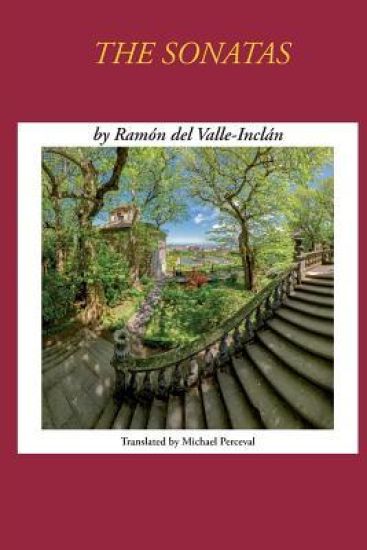
Ram n del Valle-Incl n (1866-1936) Galician novelist and playwright, evolved in style from the brio of the early Short Stories (Vol I in this series) to the luxuriance of these Sonatas --- the life and loves of his Don Juan-like avatar, the Marqu s de Bradom n. There followed the straight-forward historical novel The Carlist War (Vol III) chronicling the horrors of Spain's 19th century ideological civil conflict. Valle's crowning achievement (illustration of esperpento, or nailing of truth through the grotesque) is The Iberian Arena (Vol IV), a choral novel touching on every aspect of Spanish society as it flays the follies and vices of the Court of Isabel II in 1868, the year of her overthrow. Spain's greatest political novel of the 20th century.
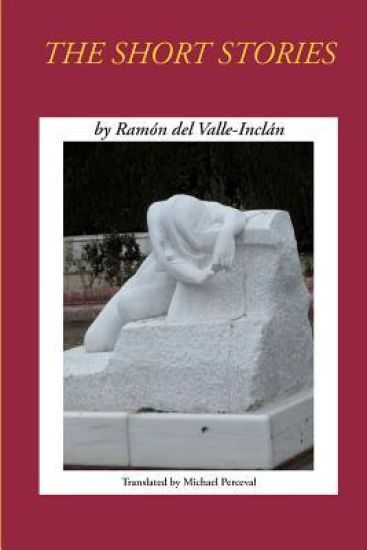
Ram n del Valle-Incl n (1866-1936) Galician novelist and playwright, evolved in style from the brio of these early short stories, to the luxuriance of his Sonatas (Vol II in this series) --- the life and loves of his Don Juan-like avatar, the Marqu s de Bradom n. There followed the straight-forward historical novel The Carlist War (Vol III) chronicling the horrors of Spain's 19th century ideological civil conflict. Valle's crowning achievement (masterpiece of esperpento or nailing of truth through the grotesque), is The Iberian Arena (Vol IV), a choral novel touching on every aspect of Spanish society as it flays the follies and vices of the Court of Isabel II in 1868, the year of her overthrow. Spain's greatest political novel of the 20th century.