Kirjojen hintavertailu. Mukana 12 016 292 kirjaa ja 12 kauppaa.

Kirjahaku

Etsi kirjoja tekijän nimen, kirjan nimen tai ISBN:n perusteella.

1000 tulosta hakusanalla Randall Calhoun
Pictures from an Institution

Pictures from an Institution

Randall Jarrell

University of Chicago Press
2010
nidottu
Beneath the unassuming surface of a progressive women's college lurks a world of intellectual pride and pomposity awaiting devastation by the pens of two brilliant and appalling wits. Randall Jarrell's classic novel was originally published to overwhelming critical acclaim in 1954, forging a new standard for campus satire - and instantly yielding comparisons to Dorothy Parker's razor-sharp barbs. Like his fictional nemesis, Jarrell cuts through the earnest conversations at Benton College mischievously - but with mischief nowhere more wicked than when crusading against the vitriolic heroine herself.
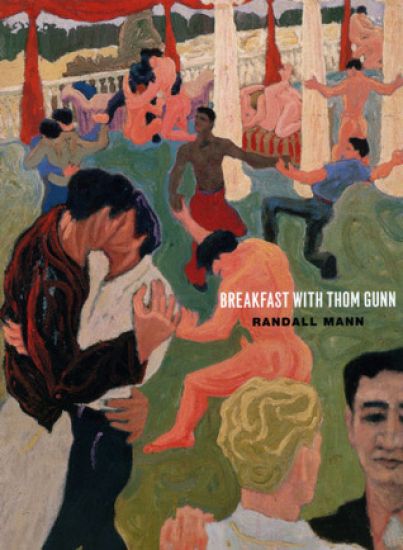
Breakfast with Thom Gunn

Breakfast with Thom Gunn

Randall Mann

University of Chicago Press
2009
sidottu
Randall Mann's "Breakfast with Thom Gunn" is a work both direct and unsettling. Haunted by the afterlife of Thom Gunn (1929-2004), one of the most beloved gay literary icons of the twentieth century, the poems are moored in Florida and California, but the backdrop is 'pitiless', the trees 'thin and bloodless', the words 'like the icy water' of the San Francisco Bay. Mann, fiercely intelligent, open yet elusive, draws on the 'graceful erosion' of both landscape and the body, on the beauty that lies in unbeauty. With audacity, anxiety, and unbridled desire, this gifted lyric poet grapples with dilemmas of the gay self embroiled in - and aroused by - a glittering, unforgiving subculture. "Breakfast with Thom Gunn" is at once formal and free, forging a sublime integrity in the fire of wit, intensity, and betrayal.
Breakfast with Thom Gunn

Breakfast with Thom Gunn

Randall Mann

University of Chicago Press
2009
nidottu
Randall Mann's "Breakfast with Thom Gunn" is a work both direct and unsettling. Haunted by the afterlife of Thom Gunn (1929-2004), one of the most beloved gay literary icons of the twentieth century, the poems are moored in Florida and California, but the backdrop is 'pitiless', the trees 'thin and bloodless', the words 'like the icy water' of the San Francisco Bay. Mann, fiercely intelligent, open yet elusive, draws on the 'graceful erosion' of both landscape and the body, on the beauty that lies in unbeauty. With audacity, anxiety, and unbridled desire, this gifted lyric poet grapples with dilemmas of the gay self embroiled in - and aroused by - a glittering, unforgiving subculture. "Breakfast with Thom Gunn" is at once formal and free, forging a sublime integrity in the fire of wit, intensity, and betrayal.
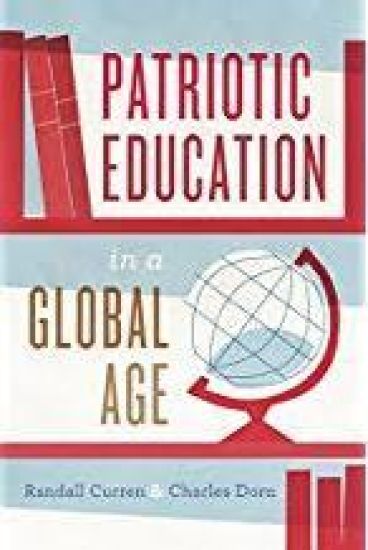
Patriotic Education in a Global Age

Patriotic Education in a Global Age

Randall Curren; Charles Dorn

University of Chicago Press
2018
sidottu
Should schools attempt to cultivate patriotism? If so, why? And what conception of patriotism should drive those efforts? Is patriotism essential to preserving national unity, sustaining vigorous commitment to just institutions, or motivating national service? Are the hazards of patriotism so great as to overshadow its potential benefits? Is there a genuinely virtuous form of patriotism that societies and schools should strive to cultivate? In Patriotic Education in a Global Age, philosopher Randall Curren and historian Charles Dorn address these questions as they seek to understand what role patriotism might legitimately play in schools as an aspect of civic education. They trace the aims and rationales that have guided the inculcation of patriotism in American schools over the years, the methods by which schools have sought to cultivate patriotism, and the conceptions of patriotism at work in those aims, rationales, and methods. They then examine what those conceptions mean for justice, education, and human flourishing. Though the history of attempts to cultivate patriotism in schools offers both positive and cautionary lessons, Curren and Dorn ultimately argue that a civic education organized around three components of civic virtue—intelligence, friendship, and competence—and an inclusive and enabling school community can contribute to the development of a virtuous form of patriotism that is compatible with equal citizenship, reasoned dissent, global justice, and devotion to the health of democratic institutions and the natural environment. Patriotic Education in a Global Age mounts a spirited defense of democratic institutions as it situates an understanding of patriotism in the context of nationalist, populist, and authoritarian movements in the United States and Europe, and will be of interest to anyone concerned about polarization in public life and the future of democracy.
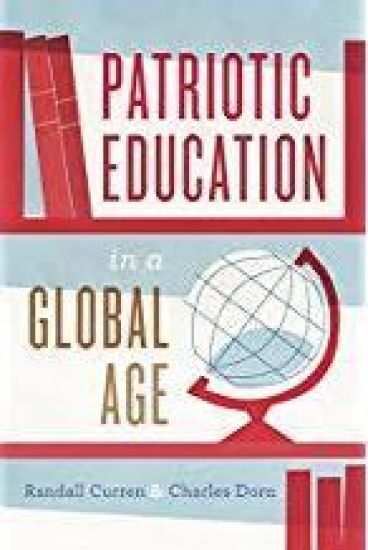
Patriotic Education in a Global Age

Patriotic Education in a Global Age

Randall Curren; Charles Dorn

University of Chicago Press
2018
nidottu
Should schools attempt to cultivate patriotism? If so, why? And what conception of patriotism should drive those efforts? Is patriotism essential to preserving national unity, sustaining vigorous commitment to just institutions, or motivating national service? Are the hazards of patriotism so great as to overshadow its potential benefits? Is there a genuinely virtuous form of patriotism that societies and schools should strive to cultivate? In Patriotic Education in a Global Age, philosopher Randall Curren and historian Charles Dorn address these questions as they seek to understand what role patriotism might legitimately play in schools as an aspect of civic education. They trace the aims and rationales that have guided the inculcation of patriotism in American schools over the years, the methods by which schools have sought to cultivate patriotism, and the conceptions of patriotism at work in those aims, rationales, and methods. They then examine what those conceptions mean for justice, education, and human flourishing. Though the history of attempts to cultivate patriotism in schools offers both positive and cautionary lessons, Curren and Dorn ultimately argue that a civic education organized around three components of civic virtue—intelligence, friendship, and competence—and an inclusive and enabling school community can contribute to the development of a virtuous form of patriotism that is compatible with equal citizenship, reasoned dissent, global justice, and devotion to the health of democratic institutions and the natural environment. Patriotic Education in a Global Age mounts a spirited defense of democratic institutions as it situates an understanding of patriotism in the context of nationalist, populist, and authoritarian movements in the United States and Europe, and will be of interest to anyone concerned about polarization in public life and the future of democracy.
Deadly Imbalances

Deadly Imbalances

Randall Schweller

Columbia University Press
1998
sidottu
Scholars frequently portray World War II as an epic morality play driven by a villain (Hitler) and a sinner (Chamberlain). This book offers a fresh approach, combining both the attributes of states and the structure of the international system to explain the origins and causes of World War II. Central to the analysis is the argument that the structure of the international system was tripolar - with Germany, the Soviet Union and the United States as the three central powers - and not multipolar and that this needs to be considered in any examination of the antecedent causes and crucial events of the war. Recognizing that both systems and human agents make history, the author presents an amended balance-of-power theory, a balance-of-interests theory - that distinguishes great powers by their relative material strength and the value they place on the status quo. This systems framework is used to examine and explain the dynamics of tripolar systems; how states respond to threats and opportunities; Hitler's strategy of global dominion; and the foreign policy strategies of the other major powers before and during the war.
Deadly Imbalances

Deadly Imbalances

Randall Schweller

Columbia University Press
1998
pokkari
Scholars frequently portray World War II as an epic morality play driven by a villain (Hitler) and a sinner (Chamberlain). This book offers a fresh approach, combining both the attributes of states and the structure of the international system to explain the origins and causes of World War II. Central to the analysis is the argument that the structure of the international system was tripolar - with Germany, the Soviet Union and the United States as the three central powers - and not multipolar and that this needs to be considered in any examination of the antecedent causes and crucial events of the war. Recognizing that both systems and human agents make history, the author presents an amended balance-of-power theory, a balance-of-interests theory - that distinguishes great powers by their relative material strength and the value they place on the status quo. This systems framework is used to examine and explain the dynamics of tripolar systems; how states respond to threats and opportunities; Hitler's strategy of global dominion; and the foreign policy strategies of the other major powers before and during the war.
Protestantism in America

Protestantism in America

Randall Balmer

Columbia University Press
2002
sidottu
As America has become more pluralistic, Protestantism, with its long roots in American history and culture, has hardly remained static. This finely crafted portrait of a remarkably complex group of Christian denominations describes Protestantism's history, constituent subgroups and their activities, and the way in which its dialectic with American culture has shaped such facets of the wider society as healthcare, welfare, labor relations, gender roles, and political discourse. Part I provides an introduction to the religion's essential beliefs, a brief history, and a taxonomy of its primary American varieties. Part II shows the diversity of the tradition with vivid accounts of life and worship in a variety of mainline and evangelical churches. Part III explores the vexed relationship Protestantism maintains with critical social issues, including homosexuality, feminism, and social justice. The appendices include biographical sketches of notable Protestant leaders, a chronology, a glossary, and an annotated list of resources for further study.
Protestantism in America

Protestantism in America

Randall Balmer

Columbia University Press
2005
pokkari
As America has become more pluralistic, Protestantism, with its long roots in American history and culture, has hardly remained static. This finely crafted portrait of a remarkably complex group of Christian denominations describes Protestantism's history, constituent subgroups and their activities, and the way in which its dialectic with American culture has shaped such facets of the wider society as healthcare, welfare, labor relations, gender roles, and political discourse. Part I provides an introduction to the religion's essential beliefs, a brief history, and a taxonomy of its primary American varieties. Part II shows the diversity of the tradition with vivid accounts of life and worship in a variety of mainline and evangelical churches. Part III explores the vexed relationship Protestantism maintains with critical social issues, including homosexuality, feminism, and social justice. The appendices include biographical sketches of notable Protestant leaders, a chronology, a glossary, and an annotated list of resources for further study.
The Credential Society

The Credential Society

Randall Collins; Tressie McMillan Cottom; Mitchell L. Stevens
Columbia University Press
2019
sidottu
The Credential Society is a classic on the role of higher education in American society and an essential text for understanding the reproduction of inequality. Controversial at the time, Randall Collins’s claim that the expansion of American education has not increased social mobility, but rather created a cycle of credential inflation, has proven remarkably prescient.Collins shows how credential inflation stymies mass education’s promises of upward mobility. An unacknowledged spiral of the rising production of credentials and job requirements was brought about by the expansion of high school and then undergraduate education, with consequences including grade inflation, rising educational costs, and misleading job promises dangled by for-profit schools. Collins examines medicine, law, and engineering to show the ways in which credentialing closed these high-status professions to new arrivals. In an era marked by the devaluation of high school diplomas, outcry about the value of expensive undergraduate degrees, and the proliferation of new professional degrees like the MBA, The Credential Society has more than stood the test of time. In a new preface, Collins discusses recent developments, debunks claims that credentialization is driven by technological change, and points to alternative pathways for the future of education.
The Credential Society

The Credential Society

Randall Collins; Tressie McMillan Cottom; Mitchell L. Stevens
Columbia University Press
2019
pokkari
The Credential Society is a classic on the role of higher education in American society and an essential text for understanding the reproduction of inequality. Controversial at the time, Randall Collins’s claim that the expansion of American education has not increased social mobility, but rather created a cycle of credential inflation, has proven remarkably prescient.Collins shows how credential inflation stymies mass education’s promises of upward mobility. An unacknowledged spiral of the rising production of credentials and job requirements was brought about by the expansion of high school and then undergraduate education, with consequences including grade inflation, rising educational costs, and misleading job promises dangled by for-profit schools. Collins examines medicine, law, and engineering to show the ways in which credentialing closed these high-status professions to new arrivals. In an era marked by the devaluation of high school diplomas, outcry about the value of expensive undergraduate degrees, and the proliferation of new professional degrees like the MBA, The Credential Society has more than stood the test of time. In a new preface, Collins discusses recent developments, debunks claims that credentialization is driven by technological change, and points to alternative pathways for the future of education.
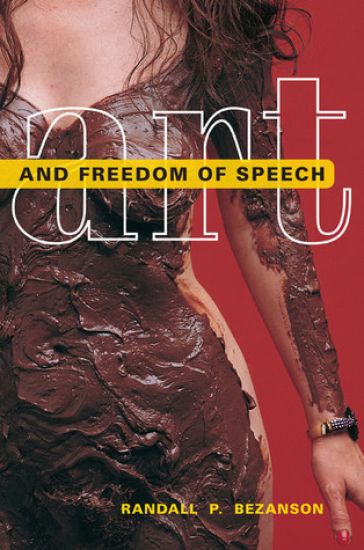
Art and Freedom of Speech

Art and Freedom of Speech

Randall P. Bezanson

University of Illinois Press
2009
sidottu
This book analyzes the broad range of Supreme Court cases that concern the protection of art and free speech under the First Amendment. Finding that debates about free expression (whether in speech or art) swirl around sex and cultural blasphemy, Randall P. Bezanson tracks and interprets the Court's decisions on film, nude dancing, music, painting, and other visual expressions.Showing how the Court has dealt with judgments of art, quality, meaning, and how to distinguish types of speech and expression, Bezanson explores issues as diverse as homosexuality in the Boy Scouts, gay and lesbian parade floats, 2 Live Crew's alleged copyright infringement, National Endowment for the Arts grants and diversity, dangerous art, and screenings of the film Carnal Knowledge. In considering the transformative meaning of art, the importance of community judgments, and the definition of speech in Court rulings, Bezanson focuses on the fundamental questions underlying the discussion of art as protected free speech: What are the boundaries of art? What are the limits on the government's role as supporter and "patron" of the arts? And what role, if any, may core social values of decency, respect, and equality play in limiting the production or distribution of art?Accessibly written and evocatively argued, Art and Freedom of Speech explores these questions and concludes with the argument that, for legal purposes, art should be absolutely free under the First Amendment--in fact, even more free than other forms of speech.
The Europeanization of Cinema

The Europeanization of Cinema

Randall Halle

University of Illinois Press
2014
sidottu
In this innovative study, German and film studies scholar Randall Halle advances the concept of "interzones"--geographical and ideational spaces of transit, interaction, transformation, and contested diversity--as a mechanism for analyzing European cinema. He focuses especially on films about borders, borderlands, and cultural zones as he traces the development of interzones from the inception of central European cinema to the avant-garde films of today. Throughout, he shows how cinema both reflects and engenders interzones that explore the important questions of Europe's social order: imperialism and nation-building in the late nineteenth and early twentieth centuries; "first contact" between former adversaries (such as East and West Germany) following World War II and the Cold War; and migration, neo-colonialism, and cultural imperialism in the twenty-first century. Ultimately, Halle argues that today's cinema both produces and reflects imaginative communities. He demonstrates how, rather than simply erasing boundaries, the European Union instead fosters a network of cultural interzones that encourage cinematic exploration of the new Europe's processes and limits of connectivity, tolerance, and cooperation.
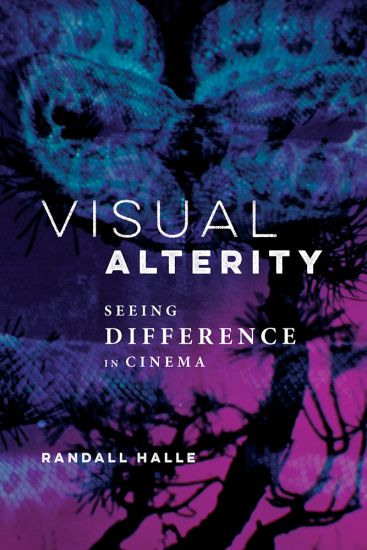
Visual Alterity

Visual Alterity

Randall Halle

University of Illinois Press
2021
sidottu
Reconsidering the dynamics of perception Using cinema to explore the visual aspects of alterity, Randall Halle analyzes how we become cognizant of each other and how we perceive and judge another person in a visual field. Halle draws on insights from philosophy and recent developments in cognitive and neuroscience to argue that there is no pure "natural" sight. We always see in a particular way, from a particular vantage point, and through a specific apparatus, and Halle shows how human beings have used cinema to experiment with the apparatus of seeing for over a century. Visual alterity goes beyond seeing difference to being conscious of how one sees difference. Investigating the process allows us to move from mere perception to apperception, or conscious perception. Innovative and insightful, Visual Alterity merges film theory with philosophy and cutting-edge science to propose new ways of perceiving and knowing.
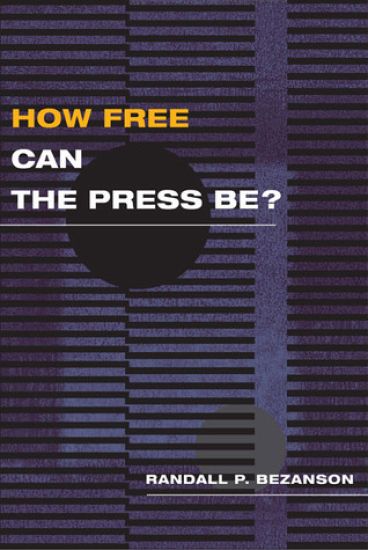
How Free Can the Press Be?

How Free Can the Press Be?

Randall P. Bezanson

University of Illinois Press
2007
nidottu
Randall P. Bezanson explores the contradictions embedded in understanding press freedom in America by discussing nine of the most pivotal and provocative First Amendment cases in US judicial history. Each case resulted in a ruling that refined or reshaped judicial definition of the limits of press freedom. The cases concerned matters ranging from The New York Times's publication of the Pentagon Papers to Hugo Zacchini's claim that TV broadcasts of his human cannonball act threatened his livelihood. Bezanson also examines the case of politician blackballed by the Miami Herald; the Pittsburgh Press's argument that it had the right to use gender based column headings in its classifieds; and a crime victim suing the Des Moines Register over the paper's publication of intimate details, including the victim's name.
German Film After Germany

German Film After Germany

Randall Halle

University of Illinois Press
2008
nidottu
What is the work of film in the age of transnational production? To answer that question, Randall Halle focuses on the film industry of Germany, one of Europe's largest film markets and one of the world's largest film-producing nations. In the 1990s Germany experienced an extreme transition from a state-subsidized mode of film production that was free of anxious concerns about profit and audience entertainment to a mode dominated by private interest and big capital. At the same time, the European Union began actively drawing together the national markets of Germany and other European nations, sublating their individual significances into a synergistic whole. This book studies these changes broadly, but also focuses on the transformations in their particular national context. It balances film politics and film aesthetics, tracing transformations in financing along with analyses of particular films to describe the effects on the film object itself. Halle concludes that we witness currently the emergence of a new transnational aesthetic, a fundamental shift in cultural production with ramifications for communal identifications, state cohesion, and national economies.
How Free Can Religion Be?

How Free Can Religion Be?

Randall P. Bezanson

University of Illinois Press
2010
nidottu
In tracking the evolution of the First Amendment's Free Exercise and Establishment Clause doctrine through Key Supreme Court decisions on religious freedom, legal scholar Randall P. Bezanson focuses on the court's shift from strict separation of church and state to a position where the government accommodates and even fosters religion. Beginning with samples from the latter half of the nineteenth century, the detailed case studies present new problems and revisit old ones as well: the purported belief of polygamy in the Mormon Church; state support for religious schools; the teaching of evolution and creationism in public schools; Amish claims for exemption from compulsory education laws; comparable claims for Native American religion in relation to drug laws; and rights of free speech and equal access by religious groups in colleges and public schools.