Best Book of May 2024 by New York Post. Finalist for the 2024 Westport Prize for Literature. From the acclaimed #1 New York Times bestselling author comes a soulful and lyrical novel exploring sisterhood, motherhood, faith, love, and ultimately what gets passed down from one generation to the next At 40, Lena Baker is at a steady and stable moment in life--between wine nights with her two best friends and her wedding just weeks away, she's happy in love and in friendship until a confession on her wedding day shifts her world. Unmoored and grieving a major loss, Lena finds herself trying to teach her daughter self-love while struggling to do so herself. Lena questions everything she's learned about dating, friendship, and motherhood, and through it all, she works tirelessly to bring the oft-forgotten Black history of Oregon to the masses, sidestepping her well-meaning co-workers that don't understand that their good intentions are often offensive and hurtful. Through Watson's poetic voice, skin & bones is a stirring exploration of who society makes space for and is ultimately a story of heartbreak and healing.
Best Book of May 2024 by New York Post. Finalist for the 2024 Westport Prize for Literature. A plus-size single mother struggles to fit into spaces not made for her in this soulful, lyrical novel that explores what ultimately gets passed down from one generation to the next With her wedding weeks away, Lena Baker feels excited for the next chapter. She's built a steady life in Portland, and between wine nights with her two best friends, a loving relationship, and a rewarding job, she's happy--until a devastating confession from her fianc on their wedding day shakes her world. Unmoored and grieving, Lena questions everything she thought she knew about love, friendship, and motherhood. In this stirring exploration of who society makes room for, one mother resolves to teach her daughter self-love even as she herself struggles with it--and learns how to shine her bold, brilliant light in a world that wants to dim it. "An exquisite love letter to Black women." --Deesha Philyaw, author of The Secret Lives of Church Ladies "Ren e Watson's writing is divine." --Kwame Alexander, author of Why Fathers Cry at Night
Written for surgical technologists, surgical first assistants, registered nurses, physicians, physician assistants, central service technicians, and surgical sales representatives, Surgical Instrumentation: An Interactive Approach, 4th Edition offers a level of visual clarity and realism unmatched by any other surgical instrument book. Many photos include close-up views of the instrument tip, so you can quickly discern differences between instruments. Interactive resources on the Evolve companion website allow you to view 360-degree rotations of more than 100 instruments. Also included are flash cards, timed memory exercises, Mayo stands, quizzes, and instrument sets for common procedures in various surgical specialties. Instruments organized by category within their surgical specialty make it easy to find specific instruments. More than 660 full-color instrument photographs with inset instrument tip photos help you learn the most common surgical instruments for all surgical procedures. Consistent, clear, and concise instrument monographs include names, category, use, and insight. Caution bullets detail potential hazards or concerns you must consider when using an instrument. Surgical Setups chapter familiarizes you with common instrument setups for various procedures. Reader-friendly layout with two instruments per page makes it easier to see the details of each instrument. Evolve companion website offers interactive exercises, practice quizzes, flash cards, and 360-degree instrument rotations to reinforce understanding. NEW! Basic Sterilization chapter provides comprehensive coverage of decontamination and sterilization of instruments. NEW! Basic Operating Room Supplies and Equipment chapter familiarizes you with what you will encounter in the OR. NEW! Additional close-up/inset photos of instruments give you a detailed way to examine and learn about instruments you'll be working with on a daily basis.
NEW YORK TIMES BESTSELLER - A one-of-a-kind Star Wars experience that sheds new light on the original film. On May 25, 1977, the world was introduced to Han Solo, Luke Skywalker, Princess Leia, C-3PO, R2-D2, Chewbacca, Obi-Wan Kenobi, Darth Vader, and a galaxy full of possibilities. In honor of the fortieth anniversary, more than forty contributors lend their vision to this retelling of Star Wars. Each of the forty short stories reimagines a moment from the original film, but through the eyes of a supporting character. From a Certain Point of View features contributions by bestselling authors, trendsetting artists, and treasured voices from the literary history of Star Wars - Gary Whitta bridges the gap from Rogue One to A New Hope through the eyes of Captain Antilles. - Aunt Beru finds her voice in an intimate character study by Meg Cabot. - Nnedi Okorofor brings dignity and depth to a most unlikely character: the monster in the trash compactor. - Pablo Hidalgo provides a chilling glimpse inside the mind of Grand Moff Tarkin. - Pierce Brown chronicles Biggs Darklighter's final flight during the Rebellion's harrowing attack on the Death Star. - Wil Wheaton spins a poignant tale of the rebels left behind on Yavin. Plus thirty-four more hilarious, heartbreaking, and astonishing tales from: Ben Acker - Ren e Ahdieh - Tom Angleberger - Ben Blacker - Jeffrey Brown - Rae Carson - Adam Christopher - Zoraida C rdova - Delilah S. Dawson - Kelly Sue DeConnick - Paul Dini - Ian Doescher - Ashley Eckstein - Matt Fraction - Alexander Freed - Jason Fry - Kieron Gillen - Christie Golden - Claudia Gray - E. K. Johnston - Paul S. Kemp - Mur Lafferty - Ken Liu - Griffin McElroy - John Jackson Miller - Daniel Jos Older - Mallory Ortberg - Beth Revis - Madeleine Roux - Greg Rucka - Gary D. Schmidt - Cavan Scott - Charles Soule - Sabaa Tahir - Elizabeth Wein - Glen Weldon - Chuck Wendig All participating authors have generously forgone any compensation for their stories. Instead, their proceeds will be donated to First Book--a leading nonprofit that provides new books, learning materials, and other essentials to educators and organizations serving children in need. To further celebrate the launch of this book and both companies' longstanding relationships with First Book, Penguin Random House has donated $100,000 to First Book, and Disney/Lucasfilm has donated 100,000 children's books--valued at $1,000,000--to support First Book and their mission of providing equal access to quality education. Over the past sixteen years, Disney and Penguin Random House combined have donated more than eighty-eight million books to First Book.
NEW YORK TIMES BESTSELLER - A one-of-a-kind Star Wars experience that sheds new light on the original film. On May 25, 1977, the world was introduced to Han Solo, Luke Skywalker, Princess Leia, C-3PO, R2-D2, Chewbacca, Obi-Wan Kenobi, Darth Vader, and a galaxy full of possibilities. In honor of the fortieth anniversary, more than forty contributors lend their vision to this retelling of Star Wars. Each of the forty short stories reimagines a moment from the original film, but through the eyes of a supporting character. From a Certain Point of View features contributions by bestselling authors, trendsetting artists, and treasured voices from the literary history of Star Wars - Gary Whitta bridges the gap from Rogue One to A New Hope through the eyes of Captain Antilles. - Aunt Beru finds her voice in an intimate character study by Meg Cabot. - Nnedi Okorofor brings dignity and depth to a most unlikely character: the monster in the trash compactor. - Pablo Hidalgo provides a chilling glimpse inside the mind of Grand Moff Tarkin. - Pierce Brown chronicles Biggs Darklighter's final flight during the Rebellion's harrowing attack on the Death Star. - Wil Wheaton spins a poignant tale of the rebels left behind on Yavin. Plus thirty-four more hilarious, heartbreaking, and astonishing tales from: Ben Acker - Ren e Ahdieh - Tom Angleberger - Ben Blacker - Jeffrey Brown - Pierce Brown - Meg Cabot - Rae Carson - Adam Christopher - Zoraida C rdova - Delilah S. Dawson - Kelly Sue DeConnick - Paul Dini - Ian Doescher - Ashley Eckstein - Matt Fraction - Alexander Freed - Jason Fry - Kieron Gillen - Christie Golden - Claudia Gray - E. K. Johnston - Paul S. Kemp - Mur Lafferty - Daniel M. Lavery - Ken Liu - Griffin McElroy - John Jackson Miller - Daniel Jos Older - Beth Revis - Madeleine Roux - Greg Rucka - Gary D. Schmidt - Cavan Scott - Charles Soule - Sabaa Tahir - Elizabeth Wein - Glen Weldon - Chuck Wendig All participating authors have generously forgone any compensation for their stories. Instead, their proceeds will be donated to First Book--a leading nonprofit that provides new books, learning materials, and other essentials to educators and organizations serving children in need. To further celebrate the launch of this book and both companies' longstanding relationships with First Book, Penguin Random House has donated $100,000 to First Book, and Disney/Lucasfilm has donated 100,000 children's books--valued at $1,000,000--to support First Book and their mission of providing equal access to quality education. Over the past sixteen years, Disney and Penguin Random House combined have donated more than eighty-eight million books to First Book.
Lift prepares multilingual teenagers with academic language and literacy skills to study cross-curricular subjects. Through global literature and non-fiction, supported by stories told through photography and video, Lift provides a structured approach to skill-building through scaffolded instruction.
In this second book in the humorous, mystery-solving graphic novel series that's perfect for fans of Bad Guys, Sherlock Bones and his ragtag team hunt down a swamp monster Sherlock Bones's home, the Natural History Museum, has added an exciting new exhibit, Reef to Shore, that includes a mangrove forest and shallow coral reef habitat, with touch tanks in between. When Sherlock overhears a that a swamp monster has been sighted, he gathers his team to investigate. At first Sherlock Bones suspects Nivlac, a quirky octopus with a talent for camouflage--and tank pranks. But then, loud bellowing leads Bones and team to the mangroves, where they find a horrifying long-haired green beast Can they escape the creature--or is it too late for our beloved frogmouth bird skeleton and his ragtag mystery-solving team?
In this second book in the humorous, mystery-solving graphic novel series that's perfect for fans of Bad Guys, Sherlock Bones and his ragtag team hunt down a swamp monster Sherlock Bones's home, the Natural History Museum, has added an exciting new exhibit, Reef to Shore, that includes a mangrove forest and shallow coral reef habitat, with touch tanks in between. When Sherlock overhears a that a swamp monster has been sighted, he gathers his team to investigate. At first Sherlock Bones suspects Nivlac, a quirky octopus with a talent for camouflage--and tank pranks. But then, loud bellowing leads Bones and team to the mangroves, where they find a horrifying long-haired green beast Can they escape the creature--or is it too late for our beloved frogmouth bird skeleton and his ragtag mystery-solving team?
An action-packed graphic novel mystery with gentle humor and Bad Guys-style illustrations, perfect for dinosaur-loving emerging readers. Hi there, I'm Sherlock Bones. Who is Sherlock Bones, you ask? Well, I don't like to brag, but my trusty side-kick Watts says I'm the greatest detective in our whole museum. Don't you, Watts? Watts . . . ? Sherlock Bones and his sidekick, a stuffed parrot named Watts, live in a natural history museum. So when the precious Royal Blue Diamond goes missing, they are first on the case. What they don't expect is Grace, a silly, new-to-the-scene raccoon who keeps getting in the way. Even worse, Bones and Watts learn that if the diamond isn't recovered, the museum could (GASP ) close Can they find the diamond before they're forced to find another home?
An action-packed graphic novel mystery with gentle humor and Bad Guys-style illustrations, perfect for dinosaur-loving emerging readers. Hi there, I'm Sherlock Bones. Who is Sherlock Bones, you ask? Well, I don't like to brag, but my trusty side-kick Watts says I'm the greatest detective in our whole museum. Don't you, Watts? Watts . . . ? Sherlock Bones and his sidekick, a stuffed parrot named Watts, live in a natural history museum. So when the precious Royal Blue Diamond goes missing, they are first on the case. What they don't expect is Grace, a silly, new-to-the-scene raccoon who keeps getting in the way. Even worse, Bones and Watts learn that if the diamond isn't recovered, the museum could (GASP ) close Can they find the diamond before they're forced to find another home?
Join eSTeEM Girl on a journey to STEM world to explore fun careers in Science, Technology, Engineering, and Math. She empower girls to study Math & Science. As she tries out STEM careers she gives them confidence that they can do it too This book is stem-tastic, she teaches girls about new and unsuspecting careers that are indeed STEM. A 44 page full color interactive children's stem book which includes a periodic table, stem experiment and activities.
With clarity and eloquence, Trauma and Grief Assessment and Intervention comprehensively captures the nuance and complexity involved in counseling bereaved and traumatically bereaved persons in all stages of the life cycle. Integrating the various models of grief with the authors’ strengths-based framework of grief and loss, chapters combine the latest research in evidence-based practice with expertise derived from years of psychotherapy with grieving individuals. The book walks readers through the main theories of grief counseling, from rapport building to assessment to intervention. Each chapter concludes with lengthy case scenarios that closely resemble actual counseling sessions to help readers apply their understanding of the chapter’s content. In the support material on the book’s website, instructors will find a sample syllabus, PowerPoint slides, and lists of resources that can be used as student assignments or to enhance classroom learning.Trauma and Grief Assessment and Intervention equips students with the knowledge and skills they need to work effectively with clients experiencing trauma and loss.
With clarity and eloquence, Trauma and Grief Assessment and Intervention comprehensively captures the nuance and complexity involved in counseling bereaved and traumatically bereaved persons in all stages of the life cycle. Integrating the various models of grief with the authors’ strengths-based framework of grief and loss, chapters combine the latest research in evidence-based practice with expertise derived from years of psychotherapy with grieving individuals. The book walks readers through the main theories of grief counseling, from rapport building to assessment to intervention. Each chapter concludes with lengthy case scenarios that closely resemble actual counseling sessions to help readers apply their understanding of the chapter’s content. In the support material on the book’s website, instructors will find a sample syllabus, PowerPoint slides, and lists of resources that can be used as student assignments or to enhance classroom learning.Trauma and Grief Assessment and Intervention equips students with the knowledge and skills they need to work effectively with clients experiencing trauma and loss.
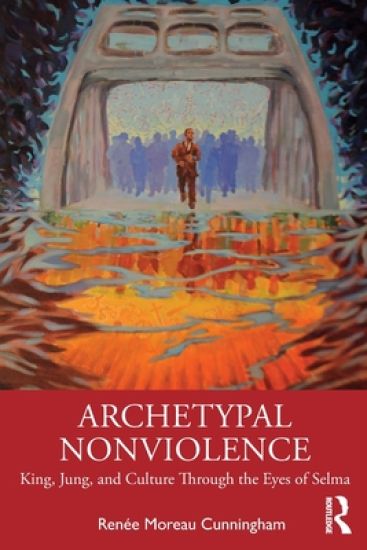
Renée Moreau Cunningham’s unique study utilizes the psychology of C. G. Jung and the spiritual teachings of Mahatma Gandhi and Martin Luther King, Jr. to explore how nonviolence works psychologically as a form of spiritual warfare, confronting and transmuting aggression. Archetypal Nonviolence uses King’s iconic march from Selma to Montgomery, a demonstration which helped introduce America to nonviolent philosophy on a mass scale, as a metaphor for psychological and spiritual activism on an individual and collective level. Cunningham’s work explores the core wound of racism in America on both a collective and a personal level, investigating how we hide from our own potential for evil and how the divide within ourselves can be bridged. The book demonstrates that the alchemical transmutation of aggression through a nonviolent ethos, as shown in the Selma marches, is important to understand as a beginning to something greater within the paradox of human violence and its bedfellow, nonviolence. Archetypal Nonviolence explores how we can truly transform hatred by understanding how it operates within. It will be of great interest to Jungian analysts and analytical psychologists in practice and in training, and to academics and students of Jungian and post-Jungian studies, American history, race and racism, and nonviolent movements.
Renée Moreau Cunningham’s unique study utilizes the psychology of C. G. Jung and the spiritual teachings of Mahatma Gandhi and Martin Luther King, Jr. to explore how nonviolence works psychologically as a form of spiritual warfare, confronting and transmuting aggression. Archetypal Nonviolence uses King’s iconic march from Selma to Montgomery, a demonstration which helped introduce America to nonviolent philosophy on a mass scale, as a metaphor for psychological and spiritual activism on an individual and collective level. Cunningham’s work explores the core wound of racism in America on both a collective and a personal level, investigating how we hide from our own potential for evil and how the divide within ourselves can be bridged. The book demonstrates that the alchemical transmutation of aggression through a nonviolent ethos, as shown in the Selma marches, is important to understand as a beginning to something greater within the paradox of human violence and its bedfellow, nonviolence. Archetypal Nonviolence explores how we can truly transform hatred by understanding how it operates within. It will be of great interest to Jungian analysts and analytical psychologists in practice and in training, and to academics and students of Jungian and post-Jungian studies, American history, race and racism, and nonviolent movements.
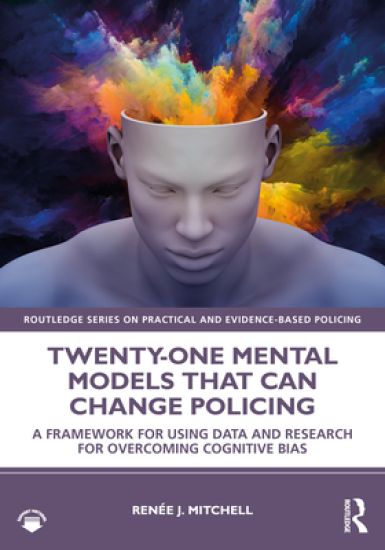
This book goes beyond other police leadership books to teach practitioners how to think about policing in a structured way that synthesizes criminological theory, statistics, research design, applied research, and what works and what doesn’t in policing into Mental Models. A Mental Model is a representation of how something works. Using a Mental Model framework to simplify complex concepts, readers will take away an in-depth understanding of how cognitive biases affect our ability to understand and interpret data, what empirical research says about effective police interventions, how statistical data should be structured for management meetings, and how to evaluate interventions for efficiency and effectiveness. While evidence-based practice is critical to advancing the police profession, it is limited in scope, and is only part of what is necessary to support sustainable change in policing. Policing requires a scientifically based framework to understand and interpret data in a way that minimizes cognitive bias to allow for better responses to complex problems. Data and research have advanced so rapidly in the last several decades that it is difficult for even the most ambitious of police leaders to keep pace. The Twenty-one Mental Models were synthesized to create a framework for any police, public, or community leader to better understand how cognitive bias contributes to misunderstanding data and gives the reader the tools to overcome those biases to better serve their communities.The book is intended for a wide range of audiences, including law enforcement and community leaders; scholars and policy experts who specialize in policing; students of criminal justice, organizations, and management; reporters and journalists; individuals who aspire to police careers; and citizen consumers of information about policing. Anyone who is going to make decisions about their communities based on data has a responsibility to be numerate and this book Twenty-one Mental Models That Can Change Policing: A Framework For Using Data and Research For Overcoming Cognitive Bias, will help you become just that.
This book goes beyond other police leadership books to teach practitioners how to think about policing in a structured way that synthesizes criminological theory, statistics, research design, applied research, and what works and what doesn’t in policing into Mental Models. A Mental Model is a representation of how something works. Using a Mental Model framework to simplify complex concepts, readers will take away an in-depth understanding of how cognitive biases affect our ability to understand and interpret data, what empirical research says about effective police interventions, how statistical data should be structured for management meetings, and how to evaluate interventions for efficiency and effectiveness. While evidence-based practice is critical to advancing the police profession, it is limited in scope, and is only part of what is necessary to support sustainable change in policing. Policing requires a scientifically based framework to understand and interpret data in a way that minimizes cognitive bias to allow for better responses to complex problems. Data and research have advanced so rapidly in the last several decades that it is difficult for even the most ambitious of police leaders to keep pace. The Twenty-one Mental Models were synthesized to create a framework for any police, public, or community leader to better understand how cognitive bias contributes to misunderstanding data and gives the reader the tools to overcome those biases to better serve their communities.The book is intended for a wide range of audiences, including law enforcement and community leaders; scholars and policy experts who specialize in policing; students of criminal justice, organizations, and management; reporters and journalists; individuals who aspire to police careers; and citizen consumers of information about policing. Anyone who is going to make decisions about their communities based on data has a responsibility to be numerate and this book Twenty-one Mental Models That Can Change Policing: A Framework For Using Data and Research For Overcoming Cognitive Bias, will help you become just that.
Learn how to engage the diverse families of English learners (ELs) and immigrants with the effective, practical approaches in this book. This must-have resource for teachers and school leaders is packed with fresh ideas geared toward building a partnership between school communities and ELs and immigrant families at school and at home. The book includes information and activities to: Assess current practices Investigate family perceptions and expectations Overcome challenges Improve communication Fund family engagementFully revised and up-to-date, the new edition shines a much-needed spotlight on immigrant families from numerous homelands and includes a chapter on schools and organizations that have applied many of the ideas in the book for successful partnerships. New online resources include 20 new activities to complement the book chapters, over 50 annotated websites, and additional book recommendations to provide insight into the immigrant experience. The support materials can be found at routledge.com/9780367607548.Organized with the busy educator in mind, the book can be read straight through or section by section to best fit your specific needs. As the demographics of America's schools continue to grow and change, this book guides you to building an inclusive school community in which every family can thrive!
Learn how to engage the diverse families of English learners (ELs) and immigrants with the effective, practical approaches in this book. This must-have resource for teachers and school leaders is packed with fresh ideas geared toward building a partnership between school communities and ELs and immigrant families at school and at home. The book includes information and activities to: Assess current practices Investigate family perceptions and expectations Overcome challenges Improve communication Fund family engagementFully revised and up-to-date, the new edition shines a much-needed spotlight on immigrant families from numerous homelands and includes a chapter on schools and organizations that have applied many of the ideas in the book for successful partnerships. New online resources include 20 new activities to complement the book chapters, over 50 annotated websites, and additional book recommendations to provide insight into the immigrant experience. The support materials can be found at routledge.com/9780367607548.Organized with the busy educator in mind, the book can be read straight through or section by section to best fit your specific needs. As the demographics of America's schools continue to grow and change, this book guides you to building an inclusive school community in which every family can thrive!
Australian author Renee Dahlia takes us back to Merindah Park for this rural romance about letting go of the past and the healing power of horses. Serena Bassett Home. It's been a long journey to recovery after the horse racing accident that nearly killed me, and now I'm ready to embrace life. Yes, I have a head injury, but that's not going to stop me creating a survival list of all the things I was too polite to do before. Number one on the list is to ride again. Also on the list: kiss Lee Edwards, my former boss and hot-as-hell neighbour. Not that I'm going to write that one down where anyone might see it. Lee Edwards The last six months have been hell. Not only did one of my horses nearly kill my stable jockey, Serena, but the accident wrecked my friendship with her brother and reminded me that I'm a failure. Just like my father said I'd be. I moved to Australia, the other side of the world, to get away from his negative voice and create a new life as a horse trainer. And now Serena is on my doorstep, demanding to learn to ride again. I can't do it. I won't be responsible for hurting her again. So why is it so hard to say no?