Kirjojen hintavertailu. Mukana 11 342 296 kirjaa ja 12 kauppaa.

Kirjahaku

Etsi kirjoja tekijän nimen, kirjan nimen tai ISBN:n perusteella.

1000 tulosta hakusanalla Robert Cornforth

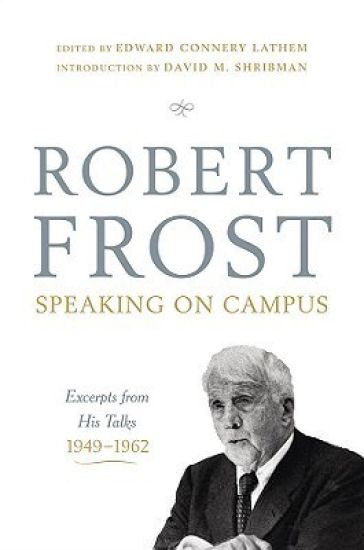
Robert Frost: Speaking on Campus

Robert Frost: Speaking on Campus

Robert Frost

WW Norton Co
2009
sidottu
Robert Frost’s poetry has triumphantly survived him, but most readers today have not known him in one of his most significant capacities—as teacher and lecturer. Here, collected for the first time, are excerpts from forty-six of his presentations delivered to students at more than thirty academic institutions over three decades. Frost’s topics include: “What I think I’m doing when I write a poem,” “Getting up things to say for yourself,” “The future of the world,” “Fall in love at sight,” and “Not freedom from, but freedom of.” Gathered by Edward Connery Lathem, editor of The Poetry of Robert Frost, and introduced by Pulitzer Prize–winning journalist David M. Shribman, Robert Frost: Speaking on Campus reveals Frost in the setting of both classroom and lecture hall, where he inspired thousands.
Robert E. Lee

Robert E. Lee

Emory M. Thomas

WW Norton Co
1997
nidottu
The life of Robert E. Lee is a story not of defeat but of triumph—triumph in clearing his family name, triumph in marrying properly, triumph over the mighty Mississippi in his work as an engineer, and triumph over all other military men to become the towering figure who commanded the Confederate army in the American Civil War. But late in life Lee confessed that he "was always wanting something." In this probing and personal biography, Emory Thomas reveals more than the man himself did. Robert E. Lee has been, and continues to be, a symbol and hero in the American story. But in life, Thomas writes, Lee was both more and less than his legend. Here is the man behind the legend.
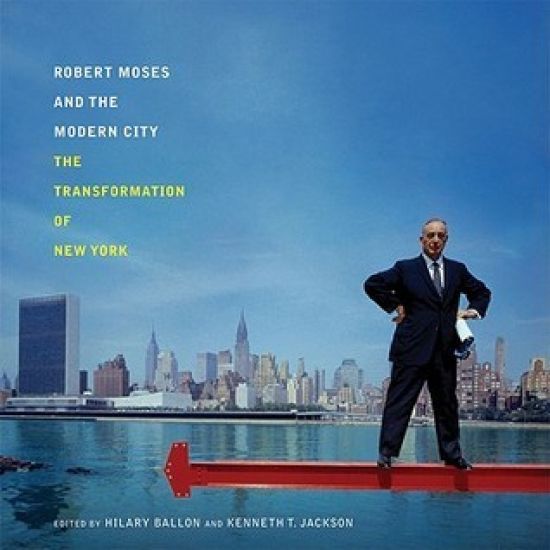
Robert Moses and the Modern City
“We are rebuilding New York, not dispersing and abandoning it”: Robert Moses saw himself on a rescue mission to save the city from obsolescence, decentralization, and decline. His vast building program aimed to modernize urban infrastructure, expand the public realm with extensive recreational facilities, remove blight, and make the city more livable for the middle class. This book offers a fresh look at the physical transformation of New York during Moses’s nearly forty-year reign over city building from 1934 to 1968. It is hard to imagine that anyone will ever have the same impact on New York as did Robert Moses. In his various roles in city and state government, he reshaped the fabric of the city, and his legacy continues to touch the lives of all New Yorkers. Revered for most of his life, he is now one of the most controversial figures in the city’s history. Robert Moses and the Modern City is the first major publication devoted to him since Robert Caro’s damning 1974 biography, The Power Broker: Robert Moses and the Fall of New York. In these pages eight short essays by leading scholars of urban history provide a revised perspective; stunning new photographs offer the first visual record of Moses’s far-reaching building program as it stands today; and a comprehensive catalog of his works is illustrated with a wealth of archival records: photographs of buildings, neighborhoods, and landscapes, of parks, pools, and playgrounds, of demolished neighborhoods and replacement housing and urban renewal projects, of bridges and highways; renderings of rejected designs and controversial projects that were defeated; and views of spectacular models that have not been seen since Moses made them for promotional purposes.Robert Moses and the Modern City captures research undertaken in the last three decades and will stimulate a new round of debate. Robert Moses and the Modern City captures research undertaken in the last three decades and will stimulate a new round of debate.
Robert Moses and the Modern City
“We are rebuilding New York, not dispersing and abandoning it”: Robert Moses saw himself on a rescue mission to save the city from obsolescence, decentralization, and decline. His vast building program aimed to modernize urban infrastructure, expand the public realm with extensive recreational facilities, remove blight, and make the city more livable for the middle class. This book offers a fresh look at the physical transformation of New York during Moses’s nearly forty-year reign over city building from 1934 to 1968.It is hard to imagine that anyone will ever have the same impact on New York as did Robert Moses. In his various roles in city and state government, he reshaped the fabric of the city, and his legacy continues to touch the lives of all New Yorkers. Revered for most of his life, he is now one of the most controversial figures in the city’s history. Robert Moses and the Modern City is the first major publication devoted to him since Robert Caro’s damning 1974 biography, The Power Broker: Robert Moses and the Fall of New York.In these pages eight short essays by leading scholars of urban history provide a revised perspective; stunning new photographs offer the first visual record of Moses’s far-reaching building program as it stands today; and a comprehensive catalog of his works is illustrated with a wealth of archival records: photographs of buildings, neighborhoods, and landscapes, of parks, pools, and playgrounds, of demolished neighborhoods and replacement housing and urban renewal projects, of bridges and highways; renderings of rejected designs and controversial projects that were defeated; and views of spectacular models that have not been seen since Moses made them for promotional purposes.Robert Moses and the Modern City captures research undertaken in the last three decades and will stimulate a new round of debate.
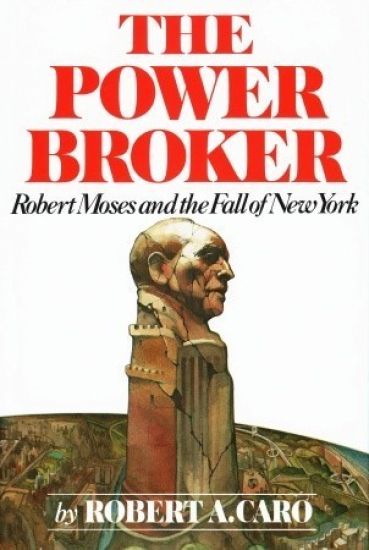
The Power Broker: Robert Moses and the Fall of New York

The Power Broker: Robert Moses and the Fall of New York

Robert A. Caro

Knopf Publishing Group
1974
sidottu
PULITZER PRIZE WINNER - A modern American classic, this huge and galvanizing biography of Robert Moses reveals not only the saga of one man's incredible accumulation of power but the story of his shaping (and mis-shaping) of twentieth-century New York. One of the Modern Library's hundred greatest books of the twentieth century, Robert Caro's monumental book makes public what few outsiders knew: that Robert Moses was the single most powerful man of his time in the City and in the State of New York. And in telling the Moses story, Caro both opens up to an unprecedented degree the way in which politics really happens--the way things really get done in America's City Halls and Statehouses--and brings to light a bonanza of vital information about such national figures as Alfred E. Smith and Franklin D. Roosevelt (and the genesis of their blood feud), about Fiorello La Guardia, John V. Lindsay and Nelson Rockefeller. But The Power Broker is first and foremost a brilliant multidimensional portrait of a man--an extraordinary man who, denied power within the normal framework of the democratic process, stepped outside that framework to grasp power sufficient to shape a great city and to hold sway over the very texture of millions of lives. We see how Moses began: the handsome, intellectual young heir to the world of Our Crowd, an idealist. How, rebuffed by the entrenched political establishment, he fought for the power to accomplish his ideals. How he first created a miraculous flowering of parks and parkways, playlands and beaches--and then ultimately brought down on the city the smog-choked aridity of our urban landscape, the endless miles of (never sufficient) highway, the hopeless sprawl of Long Island, the massive failures of public housing, and countless other barriers to humane living. How, inevitably, the accumulation of power became an end in itself. Moses built an empire and lived like an emperor. He was held in fear--his dossiers could disgorge the dark secret of anyone who opposed him. He was, he claimed, above politics, above deals; and through decade after decade, the newspapers and the public believed. Meanwhile, he was developing his public authorities into a fourth branch of government known as "Triborough"--a government whose records were closed to the public, whose policies and plans were decided not by voters or elected officials but solely by Moses--an immense economic force directing pressure on labor unions, on banks, on all the city's political and economic institutions, and on the press, and on the Church. He doled out millions of dollars' worth of legal fees, insurance commissions, lucrative contracts on the basis of who could best pay him back in the only coin he coveted: power. He dominated the politics and politicians of his time--without ever having been elected to any office. He was, in essence, above our democratic system. Robert Moses held power in the state for 44 years, through the governorships of Smith, Roosevelt, Lehman, Dewey, Harriman and Rockefeller, and in the city for 34 years, through the mayoralties of La Guardia, O'Dwyer, Impellitteri, Wagner and Lindsay, He personally conceived and carried through public works costing 27 billion dollars--he was undoubtedly America's greatest builder. This is how he built and dominated New York--before, finally, he was stripped of his reputation (by the press) and his power (by Nelson Rockefeller). But his work, and his will, had been done.
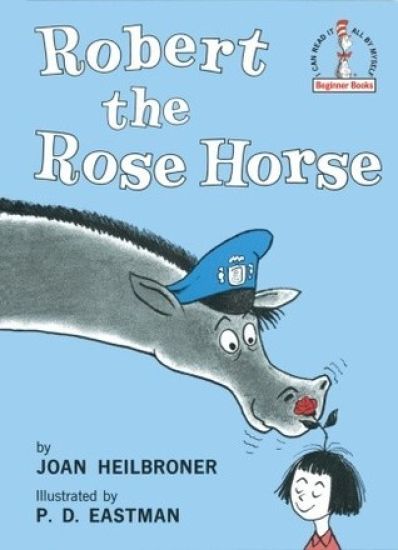
Robert the Rose Horse

Robert the Rose Horse

Joan Heilbroner

Random House Books for Young Readers
1962
sidottu
Illustrated in vibrant colors, a city horse faces many problems due to his allergy to roses, until one day, his sneezes save the day. Beginner Books are fun, funny, and easy to read Launched by Dr. Seuss in 1957 with the publication of The Cat in the Hat, this beloved early reader series motivates children to read on their own by using simple words with illustrations that give clues to their meaning. Featuring a combination of kid appeal, supportive vocabulary, and bright, cheerful art, Beginner Books will encourage a love of reading in children ages 3-7.
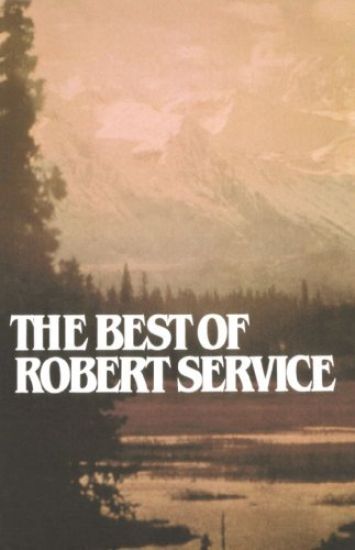
Best of Robert Service

Best of Robert Service

Robert Service

TarcherPerigee
1989
nidottu
Here, collected in a single volume, are the most popular verses of the great English-born Canadian poet. His famous ballads of the Klondike are here: "The Shooting of Dan McGrew," "The Spell of the Yukon," and "The Cremation of Sam McGee." Also included are unforgettable portrayals of the artists, grisettes, and models of the merry, tragic life of bohemian Paris, and other verses inspire by the First World War, during which Service drove an ambulance in France. And not to be overlooked are the many expressions of the poet's own homespun philosophy--his comments on women, on life and death, ambition, and success and failure, which strike a responsive chord in the reader's heart. Gaiety, humor, nostalgia, and pathos fill every page, along with the genuine Service ring of virility which has made his verse loved throughout the English reading world.
Robert Louis Stevenson's A Child's Garden of Verses

Robert Louis Stevenson's A Child's Garden of Verses

Robert Louis Stevenson

Golden Books Publishing Company, Inc.
2017
sidottu
How do you like to go up in a swing, Up in the air so blue? Oh, I do think it the pleasantest thing Ever a child can do Robert Louis Stevenson's rhymes have charmed children and adults alike since 1885, when they first appeared to a delighted public. Stevenson's joyful exploration of the world speaks directly from a child's point of view and celebrates the child's imagination. This Golden Books edition, originally published in 1951, features lively, colorful illustrations by Caldecott Medalists Alice and Martin Provensen. The original artwork has been digitally restored for this edition--resulting in a stunning, best-ever reproduction
Robert B. Parker's Colorblind

Robert B. Parker's Colorblind

Reed Farrel Coleman

G.P. Putnam's Sons
2019
pokkari
Police chief Jesse Stone tackles a disturbing case that hits right at the heart of the Paradise police force. Jesse Stone is back on the job after a stint in rehab, and the road to recovery is immediately made bumpy by a series of disturbing and apparently racially motivated crimes, beginning with the murder of an African American woman. Then, Jesse's own deputy Alisha--the first black woman hired by the Paradise police force--becomes the target of a sophisticated frame-up. As he and his team work tirelessly to unravel the truth, he has to wonder if this is just one part of an even grander plot, one with an end game more destructive than any of them can imagine. At the same time, a mysterious young man named Cole Slayton rolls into town with a chip on his shoulder and a problem with authority--namely, Jesse. Yet, something about the angry twenty-something appeals to Jesse, and he takes Cole under his wing. But there's more to him than meets the eye, and his secrets might change Jesse's life forever.
Robert B. Parker's the Bitterest Pill

Robert B. Parker's the Bitterest Pill

Reed Farrel Coleman

G.P. Putnam's Sons
2020
pokkari
The opioid epidemic has reached Paradise, and Police Chief Jesse Stone must rush to stop the devastation in the latest thriller in Robert B. Parker's New York Times-bestselling series. When a popular high school cheerleader dies of a suspected heroin overdose, it becomes clear that the opioid epidemic has spread even to the idyllic town of Paradise. It will be up to Police Chief Jesse Stone to unravel the supply chain and unmask the criminals behind it, and the investigation has a clear epicenter: Paradise High School. Home of the town's best and brightest future leaders and its most vulnerable down-and-out teens, it's a rich and bottomless market for dealers out of Boston looking to expand into the suburbs. But when it comes to drugs, the very people Jesse is trying to protect are often those with the most to lose. As he digs deeper into the case, he finds himself battling self-interested administrators, reluctant teachers, distrustful schoolkids, and overprotective parents . . . and at the end of the line are the true bad guys, the ones with a lucrative business they'd kill to protect.
Robert Burns

Robert Burns

Routledge
1995
sidottu
The Critical Heritage gathers together a large body of critical sources on major figures in literature. Each volume presents contemporary responses to a writer's work, enabling students and researchers to read for themselves, for example, comments on early performances of Shakespeare's plays, or reactions to the first publication of Jane Austen's novels.The carefully selected sources range from landmark essays in the history of criticism to journalism and contemporary opinion, and little published documentary material such as letters and diaries. Significant pieces of criticism from later periods are also included, in order to demonstrate the fluctuations in an author's reputation.Each volume contains an introduction to the writer's published works, a selected bibliography, and an index of works, authors and subjects.
Robert Southey
The Critical Heritage gathers together a large body of critical sources on major figures in literature. Each vlume presents contemporary responses to a writer's work, enabling the student or researcher to read the material themselves.
Robert Browning
The Critical Heritage gathers together a large body of critical sources on major figures in literature. Each volume presents contemporary responses to a writer's work, enabling students and researchers to read for themselves, for example, comments on early performances of Shakespeare's plays, or reactions to the first publication of Jane Austen's novels. The carefully selected sources range from landmark essays in the history of criticism to journalism and contemporary opinion, and little published documentary material such as letters and diaries. Significant pieces of criticism from later periods are also included, in order to demonstrate the fluctuations in an author's reputation. Each volume contains an introduction to the writer's published works, a selected bibliography, and an index of works, authors and subjects. The Collected Critical Heritage set will be available as a set of 68 volumes and the series will also be available in mini sets selected by period (in slipcase boxes) and as individual volumes.
Robert Louis Stevenson
The Critical Heritage gathers together a large body of critical sources on major figures in literature. Each volume presents contemporary responses to a writer's work, enabling students and researchers to read the material themselves.
Robert Browning

Robert Browning

Stefan Hawlin

Routledge
2001
sidottu
Accessibly written throughout, this guidebook covers biographical details, information on the historical and social contexts of Browning's work, an overview of the full range of his work and a survey of the major critical debates surrounding him and his work.
Robert Browning

Robert Browning

Stefan Hawlin

Routledge
2001
nidottu
Accessibly written throughout, this guidebook covers biographical details, information on the historical and social contexts of Browning's work, an overview of the full range of his work and a survey of the major critical debates surrounding him and his work.
Robert Venturi and Denise Scott Brown: Learning from Las Vegas
The Supercrit series revisits some of the most influential architectural projects of the recent past and examines their impact on the way we think and design today. Based on live studio debates between protagonists and critics, the books describe, explore and criticise these major projects. This second book in the unprecedented series examines Robert Venturi and Denise Scott Brown's infamous book which overturned the barriers separating high architecture from the commercial architecture of the Strip. In Robert Venturi and Denise Scott Brown: Learning from Las Vegas you can hear the couple's project description, see the drawings and join in the crit. This innovative and compelling book is an invaluable resource for any architecture student.
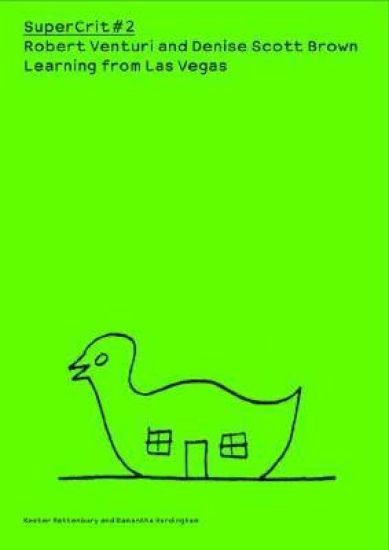
Robert Venturi and Denise Scott Brown: Learning from Las Vegas
The Supercrit series revisits some of the most influential architectural projects of the recent past and examines their impact on the way we think and design today. Based on live studio debates between protagonists and critics, the books describe, explore and criticise these major projects. This second book in the unprecedented series examines Robert Venturi and Denise Scott Brown's infamous book which overturned the barriers separating high architecture from the commercial architecture of the Strip. In Robert Venturi and Denise Scott Brown: Learning from Las Vegas you can hear the couple's project description, see the drawings and join in the crit. This innovative and compelling book is an invaluable resource for any architecture student.
Robert Owen and the Owenites in Britain and America (Routledge Revivals)
Robert Owen and the Owenites were associated with the rise of an early industrial society in Britain and with the development of an agricultural, frontier society in the United States during the first half of the nineteenth century. This book, originally published in 1969, was the first to use both British and American source material, and tells the story of Robert Owen and the movement associated with his name, from the standpoint of comparative social and intellectual history.The book directs new light on Owenism, and at the same time illuminates general problems of the history of social movements and social change in modern societies.