Kirjojen hintavertailu. Mukana 12 016 877 kirjaa ja 12 kauppaa.

Kirjahaku

Etsi kirjoja tekijän nimen, kirjan nimen tai ISBN:n perusteella.

1000 tulosta hakusanalla Robert L. Perry

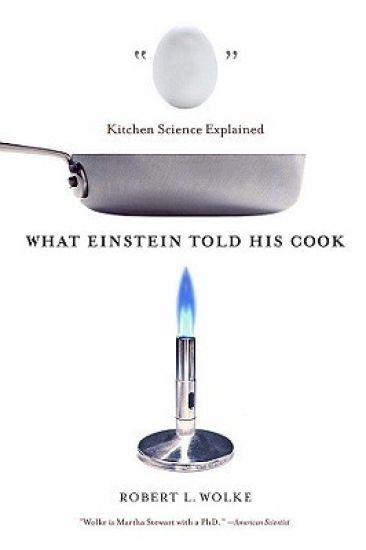
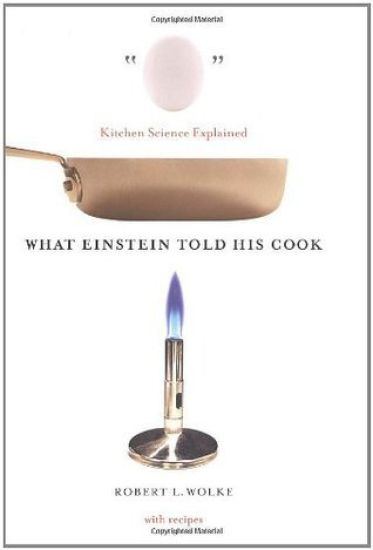
What Einstein Told His Cook

What Einstein Told His Cook

Robert L. Wolke

WW Norton Co
2002
sidottu
Do you wish you understood the science of foods, but don't want to plow through dry technical books? What Einstein Told His Cook is like having a scientist at your side to answer your questions in plain, nontechnical terms. Chemistry professor and syndicated Washington Post food columnist Robert L. Wolke provides over 100 reliable and witty explanations, while debunking misconceptions and helping you to see through confusing advertising and labeling. In "Sweet Talk" you will learn that your taste buds don't behave the way you thought they did, that starch is made of sugar, and that raw sugar isn't raw. Did you know that roads have been paved with molasses? Why do cooked foods turn brown? What do we owe to Christopher Columbus's mother-in-law? In "The Salt of the Earth" you will learn about the strange salts in your supermarket. Does sea salt really come from the sea? (Don't bet on it.) Why do we salt the water for boiling pasta? And how can you remove excess salt from oversalted soup? (You may be surprised.) In "The Fat of the Land" you will learn the difference between a fat and a fatty acid, what makes them saturated or unsaturated, and that nonfat cooking sprays are mostly fat. Why don't the amounts of fats on food labels add up? Why does European butter taste better than ours? In "Chemicals in the Kitchen" you will learn what's in your tap water, how baking powder and baking soda differ, and what MSG does to food. What Japanese taste sensation is sweeping this country? Is your balsamic vinegar fake? Why do potato chips have green edges? In "Turf and Surf" you will learn why red meat is red, why ground beef may look as if it came from the Old Gray Mare, and how bones contribute to flavor. Want a juicy turkey with smooth gravy? How does one deal with a live clam, oyster, crab, or lobster? In "Fire and Ice" you will learn how to buy a range and the difference between charcoal and gas for grilling. Did you know that all the alcohol does not boil off when you cook with wine? How about a surprising way to defrost frozen foods? And yes, hot water can freeze before cold water. In "Liquid Refreshment" you will learn about the acids and caffeine in coffee, and why "herb teas" are not teas. Does drinking soda contribute to global warming? Why does champagne foam up? Should you sniff the wine cork? How can you find out how much alcohol there is in your drink? In "Those Mysterious Microwaves" you will learn what microwaves do—and don't do—to your food. What makes a container "microwave safe"? Why mustn't you put metal in a microwave oven? How can you keep microwave-heated water from blowing up in your face? In "Tools and Technology" you will learn why nothing sticks to nonstick cookware, and what the pressure-cooker manufacturers don't tell you. What's the latest research on juicing limes? Why are "instant read" thermometers so slow? Can you cook with magnetism and light? What does irradiation do to our foods?
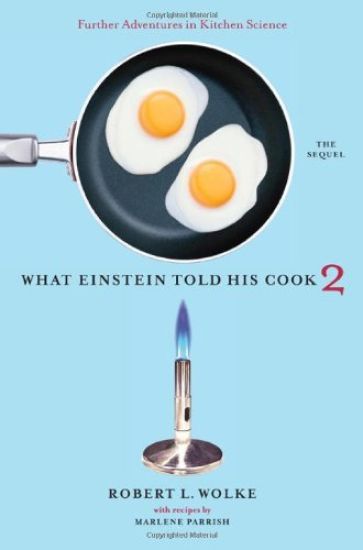
What Einstein Told His Cook 2

What Einstein Told His Cook 2

Robert L. Wolke

WW Norton Co
2005
sidottu
This sequel to the best-selling What Einstein Told His Cook continues Bob Wolke's investigations into the science behind our foods—from the farm or factory to the market, and through the kitchen to the table. In response to ongoing questions from the readers of his nationally syndicated Washington Post column, "Food 101," Wolke continues to debunk misconceptions with reliable, commonsense answers. He has also added a new feature for curious cooks and budding scientists, "Sidebar Science," which details the chemical processes that underlie food and cooking. In the same plain language that made the first book a hit with both techies and foodies, Wolke combines the authority, clarity, and wit of a renowned research scientist, writer, and teacher. All those who cook, or for that matter go to the market and eat, will become wiser consumers, better cooks, and happier gastronomes for understanding their food.
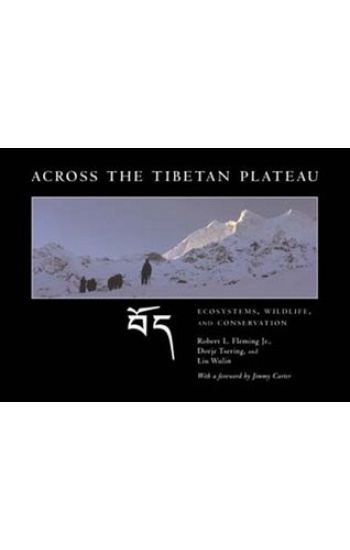
Across the Tibetan Plateau

Across the Tibetan Plateau

Robert L. Fleming; Dorje Tsering; Liu Wulin; Jimmy Carter

WW Norton Co
2007
sidottu
Here is the most comprehensive photography to date of a little-known and seldom-visited land whose area equals western Europe. The beauty and diversity of Tibet is staggering: from Mount Everest to the world’s deepest gorge, from tropical jungles to arctic-like tundra, from trees twenty feet in diameter to vast herds and solitary specimens of some of the least-known animals on the planet. Certain photographs, such as those of a newborn Tibetan antelope or the elusive red ghoral, are among the first ever taken of these subjects. The book brings American, Tibetan, and Chinese scholarship to bear on the natural history of Tibet, and it also describes an extraordinary conservation accomplishment that has gone virtually unnoticed by the outside world. Where else has 40 percent of the land been set aside in nature preserves in twenty years? As a result of this effort, the animals and landscapes shown here will be saved for future generations.
Behind the Veil of Economics

Behind the Veil of Economics

Robert L. Heilbroner

WW Norton Co
1989
nidottu
What lies behind the veil of economics? Power and ideology, answers Robert Heilbroner—the power of our economic involvement in society to shape the ways we think about it; the visions and values that add unsuspected ideological color to our economic beliefs about it. Most important, Heilbroner shows why economics has become the reigning form of social inquiry and how we might penetrate its mystique.
The Debt and the Deficit

The Debt and the Deficit

Robert L. Heilbroner; Peter L. Bernstein

WW Norton Co
1989
nidottu
The authors explain what national debts and deficits are, and what they are not. One thing they are not nearly as big as we think. Another thing they are not is a burden on the shoulders of our grandchildren. And one thing they are is a potential means of financing economic growth. Heilbroner and Bernstein do not shrug aside the debt and deficit. "The only remedy for our present frightened state of mind", they write, "is explanations that are simple but accurate, facts that will defuse unreasoning panic, and arguments that will stand up under the most skeptical examination."
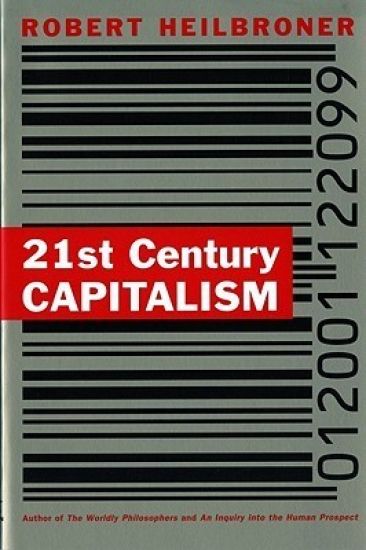
21st Century Capitalism

21st Century Capitalism

Robert L Heilbroner

W. W. Norton Company
1994
pokkari
Although communism lies shattered almost everywhere it once existed, no single form of capitalism has emerged worldwide. Which of the varieties of capitalism will be hardy enough to survive into the next century? Will the private sector make way for government to redress the failures of the market system? Does the defeat of the socialist vision portend that unbridled acquisitiveness will dominate the world? In tackling these questions, Heilbroner takes us to the roots of capitalist society. He views capitalism from a wide angle as both an economic system and a political order, showing the integral connections between the two that are often overlooked; finally, he addresses the overarching challenge ahead--a society that no longer believes in the inevitability of progress.
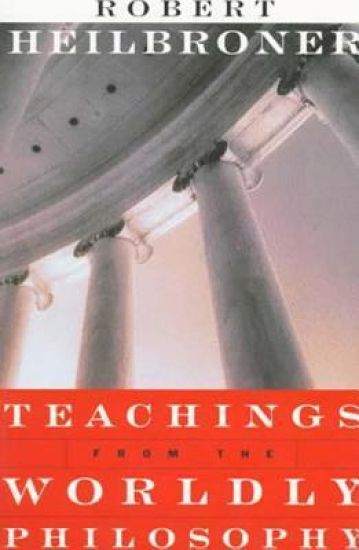
Teachings from the Worldly Philosophy

Teachings from the Worldly Philosophy

Robert L. Heilbroner

WW Norton Co
1997
nidottu
Author of The Worldly Philosophers, a 3-million-copy seller, Robert Heilbroner offers here a compendium of readings from the "worldly philosophers" themselves. The selections range from the earliest economic thought to such towering volumes as Adam Smith's The Wealth of Nations, Thomas Malthus's Essay on the Principle of Population, David Ricardo's Principles of Political Economy, and John Maynard Keynes's The General Theory of Employment, Interest, and Money. Acting as "a docent, not merely an editor," he takes the reader through the core arguments with "brilliantly clear commentary" (New York Times Book Review).
What Einstein Told His Cook

What Einstein Told His Cook

Robert L. Wolke

WW Norton Co
2008
nidottu
“Wolke, longtime professor of chemistry and author of the Washington Post column Food 101, turns his hand to a Cecil Adams style compendium of questions and answers on food chemistry. Is there really a difference between supermarket and sea salt? How is sugar made? Should cooks avoid aluminum pans? Interspersed throughout Wolke’s accessible and humorous answers to these and other mysteries are recipes demonstrating scientific principles. There is gravy that avoids lumps and grease; Portuguese Poached Meringue that demonstrates cream of tartar at work; and juicy Salt-Seared Burgers…With its zest for the truth, this book will help cooks learn how to make more intelligent choices.” —Publishers Weekly
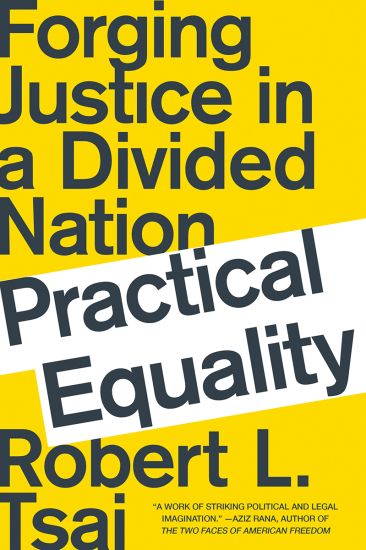
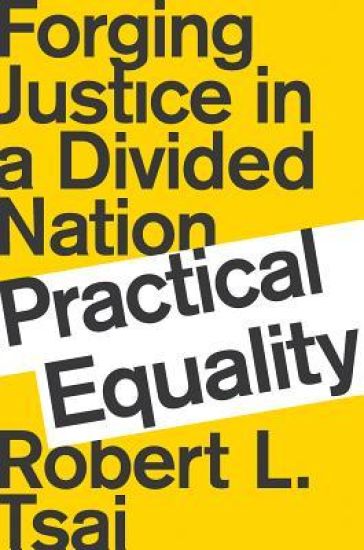
Practical Equality

Practical Equality

Robert L. Tsai

WW Norton Co
2020
nidottu
Robert L. Tsai offers a stirring account of how legal ideas that aren’t necessarily about equality have often been used to overcome resistance to justice and remain vital today. From the oppression of emancipated slaves after the Civil War, to the internment of Japanese Americans during World War II, to President Trump’s ban on Muslim travelers, Tsai applies lessons from past struggles to pressing contemporary issues.
Practical Equality

Practical Equality

Robert L. Tsai

WW Norton Co
2019
sidottu
Equality is easy to grasp in theory but often hard to achieve in reality. In this accessible and wide-ranging work, American University law professor Robert L. Tsai offers a stirring account of how legal ideas that aren’t necessarily about equality at all—ensuring fair play, behaving reasonably, avoiding cruelty, and protecting free speech—have often been used to overcome resistance to justice and remain vital today. Practical Equality is an original and compelling book on the intersection of law and society. Tsai, a leading expert on constitutional law who has written widely in the popular press, traces challenges to equality throughout American history: from the oppression of emancipated slaves after the Civil War to the internment of Japanese Americans during World War II to President Trump’s ban on Muslim travelers. He applies lessons from these and other past struggles to such pressing contemporary issues as the rights of sexual minorities and the homeless, racism in the criminal justice system, police brutality, voting restrictions, oppressive measures against migrants, and more. Deeply researched and well argued, Practical Equality offers a sense of optimism and a guide to pursuing equality for activists, lawyers, public officials, and concerned citizens.
Demand the Impossible: One Lawyer's Pursuit of Equal Justice for All
Stephen Bright emerged on the scene as a cause lawyer in the early decades of mass incarceration, when inflammatory politics and harsh changes to criminal justice policy were crashing down on the most vulnerable members of society. He dedicated his career to unleashing social change by representing clients that society had long ago discarded, and advocated for all to receive a fair trial.In Demand the Impossible, Robert L. Tsai traces Bright's remarkable career to explore the legal ideas that were central to his relentless pursuit of equal justice. For nearly forty years, Bright led the Southern Center for Human Rights, a nonprofit that provided legal aid to incarcerated people and worked to improve conditions within the justice system. He argued four capital cases before the US Supreme Court--and won each one, despite facing an increasingly hostile bench. With each victory, he brought to light how the law itself had become corrupted by the country's thirst for severe punishment, exposing prosecutorial misconduct, continuing racial inequality, inadequate safeguards for people with intellectual disabilities, and the shameful quality of legal representation for the poor.Organized around these four major Supreme Court cases, each narrated in vivid and dramatic detail, Tsai's essential account explores the racism built into the criminal justice system and the incredible advancements one lawyer and his committed allies made for equal rights. An electrifying work of legal history, Demand the Impossible reveals how change can be won in even the most challenging times and how seemingly small victories can go on to have outsized effects.
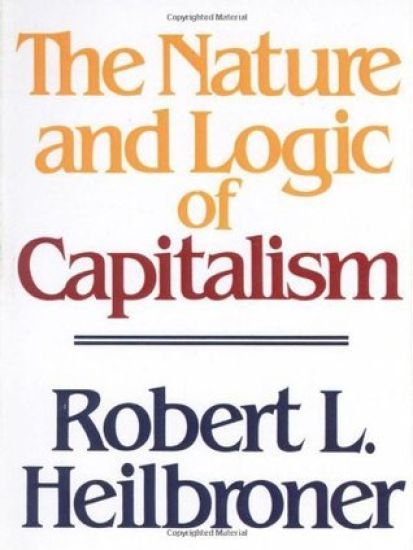
The Nature and Logic of Capitalism

The Nature and Logic of Capitalism

Robert L. Heilbroner

WW Norton Co
1986
nidottu
In an inquiry that encompasses a probe of the human psyche, an analysis of the organization of primitive society, and an examination of the sources of profit and the accumulation of wealth, the noted economist explores the nature and dynamics of capitalism
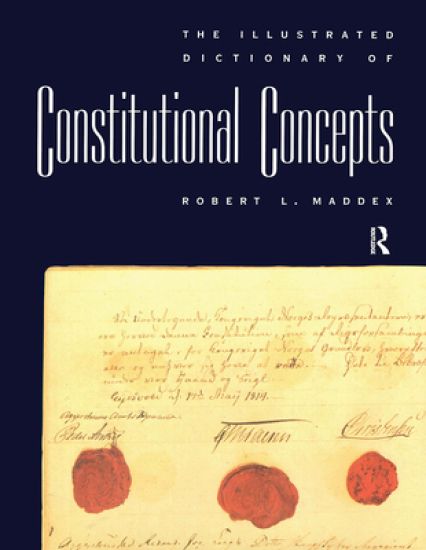
Constitutions of the World

Constitutions of the World

Robert L. Maddex

Routledge
1997
sidottu
From Algeria to Zimbabwe, Constitutions of the World is a guide to the constitutions and constitutional histories of eighty nations. It will prove an invaluable resource for any teacher or student interested in politics, law, human rights or the political history of nations across the world. Strucured alphabetically each chapter profiles one country in an easy-to-use format. For every country a wealth of information is to be found.
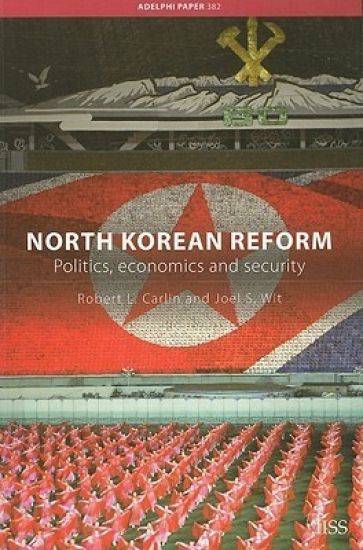
North Korean Reform

North Korean Reform

Robert L. Carlin; Joel Wit

Routledge
2006
nidottu
In the past, foreign policy and security concerns have trumped any efforts to reform the North Korean economy. Today, the linkage between security and economic policies is being reconsidered as part of a larger debate in the North Korean leadership that has already transformed the country in fundamental ways. Despite renewed tensions with the United States, North Korea has begun to implement important economic reforms. Moreover, underneath the cover of the ever-present ‘military-first’ slogan in the controlled media, a debate is taking place between ‘reformers’ and ‘conservatives’ over whether Pyongyang’s bloated military industrial complex should be scaled back to help ensure the success of economic reform. Not only do these developments reflect strong political forces in the North Korean leadership that support reform, but they could also have profound implications for the future of Pyongyang’s national security policy. North Korea may decide that it will need a more favourable external security environment in order to secure greater access to international economic and financial assistance for its reform measures and, ultimately, downsizing its military. Pyongyang could launch a new policy of engagement that would include greater flexibility in the Beijing Six Party Talks. A second scenario is continued internal struggle over reform that could lead to an inability to act decisively on key security and foreign policy issues, including at the nuclear talks. Finally, progress in reform may, paradoxically, strengthen conservatives, leading to hopes in Pyongyang that it can improve the economy, while simultaneously maintaining a large powerful military. Whether Washington can do anything at this point to influence directly the emerging debate in Pyongyang is unclear, but a renewed policy of engagement on its part could enhance the chances of success for North Korean advocates of reform.
Honor: A Phenomenology

Honor: A Phenomenology

Robert L. Oprisko

Routledge
2012
sidottu
Honor is misunderstood in the social sciences. The literature lacks both accuracy and precision in its conceptual development such that we no longer say what we mean because we have no idea what we’re saying. We use many terms to mean honor and mean many different ideas when we refer to honor. Honor: A Phenomenology is designed to fix all of these problems. A ground-breaking examination of honor as a metaphenomenon, this book incorporates various structures of social control including prestige, face, shame and affiliated honor and the rejection of said structures by dignified individuals and groups. It shows honor to be a concept that encompasses a number of processes that operate together in order to structure society. Honor is how we are inscribed with social value by others and the means by which we inscribe others with social honor. Because it is the means by which individuals fit in and function with society, the main divisions internal (within the psyche of the individual and external (within the norms and institutions of society). Honor is the glue that holds groups together and the wedge that forces them apart; it defines who is us and who them. It accounts for the continuity and change in socio-political systems.
Constitutions of the World

Constitutions of the World

Robert L. Maddex

Routledge
2014
nidottu
From Algeria to Zimbabwe, Constitutions of the World is a guide to the constitutions and constitutional histories of eighty nations. It will prove an invaluable resource for any teacher or student interested in politics, law, human rights or the political history of nations across the world. Strucured alphabetically each chapter profiles one country in an easy-to-use format. For every country a wealth of information is to be found.
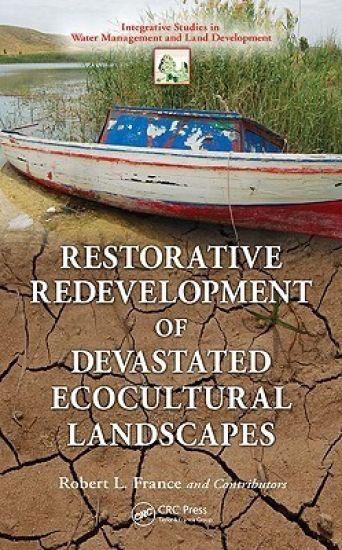
Restorative Redevelopment of Devastated Ecocultural Landscapes
A fusion of ecological restoration and sustainable development, restorative redevelopment represents an emerging paradigm for remediating landscapes. Rather than merely fixing the broken bits and pieces of nature, restorative development advocates the reuse of devastated landscapes to improve the value and livability of a location for humans at the same time as effectively reinstating natural processes and functions. Restorative Redevelopment of Devastated Ecocultural Landscapes explores the use of this approach to address the long-term, sustainable reparation of the fabled marshlands of southern Iraq destroyed by Saddam Hussein, as well as numerous examples of other ecologically sensitive regions.Case studies presented include: Southern marshlands IraqHula swamp, IsraelAzraq Oasis, JordanLas Vegas Wash, USA Xochimilco, MexicoPantanal, BrazilClark County Wetlands Park, USATonle Sap, CambodiaLake Titicaca, PeruNature Reserves, JordanThe book reviews successfully-implemented and celebrated case studies from more than 15 countries around the world which, either in whole or in part, can offer valuable insight into the restorative development of the Iraqi marshlands as well as other devastated ecocultural landscapes. It presents practical approaches for sustaining the process of restoration efforts, both during and after the reparation work has been accomplished. The editor suggests solutions targeted for Iraq but that also have resonance in other regions devastated by conflict and natural disasters. He takes a synoptic or cross-system approach to problem solving when repairing large-scale landscapes that have been devastated by conflict or natural disasters such as tsunami-damaged Indonesia and earthquake-ravaged Haiti.