This is the genuine 1550 Received Text of Robert Stephens, as reprinted by F. H. A. Scrivener in 1887.This edition should not be confused with Scrivener's later editions which were edited to mirror the Authorized Version.In addition to the main text, Scrivener included footnotes with varient readings from the margin of the 1550 printing of Stephanus' textus receptus, as well as variants from the following early printings and editions: Bezae Textus Receptus.Elzevir Textus Receptus.Lachmann Critical Edition.Tischendorf Critical Edition.Tregelles Critical Edition.Wescott and Hort Critical Edition.Revised Version (KJV) of 1881.Take note that the introduction is in Latin, but the Biblical text in Greek.Official Title: H KAINH ΔΙA0HKHNOVUM TESTAMENTUMTEXTUS STEPHANICI A.D. 1550CANTABRIGIAE, DEIGHTON, BELL ET SOC: LONDINI, WHITTAKER ET SOC: G. BELL ET FILII.M.DCCC.LXXXVII.
Many ecological phenomena involve space as well as time and arise from a combination of random and deterministic processes. Such phenomena include the effects of habitat fragmentation, which is a common result of human activity and a major problem in biological conservation. Reaction-diffusion models provide one approach to describing how random movements and deterministic interactions between individuals combine to influence the dynamics of populations and the structure of ecological communities. Spatial Ecology via Reaction-Diffusion Equations addresses the problem of modeling spatial effects in ecology and population dynamics using reaction-diffusion models. *Provides broad coverage of a rapidly expanding area of research for ecologists and applied mathematicians. *Provides a unified and coherent account of methods developed to study spatial ecology via reaction-diffusion models. *Provides the reader with the tools needed to construct and interpret models. *Includes specific applications of both the models and the methods described. Spatial Ecology via Reaction-Diffusion Equations provides a practical introduction to the subject for graduate students and researchers working in spatial modeling from mathematics, statistics, ecology, geography and biology.
Este libro corrige la doctrina de los derechos humanos mediante la presentaci n de una teor a de los derechos humanos determinada por el m todo cient fico. Es decir, primero son descubiertos los axiomas aplicables y luego una teor a completa se construye basado en ellos por deducci n. No se incorporan ningunos valores personales ni moralidad que arruinar a su objetividad. La teor a resultante es diferente de la doctrina prevalente sobre los derechos humanos que incorpora valores, moralidad y visiones de utop a. El libro muestra que algunos derechos proclamados son falsos y dedica un cap tulo a exponerlos. La implementaci n de la teor a se describe en t rminos de principios generales y un suplemento aplica la teor a a diez temas actuales que van desde la pena de muerte a la circuncisi n y a la pobreza mundial.El libro es valioso no s lo a los estudiantes de los derechos humanos, mostr ndoles una teor a alternativa de los derechos, sino tambi n a cualquier persona que desea saber cu les derechos fundamentales tiene como persona."...Derechos humanos, qu son realmente? es una discusi n de gran alcance que debe ser esencial, obligatoria lectura para la historia estadounidense, estudios sociales y pol ticos, y para los cursos de debate desde la escuela secundaria en adelante" D.Donovan, Revisor Senior, Midwest Book ReviewsFull book review is at http: //donovansliteraryservices.com/may-2020-issue.html#hrw
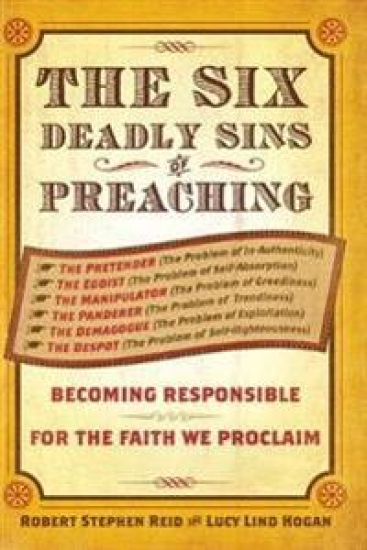
This ethics of preaching text identifies vices of irresponsible preaching practices. Preachers who fail to develop deep respect for their listeners or drift into a lack faithfulness to the Gospel can end up becoming: . The Pretender (The Problem of In-authenticity) . The Egoist (The Problem of Self-absorption) . The Manipulator (The Problem of Greediness) . The Panderer (The Problem of Trendiness) . The Crusader (The Problem of Exploitation) . The Demagogue (The Problem of Self-righteousness) Just as the church historically derived its Seven Holy Virtues (chastity, temperance, charity, diligence, patience, kindness, & humility) by naming Seven Deadly Sins (lust, gluttony, greed, sloth, wrath, envy, & pride), Reid and Hogan call preachers to turn away from pulpit vices and strive to realize the homiletic virtues of becoming: . Authentic (The Call to Be Genuine) . Altruistic (The Call to Be Selfless) . Careful (The Call to Exercise Self-Control) . Passionate (The Call to Be Honest to God) . Courteous (The Call to Woo a Reasoned Reception) . A Namer of God (The Call to Reveal an Ineffable God) The Six Deadly Sins of Preaching explores the difference between the irresponsible practices, unfortunate missteps, and mere unthinking mistakes in preaching. A chapter is devoted to Preaching Missteps (problems that do not rise to the level of being irresponsible) that includes: . Short Changing the Process . Waving a Red Flag . Thou Shall Not Bore the Congregation . Through the Looking Glass Darkly . The Mumbler . TMI Too Much Information . Your Cup Do Runneth Over . Where s This Sermon Going, Anyway?"