

Kirjahaku
Etsi kirjoja tekijän nimen, kirjan nimen tai ISBN:n perusteella.
1000 tulosta hakusanalla Roger Rule

Les Memoires De Messire Roger De Rabutin, Comte De Bussy V3 (1704)
Roger De Rabutin
KESSINGER PUBLISHING, LLC
2009
pokkari
The Sir Roger De Coverley Papers From The Spectator (1897)
Roger De Coverly
KESSINGER PUBLISHING, LLC
2009
pokkari

Lettres De Messire Roger De Rabutin Comte De Bussy V2 (1738)
Roger De Rabutin Bussy
KESSINGER PUBLISHING, LLC
2009
pokkari
Boscovich, R: Roger Josef Boscovich Abris Der Astronomie (17
Roger Josef Boscovich
KESSINGER PUBLISHING, LLC
2009
nidottu
The Greek Grammar of Roger Bacon and a Fragment of His Hebrew Grammar
Roger Bacon; Edmond (EDT) Nolan; S. A. (EDT) Hirsch
Kessinger Pub
2009
pokkari
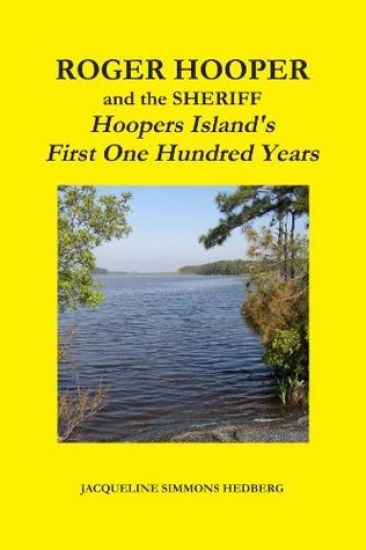
Roger Hooper and the Sheriff: Hoopers Island's First One Hundred Years
Jacqueline Simmons Hedberg
Lulu.com
2012
nidottu
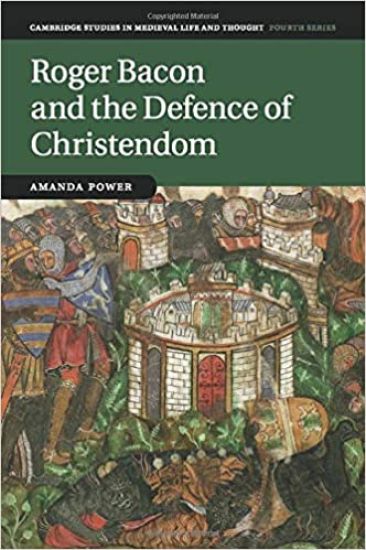
The English Franciscan Roger Bacon (c.1214–92) holds a controversial but important position in the development of modern science. He has been portrayed as an isolated figure, at odds with his influential order and ultimately condemned by it. This major study, the first in English for nearly sixty years, offers a provocative new interpretation of both Bacon and his environment. Amanda Power argues that his famous writings for the papal curia were the product of his critical engagement with the objectives of the Franciscan order and the reform agenda of the thirteenth-century church. Fearing that the apocalypse was at hand and Christians unprepared, Bacon explored radical methods for defending, renewing and promulgating the faith within Christendom and beyond. Read in this light, his work indicates the breadth of imagination possible in a time of expanding geographical and intellectual horizons.
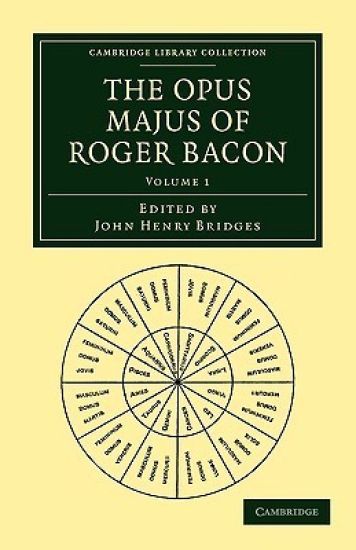
Roger Bacon, the medieval natural philosopher who broke new ground in promoting scientific method, produced the encyclopedic Opus Majus or 'Greater Work' in the mid-thirteenth century. This 1897 publication in two volumes was the first complete edition of the work to appear in print. Written at the request of Pope Clement IV, the Opus Majus is the most significant and most influential of Bacon's works, containing his observations of the natural world and theories on knowledge acquisition. Bacon's text appears in the original Latin, and Bridges includes a substantial introduction and brief analysis of each chapter in English, as well as extensive footnotes and an analytical table to aid the reader. Volume 1 contains the first four parts of Bacon's treatise with sections on 'Wisdom and Truth', 'The connection of Philosophy with Theology', 'The Study of Language', and 'Mathematical Science'.
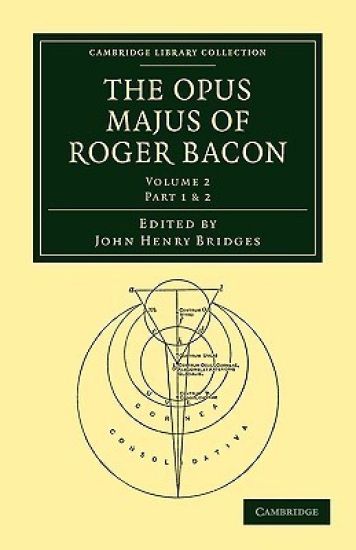
Roger Bacon, the medieval natural philosopher who broke new ground in promoting scientific method, produced the encyclopedic Opus Majus or 'Greater Work' in the mid-thirteenth century. This 1897 publication in two volumes was the first complete edition of the work to appear in print. Written at the request of Pope Clement IV, the Opus Majus is the most significant and most influential of Bacon's works, containing his observations of the natural world and theories on knowledge acquisition. Bacon's text appears in the original Latin, and Bridges includes a substantial introduction and brief analysis of each chapter in English, as well as extensive footnotes and an analytical table to aid the reader. Volume 2 contains the last three parts of Bacon's treatise, on Optics, Experimental Science, and Moral Philosophy. This volume also incorporates a later supplement containing additional material and corrections.
First published in 1909, this autobiography details the astonishing life of Roger Langdon (1825–94), a country station-master and amateur astronomer. Langdon's life is a remarkable story of self-education and determination: he started work as a farmer's boy at the age of eight, ran away from the home to work for a shipowner in Jersey at fourteen, and was then employed by a blacksmith, canvas manufacturers, and a solicitor before finding work with the Great Western Railway. Langdon was from an early age interested in astronomy, and eventually constructed four telescopes and his own observatory. He developed his own method for photographing the moon and the transit of Venus, and presented a paper to the Royal Astronomical Society, which is included in the appendices. Langdon died before completing his autobiography, and the latter chapters on his scientific achievements and final years were completed by his daughter Ellen.
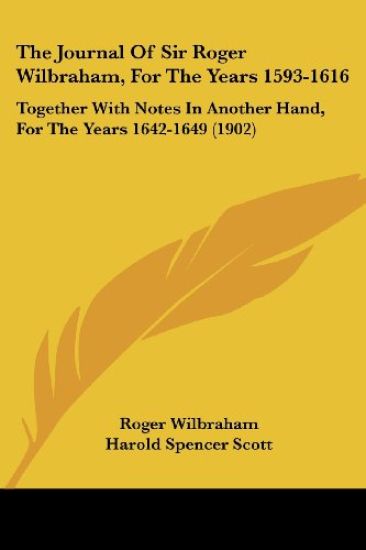
The Journal Of Sir Roger Wilbraham, For The Years 1593-1616
Roger Wilbraham; Thomas Hoby
KESSINGER PUBLISHING, LLC
2010
pokkari