
Kirjahaku
Etsi kirjoja tekijän nimen, kirjan nimen tai ISBN:n perusteella.
1000 tulosta hakusanalla Rohan Chakravarty
From award-winning educator, innovation expert, and Global Teacher Prize finalist, Rohan Roberts, comes a provocative look at why our current education system is not fit for purpose and why we need to overhaul it. Cosmic Citizens and Moonshot Thinking: Education in an Age of Exponential Technologies takes a fresh approach to what we need to do differently to prepare our children for a world of exponential technologies, disruptive innovations, and ubiquitous A.I. In this groundbreaking book, Roberts outlines the purpose of education in a world of increased outsourcing and automation and explains how we can future-proof our youth to survive and thrive in a world of accelerating change. Through interactions with corporate leaders, interviews with principals, meetings with parents, and surveys of students, this book considers how the best and brightest students would overhaul their education system. The book highlights the role of neuroscience in education and explores several fascinating concepts such as radical openness, abundance mindsets, the gig economy, the technological singularity, intelligent optimism, the age of imagination, humanics, transhumanism, and the importance of Enlightenment values as we advance into the 21st Century. Underpinning this book is a constant focus on the importance of bringing a sense of awe into education and fostering a sense of cosmic wonder when contemplating human purpose and human existence. Written in a style that is discursive, contemplative, and with a sense of urgency, this book will appeal to students, parents, teachers, school principals, and to anyone who recognises that the only real and long-lasting way to create a better society is to first fix our education system.
The year is 2100. John Stroff and his team of seven, code named Air Hawk, are on a global mission to the Earth-like planet of Greenleaf, located in the Holarid solar system. Their assignment is to identify, capture and bring back a set of land, air and marine wildlife species to repopulate the Earth with, which at this point in time, has seen most of its fauna become extinct. Greenleaf teems with an abundance of natural life and environmental ecosystems that match Earth's, from around 5,000 years ago. However, not all of the migrant and native human inhabitants living on Greenleaf at Alita Island are happy about this mission, with a secret organisation called the New World Legionnaires looking to make their planet an independent colony from Earth. While Stroff's mission to Greenleaf starts successfully, there is a shocking discovery made soon after, which will smash the very foundations upon which humanity's story of origin has been built and believed, for the last 65 centuries.This is the first installment in The Books Of Revelation series.
The Sri Lankan ethnic conflict that has occurred largely between Sinhala Buddhists and Tamil Hindus is marked by a degree of religious tolerance that sees both communities worshiping together. This study describes one important site of such worship, the ancient Hindu temple complex of Munnesvaram. Standing adjacent to one of Sri Lanka's historical western ports, the fortunes of the Munnesvaram temples have waxed and waned through the years of turbulence, violence and social change that have been the country's lot since the advent of European colonialism in the Indian Ocean. Bastin recounts the story of these temples and analyses how the Hindu temple is reproduced as a center of worship amidst conflict and competition.

Since January 2004, the violence in the southern provinces in Thailand has claimed more than 4,600 lives. The violence has also adversely affected the local economy and quality of life in the southern provinces. The atmosphere of fear and intimidation is dividing the society on religious lines with growing apprehension that what began as a separatist nationalist conflict might well end up as a clash between Buddhism and Islam. There is also a strong potential for the Muslim insurgency in southern Thailand to get sucked into the global jihad.Gunaratna and Acharya provide a short history of the conflict, which dates at least to the early 1900s, as well as an analysis of factors contributing to the most recent escalation of violence in 2004. The authors shed light on the causes of the Southern Thai conflict and examine its potential to spread from Thailand to neighboring countries such as Malaysia, Singapore, the Philippines, and Indonesia. A strong potential also exists for this predominantly localized conflict to get absorbed into the global jihad. In addition to analyzing the insurgents' capabilities and opportunities, the authors provide a critique of government policies and make astute suggestions for resolving the conflict.
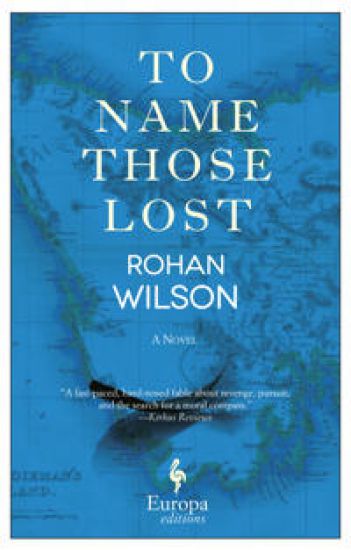
A powerful, suspenseful tale about a father and son in search of one another, this prize-winning novel based on real-life events is a classic western story of vengeance and redemption set against the sweeping, merciless grandeur of the Australian frontier. It is the summer of 1874. Launceston, a colonial outpost on the southern Australian island of Tasmania, hovers on the brink of anarchy, teeming with revolutionaries, convicts, drunks, crooked cops, and poor strugglers looking for a break. Outlaw Thomas Toosey races to this dangerous bedlam to find his motherless twelve-year-old son before the city swallows the child whole, but he is pursued by more than just the law. Hindering his progress at every turn is a man to whom he owes a terrible debt: the vengeful Irishman Fitheal Finn, whose hooded companion hides a grotesque secret.Brilliantly told in galloping, lyrical prose and infused with gothic tones reminiscent of Cormac McCarthy, Daniel Woodrell, and William Faulkner, To Name Those Lost is a gripping story of fatherly devotion and of one man's search for moral bearings in a lawless society. WinnerVictorian Premier's Literary Award and the Adelaide Festival Award for Best Novel
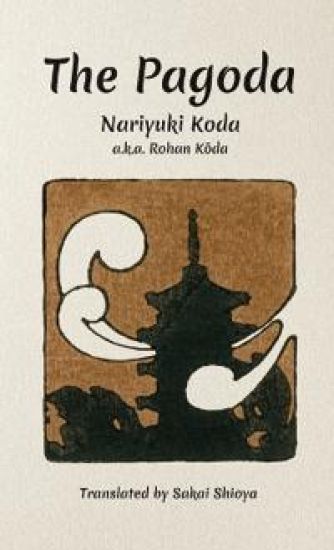
This novel is a landmark in Japanese literature, widely known, read, and beloved. Sometimes known as "The Five-Story Pagoda," it tells the story of Jubei, a carpenter and craftsman, who dreams of building a pagoda for the Abbot of the Kannoji Temple. Despite his poverty, low station, and poor reputation-he is known as "the slouch"- Jubei's determined and uncompromising allegiance to his own vision bring him the possibility of raising a great work for the ages ... but will it stand against the howling demons of a tropical typhoon? Rohan Kōda's The Pagoda (Gojūnotō, 五重塔) first appeared in installments in 1891-1892. This first English translation was published in 1909. Sakae Shioya, the translator, was the author of When I Was a Boy in Japan (1906).

Digitizing the Dollar: The Future of Public Money in the Age of Cryptocurrency
Rohan Grey
Melville House Publishing
2022
sidottu
The modern era of digital currency is here, but far from an oddity or bubble, digital money promises to revolutionize our monetary system--and presents a unique opportunity to change it for the better. The modern era of digital currency began in 2008, with the publication of Satoshi Nakamoto's famous whitepaper on Bitcoin. But despite early hacker enthusiasm, today Wall Street and Silicon Valley have staked claims over the future of digital currency. Both industries share a vision of a commercial product, driving profits from data-mining and predictive analytics--and they are positioning themselves to lay the groundwork for the future of money as it inevitably digitizes. Since the invention of coins, money has been an instrument of public governance and law, designed by democratic process. As the digital revolution threatens to change this premise, overcoming the combined interests of Wall Street and Silicon Valley will require a full-throated, unapologetic defense of the public nature of money. Law professor and digital currency expert, Rohan Grey, explores the history and theory of money to explain how digital currency departs from coin, credit, and cash, and how it changes--and does not change--the nature of money. In Digitizing the Dollar, he presents a clear vision for the future of a public digital currency that incorporates political, economic, and legal concerns to make sure that money, in its next stage, remains a tool by and for the people.

" An] exceedingly powerful debut. Wilson's compelling story carries us through forest and over plains, leaving a trail of dead men." --Alan Cheuse, The Chicago Tribune 1829, Tasmania. A group of men--convicts, a farmer, two free black traders, and Black Bill, an aboriginal man brought up from childhood as a white man--are led by Jon Batman, a notorious historical figure, on a "roving party." Their purpose is massacre. With promises of freedom, land grants and money, each is willing to risk his life for the prize. Passing over many miles of tortured country, the roving party searches for Aborigines, taking few prisoners and killing freely, Batman never abandoning the visceral intensity of his hunt. And all the while, Black Bill pursues his personal quarry, the much-feared warrior, Manalargena. A surprisingly beautiful evocation of horror and brutality, The Roving Party is a meditation on the intricacies of human nature at its most raw.

Mankind was in trouble and needed to be saved. God had a plan to save mankind and that was through his Son. Before man can be saved God had to prove to man, that he was in trouble and needed to be saved. Hence God gave man the laws through Moses, what the laws did was to reveal sin so God can be proven right that man needed saving and man on the other hand could not make any excuse for their sins. To save man from hell, the debt that was owed to God had to be paid and paid in full. Man had to die. So, how can God save man and kill him at the same time? Jesus the Son of God became our substitute, the plan God had was to use His Son as the scape goat where Jesus would take all of our sins upon Himself go to the cross and die on our behalf. Through baptism we join Christ in His death and through His resurrection we achieve new life. What that does is set us free from the law and placed us under grace.So, in the end we are saved by grace. Rohan Brooks is a former lecturer of Sociology and a former Sunday school teacher. Holds a master's degree in Applied Sociology. He has been writing Christian blog for many years. Does most of his writing while reading and meditating upon the word of God.You can find a few of his blog at https: //rohanb765.wordpress.com/

The Mighty Annapurna - Illustrated book about the Himalayan mountain range seen through a child's eye
Rohan Raman
White Falcon Publishing
2022
sidottu
The Mighty Annapurna narrates the magical relationship between a father and a son with the great Himalayan Annapurna as the backdrop. This is a love letter to nature and the mountains, inspired by the author's recent trip to the Annapurna Base Camp in Nepal. As soon as he returned from his climb, his two little boys were full of questions about the mountains. These innocent questions served as inspiration for the book which is written from a little boy's point of view as he climbs to the Annapurna Base Camp with his father. This book aims to capture some of the magic and adventure the author experienced and to make it available to all children and their parents.About the Author: Rohan Raman is a newly minted children's book author. This is his first book. Husband to an amazing rockstar wife and father to two young boys, when he is not authoring children's books, you will find him breaking making and fixing things. Rohan spent majority of his adult life improving the operations of Fortune 500 companies but now focuses his energy on his family, building a passion for tinkering among kids through his new kid-focused tinkering business (www.tinkernauts.in) and his next big outdoor adventure.

The delicate snowdrop flower, despite its name, often serves as the first sign of spring. The snow has finally begun to recede It is seen as a symbol of rebirth and the ability to overcome challenges in life. It can serve as a delicate reminder that we can all do great things in life - if only we set our minds to it. There is nothing that can make you fail if you have the drive to succeed Hope purity, innocence rebirth is also symbolized by snowdrop. ""Snowdrop"" is a collection of all such beautiful poems by 21 coauthors, compiled by Rohan Nath and Nidhi Shukla.

Snowdrop anthology compiled by Rohan and Nidhi is a collection of 21 beautiful poems by 21 different authors in Hindi.

Rose Petals / रोस् पैटलस्
Rohan Nath
Notion Press
2021
pokkari
Our life is full of love and betrayal, where we are lost and found between different materialistic desires and we dont have the solutiions how to quench out thirst for love 'n' joy. In search of love we are often allured by many beautiful mometns which are like promises of forever for happiness and love and divert us from the path of real love. (ultimate love). Rose petals is collection of such poems in which coauthors shows their thirst for love leading them to wonderful journey of love.

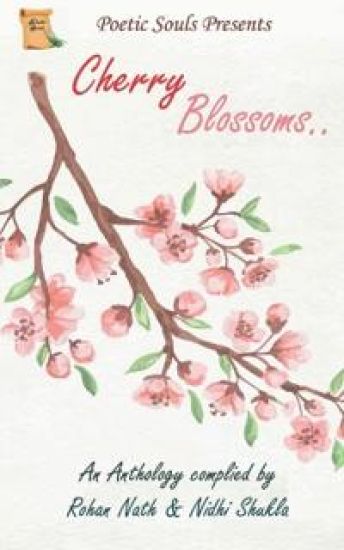
In Search Of love We are Often Allured By Many Beautiful Moments which are like A Promises of Forever For Happiness And Love And Divert Us From The Path Of Real Love( Ultimate Love) ""Cherry Blossom"" Is Collections Of Such poem Which Shows Co-Authors Thirst For Cherrish Moments of life leading Them To Wonderful Journey Of Love.

Durga - A symbol for women's empowerment Just like Durga Maa, women in India are powerful, courageous and incredible. Every woman is Shakti (energy), Bhakti (devotion) and Mukti (Liberation), and should be treated as such. It epitomizes the victory of good over evil. This book is the collection of poems on women empowerement. Its shows the search of Durga within.