This atlas is a comprehensive guide to interventional pain management procedures. Divided into 11 sections, the book begins with an overview of the subject, covering radiological anatomy, common image-guided procedures, radiation protection, MRI, protocols, and more. Each of the following sections covers procedures for pain management in different parts on the body, including head and neck, cervical spine, chest and thorax, lumbosacral spine; as well as neuromodulation, and peripheral and sympathetic blocks. The final chapters examine ultrasound guided block and ultrasound guided dry needling. Presented in bullet point style, each topic follows a step by step approach, explaining indications, contraindications, equipment, and procedural techniques. Edited by recognised experts from India, the UK and the US, and with contributions from leading international experts, this book is highly illustrated with radiological images and figures. Access to procedural videos via a QR code is also included with the atlas.
Title: Panoramic view from Bunker Hill Monument. Engraved ... from a drawing by R. P. M.Publisher: British Library, Historical Print EditionsThe British Library is the national library of the United Kingdom. It is one of the world's largest research libraries holding over 150 million items in all known languages and formats: books, journals, newspapers, sound recordings, patents, maps, stamps, prints and much more. Its collections include around 14 million books, along with substantial additional collections of manuscripts and historical items dating back as far as 300 BC.The HISTORY OF COLONIAL NORTH AMERICA collection includes books from the British Library digitised by Microsoft. This collection refers to the European settlements in North America through independence, with emphasis on the history of the thirteen colonies of Britain. Attention is paid to the histories of Jamestown and the early colonial interactions with Native Americans. The contextual framework of this collection highlights 16th century English, Scottish, French, Spanish, and Dutch expansion. ++++The below data was compiled from various identification fields in the bibliographic record of this title. This data is provided as an additional tool in helping to insure edition identification: ++++ British Library Mallory, R P.; Smillie, James; 1848. 15 p.; 4 . 10413.p.32.
This work has been selected by scholars as being culturally important, and is part of the knowledge base of civilization as we know it. This work was reproduced from the original artifact, and remains as true to the original work as possible. Therefore, you will see the original copyright references, library stamps (as most of these works have been housed in our most important libraries around the world), and other notations in the work.This work is in the public domain in the United States of America, and possibly other nations. Within the United States, you may freely copy and distribute this work, as no entity (individual or corporate) has a copyright on the body of the work.As a reproduction of a historical artifact, this work may contain missing or blurred pages, poor pictures, errant marks, etc. Scholars believe, and we concur, that this work is important enough to be preserved, reproduced, and made generally available to the public. We appreciate your support of the preservation process, and thank you for being an important part of keeping this knowledge alive and relevant.
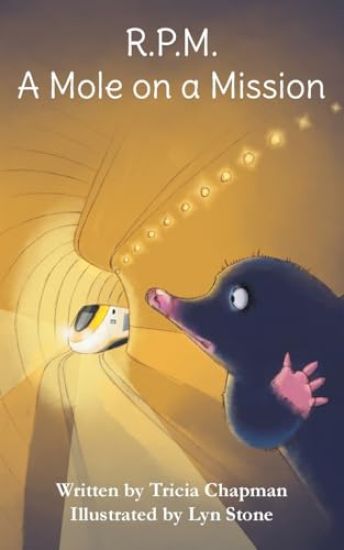
You are invited once again, to join R.P.M and his friends in this latest, humorous, gentle, thought provoking, animal adventure story.In the first book of the series, R.P.M., The Mole who was Afraid of the Dark, R.P.M. had a fear of waking up in the dark. His family and friends helped him to overcome his anxieties and soon he was able to help others too.In the second instalment, R.P.M. is to be found digging a burrow for himself so that he can live in a mole hole of his own. During the dig, he discovers an item of great sentimental value to him and his family which belonged to his grandfather and name sake, Reginald Peregrine Mole. He was an intrepid, fearless explorer who had helped to dig the longest rail tunnel under the sea and had received an award for his efforts.R.P.M. had heard so many stories about how brave his grandfather had been and he wanted to be like him. When he found the family heirloom, it inspired him to embark on the same journey that his grandfather had taken many years before.Written in two parts, we follow the journeys of both these brave little moles to discover whether their dreams and aspirations were the same or unique to themselves.
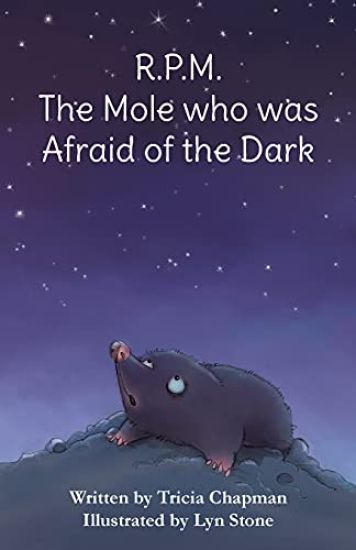
Tricia Chapman presents a thought provoking, yet gentle story about how a little mole called R.P.M. comes to terms with his fear of waking up in the dark and how he discovers his own strengths and abilities, which not only help him to overcome his anxieties but enable him to help his friends too. The importance of friendship, love and respect for others is the main theme of this book, and it invites young readers to think about their own concerns and worries, and to understand that they are not alone. Instead, they should feel confident in discussing their anxieties with those that they can trust. This is a truly inspirational book which encapsulates the joy of friendship and compassion for others, with lots of fun and laughter along the way.
R.P. Philippi Bebii e Societate Jesu, - Chronologia brevis, ab orbe condito ad haec tempora, ex Bellarmino ac Baronio potissimum in studiosae juventutis usum collecta, ac continuata is an unchanged, high-quality reprint of the original edition of 1696. Hansebooks is editor of the literature on different topic areas such as research and science, travel and expeditions, cooking and nutrition, medicine, and other genres. As a publisher we focus on the preservation of historical literature. Many works of historical writers and scientists are available today as antiques only. Hansebooks newly publishes these books and contributes to the preservation of literature which has become rare and historical knowledge for the future.