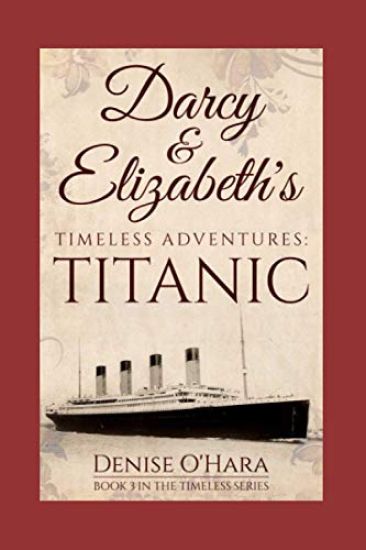
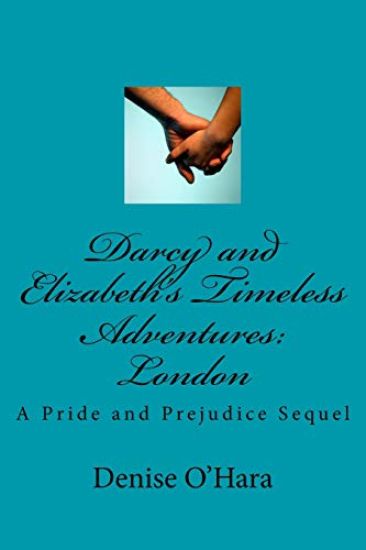
In the third installment of the Timeless Series, Darcy and Elizabeth are catching up on the history they missed after their long sleep. Darcy becomes fascinated with the Titanic, leading him on an adventure like no other Part history, part entertainment, Darcy has a dream which puts beloved Pride and Prejudice characters on the TITANIC The dream proves quite unsettling, leading our couple to some revelations and their next adventure.
Elizabeth Bennet is on the search for her wayward sister, and her search takes her to Gretna Green, the suspected hideaway of Lydia and the rogue, Mr. Wickham. Much to her surprise, she discovers that Mr. Darcy is also in Gretna Green, on the very same errand as she... Overcome with misery and worry, Elizabeth pours her heart out to Mr. Darcy over supper and too many glasses of wine, but what follows could bring more scandal on her family than anything Lydia has done.This Pride and Prejudice sensual variation is best enjoyed by those over the age of 18.
Since her marriage to Fitzwilliam Darcy, Miss Elizabeth Bennet has learned many things... exciting, dangerous and scandalous things about her new husband, and what it means to be a woman. When her husband declares that Pemberley will play host to a winter shooting party, Elizabeth is at once terrified of taking on the role of hostess and thrilled by the trust that Darcy has placed in her, in all aspects of their relationship. When the party comes to a close, Elizabeth will be the true mistress of Pemberley in every way. "Elizabeth's Awakening" is a collection of 6 intimate variations including: - Elizabeth's Punishment- Elizabeth's Limits- Mr. Darcy's Permission- Elizabeth's Secret- Entertaining Mr. Darcy- Elizabeth's RequestBonus variation: - Pemberley PromisesThis collection of Pride and Prejudice intimate variations is best enjoyed by those over the age of 18.
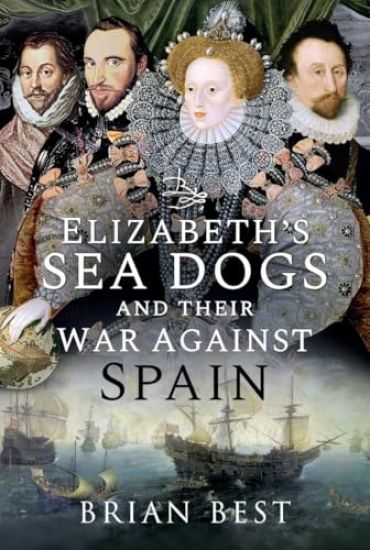
The Sea Dogs were seafaring merchantmen who originally traded mainly with Holland and France. During Queen Elizabeth's reign, however, they began to spread their reach, sailing further and further afield exploring and plundering. The main source of wealth quickly became the Caribbean, which, until then, had been predominantly the domain of wealthy Catholic Spain. The first man to trade with the Spanish Main was John Hawkins, who travelled to West Africa, captured the natives and transported them to the Caribbean. There he sold them to plantation owners in exchange for goods such as pearls, hides and spices. He made three voyages and on the disastrous last he took his cousin, Francis Drake. The backers, including the Queen, were satisfied with the bounty but encouraged the Sea Dogs to seek greater riches. England at that time was a relatively impoverished country compared with Spain. Elizabeth had inherited a high cost of inflation, poor harvests and a legacy of poverty from Edward VI and Mary Tudor. This was a time of religious tension with King Philip of Spain, whose marriage to Mary Tudor gave him the right to rule England. The rift between the Catholics and Protestants was cooled somewhat by Elizabeth's keeping the peace between the two countries, despite the continuing campaigns of the privateers crewed by the Sea Dogs. The main thorn in the Spanish side was Francis Drake. Despite efforts to kill or capture him, he continued to plunder the high seas, bringing back Spanish riches to England. This allowed the Queen to flourish. It was thanks in main to the privateering exploits of the Sea Dogs that England became so wealthy, paving the way for the Renaissance that followed.
The Sea Dogs were seafaring merchantmen who originally traded mainly with Holland and France. During Queen Elizabeth’s reign, however, they began to spread their reach, sailing further and further afield exploring and plundering. The main source of wealth quickly became the Caribbean, which, until then, had been predominantly the domain of wealthy Catholic Spain. The first man to trade with the Spanish Main was John Hawkins, who travelled to West Africa, captured the natives and transported them to the Caribbean. There he sold them to plantation owners in exchange for goods such as pearls, hides and spices. He made three voyages and on the disastrous last he took his cousin, Francis Drake. The backers, including the Queen, were satisfied with the bounty but encouraged the Sea Dogs to seek greater riches. England at that time was a relatively impoverished country compared with Spain. Elizabeth had inherited a high cost of inflation, poor harvests and a legacy of poverty from Edward VI and Mary Tudor. This was a time of religious tension with King Philip of Spain, whose marriage to Mary Tudor gave him the right to rule England. The rift between the Catholics and Protestants was cooled somewhat by Elizabeth’s keeping the peace between the two countries, despite the continuing campaigns of the privateers crewed by the Sea Dogs. The main thorn in the Spanish side was Francis Drake. Despite efforts to kill or capture him, he continued to plunder the high seas, bringing back Spanish riches to England. This allowed the Queen to flourish. It was thanks in main to the privateering exploits of the Sea Dogs that England became so wealthy, paving the way for the Renaissance that followed.
In this sequel to Darcy and Elizabeth: Timeless, Darcy and Elizabeth from the early 1800's are now living in the year 2013. On a trip to the now very different city of London, the newlyweds discover new interests and experiences.
Elizabeth wrote to reclaim her life. To save it. But she couldn't have guessed where the words would take her. Or who might be touched. Elizabeth's intriguing fictional autobiography defines a lifelong adventurer and dreamer. And an imprisoned housewife. Elizabeth's Story is about coincidence and contradiction. Lives suspended between truth and fiction.Elizabeth roomed with Kathryn at a coed Quaker boarding school in Pennsylvania. Senior year, 1964. The two girls formed a lasting bond, and made plans for writing their life stories. They drifted apart, sharing only an occasional note over the years. Fifty years later, Kathryn receives a letter from Elizabeth, planning to travel to California by train, to reclaim a sense of peace with her friend. Elizabeth is carrying a manuscript. Her story. She tells pieces of the story along the way. But Elizabeth's Story is about two such journeys, as a messenger delivers a copy of Elizabeth's published memoir in Denmark, and he too shares pieces of the story. The book transports readers from Pennsylvania to Denmark, Thailand, and Switzerland and from the Sixties to the present. As tales are told and retold, mysteries at the story's heart are revealed, and hearers end up contributing to the story.
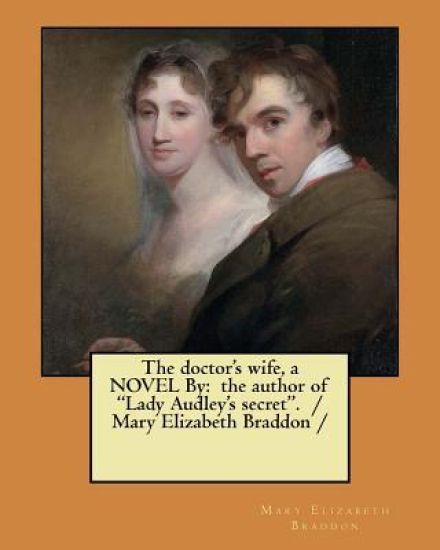
Mary Elizabeth Braddon (4 October 1835 - 4 February 1915) was an English popular novelist of the Victorian era. She is best known for her 1862 sensation novel Lady Audley's Secret. Life and works: Born in London, Mary Elizabeth Braddon was privately educated. Her mother Fanny separated from her father Henry in 1840, when Mary was five. When Mary was ten years old, her brother Edward Braddon left for India and later Australia, where he became Premier of Tasmania. Mary worked as an actress for three years when she was befriended by Clara and Adelaide Biddle. They were only playing minor roles but Braddon was able to support herself and her mother. Adelaide noted that Braddon's interest in acting waned as she took an interest in writing novels. In 1860, Mary met John Maxwell (1824-1895), a publisher of periodicals. She started living with him in 1861. However, Maxwell was already married with five children, and his wife was living in an asylum in Ireland. Mary acted as stepmother to his children until 1874, when Maxwell's wife died and they were able to get married. She had six children by him, including the novelist William Babington Maxwell. Braddon was a prolific writer, producing more than 80 novels with inventive plots. The most famous is Lady Audley's Secret (1862), which won her recognition, and a fortune as a bestseller.It has remained in print since its publication and been dramatised and filmed several times. R. D. Blackmore's anonymous sensation novel Clara Vaughan (1864) was wrongly attributed to her by some critics. Braddon wrote several works of supernatural fiction, including the pact with the devil story Gerald, or the World, the Flesh and the Devil (1891), and the ghost stories "The Cold Embrace", "Eveline's Visitant" and "At Chrighton Abbey". From the 1930s onwards, these stories were often anthologised in collections such as Montague Summers's The Supernatural Omnibus (1931) and Fifty Years of Ghost Stories (1935). Braddon's legacy is tied to the sensation fiction of the 1860s. Braddon also founded Belgravia magazine (1866), which presented readers with serialised sensation novels, poems, travel narratives and biographies, as well as essays on fashion, history and science. The magazine was accompanied by lavish illustrations and offered readers a source of literature at an affordable cost. She also edited Temple Bar magazine. She died on 4 February 1915 in Richmond (at the time a borough in Surrey, but now part of Greater London), and is interred in Richmond Cemetery. Her home had been Lichfield House in the centre of the town, which was replaced by a block of flats in 1936, Lichfield Court, now listed. She has a plaque in Richmond parish church which calls her simply 'Miss Braddon'. A number of streets in the area are named after characters in her novels - her husband was a property developer in the area. There is a critical essay on Braddon's work in Michael Sadleir's book Things Past (1944). In 2014 the Mary Elizabeth Braddon Association was founded to pay tribute to Braddon's life and work.