Kirjojen hintavertailu. Mukana 12 390 323 kirjaa ja 12 kauppaa.

Kirjahaku

Etsi kirjoja tekijän nimen, kirjan nimen tai ISBN:n perusteella.

1000 tulosta hakusanalla Sabine Mercer

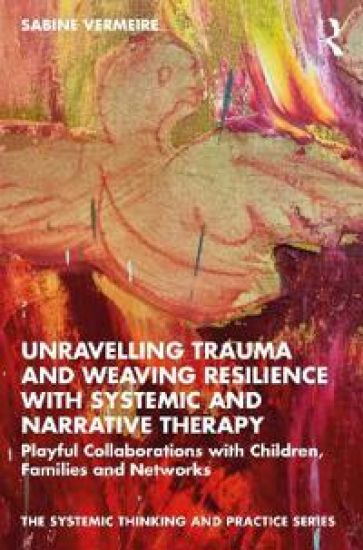
Unravelling Trauma and Weaving Resilience with Systemic and Narrative Therapy
Unravelling Trauma and Weaving Resilience with Systemic and Narrative Therapy is an innovative book that details how clinicians can engage children, families and their networks in creative and collaborative relationships to elicit change within the context of trauma and violence. Combining systemic, narrative and dialogical theoretical frameworks with clinical examples, this volume focuses on therapeutic conversations that can help children, and those involved with them, deconstruct their experienced difficulties, and create more hopeful stories and alternative ways of relating to one another through a sense of play. Vermeire advocates for serious playfulness as a way of directly addressing trauma and its effects, as well as along ‘trauma-sensitive’ side paths. Puppetry, artwork, interviews and theatre play are used to weave networks of resilience in ever-widening circles and this approach is informed by the awareness that individual problems are always to be seen as relational, social and political. This book is an important read for therapists and social workers who work with traumatised children and their multi-stressed families.

Unravelling Trauma and Weaving Resilience with Systemic and Narrative Therapy
Unravelling Trauma and Weaving Resilience with Systemic and Narrative Therapy is an innovative book that details how clinicians can engage children, families and their networks in creative and collaborative relationships to elicit change within the context of trauma and violence. Combining systemic, narrative and dialogical theoretical frameworks with clinical examples, this volume focuses on therapeutic conversations that can help children, and those involved with them, deconstruct their experienced difficulties, and create more hopeful stories and alternative ways of relating to one another through a sense of play. Vermeire advocates for serious playfulness as a way of directly addressing trauma and its effects, as well as along ‘trauma-sensitive’ side paths. Puppetry, artwork, interviews and theatre play are used to weave networks of resilience in ever-widening circles and this approach is informed by the awareness that individual problems are always to be seen as relational, social and political. This book is an important read for therapists and social workers who work with traumatised children and their multi-stressed families.

Communicating with One Another

Communicating with One Another

Sabine Kowal

Springer-Verlag New York Inc.
2008
sidottu
In contrast to traditional approaches of mainstream psycholinguists, the authors of Communicating with One Another approach spontaneous spoken discourse as a dynamic process, rich with structures, patterns, and rules other than conventional grammar and syntax. Daniel C. O’Connell and Sabine Kowal thoroughly critique mainstream psycholinguistics, proposing instead a shift in theoretical focus from experimentation to field observation, from monologue to dialogue, and from the written to the spoken. They invoke four theoretical principles: intersubjectivity, perspectivity, open-endedness, and verbal integrity. Their analyses of historical and original research raise significant questions about the relationship between spoken and written discourse, particularly with regard to transcription and punctuation. With emphasis on political discourse, media interviews, and dramatic performance, the authors review both familiar and unexplored characteristics of spontaneous spoken communication, including: (1) The speaker’s use of prosody. (2) The functions of interjections. (3) What fillers do for a living. (4) Turn-taking: Smooth and otherwise. (5) Laughter, applause, and booing: from individual listener to collective audience. (6) Pauses, silence, and the art of listening. The paradigm shift proposed in Communicating with One Another will interest and provoke readers concerned about communicative language use – including psycholinguists, sociolinguists, and anthropological linguists.
Metaphor and the Dynamics of Knowledge

Metaphor and the Dynamics of Knowledge

Sabine Maasen; Peter Weingart

Routledge
2000
sidottu
This book opens up a new route to the study of knowledge dynamics and the sociology of knowledge. The focus is on the role of metaphors as powerful catalysts, and the book dissects their role in the construction of theories of knowledge. It is of vital interest to social and cognitive scientists alike.
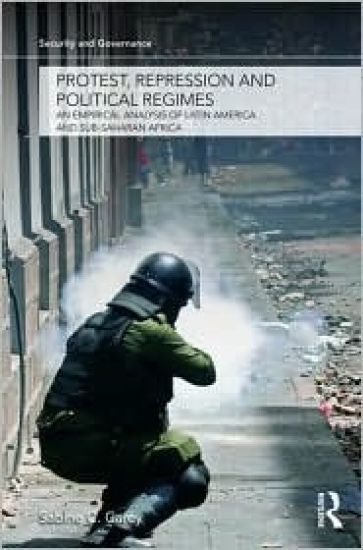
Protest, Repression and Political Regimes
This volume investigates the relationship between protest, repression and political regimes in Latin America and sub-Saharan Africa.Considering how different political regimes use repression and respond to popular protest, this book analyzes the relationship between protest and repression in Africa and Latin America between the late 1970s and the beginning of the twenty first century. Drawing on theories, multi-method empirical analyses and case studies, the author of this volume sets out to investigate the reciprocal dynamics between protest and repression. Distinctive features of this volume include: quantitative analyses that highlight general trends in the protest-repression relationship case studies of different political regimes in Chile and Nigeria, emphasising the dynamics at the micro-level an emphasis on the importance of full democratization in order to reduce the risk, and intensity, of intra-state conflictFocusing on political regimes in different areas of the world, Protest, Repression and Political Regimes will be of vital interest to students and scholars of conflict studies, human rights and social movements.
Reforming the UN Security Council Membership
This book comprehensively examines the different proposals put forward for reforming the UN Security Council by analysing their objectives and exploring whether the implementation of these proposals would actually create a representative and more effective Security Council. The book places the discussion on reform of Security Council membership in the context of the council’s primary responsibility, which is at the helm of the UN collective security system. The author contends that only a Council that is adequately representative of the UN membership can claim to legitimately act on the members’ behalf. This book offers an inquiry into the Council’s constitutional framework and how far that framework still reflects the expectations and intentions of the founding nations, whilst remaining flexible enough to satisfy today’s, and possibly tomorrow’s, membership. Through the use of policy-oriented jurisprudence and elements of the International Law/International Relations theory this book explores how reform can best be realised.Reforming the UN Security Council Membership will be of particular interest to scholars and students of International Law and International Relations.
Development of an Environmental Impact Assessment and Decision Support System for Seawater Desalination Plants
Seawater desalination is a coastal-based industry. The growing number of desalination plants worldwide and the increasing size of single facilities emphasises the need for greener desalination technologies and more sustainable desalination projects. A comprehensive evaluation of potential environmental impacts of desalination plants, this book emphasizes discusses strategies for impact mitigation. The author proposes a best-available technology concept for seawater desalination technologies in combination with a methodological approach for the environmental impact assessment (EIA) of desalination projects. It outlines the scope of EIA studies, including environmental monitoring and toxicity and hydrodynamic modeling studies. The book also explores the usefulness of multi-criteria analysis as a decision support tool for EIAs and then uses them to compare different intake and pretreatment options for seawater reverse osmosis plants.
Metaphor and the Dynamics of Knowledge

Metaphor and the Dynamics of Knowledge

Sabine Maasen; Peter Weingart

Routledge
2013
nidottu
This book opens up a new route to the study of knowledge dynamics and the sociology of knowledge. The focus is on the role of metaphors as powerful catalysts, and the book dissects their role in the construction of theories of knowledge. It is of vital interest to social and cognitive scientists alike.
Dickens, Journalism, and Nationhood
Dickens, Journalism, and Nationhood examines Charles Dickens’ weekly family magazine Household Words in order to develop a detailed picture of how the journal negotiated, asserted and simultaneously deconstructed Englishness as a unified (and sometimes unifying) mode of expression. It offers close readings of a wide range of materials that self-consciously focus on the nature of England as well as the relationship between Britain and the European continent, Ireland, and the British colonies. Starting with the representation and classification of identities that took place within the framework of the Great Exhibition of 1851, it suggests that the journal strives for a model of the world in concentric circles, spiraling outward from the metropolitan center of London. Despite this apparent orderliness, however, each of the national or regional categories constructed by the journal also resists and undermines such a clear-cut representation.
The Mirror

The Mirror

Sabine Melchoir-Bonnet

Routledge
2000
sidottu
This engaging and witty cultural history traces the evolution of the mirror from antiquity to the present day, illustrating its journey from wondrous object to ordinary trinket. With its earliest invention, the mirror allowed us to gaze upon ourselves, bestowing a power both fascinating and terrifying.
The Mirror

The Mirror

Sabine Melchoir-Bonnet

Routledge
2002
nidottu
This engaging and witty cultural history traces the evolution of the mirror from antiquity to the present day, illustrating its journey from wondrous object to ordinary trinket. With its earliest invention, the mirror allowed us to gaze upon ourselves, bestowing a power both fascinating and terrifying.
Dickens, Journalism, and Nationhood
Dickens, Journalism, and Nationhood examines Charles Dickens’ weekly family magazine Household Words in order to develop a detailed picture of how the journal negotiated, asserted and simultaneously deconstructed Englishness as a unified (and sometimes unifying) mode of expression. It offers close readings of a wide range of materials that self-consciously focus on the nature of England as well as the relationship between Britain and the European continent, Ireland, and the British colonies. Starting with the representation and classification of identities that took place within the framework of the Great Exhibition of 1851, it suggests that the journal strives for a model of the world in concentric circles, spiraling outward from the metropolitan center of London. Despite this apparent orderliness, however, each of the national or regional categories constructed by the journal also resists and undermines such a clear-cut representation.
Inorganic Mass Spectrometry

Inorganic Mass Spectrometry

Sabine Becker

John Wiley Sons Inc
2007
sidottu
Providing an exhaustive review of this topic, Inorganic Mass Spectrometry: Principles and Applications provides details on all aspects of inorganic mass spectrometry, from a historical overview of the topic to the principles and functions of mass separation and ion detection systems. Offering a comprehensive treatment of inorganic mass spectrometry, topics covered include: Recent developments in instrumentationDeveloping analytical techniques for measurements of trace and ultratrace impurities in different materials This broad textbook in inorganic mass spectrometry, presents the most important mass spectrometric techniques used in all fields of analytical chemistry. By covering recent developments and advances in all fields of inorganic mass spectrometry, this text provides researchers and students with information to answer any questions on this topic as well as providing the basic fundamentals for understanding this potentially complex, but increasingly relevant subject.
The Jesuit and the Incas

The Jesuit and the Incas

Sabine Hyland

The University of Michigan Press
2004
nidottu
In the spirit of justice Blas Valera broke all the rules-and paid with his life. Hundreds of years later, his ghost has returned to haunt the official story. But is it the truth, and will it set the record straight?This is the tale of Father Blas Valera, the child of a native Incan woman and Spanish father, caught between the ancient world of the Incas and the conquistadors of Spain. Valera, a Jesuit in sixteenth-century Peru, believed in what to his superiors was pure heresy: that the Incan culture, religion, and language were equal to their Christian counterparts.As punishment for his beliefs he was imprisoned, beaten, and, finally, exiled to Spain, where he died at the hands of English pirates in 1597.Four centuries later, this Incan chronicler had been all but forgotten, until an Italian anthropologist discovered some startling documents in a private Neapolitan collection. The documents claimed, among other things, that Valera's death had been faked by the Jesuits; that he had returned to Peru; and, intriguingly, while there had taught his followers that the Incas used a secret phonetic quipu-a record-keeping device of the Inca empire-to record history.Far from settling anything, the documents created an international sensation among scholars and led to bitter disputes over how they should be assessed. Are they forgeries, authentic documents, or something in between? If genuine, they will radically reform our view of Inca culture and Valera. The author insightfully examines the evidence, showing how fact and fiction intertwine, and brings the dimly understood history of this author-priest to light. Sabine Hyland is Co-director of a multidisciplinary project studying the Chanka people of Peru. She holds a doctoral degree in anthropology from Yale, and is Assistant Professor of Anthropology at St. Norbert College.
Topographies of Class

Topographies of Class

Sabine Hake

The University of Michigan Press
2008
nidottu
In Topographies of Class, Sabine Hake explores why Weimar Berlin has had such a powerful hold on the urban imagination. Approaching Weimar architectural culture from the perspective of mass discourse and class analysis, Hake examines the way in which architectural projects; debates; and representations in literature, photography, and film played a key role in establishing the terms under which contemporaries made sense of the rise of white-collar society.Focusing on the so-called stabilization period, Topographies of Class maps out complex relationships between modern architecture and mass society, from Martin Wagner's planning initiatives and Erich Mendelsohn's functionalist buildings, to the most famous Berlin texts of the period, Alfred Döblin's city novel Berlin Alexanderplatz (1929) and Walter Ruttmann's city film Berlin, Symphony of the Big City (1927). Hake draws on critical, philosophical, literary, photographic, and filmic texts to reconstruct the urban imagination at a key point in the history of German modernity, making this the first study---in English or German---to take an interdisciplinary approach to the rich architectural culture of Weimar Berlin.Sabine Hake is Professor and Texas Chair of German Literature and Culture at the University of Texas at Austin. She is the author of numerous books, including German National Cinema and Popular Cinema of the Third Reich.Cover art: Construction of the Karstadt Department Store at Hermannplatz, Berlin-Neukölln. Courtesy Bildarchiv Preeussischer Kulturbesitz / Art Resource, NY
Topographies of Class

Topographies of Class

Sabine Hake

The University of Michigan Press
2008
sidottu
In Topographies of Class, Sabine Hake explores why Weimar Berlin has had such a powerful hold on the urban imagination. Approaching Weimar architectural culture from the perspective of mass discourse and class analysis, Hake examines the way in which architectural projects; debates; and representations in literature, photography, and film played a key role in establishing the terms under which contemporaries made sense of the rise of white-collar society.Focusing on the so-called stabilization period, Topographies of Class maps out complex relationships between modern architecture and mass society, from Martin Wagner's planning initiatives and Erich Mendelsohn's functionalist buildings, to the most famous Berlin texts of the period, Alfred Döblin's city novel Berlin Alexanderplatz (1929) and Walter Ruttmann's city film Berlin, Symphony of the Big City (1927). Hake draws on critical, philosophical, literary, photographic, and filmic texts to reconstruct the urban imagination at a key point in the history of German modernity, making this the first study---in English or German---to take an interdisciplinary approach to the rich architectural culture of Weimar Berlin.Sabine Hake is Professor and Texas Chair of German Literature and Culture at the University of Texas at Austin. She is the author of numerous books, including German National Cinema and Popular Cinema of the Third Reich.Cover art: Construction of the Karstadt Department Store at Hermannplatz, Berlin-Neukölln. Courtesy Bildarchiv Preeussischer Kulturbesitz / Art Resource, NY
The Shadows of Poetry

The Shadows of Poetry

Sabine MacCormack

University of California Press
1998
sidottu
Imperial ceremony was a vital form of self-expression for late antique society. Sabine MacCormack examines the ceremonies of imperial arrivals, funerals, and coronations from the late third to the late sixth centuries A.D., as manifest in the official literature and art of the time. Her study offers us new insights into the exercise of power and into the social, political, and cultural significance of religious change during the Christianization of the Roman world.
Colonizing Sex

Colonizing Sex

Sabine Frühstück

University of California Press
2003
pokkari
A sweeping study of sex, power, and knowledge in modern Japan, this ambitious work provides the first full-scale, detailed history of the formation and application of a science of sex from Meiji through mid-twentieth century Japan. Tracing the different uses made of sexual knowledge, the book brings to light the complex and subtle interplay between sexuality, scientific expertise, social control, and empire building. Drawing on a wide variety of sources, Fruhstuck analyzes the conflicts and negotiations that aimed at producing a normative sexuality. She shows how the 'colonization' of sex was enacted through debates over several issues: the necessity of sex education; the prevention of venereal diseases; the problem of masturbation and its alleged consequences; the legalization of birth control; the fight against prostitution; the emergence of eugenics; and, eventually, the implementation of 'racial hygiene' policies. In "Colonizing Sex" we see how these struggles were driven by rhetoric consisting of cries for defense, liberation, and truth - emphasizing in every historical moment how the sexual body has been, and is, part of much broader currents in political, cultural and social life.
Uneasy Warriors

Uneasy Warriors

Sabine Frühstück

University of California Press
2007
pokkari
Following World War II, Japan's postwar constitution forbade the country to wage war or create an army. However, with the emergence of the cold war in the 1950s, Japan was urged to establish the Self-Defense Forces as a way to bolster Western defenses against the tide of Asian communism. Although the SDF's role is supposedly limited to self-defense, Japan's armed forces are equipped with advanced weapons technology and the world's third-largest military budget. Sabine Fruhstuck draws on interviews, historical research, and analysis to describe the unusual case of a non-war-making military. As the first scholar permitted to participate in basic SDF training, she offers a firsthand look at an army trained for combat that nevertheless serves nontraditional military needs.