Kirjojen hintavertailu. Mukana 12 483 457 kirjaa ja 12 kauppaa.

Kirjahaku

Etsi kirjoja tekijän nimen, kirjan nimen tai ISBN:n perusteella.

1000 tulosta hakusanalla Sami Mahkonen

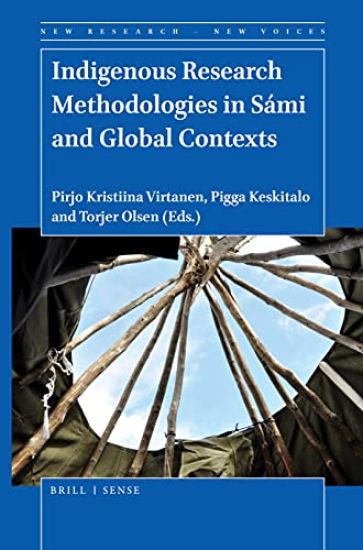
Indigenous Research Methodologies in Sámi and Global Contexts
This book addresses the conceptualization and practice of Indigenous research methodologies especially in Sámi and North European academic contexts. It examines the meaning of Sámi research and research methodologies, practical levels of doing Indigenous research today in different contexts, as well as global debates in Indigenous research. The contributors present place-specific and relational Sámi research approaches as well as reciprocal methodological choices in Indigenous research in North-South relationships. This edited volume is a result of a research collaboration in four countries where Sámi people live. By taking the readers to diverse local discussions, the collection emphasizes communal responsibility and care as a key in doing Indigenous research. Contributors are: Rauni Äärelä-Vihriälä, Hanna Guttorm, Lea Kantonen, Pigga Keskitalo, Ilona Kivinen, Britt Kramvig, Petter Morottaja, Eljas Niskanen, Torjer Olsen, Marja-Liisa Olthuis, Hanna Outakoski, Attila Paksi, Jelena Porsanger, Aili Pyhälä, Rauna Rahko-Ravantti, Torkel Rasmussen, Erika Katjaana Sarivaara, Irja Seurujärvi-Kari, Trond Trosterud and Pirjo Kristiina Virtanen.
Indigenous Research Methodologies in Sámi and Global Contexts
This book addresses the conceptualization and practice of Indigenous research methodologies especially in Sámi and North European academic contexts. It examines the meaning of Sámi research and research methodologies, practical levels of doing Indigenous research today in different contexts, as well as global debates in Indigenous research. The contributors present place-specific and relational Sámi research approaches as well as reciprocal methodological choices in Indigenous research in North-South relationships. This edited volume is a result of a research collaboration in four countries where Sámi people live. By taking the readers to diverse local discussions, the collection emphasizes communal responsibility and care as a key in doing Indigenous research. Contributors are: Rauni Äärelä-Vihriälä, Hanna Guttorm, Lea Kantonen, Pigga Keskitalo, Ilona Kivinen, Britt Kramvig, Petter Morottaja, Eljas Niskanen, Torjer Olsen, Marja-Liisa Olthuis, Hanna Outakoski, Attila Paksi, Jelena Porsanger, Aili Pyhälä, Rauna Rahko-Ravantti, Torkel Rasmussen, Erika Katjaana Sarivaara, Irja Seurujärvi-Kari, Trond Trosterud and Pirjo Kristiina Virtanen.

Vukovi Umiru Sami

Vukovi Umiru Sami

VDM Publishing House
2010
nidottu
Observera att förlaget som ger ut denna produkt baserar innehållet i sina produkter på fria källor som Wikipedia. Boken är med stor sannolikhet endast ett utdrag ur dessa informationskällor, alltså inte en vanlig bok i den bemärkelsen.
Skyfixer: With selected poems translated to Northern Sámi, Finnish, Swedish and Norwegian
After being diagnosed with PTSD and anxiety related to my service in Viet Nam, I found a healer who read my poetry and described my writings as nature-based. Knowing that I was interested in learning more about my S mi heritage, he suggestedI explore my ancestors' indigenous spiritual practices as a way to begin healing from the war. This collection of poetry is a record of that exploration.I have always found peace in nature, but on this healing path I have also found my voice, my heart and my soul. My search has taken me from connections locked in my DNA to soaring journeys with my spiritual guides. I have found the roots of myfamily in the far north of Scandinavia and a deeper appreciation of those closer to home. I am fond of saying that I am filling my soul with places-places that have their own language and spirits. I was raised in rural Southwest Washington and have added the Upper Peninsula of Michigan, Finland, Norway and Sweden to my nature.It's important for me to share these poems with family and friends, those I know and those I've yet to meet. With that in mind, a number of poems in this collection have been translated into Northern S mi, Finnish, Swedish, and Norwegian.I embrace the translations and consider them a collaboration and enhancement of the art of poetry. The collaboration may produce alternate meanings and nuance which I welcome. I, alone, take responsibility for any differences in description and meaning-I consider all as synchronicity.
Girls of Yellow (Elise de Jong/Sami Ali Book 1)
Imagine a world where modern governments failed their citizens and long-simmering conflicts escalated into global war. Imagine if its survivors migrated toward those who share the same faith. Imagine the continents are ruled by religions.When the mysterious death of a teenage girl triggers memories of a similar childhood event, police Detective Sami Ali becomes consumed with solving her murder. Persecuted by the shame of his past, Ali will stop at nothing to find the killer, even if his investigation puts his wife and daughter at risk. As he follows the clues, Ali collides with another lost soul - a foreign spy. Elise De Jong's official mission in Eurabia involves the acquisition of a priceless item that could shift the balance of power among the theocracies. But she also has a personal objective - to find her last living relative, the little sister whom she hasn't seen since her birth. To succeed in their missions, Elise and Ali must find common ground despite their religious differences, for they can depend only on each other.
Revenge of the Shaman: A Duke and Sami River Ranch Adventure

Revenge of the Shaman: A Duke and Sami River Ranch Adventure

J. L. Gaither

Createspace Independent Publishing Platform
2017
nidottu
Duke and Sami, the ranch dogs, with their family and friends of River Ranch are back again. This time fighting evil in the form of an ancient Native American medicine man (Shaman). The Shaman has kidnapped his tribe's chief's son and in hiding in one of the caves on Mystery Mountain has inadvertently traveled through time to the present. Pursued by the chief, Running Bear and his friend Kretus, the leader of the Wolfen pack, they land on Mystery Mountain and seek the help of Duke and Sami in finding the Shaman and rescuing the boy With many events happening around them at River Ranch, can Duke and Sami, with their special powers and help of some of their animal friends save the boy and destroy, once and for all, the evil that exists in the form of Cheyevo, the Shaman?
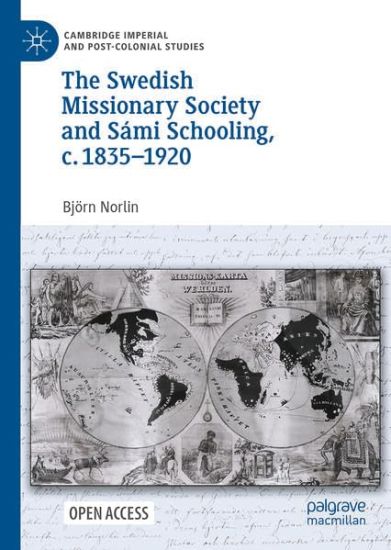
The Swedish Missionary Society and Sámi Schooling, c. 1835–1920

The Swedish Missionary Society and Sámi Schooling, c. 1835–1920

Björn Norlin

Springer International Publishing AG
2025
sidottu
This open access book offers a thorough examination of the most important ac­tor in schooling children from the Indigenous Sámi during the nineteenth century, namely the Swedish Missionary Society (SMS). In the late 1830s, the SMS created its first schools for Sámi children and youth in small rural villages in the northern inlands of Sweden. The missionary schools enrolled several thousand children in the approximately eighty-year-period they operated, for many decades being the predominant school for the Sámi. The impulse behind the creation of the SMS came from evangelical move­ments such as British Methodism, which helped to initiate the Stock­holm-based society in 1835, and aided the startup of a school in the Swed­ish colony of Saint-Barthélemy in the West Indies. The society was supported by private donations, as well as financial aid and supervision from the Swedish Evangelical-Lutheran state church. It kept in operation between five to ten schools and or­phanages until the so-called ‘nomadic school’ reform in 1913, when the mission­ary schools were either shut down, modified to become Swedish primary schools, or subsumed under the new and expanding state-governed nomadic school sys­tem. By examining school practice aimed at Sámi pupils in Sweden, this book provides valuable insights into the overall organisation and curriculum of the mis­sionary schools, their ideological driving forces, and their relation to global devel­opments and the ongoing formation of the Swedish primary school sys­tem. Such knowledge helps deepen our understanding of the long-term organisation of Sámi education in Sweden, and more broadly within the Nordic countries. Through its analysis, this book seeks to develop the history of missionary educa­tion, as well as research into settler colonial and Indigenous schooling.
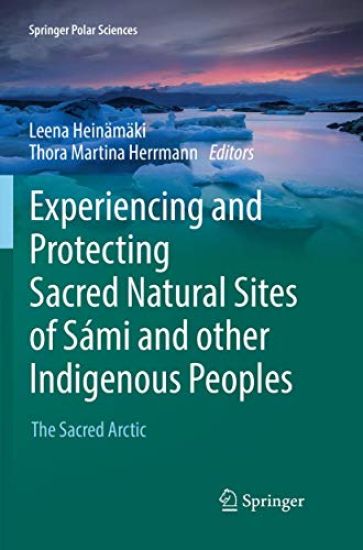
Experiencing and Protecting Sacred Natural Sites of Sámi and other Indigenous Peoples
This book focuses specifically on the experience and protection of indigenous, and particularly Sámi sacred sites in the Arctic. Sacred sites are being increasingly recognized as important reservoirs of Arctic cultural and biological diversity, as a means for the transmission of culture and identity, and a tool for the preservation of fragile northern social-ecological systems. Yet, legal protection of Arctic sacred sites and related policies are often still lacking or absent. It becomes increasingly difficult for site custodians in the Arctic to protect these ancient sites, due to disruptive changes, such as climate change, economic developments and infrastructural development.With contributions from Sámi and non-Sámi scholars from Arctic regions, this book provides new insights into our understanding of the significance and legal protection of sacred sites for Sámi of the Arctic. It examines the role of international human rights, environmental law, and longstanding customary law that uphold Arctic indigenous peoples’ rights in conservation, and their associated management systems. It also demonstrates the complex relationships between indigenous knowledge, cultural/spiritual values and belief systems and nature conservation. The book looks forward to providing guidelines for future research and practice for improved integration of the ethical, cultural and spiritual values of nature into law, policy, planning and management. As such, this book offers a contribution to upholding the sanctity of these sites, their cultural identity and the biodiversity associated with them.
Experiencing and Protecting Sacred Natural Sites of Sámi and other Indigenous Peoples
This book focuses specifically on the experience and protection of indigenous, and particularly Sámi sacred sites in the Arctic. Sacred sites are being increasingly recognized as important reservoirs of Arctic cultural and biological diversity, as a means for the transmission of culture and identity, and a tool for the preservation of fragile northern social-ecological systems. Yet, legal protection of Arctic sacred sites and related policies are often still lacking or absent. It becomes increasingly difficult for site custodians in the Arctic to protect these ancient sites, due to disruptive changes, such as climate change, economic developments and infrastructural development.With contributions from Sámi and non-Sámi scholars from Arctic regions, this book provides new insights into our understanding of the significance and legal protection of sacred sites for Sámi of the Arctic. It examines the role of international human rights, environmental law, and longstanding customary law that uphold Arctic indigenous peoples’ rights in conservation, and their associated management systems. It also demonstrates the complex relationships between indigenous knowledge, cultural/spiritual values and belief systems and nature conservation. The book looks forward to providing guidelines for future research and practice for improved integration of the ethical, cultural and spiritual values of nature into law, policy, planning and management. As such, this book offers a contribution to upholding the sanctity of these sites, their cultural identity and the biodiversity associated with them.