
Kirjahaku
Etsi kirjoja tekijän nimen, kirjan nimen tai ISBN:n perusteella.
1000 tulosta hakusanalla Sarah Crosetti
Sarah Gives Thanks: How Thanksgiving Became a National Holiday
Mike Allegra
Albert Whitman Company
2025
nidottu
"Sarah Johnson's Mount Vernon" brilliantly restores the lives and contributions of African Americans to the legacy of Mount Vernon. Digging beneath the well-known stories of George Washington and the era of America's birth, Scott E. Casper recovers the remarkable history of Sarah Johnson, who spent more than fifty years at Mount Vernon, in slavery and after emancipation. Through her life and those of her family and friends, Casper provides not only an intimate picture of Mount Vernon during the nineteenth and early twentieth centuries years that are rarely part of its public story but also a window into a community of people who played an essential part in creating and maintaining this American landmark."
Sarah Caldwell: The First Woman of Opera is the first biography of this significant musician, conductor, and director and documents Ms. Caldwell's genius as an indomitable force for opera in America. Caldwell mounted many U.S. premieres and brought rare editions of standard works to her audiences. At the height of her career, she raised her baton over four of the top five orchestras, including the New York Philharmonic and the Boston Symphony Orchestra, and conducted orchestras in such cities as Pittsburgh, St. Louis, San Antonio, Atlanta, Mexico City, and Puerto Rico. She conducted ensembles in Canada, Sweden, South Africa, and Russia; was a musical director for Wolf Trap; and was the first woman to conduct at the Metropolitan Opera. She founded the renowned Opera Company of Boston, as well as the outreach effort Opera New England and a nation-wide touring enterprise, the American National Opera Company. Caldwell's undeniable zeal was evident in whatever she undertook, and her accomplishments invite reflection, showing what an opera company could and should be in America. Daniel Kessler presents Ms. Caldwell's life in flashbacks and explores her 1978 landmark production of Gaetano Donizetti's Don Pasquale, which serves as a prime example of how she engaged with her creative Muse. He describes her personal and professional life, including her experience with the impresario Boris Goldovsky, her ability to create her own brand of 'stage wizardry,' and her moments of overreaching and hubris, such as her unorthodox fundraising methods and her experience with Imelda Marcos. Complete with several illustrations, a bibliography, an index, and the comprehensive annals of her three opera companies, Sarah Caldwell demonstrates what one person of genius, imagination, and passion can accomplish single-handedly.
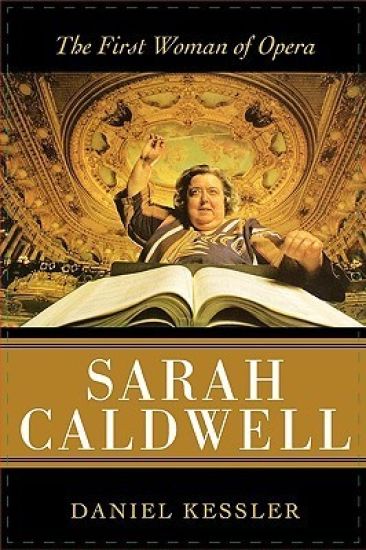
Sarah Caldwell: The First Woman of Opera is the first biography of this significant musician, conductor, and director and documents Ms. Caldwell's genius as an indomitable force for opera in America. Caldwell mounted many U.S. premieres and brought rare editions of standard works to her audiences. At the height of her career, she raised her baton over four of the top five orchestras, including the New York Philharmonic and the Boston Symphony Orchestra, and conducted orchestras in such cities as Pittsburgh, St. Louis, San Antonio, Atlanta, Mexico City, and Puerto Rico. She conducted ensembles in Canada, Sweden, South Africa, and Russia; was a musical director for Wolf Trap; and was the first woman to conduct at the Metropolitan Opera. She founded the renowned Opera Company of Boston, as well as the outreach effort Opera New England and a nation-wide touring enterprise, the American National Opera Company. Caldwell's undeniable zeal was evident in whatever she undertook, and her accomplishments invite reflection, showing what an opera company could and should be in America. Daniel Kessler presents Ms. Caldwell's life in flashbacks and explores her 1978 landmark production of Gaetano Donizetti's Don Pasquale, which serves as a prime example of how she engaged with her creative Muse. He describes her personal and professional life, including her experience with the impresario Boris Goldovsky, her ability to create her own brand of "stage wizardry," and her moments of overreaching and hubris, such as her unorthodox fundraising methods and her experience with Imelda Marcos. Complete with several illustrations, a bibliography, an index, and the comprehensive annals of her three opera companies, Sarah Caldwell demonstrates what one person of genius, imagination, and passion can accomplish single-handedly.

With her uncanny ability to monumentalize the miniscule and to give permanence to the ephemeral, Sarah Sze has become one of the most original and ambitious artists working today, with solo exhibitions at major art musuems. As the first monograph to span the course of her career including sculptures, site-specific installations, and drawings, Sarah Sze reveals the artist’s working process and gives insight into the thoughtful precision and care that goes into each and every one of her creations.Elaborately transforming everyday materials into elegant sculptures and installations, Sze eloquently finesses the line between sculpture and architecture. In her essay, writer and curator Linda Norden explores the question of how matter takes on value, both temporally and spatially. With its stunning photography, Sarah Sze makes it clear that the exhilarating and challenging aspect of this artist’s work lies in all of its minute details.

This is a brief biography that explores the life of Sarah Livingston Jay. This book is a part of Westview?s `Lives of American Women? series, edited by Carol Berkin. Each title in the series features brief biographies of figures whose lives serve as a lens onto a major trend, event, movement, or crisis of their eras, and whose stories will be the entry point for a deeper understanding of a particular historical time.

Sarah Orne Jewett - American Writers 61
Thorp Margaret Farrand
UNIVERSITY OF MINNESOTA PRESS
1966
nidottu
Sarah Orne Jewett - American Writers 61 was first published in 1966. Minnesota Archive Editions uses digital technology to make long-unavailable books once again accessible, and are published unaltered from the original University of Minnesota Press editions.
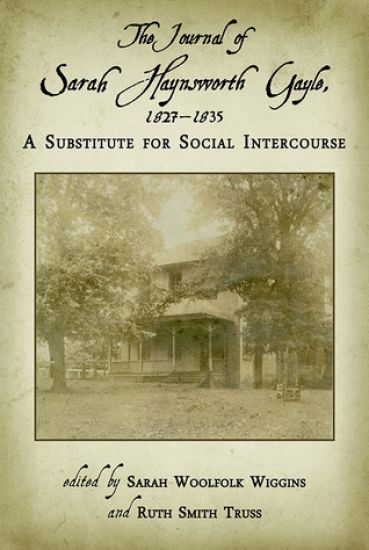
The Journal of Sarah Haynsworth Gayle, 1827?1835
Sarah Haynsworth Gayle
The University of Alabama Press
2013
sidottu
Astonishing, tragic, and remarkable, the journal of Sarah Haynsworth Gayle, wife of early Alabama governor John Gayle, is among the most widely studied and seminal accounts of antebellum life in the American South. This is the first complete edition of the journal in print. Bereft of the companionship of her often-absent husband, Sarah considered her journal ?a substitute for social intercourse” during the period from 1827 to 1835. It became the social and intellectual companion to which she confided stories that reflected her personal life and the world of early Alabama. Sarah speaks directly to us of her loneliness, the challenges of child rearing, her fear of and frustration with the management of slaves, and the difficulty of balancing the responsibilities of a socially prominent woman with her family’s slender finances. The poor condition of the journal and its transcripts, sometimes disintegrated or reassembled in the wrong order, has led historians to misinterpret Gayle’s words. Gayle’s descendants, Alabama’s famed Gorgases, deliberately obscured or defaced many passages. Using archival techniques to recover the text and restore the correct order, Sarah Wiggins and Ruth Truss reveal the unknown story of Sarah’s economic hardships, the question of her husband’s ?temperance,” and her opium use. The only reliable and unexpurgated edition of Sarah Gayle’s journal, now enhanced with a fascinating introduction and inset notes, The Journal of Sarah Haynsworth Gayle, 1827?1835, is a robust and gripping account and will be of inestimable value to our understanding of antebellum society, religion, intellectual culture, and slavery. Published in cooperation with the University Libraries, The University of Alabama, with further financial support from the Library Leadership Board, the University Libraries, The University of Alabama.
In her book Sarah Orne Jewett: Reconstructing Gender, Margaret Roman argues that one theme colors almost every short story and novel by the turn-of-the-century American author: each person, regardless of sex, must break free of the restrictive, polar-opposite norms of behavior traditionally assigned to men and women by a patriarchal society. That society, as seen from Jewett’s perspective during the late Victorian era, was one in which a competitive, active man dominates a passive, emotional woman. Frequently referring to Jewett’s own New England upbringing at the hands of an unusually progressive father, Roman demonstrates how the writer, through her personal quest for freedom and through the various characters she created, strove to eliminate the necessity for rigid and narrowly defined male-female roles and relationships.With the details of Jewett’s free-spirited life, Roman’s book represents a solid work of literary scholarship, which traces a gender-dissolving theme throughout Jewett’s writing. Whereas previous critics have focused primarily on her best-known works, including “A White Heron,” Deephaven, A Country Doctor, and The Country of the Pointed Firs, Roman encompasses within her own discussion virtually all of the stories found in the nineteen volumes Jewett published during her lifetime. And although much recent criticism has centered around Jewett’s strong female characters, Roman is the first to explore in depth Jewett’s male characters and married couples.The book progresses through distinct phases that roughly correspond to Jewett’s psychological development as a writer. In general, the characters in her early works exhibit one of two modes of behavior. Youngsters, free as Jewett was to explore the natural world of woods and field, glimpse the possibility of escape from the confining standards that society has set, though some experience turbulent and confusing adolescences where those norms have become more pressing, more demanding. At the opposite extreme are those who have mindlessly accepted the roles in which they have been trapped since youth—greedy, selfish men, dutiful women who tend emotionally empty houses, young couples unable to communicate either between themselves or with others—in short, characters who are too alienated within their roles to function as whole human beings.On the other hand, Jewett approaches the men and women of her later works with a higher degree of optimism, in that each person is free to live according to the dictates of his or her inherent personality—each character is able to measure life from within rather than from without. This group includes the self-confident men who are not reluctant to present a nurturing side, and the warm, giving women who are unafraid of displaying a decided inner strength. As Roman summarizes, “In her writings, Jewett attempts to shift society’s focus from a grasping power over people to the personal development of each member of society.”Ahead of her time in many ways, Sarah Orne Jewett confronted the Victorian polarized gender system, presaging the modern view that men and women should be encouraged to develop along whatever paths are most comfortable and most natural for them.
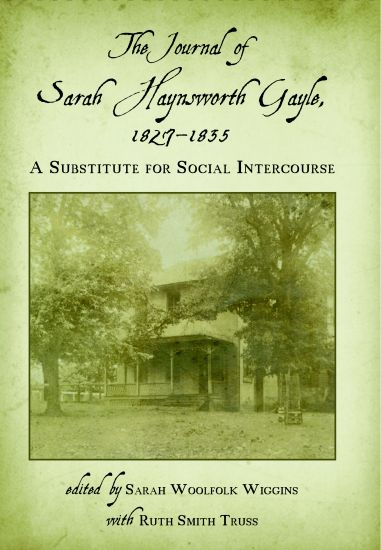
The Journal of Sarah Haynsworth Gayle, 1827-1835
Sarah Haynsworth Gayle
THE UNIVERSITY OF ALABAMA PRESS
2023
nidottu
Astonishing, tragic, and remarkable, the journal of Sarah Haynsworth Gayle, wife of early Alabama governor John Gayle, is among the most widely studied and seminal accounts of antebellum life in the American South. This is the first complete edition of the journal in print.Bereft of the companionship of her often-absent husband, Sarah considered her journal “a substitute for social intercourse” during the period from 1827 to 1835. It became the social and intellectual companion to which she confided stories that reflected her personal life and the world of early Alabama. Sarah speaks directly to us of her loneliness, the challenges of child rearing, her fear of and frustration with the management of slaves, and the difficulty of balancing the responsibilities of a socially prominent woman with her family’s slender finances.The poor condition of the journal and its transcripts, sometimes disintegrated or reassembled in the wrong order, has led historians to misinterpret Gayle’s words. Gayle’s descendants, Alabama’s famed Gorgases, deliberately obscured or defaced many passages. Using archival techniques to recover the text and restore the correct order, Sarah Wiggins and Ruth Truss reveal the unknown story of Sarah’s economic hardships, the question of her husband’s “temperance,” and her opium use.The only reliable and unexpurgated edition of Sarah Gayle’s journal, now enhanced with a fascinating introduction and inset notes, The Journal of Sarah Haynsworth Gayle, 1827–1835, is a robust and gripping account and will be of inestimable value to our understanding of antebellum society, religion, intellectual culture, and slavery. Published in cooperation with the University Libraries, The University of Alabama, with further financial support from the Library Leadership Board, the University Libraries, The University of Alabama.
This scholarly edition presents for the first time all of the known surviving letters of British novelist Sarah Harriet Burney (1772-1884). The overwhelming majority of these letters—more than ninety percent—have never before been published.Burney's accomplishments, says Lorna J. Clark, have been unjustly overlooked. She published five works of fiction between 1796 and 1839, all of which met with reasonable success, including Traits of Nature (1812), which sold out within three months. These letters position Burney among her fellow women writers and shed light on her relations with her publisher and her ambivalence toward her own work and her readership. Her lively observation of the literary scene evinces the range and scope of her reading, as well as her awareness of literary trends and developments. Burney was, for example, remarkably prescient in recognizing, and praising from the first, the talent of Jane Austen, and met several of the authors of her day.A challenging new perspective on family matters also emerges in the letters. The youngest child of the second marriage of Charles Burney, and the only daughter to remain unmarried, Sarah Harriet had the unenviable task of caring for her father in his later years. Her letters reveal a darker side of Dr. Burney, and also help to round out our image of a more favored daughter, Sarah Harriet's half-sister (and fellow novelist), Frances Burney.As literature, Clark observes, Burney's letters are, arguably, her best work. Thoroughly versed in the epistolary arts, she sought always to amuse and entertain her correspondents. Burney ultimately emerges as a quiet but heroic single woman, relegated to the margins of society where she struggled for independence and self-respect. Displaying literary qualities and a lively sense of humor, the letters provide a fascinating insight into the literary, political, and social life of the day.
"Blasted" has been labelled as one of the landmark plays of post-war British theatre, achieving its iconic status and, indeed, its notoriety, very quickly. Sarah Kane's suicide in 1999 consolidated a process of singling-out that had begun four years earlier with the 'national outrage' initiated by the media's scandalised response to the premiere of "Blasted". The brutal content of the play resulted in much-quoted hostility from the critics. Academic attention to the play has begun a process of re-evaluation, debating the production and reception of the play and key issues including its status as a classic example of 'in-yer-face' drama.This guide provides a comprehensive critical introduction to "Blasted", giving students an overview of the play's significance, a brief biography of Sarah Kane and a guide to socio-political background; a detailed analysis of the play's structure, style and characters; an analysis of key production issues and choices; an overview of key productions from the 1995 Royal Court premiere to today; and a chapter exploring possibilities and exercises for practical work on the play. An annotated guide to further reading highlights key secondary material including useful websites.These guides provide accessible, informative critical introductions to modern plays for students in both Theatre/Performance Studies and English. Offering up-to-date coverage of a broad range of key plays throughout modern drama, the guides include accounts of performance history, production analysis, screen adaptations and summaries of important critical approaches and debates.
Blasted has been labelled as one of the landmark plays of post-war British theatre, achieving its iconic status and, indeed, its notoriety, very quickly. Sarah Kane's suicide in 1999 consolidated a process of singling-out that had begun four years earlier with the 'national outrage' initiated by the media's scandalised response to the premiere of Blasted. The brutal content of the play resulted in much-quoted hostility from the critics. Academic attention to the play has begun a process of re-evaluation, debating the production and reception of the play and key issues including its status as a classic example of 'in-yer-face' drama. This guide provides a comprehensive critical introduction to Blasted, giving students an overview of the play's significance, a brief biography of Sarah Kane and a guide to socio-political background; a detailed analysis of the play's structure, style and characters; an analysis of key production issues and choices; an overview of key productions from the 1995 Royal Court premiere to today; and a chapter exploring possibilities and exercises for practical work on the play. An annotated guide to further reading highlights key secondary material including useful websites.
In this vivid collection, Judaic scholar Vanessa Ochs brings the legends of the biblical matriarchs to new life. Intimate, familiar and wise, the heroines in Sarah Laughed are revealed to be inspiring role models for women today. From Eve's rebellious taste of wisdom to the righteous anager of Job's wife, each woman's story is retold in imaginative prose and accompanied by real-life rituals that can help us gain insight into various aspects of our everyday lives.
Sarah Jane Pullman is a good cop with a complicated past. From her small-town chicken-farming roots through her runaway adolescence, court-ordered Army stint, ill-advised marriage and years slinging scrambled eggs over greasy spoon griddles, Sarah Jane unfolds her life story, a parable about memory, atonement, and finding shape in...
*NEW NOVEL RESTLESS DOLLY MAUNDER SHORTLISTED FOR THE WOMEN'S PRIZE FOR FICTION 2024*FROM THE BOOKER PRIZE-SHORTLISTED AND WOMEN'S PRIZE-WINNING AUSTRALIAN NOVELIST Sarah is the youngest daughter of William Thornhill, a ruthless man who made a life for himself and his family in New South Wales after being sentenced from England. When Sarah finds true love with Jack, an older boy with mixed ancestry, she also encounters disapproval: someone in her family will not tolerate their relationship. The reason lies in both the past and the present, and it will take Sarah across an ocean, to a place she never imagined she would go, to discover if her love is ever going to be enough.
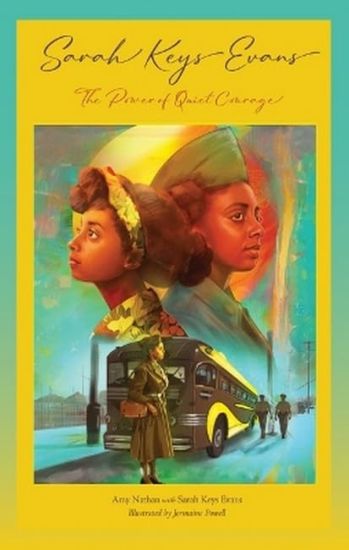
Sarah Keys Evans wasn’t a person anyone thought would spend a night in a jail cell—or change the world. But trouble came Sarah’s way in 1952, at a North Carolina bus station. There, dressed in her Women’s Army Corps uniform, she was arrested for not moving to the back of a bus—three years before it happened to another Black woman, Rosa Parks. Sarah Keys Evans: The Power of Quiet Courage tells how Sarah stood up for what’s right and helped end that kind of unfairness. Others have now honored her by creating a monument that calls her a “Trailblazer for Justice.”
This is the diary of Sarah Fisher, an Old Order Amish woman from Kalona, Iowa. Written throughout 1976 and 1977, it is an ongoing account of her seasonal routine, telling of a life where all tasks are undertaken without the conveniences of electricity, telephones or automobiles.

Little Sarah wanders away from her family's cabin into the New Hampshire forest, and settlers come from all across the countryside to help find her. As the long days pass, the searchers grow desperate, but Sarah's father's trust in God holds firm.