

Kirjahaku
Etsi kirjoja tekijän nimen, kirjan nimen tai ISBN:n perusteella.
1000 tulosta hakusanalla Shani Stein-Ratzker

Black Morgan (Morgan the Fay Book 2) An Epic Arthurian Saga
Shani Struthers
Authors Reach
2025
pokkari





The Christmas Squall: A Once-In-A-Lifetime Call A magical holiday moment... captured in rhyme From the heartwarming Interesting Tales collection comes a new seasonal favorite. Inspired by a true event, The Christmas Squall tells the story of a rare snowstorm that swept through a small town on Christmas Eve-fast, wild, and full of wonder. What happens when a rare and unexpected winter event turns an ordinary Christmas Eve into something truly unforgettable? A real-life snow squall-swift, magical, and unlike anything most have ever seen. It sweeps through a small town, bringing wonder, excitement, and a holiday memory that lasts forever. That's exactly what unfolds in The Christmas Squall: A Once-In-A-Lifetime Call, a heartwarming, rhyming tale inspired by true events and perfect for families who believe in the magic of the season. It's a once-in-a-lifetime moment that fills an entire town with joy, wonder, and the spirit of togetherness.


Protecting Human Security in a Post 9/11 World
Giorgio Shani; Makoto Sato
Palgrave Macmillan
2007
sidottu
Written by leading authorities from Asia, Africa, Europe, and North and South America, this groundbreaking volume offers the first truly global and critical perspective on human security in the post 9/11 world. The collection offers unique interpretations on mainstream discourses on human security.
Sikh Nationalism and Identity in a Global Age examines the construction of a Sikh national identity in post-colonial India and the diaspora and explores the reasons for the failure of the movement for an independent Sikh state: Khalistan. Based on a decade of research, it is argued that the failure of the movement to bring about a sovereign, Sikh state should not be interpreted as resulting from the weakness of the ‘communal’ ties which bind members of the Sikh ‘nation’ together, but points to the transformation of national identity under conditions of globalization. Globalization is perceived to have severed the link between nation and state and, through the proliferation and development of Information and Communications Technologies (ICTs), has facilitated the articulation of a transnational ‘diasporic’ Sikh identity. It is argued that this ‘diasporic’ identity potentially challenges the conventional narratives of international relations and makes the imagination of a post-Westphalian community possible. Theoretically innovative and interdisciplinary in approach, it will be primarily of interest to students of South Asian studies, political science and international relations, as well as to many others trying to come to terms with the continued importance of religious and cultural identities in times of rapid political, economic, social and cultural change.
Religion, Identity and Human Security seeks to demonstrate that a major source of human insecurity comes from the failure of states around the world to recognize the increasing cultural diversity of their populations which has resulted from globalization. Shani begins by setting out the theoretical foundations, dealing with the transformative effects of globalization on identity, violence and security. The second part of the volume then draws on different cases of sites of human insecurity around the globe to develop these ideas, examining themes such as: securitization of religious symbols retreat from multiculturalism rise of exclusivist ethno-religious identities post- 9/11 state religion, colonization and the ‘racialization’ of migration Highlighting that religion can be a source of both human security and insecurity in a globalizing world, Shani offers a ‘critical’ human security paradigm that seeks to de-secularize the individual by recognizing the culturally contested and embedded nature of human identities. The work argues that religion serves an important role in re-embedding individuals deracinated from their communities by neo-liberal globalization and will be of interest to students of International Relations, Security Studies and Religion and Politics.
This work seeks to provide a fresh examination of the relationship between religion, identity and security in a globalizing world, arguing that in order to address human security issues we must seek a reconceptualization of human security along post-secular lines.Religion, Identity and Human Security seeks to demonstrate that a major source of human insecurity comes from the failure of states around the world to recognize the increasing cultural diversity of their populations which has resulted from globalization. Shani begins by setting out the theoretical foundations, dealing with the transformative effects of globalization on identity, violence and security. The second part of the volume then draws on different cases of sites of human insecurity around the globe to develop these ideas, examining themes such as: securitization of religious symbols retreat from multiculturalism rise of exclusivist ethno-religious identities post- 9/11 state religion, colonization and the ‘racialization’ of migration Highlighting that religion can be a source of both human security and insecurity in a globalizing world, Shani offers a ‘critical’ human security paradigm that seeks to de-secularize the individual by recognizing the culturally contested and embedded nature of human identities. The work argues that religion serves an important role in re-embedding individuals deracinated from their communities by neo-liberal globalization.
Sikh Nationalism and Identity in a Global Age examines the construction of a Sikh national identity in post-colonial India and the diaspora and explores the reasons for the failure of the movement for an independent Sikh state: Khalistan. Based on a decade of research, it is argued that the failure of the movement to bring about a sovereign, Sikh state should not be interpreted as resulting from the weakness of the ‘communal’ ties which bind members of the Sikh ‘nation’ together, but points to the transformation of national identity under conditions of globalization. Globalization is perceived to have severed the link between nation and state and, through the proliferation and development of Information and Communications Technologies (ICTs), has facilitated the articulation of a transnational ‘diasporic’ Sikh identity. It is argued that this ‘diasporic’ identity potentially challenges the conventional narratives of international relations and makes the imagination of a post-Westphalian community possible. Theoretically innovative and interdisciplinary in approach, it will be primarily of interest to students of South Asian studies, political science and international relations, as well as to many others trying to come to terms with the continued importance of religious and cultural identities in times of rapid political, economic, social and cultural change.
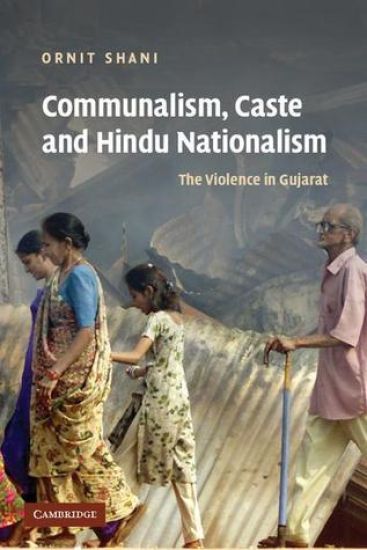
Belligerent Hindu nationalism, accompanied by recurring communal violence between Hindus and Muslims, has become a compelling force in Indian politics over the last two decades. Ornit Shani's book examines the rise of Hindu nationalism, asking why distinct groups of Hindus, deeply divided by caste, mobilised on the basis of unitary Hindu nationalism, and why the Hindu nationalist rhetoric about the threat of the impoverished Muslim minority was so persuasive to the Hindu majority. Using evidence from communal violence in Gujarat, Shani argues that the growth of communalism was not simply a result of Hindu-Muslim antagonisms, but was driven by intensifying tensions among Hindus, nurtured by changes in the relations between castes and associated state policies. These, in turn, were frequently displaced onto Muslims, thus enabling caste conflicts to develop and deepen communal rivalries. The book offers a challenge to previous scholarship on the rise of communalism, which will be welcomed by students and professionals.
Belligerent Hindu nationalism, accompanied by recurring communal violence between Hindus and Muslims, has become a compelling force in Indian politics over the last two decades. Ornit Shani's book examines the rise of Hindu nationalism, asking why distinct groups of Hindus, deeply divided by caste, mobilised on the basis of unitary Hindu nationalism, and why the Hindu nationalist rhetoric about the threat of the impoverished Muslim minority was so persuasive to the Hindu majority. Using evidence from communal violence in Gujarat, Shani argues that the growth of communalism was not simply a result of Hindu-Muslim antagonisms, but was driven by intensifying tensions among Hindus, nurtured by changes in the relations between castes and associated state policies. These, in turn, were frequently displaced onto Muslims, thus enabling caste conflicts to develop and deepen communal rivalries. The book offers a challenge to previous scholarship on the rise of communalism, which will be welcomed by students and professionals.
This book investigates the formation, configuration and consolidation of elites amongst Kenya’s Maasai. The Maasai ethnic group is one of the world’s most anthropologized populations, but research tends to focus on what appears to be their dismal situation, analysing how their culture hinders or challenges modern ideas of economic and political development. This book instead focuses on the Maasai men and women who rise to the position of elites, overcoming the odds to take on positions as politicians, professors, CEOs, and high-end administrators. The twenty-first century has seen new opportunities for progression beyond the social reproduction of family wealth, with NGOs, missionaries, tourists and researchers providing new sources of global capital flows. The author, who is Maasai herself, demonstrates the diverse local, national, and global resources and opportunities which lead to social mobility and elite formation. The book also shows how female elites have been able to navigate a patriarchal society in their journey to attaining and maintaining elite status. This book will be of interest to researchers across the fields of anthropology, political science, international development, sociology, and African studies.

This book investigates the formation, configuration and consolidation of elites amongst Kenya’s Maasai. The Maasai ethnic group is one of the world’s most anthropologized populations, but research tends to focus on what appears to be their dismal situation, analysing how their culture hinders or challenges modern ideas of economic and political development. This book instead focuses on the Maasai men and women who rise to the position of elites, overcoming the odds to take on positions as politicians, professors, CEOs, and high-end administrators. The twenty-first century has seen new opportunities for progression beyond the social reproduction of family wealth, with NGOs, missionaries, tourists and researchers providing new sources of global capital flows. The author, who is Maasai herself, demonstrates the diverse local, national, and global resources and opportunities which lead to social mobility and elite formation. The book also shows how female elites have been able to navigate a patriarchal society in their journey to attaining and maintaining elite status. This book will be of interest to researchers across the fields of anthropology, political science, international development, sociology, and African studies.

Life Skills Series - Meaning Attribution Or Keeping It Sunny
Asaf Shani
Independently Published
2019
nidottu
How do you teach your kid to deal with bullying? How do you guide your kid to frame any situation in a positive way? The 5th book in the Jade Life Skills Series - Meaning Attribution explains, in a simple and imaginative way, that we have the ability to CHOOSE how to react to external events and how to choose the better interpretation - the one that enables your kid both feel good with life events and take whatever needed action.Asaf Shani is an international consultant in the field of confrontational situations. Working with people - worldwide - in the last 20 years, help him gain insights about life skills in general and how to empower one's kids to acquire and use them. This extensive experience along with raising his own two kids (Jade and Andy what else...) are being presented in the Jade's life skills series in a way that kids aged 3 - 5, 7yrs old kids and even young adults can relate to. Yet, not surprisingly, many parents attest that the books have helped them to understand, and hence, better manage the situation in their life. After all, no one really teaches life skills at school...The book can very well fit 'I can read level 1' readers and will definitely fall into the 'children's books by age 3 - 5' category. We're being addressed by many readers with the question: does this book is a 'children's feelings books' or a 'feelings books for children' and, to that we answer with a smile: yep The somewhat strange thing is that most people accept their feelings as given - they miss out on the fact that they control whatever they feel, it's not a given thing - so by realizing the fundamental truth that we decide how life events makes us feel by deciding what would be the 'framing' we give it, a new spectrum of choice opens. Asaf Shani, a recognized world speaker and a father of 4, shares in this book his insights and knowledge.
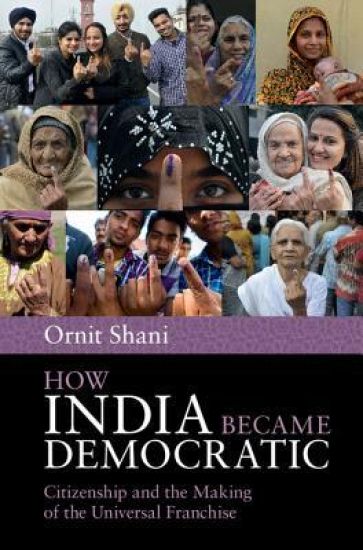
How India Became Democratic explores the greatest experiment in democratic human history. It tells the untold story of the preparation of the electoral roll on the basis of universal adult franchise in the world's largest democracy. Ornit Shani offers a new view of the institutionalisation of democracy in India, and of the way democracy captured the political imagination of its diverse peoples. Turning all adult Indians into voters against the backdrop of the partition of India and Pakistan, and in anticipation of the drawing up of a constitution, was a staggering task. Indians became voters before they were citizens - by the time the constitution came into force in 1950, the abstract notion of universal franchise and electoral democracy were already grounded. Drawing on rich archival materials, Shani shows how the Indian people were a driving force in the making of democratic citizenship as they struggled for their voting rights.
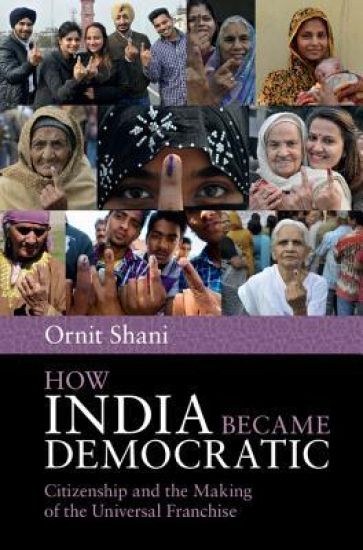
How India Became Democratic explores the greatest experiment in democratic human history. It tells the untold story of the preparation of the electoral roll on the basis of universal adult franchise in the world's largest democracy. Ornit Shani offers a new view of the institutionalisation of democracy in India, and of the way democracy captured the political imagination of its diverse peoples. Turning all adult Indians into voters against the backdrop of the partition of India and Pakistan, and in anticipation of the drawing up of a constitution, was a staggering task. Indians became voters before they were citizens - by the time the constitution came into force in 1950, the abstract notion of universal franchise and electoral democracy were already grounded. Drawing on rich archival materials, Shani shows how the Indian people were a driving force in the making of democratic citizenship as they struggled for their voting rights.