Sixteen-year-old Shanti Shah hasn't achieved menarche. She is ineligible to be a bride and her time at the school of brides, on the New New Yorke Space Station, is coming to a close. Her options are limited: return home and raise her brothers' children or become a teacher to pay back her debts to her parents and the school.With Shanti's prospects of a good marriage gone, her mentor, Ms. Striker steps in to help her out. She does this by sending Shanti on the journey from student to fully fledged headmistress, which takes her across the galaxy and beyond.
Places, relationships, nature, domestic experiences: these are the main sources of Manorama Biswal Mohapatra's poems. The print plight of Shanti Niketan Tagore's Dream-University saddens and infuriates the poet who admires its founding genious. Its dance has been stilled; devils and dragous have turned that sweet dream into a fierce nightmare. Its cry makes her listless, nostalgic about its glorious past that had initiated her into the art of poetry and music. This unrest soon grows into self-pity, she feels she is a woman in exile trying to climb up a broken ladder. The poet pays rich tribute to her mother who had first planted dreams in her: she never capsizes, never ceases to burn. There is a goddess in every mother, she says. Her decrepit village pains her as much as her house whose love and faith have given way to sadness and gloom. The poems, mostly, have an elegiac tone: yet there are moments too of hope and assurance of survival.Prof. K. SatchidanandanEminent Poet & Professor of Malayalam LanguageEx-Secretary Central Sahitya Academy
Shantistan is a cross-culture peacemaking workbook. Its purpose is to encourge the development and use of culture beares, who are dedicated to promoting peace. Both theoretical and practical applications are provided. Applications of thirteen personal cross-cultural narratives form the Shantistan peace building curriculum. Mediated learning experiences delivered through collaborative dialogues provide opportunities for self-regulated learners to use representational thinking. In order to encourage heritage sustainability, participants gather and replicate their life experience relating to the peace-making themes. (integrity, harmony, tolerance, devotion to one's beliefs, love, doing good, civility, human dignity, humanhood, faith and forgiveness, protection of ife, sacrifice and reconciliation) This flexibility in product and process provides intergeneration participation and facilitates the benefits of peace making.
Shantistan is a cross-culture peacemaking workbook. Its purpose is to encourge the development and use of culture beares, who are dedicated to promoting peace. Both theoretical and practical applications are provided. Applications of thirteen personal cross-cultural narratives form the Shantistan peace building curriculum. Mediated learning experiences delivered through collaborative dialogues provide opportunities for self-regulated learners to use representational thinking. In order to encourage heritage sustainability, participants gather and replicate their life experience relating to the peace-making themes. (integrity, harmony, tolerance, devotion to one's beliefs, love, doing good, civility, human dignity, humanhood, faith and forgiveness, protection of ife, sacrifice and reconciliation) This flexibility in product and process provides intergeneration participation and facilitates the benefits of peace making.
Shantistan Tablet is an addendum to Shantistan: Enabling a Land of Peace (West Bow: 2020), a trans-cultural enrichment program. Fifteen narrative themes are presented and participants are encouraged to apply personal cultural examples. Each of the Tablet concept theme sheets contain theory and methods of peacemaking strategies. These can apply between antagonists, whether they be religious, familial or between communities or nations. Stantistan Tablet sheets may be used separately or integrated as steps leading to peace.
Shanti is anxious about going to a family cookout but can't explain why. Two visitors to her class talk about children being touched in bad ways. Shanti knows she must tell them that this happened to her, even though it is difficult to talk about. However, by speaking out, Shanti receives the support that she needs.In Shanti's Safe Place, Yolanda Garner Hutcherson uses her years of social work experience to empower children to say no and to speak out against abuse.
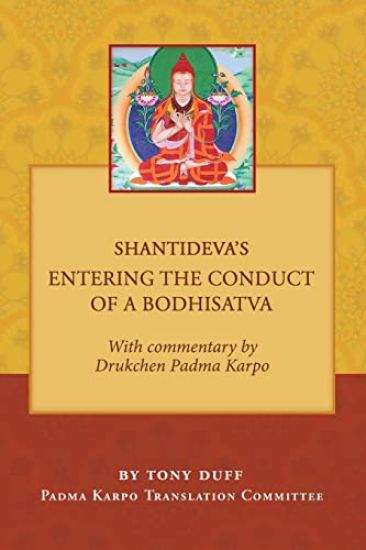
This book presents is the very famous text called Entering the Conduct of a Bodhisatva, composed by the Indian Buddhist master Shantideva. Many places in Shantideva's text need explanation, especially in the ninth chapter, therefore commentaries have been written by Indian and Tibetan masters to explain the text. An excellent commentary coming from the Tibetan side is Entering the Conduct of a Bodhisatva with an Interspersed Commentary Called "A Lamp for the Path of the Middle Way" composed by the Tibetan Buddhist master Padma Karpo. Padma Karpo's commentary is also featured in this book. Several books have become available that simply present an English translation of Shantideva's text. This book goes further. Firstly, it provides a plain English translation of Shantideva's text without the footnotes and so forth that tend to obscure it. Secondly, it provides a complete commentary to the text so that its meaning can be studied and understood. Thus it is a rich resource that provides both for those wanting simply to read and recite Shantideva's text and those wanting to study its meaning.Shantideva's text details the conduct to be followed by a person who wishes to attain true complete enlightenment. It was written during his stay at the famous Buddhist university of India called Nalanda. When he first recited the text to the masters and students of the university they were amazed by its beautiful composition and expert treatment of the topic. Since then it has only increased in fame and is now regarded as one of the essential texts to be studied by anyone who wishes to follow the path to complete enlightenment.
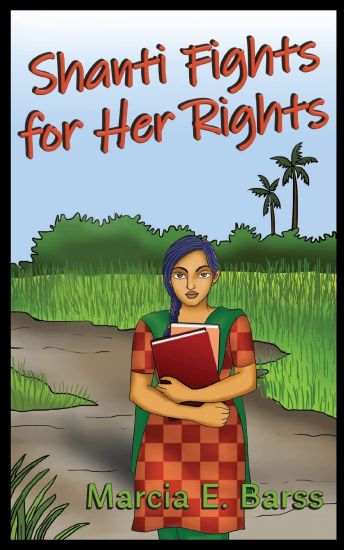
Fourteen-year-old Shanti's home is in a village in eastern India, where her parents work in the rice fields. She attends school in a town forty kilometres away and hopes to become a teacher. But while she is home on vacation, her mother gives birth to another girl. Shanti's father declares she must leave school to care for her baby sister. He also makes plans for Shanti to be married as soon as possible, despite the law against girls under eighteen being forced into marriage. Will Shanti defy her father and village traditions, and find a way to stay in school and postpone marriage? Can she and her friends convince him, and their community, that educating girls will benefit the village? Follow Shanti and her friends as they fight for their right to determine their own future.
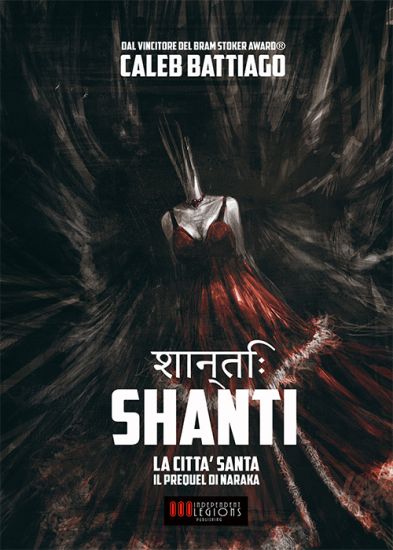
Dall'autore vincitore del Bram Stoker Awards(R) Il Prequel del romanzo 'Naraka'.Justine e Juliette, rimaste orfane, vengono affidate alle "cure" del collegio Sainte Marie di Madame Desroches, nera matrona transgender di Parigi Sud 5. Le due sorelle diverranno prede e predatrici di un mondo brutale e senza speranza, dove l'unica meta rappresentata da Shanti, la Citt Santa, l'ultima diga della deriva universale. Due destini che si rivelano in una Parigi apocalittica, distopica, con i suoi quartieri bordello e i ristoranti di carne umana, e neldeserto, tra i cantieri e i serragli sub-umani della repubblica Mesoamericana. Una entit , sopravvissuta al tempo, tiene le fila di tutto e regna sul paradiso artificiale di Shanti. Ma la malavita della Nuova Francia, guidatada Big Blue, e la potente multinazionale New Moon Corporation, vogliono metterele mani sulla Citt Santa. Entrano in gioco killer professionisti e giochi di potere, torna in azione la sensuale e letale Kiki L ger, la protagonista di Naraka. Prefazione di Alan D. Altieri
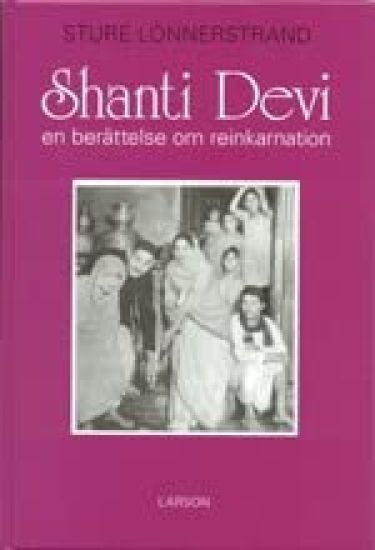
Ett av de mest väldokumenterade fallen av reinkarnation: Shanti Devi Mathur minns sitt förra liv. Då hette hon Lugdi Devi Chaubey. Hon har även minnesbilder från perioden i okroppsligt tillstånd mellan de båda inkarnationerna.Lugdi Devi föddes den 18 januari 1902 i den indiska staden Mathura. Den 25 september 1925 födde hon en son. Efter några dagar dog hon i sviterna efter förlossningen. Drygt ett år senare, den 11 december 1925, återföddes hon i Delhi och fick namnet Shanti Devi.Sture Lönnerstrand, journalist och författare, har vid flera tillfällen på ort och ställe i Indien undersökt detta märkliga människoöde. Förutom många samtal med Shanti Devi själv, har han talat med hennes familjemedlemmar och släktingar från två liv. Han har även intervjuat medlemmar i undersökningskommissionen, tillsatt på initiativ av Mahatma Gandhi, och andra personer med insikter i Shanti Devis liv.Kapitelrubriker: - Du är inte min riktiga mamma - Vem är jag - Lugdi Devi var min hustru - Hur mår min son - Shanti Devi möter sin älskade - Du bedrog mig - Mahatma Gandhi griper in - Resan till Muttra (Mathura) - En flicka med två mödrar - Mitt första möte med Shanti Devi - Jag måste tillbaka till jorden - Jag återföddes för min längtans skull - Trettio år senare - Fallet Shanti Devi - Reinkarnation och karma - Reinkarnationsläran i historiskt perspektiv.