Kirjojen hintavertailu. Mukana 11 376 743 kirjaa ja 12 kauppaa.

Kirjahaku

Etsi kirjoja tekijän nimen, kirjan nimen tai ISBN:n perusteella.

1000 tulosta hakusanalla Society Promoting Christian Knowledge

Society and the Internet

Society and the Internet

Oxford University Press
2014
sidottu
How is society being shaped by the diffusion and increasing centrality of the Internet in everyday life and work? By bringing together leading research that addresses some of the most significant cultural, economic, and political roles of the Internet, this volume introduces students to a core set of readings that address this question in specific social and institutional contexts. Internet Studies is a burgeoning new field, which has been central to the Oxford Internet Institute (OII), an innovative multi-disciplinary department at the University of Oxford. Society and the Internet builds on the OII's evolving series of lectures on society and the Internet. The series has been edited to create a reader to supplement upper-division undergraduate and graduate courses that seek to introduce students to scholarship focused on the implications of the Internet for networked societies around the world. The chapters of the reader are rooted in a variety of disciplines, but all directly tackle the powerful ways in which the Internet is linked to political, social, cultural, and economic transformations in society. This book will be a starting point for anyone with a serious interest in the factors shaping the Internet and its impact on society. The book begins with an introduction by the editors, which provides a brief history of the Internet and Web and its study from multi-disciplinary perspectives. The chapters are grouped into six focused sections: The Internet and Everyday Life; Information and Culture on the Line; Networked Politics and Government; Networked Businesses, Industries, and Economies; and Technological and Regulatory Histories and Futures.
Society and the Internet

Society and the Internet

Oxford University Press
2014
nidottu
How is society being shaped by the diffusion and increasing centrality of the Internet in everyday life and work? By bringing together leading research that addresses some of the most significant cultural, economic, and political roles of the Internet, this volume introduces students to a core set of readings that address this question in specific social and institutional contexts. Internet Studies is a burgeoning new field, which has been central to the Oxford Internet Institute (OII), an innovative multi-disciplinary department at the University of Oxford. Society and the Internet builds on the OII's evolving series of lectures on society and the Internet. The series has been edited to create a reader to supplement upper-division undergraduate and graduate courses that seek to introduce students to scholarship focused on the implications of the Internet for networked societies around the world. The chapters of the reader are rooted in a variety of disciplines, but all directly tackle the powerful ways in which the Internet is linked to political, social, cultural, and economic transformations in society. This book will be a starting point for anyone with a serious interest in the factors shaping the Internet and its impact on society. The book begins with an introduction by the editors, which provides a brief history of the Internet and Web and its study from multi-disciplinary perspectives. The chapters are grouped into six focused sections: The Internet and Everyday Life; Information and Culture on the Line; Networked Politics and Government; Networked Businesses, Industries, and Economies; and Technological and Regulatory Histories and Futures.

Society as Text

Society as Text

Richard Harvey Brown

University of Chicago Press
1992
nidottu
Brown makes elegant use of sociological theory and of insights from language philosophy, literary criticism, and rhetoric to articulate a new theory of the human sciences, using the powerful metaphor of society as text.
Society and God

Society and God

William Charlton

James Clarke Co Ltd
2020
nidottu
Where should God be in thinking about society, or society in thinking about God? This book shows how philosophy can help non-philosophers with these questions. It shows that intelligence is the product, not the source, of society and language, and the rationality of individuals is inevitably conditioned by the distinctive customs and beliefs of their societies. Addressing the idea that religion can impede the smooth running of society, it argues that the Western concept of religion is taken from Christianity and cannot usefully be extended to non-European cultures. But any society will be threatened by a sub-society with customs conflicting with those of the whole in which it exists, and Jews, Christians and Muslims have sometimes formed such sub-societies. Charlton proceeds to consider how our dependence upon society fits with traditional beliefs about creation, salvation and life after death, and offers a synthesis that is new without being unorthodox. He indicates where Christian customs concerning birth, death, sex and education conflict with those of secular liberalism and considers which culture, Christian or secular liberal, has the better chance of prevailing in a globalised world.
Society and God

Society and God

William Charlton

James Clarke Co Ltd
2020
sidottu
Where should God be in thinking about society, or society in thinking about God? This book shows how philosophy can help non-philosophers with these questions. It shows that intelligence is the product, not the source, of society and language, and the rationality of individuals is inevitably conditioned by the distinctive customs and beliefs of their societies. Addressing the idea that religion can impede the smooth running of society, it argues that the Western concept of religion is taken from Christianity and cannot usefully be extended to non-European cultures. But any society will be threatened by a sub-society with customs conflicting with those of the whole in which it exists, and Jews, Christians and Muslims have sometimes formed such sub-societies. Charlton proceeds to consider how our dependence upon society fits with traditional beliefs about creation, salvation and life after death, and offers a synthesis that is new without being unorthodox. He indicates where Christian customs concerning birth, death, sex and education conflict with those of secular liberalism and considers which culture, Christian or secular liberal, has the better chance of prevailing in a globalised world.
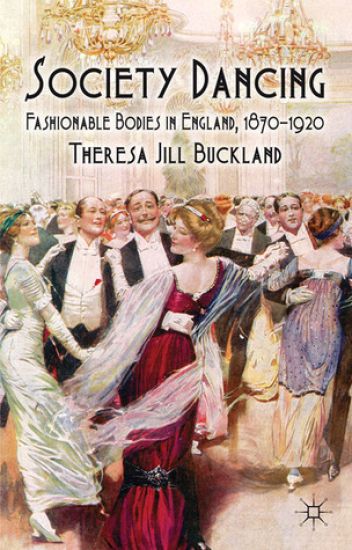
Society Dancing

Society Dancing

T. Buckland

Palgrave Macmillan
2011
sidottu
Based on new archival research, this book uniquely presents a fresh interrogation of how, among London's fashionable society, dancing in the late nineteenth and early twentieth centuries was variously a means of social modelling, change, conformity and creative individual expression.
Society Must Be Defended

Society Must Be Defended

Michel Foucault

Penguin Classics
2020
pokkari
'Foucault must be reckoned with by humanists, social scientists, and political activists' The New York Times Book ReviewSociety Must Be Defended is Michel Foucault's devastating critique of the systems of power and control inherent in civilization. Taken from a series of lectures given by Foucault at the Collége de France in 1975-76, it reveals how war is the foundation of all power relations, and politics ultimately a continuation of battlefield violence. He offers a politically charged re-reading of history, with examples ranging from the Trojan myth to Nazi Germany, to show a continual, 'silent war' between the powerful and the powerless.'A timely and prescient book, mainly because of what it says about the way in which war is necessary as a means of control' New StatesmanTranslated by David Macey
Society of the Righteous

Society of the Righteous

Kimberly T. Wortmann

INDIANA UNIVERSITY PRESS
2024
sidottu
Although the rule of the Omani sultanate in Tanzania came to an end following the Zanzibar Revolution in 1964, the legacy of its empire still exists today, along with its distinctive religious identity. The Ibadhi Muslims of Omani descent, who are neither Sunni nor Shi'a, have used a message of tolerance and harmonious coexistence to spread their beliefs across North and East Africa in a post-revolution and post-independence era. In Society of the Righteous, Kimberly T. Wortmann explores how the Ibadhi-Omani community in Tanzania has engaged in charitable activities, cooperation within the Muslim community, and economic development, despite facing suspicions of foreign influence and elitism. The focus is on the Istiqaama Muslim Community, an international charity network established in Oman and Tanzania in 1995. This ethnographic and transregional study documents the strategies employed by the "People of Truth and Righteousness" to preserve their unique religious practices and beliefs. Society of the Righteous moves beyond the typical discussions on global Muslim religion and politics, such as tradition versus modernity, conflicts between different branches of Islam, and the global war on terror. Instead, it explores the intricacies of a religious community whose significance has been obscured by the limitations of area studies paradigms. It illuminates the complexities of religious identity, transnational networks, gender relations, and the power of collective memory in shaping narratives of belonging, cultural preservation, and change in an increasingly interconnected world.
Society of the Righteous

Society of the Righteous

Kimberly T. Wortmann

INDIANA UNIVERSITY PRESS
2024
pokkari
Although the rule of the Omani sultanate in Tanzania came to an end following the Zanzibar Revolution in 1964, the legacy of its empire still exists today, along with its distinctive religious identity. The Ibadhi Muslims of Omani descent, who are neither Sunni nor Shi'a, have used a message of tolerance and harmonious coexistence to spread their beliefs across North and East Africa in a post-revolution and post-independence era. In Society of the Righteous, Kimberly T. Wortmann explores how the Ibadhi-Omani community in Tanzania has engaged in charitable activities, cooperation within the Muslim community, and economic development, despite facing suspicions of foreign influence and elitism. The focus is on the Istiqaama Muslim Community, an international charity network established in Oman and Tanzania in 1995. This ethnographic and transregional study documents the strategies employed by the "People of Truth and Righteousness" to preserve their unique religious practices and beliefs. Society of the Righteous moves beyond the typical discussions on global Muslim religion and politics, such as tradition versus modernity, conflicts between different branches of Islam, and the global war on terror. Instead, it explores the intricacies of a religious community whose significance has been obscured by the limitations of area studies paradigms. It illuminates the complexities of religious identity, transnational networks, gender relations, and the power of collective memory in shaping narratives of belonging, cultural preservation, and change in an increasingly interconnected world.
Society's Impact on Television

Society's Impact on Television

Richard R. Gilbert; Gary W. Selnow

Praeger Publishers Inc
1993
sidottu
This book is about how TV makers--notably writers, producers, and network programmers--are deeply influenced by public pressures outside their craft. Many scholars assume that the relationship between society and television is one-way, that the traffic of influence moves from the content of a program to the behavior of those who view it, and that if a show is too exploitative or violent or stereotypical, it transforms the minds of those who watch it in some manner. Authors Selnow and Gilbert maintain that the one-way influence is only half-true. Even as television makes its impact on viewers, viewers, society, and society's institutions make their impact on television, often with more noticeable effect.Some of television's most influential and best known producers and programmers (including Grant Tinker, Norman Lear, Steven Bochco, and Gary David Goldberg) discuss the forces that affect their selection of themes and treatments, why they include or reject material, and how they view their opinion leader roles and their roles as members of the society that is so influenced by their products. Selnow and Gilbert examine many of the obvious as well as less apparent forces that affect content decisions: government regulations, interest groups, and advertisers. They argue that the rapid advancement in telecommunication technologies has as much to do with what we watch as any of the social forces. The authors look not only at the current control of content, but point toward the consortium of influences that will affect the medium as it evolves rapidly throughout the next decade.
Society and Health

Society and Health

Richard K. Thomas

Kluwer Academic/Plenum Publishers
2003
sidottu
For the first time, a guide to the sociology of health and healthcare that addresses the needs of both sociologists and health professionals. Written by a career health professional with a medical sociology background, Thomas applies sociological concepts to current healthcare issues, incorporates the latest findings from health services research, and provides clear examples of the uses of sociology in understanding the U.S. healthcare system. Each chapter contains illustrative boxed material, exhibits highlighting key information, suggested readings, and useful websites for more information. With over 30 years of experience, the author provides valuable insights into the social aspects of health behavior and reveals an in-depth understanding of the social dimensions of the health delivery system. The book is a textbook for students of sociology and health, as well as a reference book for instructors and practitioners in the healthcare and sociology fields.
Society's Choices

Society's Choices

National Academies Press
1995
sidottu
Breakthroughs in biomedicine often lead to new life-giving treatments but may also raise troubling, even life-and-death, quandaries. Society's Choices discusses ways for people to handle today's bioethics issues in the context of America's unique history and culture—and from the perspectives of various interest groups. The book explores how Americans have grappled with specific aspects of bioethics through commission deliberations, programs by organizations, and other mechanisms and identifies criteria for evaluating the outcomes of these efforts. The committee offers recommendations on the role of government and professional societies, the function of commissions and institutional review boards, and bioethics in health professional education and research. The volume includes a series of 12 superb background papers on public moral discourse, mechanisms for handling social and ethical dilemmas, and other specific areas of controversy by well-known experts Ronald Bayer, Martin Benjamin, Dan W. Brock, Baruch A. Brody, H. Alta Charo, Lawrence Gostin, Bradford H. Gray, Kathi E. Hanna, Elizabeth Heitman, Thomas Nagel, Steven Shapin, and Charles M. Swezey. Table of Contents Front Matter Contents Executive Summary Part I 1. Introduction 2. The Social Context of Bioethical Problem Solving 3. Systematic Approaches to Bioethics 4. The Spectrum of Societal Responses 5. Criteria for Success 6. Conclusions and Recommendations Part II: Commissioned Papers Moral Epistemology Public Moral Discourse The Value of Consensus Bioethics Commissions: What Can We Learn from Past Successes and Failures? Limiting Life-Prolonging Medical Treatment: A Comparative Analysis of the President's Commission and the New York State Task Force The Formulation of Health Policy by the Three Branches of Government The Role of Religious Participation and Religious Belief in Biomedical Decision Making Trust, Honesty, and the Authority of Science Institutional Ethics Committees: Local Perspectives on Ethical Issues in Medicine The Ethical, Legal, and Social Implications Program of the National Center for Human Genome Research: A Missed Opportunity? AIDS, Ethics, and Activism: Institutional Encounters in the Epidemic's First Decade La Penible Valse Hesitation: Fetal Tissue Research Review and the Use of Bioethics Commissions in France and the United States Appendix: Past Commissions and Advisory Boards Index
Society Must Be Defended: Lectures at the Collhge de France, 1975-76
An examination of the relation between war and politics, by one of the twentieth century's most influential thinkers From 1971 until 1984 at the Coll ge de France, Michel Foucault gave a series of lectures ranging freely and conversationally over the range of his research. In Society Must Be Defended, Foucault deals with the emergence in the early seventeenth century of a new understanding of war as the permanent basis of all institutions of power, a hidden presence within society that could be deciphered by an historical analysis. Tracing this development, Foucault outlines the genealogy of power and knowledge that had become his dominant concern.
Society, Theory and the French Revolution

Society, Theory and the French Revolution

Brian Singer

Palgrave Macmillan
1986
sidottu
This is a very different book about the French Revolution of 1789-94. The concern is less with a change in society than a change in the relation that a society establishes with itself. Here the focus is on society's presentation (and representation) considered not simply from the perspective of a few privileged intellectuals, but as a social and historical process inseparable from the institution of society's political dimension. Through a close reading of the revolutionary texts of the period, the author is able to trace behind the surface of events and conflict themes of a more abstract, fundamental character - themes relative to the 'discovery' of society, the construction of the nation-state, and what for the revolutionaries was the scandal of their separation. While retaining a fidelity to the eighteenth century, this book opens up new theoretical perspectives that illuminate the character of both a certain revolutionary heritage and a more general political modernity.
Society and Politics in the Russian Revolution
The Russian Revolution of 1917 was an event of the greatest importance, but the social groups which were crucial to its development and outcome have been little written about. This book brings together a number of prominent British researchers whose work focusses on the connections among politics, social aspirations and economics, and offers new insights into the reasons why, only months after the last tsar fell from power in February 1917, it was the Bolsheviks who seized control and established a communist regime.
Society and Economy in Germany, 1300-1600
Society and Economy in Germany, 1300-1600 surveys the social and economic development of the German-speaking lands from the age of the Black Death to the eve of the Thirty Years War. It examines the political geography and social structure of the Holy Roman Empire as a constitutional polity in both church and state deeply etched by feudal-aristocratic values. The book questions the validity of a 'late medieval agrarian crisis', and the traditional account of the divergent social and economic development between simple landlordship in the West and a revived seigneurialism east of the Elbe. Tom Scott examines in detail patterns of regional and economic change and town-country relations, and the emergence of city-states in Germany and Switzerland. Broad coverage is given to demands for reform within the Empire, which influenced the sixteenth-century religious reformers, as well as to the many urban and rural revolts. The book concludes with reflections on Germany in the age of confessionalization and social discipline, including the rise of a witch craze. This comprehensive survey incorporates the latest research, emphasising regional analysis as the only way to comprehend Germany's diversity.