Kirjojen hintavertailu. Mukana 11 244 527 kirjaa ja 12 kauppaa.

Kirjahaku

Etsi kirjoja tekijän nimen, kirjan nimen tai ISBN:n perusteella.

1000 tulosta hakusanalla Stephan Drake

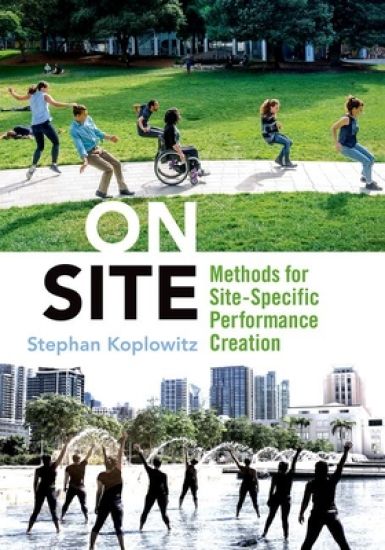
On Site

On Site

Stephan Koplowitz

OXFORD UNIVERSITY PRESS INC
2022
sidottu
On Site: Methods for Site-Specific Performance Creation is a practical book for artists and students at all levels who create or are learning to create making sited dance works. Author Stephan Koplowitz covers specific, hands-on strategies for an array of issues to consider before, during, and after embarking upon a project, including site selection, procuring permits, designing the audience experience, researching and exploring a site for inspiration and content, differences in urban and natural environments, definitions of key production roles, building effective collaborations with artists, and techniques to generate site-inspired production elements such as sound/music, costumes, lighting, and media. He also offers helpful chapters on project budgeting, contract negotiation, fundraising, marketing, documentation, and assessment. Based on the author's career spanning over 30 years of site-specific creation, the book also includes the voices of over 24 other artists, producers, and writers who share their perspectives and experiences on the many topics covered. A guide designed to make site work practical, intentional, and attainable, On Site will become a well-worn reference for anyone interested in the creative process and discovering the power of site-specific works.
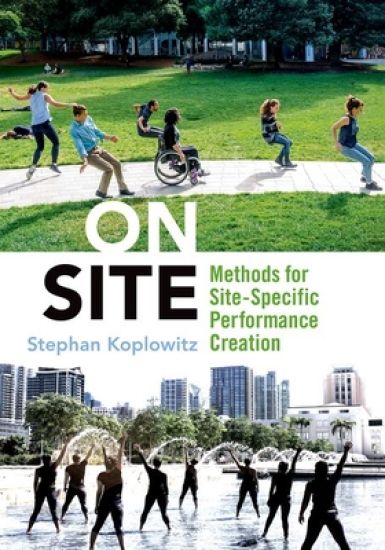
On Site

On Site

Stephan Koplowitz

OXFORD UNIVERSITY PRESS INC
2022
nidottu
On Site: Methods for Site-Specific Performance Creation is a practical book for artists and students at all levels who create or are learning to create making sited dance works. Author Stephan Koplowitz covers specific, hands-on strategies for an array of issues to consider before, during, and after embarking upon a project, including site selection, procuring permits, designing the audience experience, researching and exploring a site for inspiration and content, differences in urban and natural environments, definitions of key production roles, building effective collaborations with artists, and techniques to generate site-inspired production elements such as sound/music, costumes, lighting, and media. He also offers helpful chapters on project budgeting, contract negotiation, fundraising, marketing, documentation, and assessment. Based on the author's career spanning over 30 years of site-specific creation, the book also includes the voices of over 24 other artists, producers, and writers who share their perspectives and experiences on the many topics covered. A guide designed to make site work practical, intentional, and attainable, On Site will become a well-worn reference for anyone interested in the creative process and discovering the power of site-specific works.
Corporations in Private International Law

Corporations in Private International Law

Stephan Rammeloo

Oxford University Press
2001
sidottu
This book provides a much-needed analysis of this very important subject for company lawyers, including discussion of the principle of freedom of establishment, and focusing upon the key issue of determining where a corporation has its "seat" for legal purposes. A survey is given of current EC law and of private international law developments in three 'incorporation' countries (Netherlands, England and Switzerland) and three 'real seat' countries (Germany, France and Italy). Following on from entry into force of the Treaty of Amsterdam, an integrated approach of EC law and private international law is advocated in order to develop instruments to facilitate cross-border company migration. Special attention is given to the 1998 EC Draft Proposal for a Fourteenth Company Law Directive on Cross-border Company Transfers.
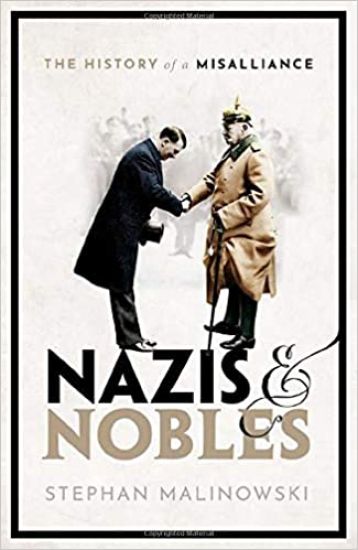
Nazis and Nobles

Nazis and Nobles

Stephan Malinowski

Oxford University Press
2020
sidottu
In the mountain of books that have been written about the Third Reich, surprisingly little has been said about the role played by the German nobility in the Nazis' rise to power. While often confidently referred to, the 'fateful' role played by the German nobility is rarely, if ever, investigated in any real detail. Nazis and Nobles now fills this gap, providing the first systematic investigation of the role played by the nobility in German political life between Germany's defeat in the First World War in 1918 and the consolidation of Nazi power in the 1930s. As Stephan Malinowski shows, the German nobility was too weak to prevent the German Revolution of 1918 but strong enough to take an active part in the struggle against the Weimar Republic. In a real twist of historical irony, members of the nobility were as prominent in the destruction of Weimar democracy as they were to be years later in Graf Stauffenberg's July 1944 bomb plot against Hitler. In this skilful portrait of an aristocratic world that was soon to disappear, Malinowski gives us for the first time the in-depth story of the German nobility's social decline and political radicalization in the inter-war years - and the troubled mésalliance to which this was to lead between the majority of Germany's nobles and the National Socialists.
Organizing Creativity

Organizing Creativity

Stephan M. Schaefer

Oxford University Press
2023
nidottu
Creativity is a defining feature of contemporary work life. Who has not taken part in brainstorming sessions, read glossy pamphlets about innovation and creativity as important cornerstones of a new business strategy, or been made aware of the importance of creative skills for one´s career? But what does it mean to be creative in and as an organization? Organizing Creativity provides an answer to this question. The book builds on the premise that creativity is essentially about ideas. Every organization is dependent on valuable ideas for solving everyday problems as well as inventing new processes, products or services. The main argument of the book is that an analysis of organizational creativity should always account for the interdependency of context, process and practice. Based on cultural and processual perspectives, it highlights the implications of context, process and practice for different aspects of the creative process: generating, evaluating and facilitating ideas. Furthermore, it reflects on how dominant notions of creativity in the economy and society prevent transformative changes and suggests a radical transformative approach to organizing creativity as an alternative. To support and illustrate its argument, Organizing Creativity draws on abundant empirical examples, case illustrations and seminal research from Sociology, Social Psychology and Organization Studies. It provides us with a multi-dimensional perspective and will both further our understanding of and spark critical reflection on the complex interplay of the organizational, social and cultural contexts, processes and practices of organizing creativity.
Organizing Creativity

Organizing Creativity

Stephan M. Schaefer

Oxford University Press
2023
sidottu
Creativity is a defining feature of contemporary work life. Who has not taken part in brainstorming sessions, read glossy pamphlets about innovation and creativity as important cornerstones of a new business strategy, or been made aware of the importance of creative skills for one´s career? But what does it mean to be creative in and as an organization? Organizing Creativity provides an answer to this question. The book builds on the premise that creativity is essentially about ideas. Every organization is dependent on valuable ideas for solving everyday problems as well as inventing new processes, products or services. The main argument of the book is that an analysis of organizational creativity should always account for the interdependency of context, process and practice. Based on cultural and processual perspectives, it highlights the implications of context, process and practice for different aspects of the creative process: generating, evaluating and facilitating ideas. Furthermore, it reflects on how dominant notions of creativity in the economy and society prevent transformative changes and suggests a radical transformative approach to organizing creativity as an alternative. To support and illustrate its argument, Organizing Creativity draws on abundant empirical examples, case illustrations and seminal research from Sociology, Social Psychology and Organization Studies. It provides us with a multi-dimensional perspective and will both further our understanding of and spark critical reflection on the complex interplay of the organizational, social and cultural contexts, processes and practices of organizing creativity.
Study Guide for International Trade and the World Economy

Study Guide for International Trade and the World Economy

Stephan Schueller; Daniel Ottens

Oxford University Press
2002
nidottu
This Study Guide compliments van Marrewijk: International Trade and the World Economy, reviewing and deepening the student's understanding of the topics covered in the main textbook. It provides a set of questions relating to every chapter and these are sub-divided into four different types of questions: review, empirical, simulation and technical questions.
British Jewry, Zionism, and the Jewish State, 1936-1956

British Jewry, Zionism, and the Jewish State, 1936-1956

Stephan E. C. Wendehorst

Oxford University Press
2011
sidottu
Stephan E. C. Wendehorst explores the relationship between British Jewry and Zionism from 1936 to 1956, a crucial period in modern Jewish history encompassing both the shoah and the establishment of the State of Israel. He attempts to provide an answer to what, at first sight, appears to be a contradiction: the undoubted prominence of Zionism among British Jews on the one hand, and its diverse expressions, ranging from aliyah to making a donation to a Zionist fund, on the other. Wendehorst argues that the ascendancy of Zionism in British Jewry is best understood as a particularly complex, but not untypical, variant of the 19th and 20th century's trend to re-imagine communities in a national key. He examines the relationship between British Jewry and Zionism on three levels: the transnational Jewish sphere of interaction, the British Jewish community, and the place of the Jewish community in British state and society. The introduction adapts theories of nationalism so as to provide a framework of analysis for Diaspora Zionism. Chapter one addresses the question of why British Jews became Zionists, chapter two how the various quarters of British Jewry related to the Zionist project in the Middle East, chapter three Zionist nation-building in Britain and chapter four the impact of Zionism on Jewish relations with the larger society. The conclusion modifies the original argument by emphasising the impact that the specific fabric of British state and society, in particular the Empire, had on British Zionism.
Molecular Electromagnetism: A Computational Chemistry Approach

Molecular Electromagnetism: A Computational Chemistry Approach

Stephan P. A. Sauer

Oxford University Press
2011
sidottu
This is a textbook on the theory and calculation of molecular electromagnetic and spectroscopic properties designed for a one-semester course with lectures and exercise classes. The idea of the book is to provide thorough background knowledge for the calculation of electromagnetic and spectroscopic properties of molecules with modern quantum chemical software packages. The book covers the derivation of the molecular Hamiltonian in the presence of electromagnetic fields, and of time-independent and time-dependent perturbation theory in the form of response theory. It defines many molecular properties and spectral parameters and gives an introduction to modern computational chemistry methods.
George Wallace

George Wallace

Stephan Lesher

Da Capo Press Inc
1995
pokkari
A full-scale biography of the complex life and times of George Wallace, from rural poverty under Roosevelt to national prominence in the age of segregationAlabama Governor George Wallace captured the national spotlight in fiery opposition to civil rights as one of the last great demagogues of the Jim Crow South. That image, however, has overshadowed his other and more lasting significance--as spokesman for a tide of working-class resentment and general opposition to big, intrusive government that persists to this day. As historian Alan Brinkley wrote in the New York Times, Wallace emerges in this biography as "the first of a new breed of protest politicians, the first to articulate themes that have no inherent racial content and that have now become a staple of American politics, having shaped every national campaign from Richard Nixon's in 1968 to Bill Clinton's and Ross Perot's in 1992." George Wallace explores the origins of Wallace's racism, his relentless dedication to his own political advancement, the influence of his public life on the nation, and his role as the embodiment of the dark side of our nation's politics--for America made George Wallace, not the other way around. "A terrific read. George Wallace is both a serious book about American politics and a good old-fashioned yarn."--Washington Post
The Cooking of History

The Cooking of History

Stephan Palmié

University of Chicago Press
2013
sidottu
Over a lifetime of studying Cuban Santeria and other religions related to Orisha worship - a practice also found among the Yoruba in West Africa - Stephan Palmie has grown progressively uneasy with the assumptions inherent in the very term Afro-Cuban religion. In "The Cooking of History" he provides a comprehensive analysis of these assumptions, in the process offering an incisive critique both of the anthropology of religion and of scholarship on the cultural history of the Afro-Atlantic World. Understood largely through its rituals and ceremonies, Santeria and related religions have been a challenge for anthropologists to link to a hypothetical African past. But, Palmie argues, precisely by relying on the notion of an aboriginal African past, and by claiming to authenticate these religions via their findings, anthropologists - some of whom have converted to these religions - have exerted considerable influence upon contemporary practices. Critiquing widespread and damaging simplifications that posit religious practices as stable and self-contained, Palmie calls for a drastic new approach that properly situates cultural origins within the complex social environments and scholarly fields in which they are investigated.
The Cooking of History

The Cooking of History

Stephan Palmié

University of Chicago Press
2013
nidottu
Over a lifetime of studying Cuban Santeria and other religions related to Orisha worship - a practice also found among the Yoruba in West Africa - Stephan Palmie has grown progressively uneasy with the assumptions inherent in the very term Afro-Cuban religion. In "The Cooking of History" he provides a comprehensive analysis of these assumptions, in the process offering an incisive critique both of the anthropology of religion and of scholarship on the cultural history of the Afro-Atlantic World. Understood largely through its rituals and ceremonies, Santeria and related religions have been a challenge for anthropologists to link to a hypothetical African past. But, Palmie argues, precisely by relying on the notion of an aboriginal African past, and by claiming to authenticate these religions via their findings, anthropologists - some of whom have converted to these religions - have exerted considerable influence upon contemporary practices. Critiquing widespread and damaging simplifications that posit religious practices as stable and self-contained, Palmie calls for a drastic new approach that properly situates cultural origins within the complex social environments and scholarly fields in which they are investigated.
Thinking with Ngangas

Thinking with Ngangas

Stephan Palmié

THE UNIVERSITY OF CHICAGO PRESS
2023
sidottu
A comparative investigation of Afro-Cuban ritual and Western science that aims to challenge the rationality of Western expert practices. Inspired by the exercises of Father Lafitau, an eighteenth-century Jesuit priest and protoethnographer who compared the lives of the Iroquois to those of the ancient Greeks, Stephan Palmié embarks on a series of unusual comparative investigations of Afro-Cuban ritual and Western science. What do organ transplants have to do with ngangas, a complex assemblage of mineral, animal, and vegetal materials, including human remains, that serve as the embodiment of the spirits of the dead? How do genomics and “ancestry projects” converge with divination and oracular systems? What does it mean that Black Cubans in the United States took advantage of Edisonian technology to project the disembodied voice of a mystical entity named ecué onto the streets of Philadelphia? Can we consider Afro-Cuban spirit possession as a form of historical knowledge production? By writing about Afro-Cuban ritual in relation to Western scientific practice, and vice versa, Palmié hopes to challenge the rationality of Western expert practices, revealing the logic that brings together enchantment and experiment.
Thinking with Ngangas

Thinking with Ngangas

Stephan Palmié

THE UNIVERSITY OF CHICAGO PRESS
2023
nidottu
A comparative investigation of Afro-Cuban ritual and Western science that aims to challenge the rationality of Western expert practices. Inspired by the exercises of Father Lafitau, an eighteenth-century Jesuit priest and protoethnographer who compared the lives of the Iroquois to those of the ancient Greeks, Stephan Palmié embarks on a series of unusual comparative investigations of Afro-Cuban ritual and Western science. What do organ transplants have to do with ngangas, a complex assemblage of mineral, animal, and vegetal materials, including human remains, that serve as the embodiment of the spirits of the dead? How do genomics and “ancestry projects” converge with divination and oracular systems? What does it mean that Black Cubans in the United States took advantage of Edisonian technology to project the disembodied voice of a mystical entity named ecué onto the streets of Philadelphia? Can we consider Afro-Cuban spirit possession as a form of historical knowledge production? By writing about Afro-Cuban ritual in relation to Western scientific practice, and vice versa, Palmié hopes to challenge the rationality of Western expert practices, revealing the logic that brings together enchantment and experiment.
Lordship and State Transformation

Lordship and State Transformation

Stephan Sander-Faes

MCGILL-QUEEN'S UNIVERSITY PRESS
2024
sidottu
Although state transformation – continuous struggle and bargaining between rulers and their subjects, producing an unpredictable variety of political structures – is often overlooked, the process is crucial in assessing the organizational development of early modern composite monarchies and deserves further investigation.In Austria, the monarchy’s emergence as a great power required it to overcome several successive crises that culminated in the decades around 1700. The Habsburgs succeeded more by adjusting relations between Crown and lordships than through institution building. This unusual interaction of state and non-state actors resulted in an Austria that markedly deviated from the centralizing nation-state exemplified by Britain or France. The nascent Habsburg fiscal-financial-military regime transformed regional and local authority, leading to armed conflict and causing disintegration of the administrative and social fabric. From the mid-seventeenth century onward, power – whether local or central, or social or political – would undergo enormous changes.Grounded in extensive research into Czech archives and spanning an era from the Thirty Years’ War to the coronation of Charles VI, Lordship and State Transformation delves into the complex transitions that characterized the first instance of a balance of power in Europe, with a focus on its underresearched great power, the Habsburg monarchy.
Famine in North Korea

Famine in North Korea

Stephan Haggard; Marcus Noland; Amartya Sen

Columbia University Press
2007
sidottu
In the mid-1990s, as many as one million North Koreans died in one of the worst famines of the twentieth century. The socialist food distribution system collapsed primarily because of a misguided push for self-reliance, but was compounded by the regime's failure to formulate a quick response-including the blocking of desperately needed humanitarian relief. As households, enterprises, local party organs, and military units tried to cope with the economic collapse, a grassroots process of marketization took root. However, rather than embracing these changes, the North Korean regime opted for tentative economic reforms with ambiguous benefits and a self-destructive foreign policy. As a result, a chronic food shortage continues to plague North Korea today. In their carefully researched book, Stephan Haggard and Marcus Noland present the most comprehensive and penetrating account of the famine to date, examining not only the origins and aftermath of the crisis but also the regime's response to outside aid and the effect of its current policies on the country's economic future. Their study begins by considering the root causes of the famine, weighing the effects of the decline in the availability of food against its poor distribution. Then it takes a close look at the aid effort, addressing the difficulty of monitoring assistance within the country, and concludes with an analysis of current economic reforms and strategies of engagement. North Korea's famine exemplified the depredations that can arise from tyrannical rule and the dilemmas such regimes pose for the humanitarian community, as well as the obstacles inherent in achieving economic and political reform. To reveal the state's culpability in this tragic event is a vital project of historical recovery, one that is especially critical in light of our current engagement with the "North Korean question."
Famine in North Korea

Famine in North Korea

Stephan Haggard; Marcus Noland; Amartya Sen

Columbia University Press
2009
pokkari
In the mid-1990s, as many as one million North Koreans died in one of the worst famines of the twentieth century. The socialist food distribution system collapsed primarily because of a misguided push for self-reliance, but was compounded by the regime's failure to formulate a quick response-including the blocking of desperately needed humanitarian relief. As households, enterprises, local party organs, and military units tried to cope with the economic collapse, a grassroots process of marketization took root. However, rather than embracing these changes, the North Korean regime opted for tentative economic reforms with ambiguous benefits and a self-destructive foreign policy. As a result, a chronic food shortage continues to plague North Korea today. In their carefully researched book, Stephan Haggard and Marcus Noland present the most comprehensive and penetrating account of the famine to date, examining not only the origins and aftermath of the crisis but also the regime's response to outside aid and the effect of its current policies on the country's economic future. Their study begins by considering the root causes of the famine, weighing the effects of the decline in the availability of food against its poor distribution. Then it takes a close look at the aid effort, addressing the difficulty of monitoring assistance within the country, and concludes with an analysis of current economic reforms and strategies of engagement. North Korea's famine exemplified the depredations that can arise from tyrannical rule and the dilemmas such regimes pose for the humanitarian community, as well as the obstacles inherent in achieving economic and political reform. To reveal the state's culpability in this tragic event is a vital project of historical recovery, one that is especially critical in light of our current engagement with the "North Korean question."
Securing Peace in Europe

Securing Peace in Europe

Stephan Kieninger

Columbia University Press
2025
pokkari
After the Cold War, the United States and its NATO allies faced crucial questions. Could Russia, their old adversary, be integrated into the liberal international order? What roles should former Soviet republics and satellite states in Eastern and Central Europe play in the Euro-Atlantic security system? These questions have taken on renewed significance since Russia’s full-scale invasion of Ukraine, as Vladimir Putin has portrayed Russia as the victim of Western expansionism.This deeply researched book offers new perspective on the NATO-Russia relationship through the eyes of Strobe Talbott, a deputy secretary of state for seven years under President Bill Clinton and the key US diplomatic broker for the former USSR. Stephan Kieninger traces the Clinton administration’s efforts to engage Russia and enlarge NATO at the same time, as elements of a new European security architecture. Drawing on Talbott’s diaries, as well as US and European archives and extensive interviews with former government officials, he sheds light on NATO’s opening, its missions in Bosnia and Kosovo, and other vexed issues. Kieninger argues that a careful look at Talbott’s statecraft rebuts Putin’s claims that the West exploited Russia’s weakness after the Cold War, demonstrating that the Clinton administration and its NATO allies sought to include Russia at every step. An illuminating and comprehensive account of US diplomacy during the Clinton years, Securing Peace in Europe provides vital insight into the complex relations between Russia and the West.
Securing Peace in Europe

Securing Peace in Europe

Stephan Kieninger

Columbia University Press
2025
sidottu
After the Cold War, the United States and its NATO allies faced crucial questions. Could Russia, their old adversary, be integrated into the liberal international order? What roles should former Soviet republics and satellite states in Eastern and Central Europe play in the Euro-Atlantic security system? These questions have taken on renewed significance since Russia’s full-scale invasion of Ukraine, as Vladimir Putin has portrayed Russia as the victim of Western expansionism.This deeply researched book offers new perspective on the NATO-Russia relationship through the eyes of Strobe Talbott, a deputy secretary of state for seven years under President Bill Clinton and the key US diplomatic broker for the former USSR. Stephan Kieninger traces the Clinton administration’s efforts to engage Russia and enlarge NATO at the same time, as elements of a new European security architecture. Drawing on Talbott’s diaries, as well as US and European archives and extensive interviews with former government officials, he sheds light on NATO’s opening, its missions in Bosnia and Kosovo, and other vexed issues. Kieninger argues that a careful look at Talbott’s statecraft rebuts Putin’s claims that the West exploited Russia’s weakness after the Cold War, demonstrating that the Clinton administration and its NATO allies sought to include Russia at every step. An illuminating and comprehensive account of US diplomacy during the Clinton years, Securing Peace in Europe provides vital insight into the complex relations between Russia and the West.
The Hohenzollerns and the Nazis

The Hohenzollerns and the Nazis

Stephan Malinowski

PENGUIN BOOKS LTD
2025
sidottu
The shocking true story of the German monarchy's collaboration with the Nazis - already a bestseller in Germany, now in English for the first time.**AWARDED THE GERMAN NON-FICTION PRIZE 2022**'Malinowksi’s work is a near-masterpiece, relating a story not synthesised in this way before, and about which any number of self-serving myths exist' - Simon Heffer, The Telegraph‘Stephan Malinowski's brilliant book strikes a balance between the forensic analysis of individual behaviour and a new understanding of how the toxic political culture of a defeated monarchy helped to disrupt democracy in Germany' - Christopher ClarkThe disappearance of the Hohenzollern family from the history of Germany in November 1918 as the Kaiser fled into Dutch exile is one of the most startling, rapid instances of a once all-powerful royal family becoming almost overnight irrelevant and marginal. Except this is not exactly what happened.Stephan Malinowski’s German bestseller is an extraordinary work of recovery. It suited both the Weimar Republic and then the Third Reich to view the Hohenzollerns with contempt, and yet the royal family’s hatred of the former and approval of the latter were for millions of Germans a significant factor in their own view of their country and its government.With forensic and often shocking detail, Malinowski shows that, far from being ridiculous, marginal figures the Hohenzollerns lay at the heart of Germany’s ongoing nightmare. Despite formally losing power, the members of the royal family remained prominent, catastrophically allowing many other conservative Germans to stay distanced from the new republic and to eventually betray conservative traditions and values. Battered from both left and right, the Republic collapsed in 1933 in part because conservative forces, fearful of both Communism and Fascism, had abandoned their own principles just as much as the leading members of former royal family had, who were themselves beguiled by and fooled by Hitler.This is an important and shocking book, as well as a devastating picture of an inadequate and trivial royal family painfully underequipped to fulfil its role.