Kirjojen hintavertailu. Mukana 12 459 402 kirjaa ja 12 kauppaa.

Kirjahaku

Etsi kirjoja tekijän nimen, kirjan nimen tai ISBN:n perusteella.

1000 tulosta hakusanalla Steven P. Remy

Poisoned Spring

Poisoned Spring

Liotard Kartika; McGiffen Steven P.

Pluto Press
2009
pokkari
Vast numbers of people have no access to safe drinking water, and even more lack any kind of effective sanitation. Most of the world's water supply remains in public ownership. Neither drought nor flood is as much a meteorological phenomenon as it is the result of mismanagement. So is privatisation the route to solving this most urgent of problems? The authors argue that, on the contrary, neoliberal economics and the power structures responsible for widening global inequalities are blocking the way to progress towards universal provision of safe water and effective sanitation. Behind these malign influences stands the growing power of the European Union and the corporations in whose interests it operates. On the basis of an analysis of the political economy of water and of the European Union's policies, Poisoned Spring will place the problem of water supply in the broad context of corporate control of the world's resources.

Poisoned Spring

Poisoned Spring

Kartika Liotard; Steven P. McGiffen

Pluto Press
2009
sidottu
Vast numbers of people have no access to safe drinking water, and even more lack any kind of effective sanitation. Most of the world's water supply remains in public ownership. Neither drought nor flood is as much a meteorological phenomenon as it is the result of mismanagement. So is privatisation the route to solving this most urgent of problems? The authors argue that, on the contrary, neoliberal economics and the power structures responsible for widening global inequalities are blocking the way to progress towards universal provision of safe water and effective sanitation. Behind these malign influences stands the growing power of the European Union and the corporations in whose interests it operates. On the basis of an analysis of the political economy of water and of the European Union's policies, Poisoned Spring will place the problem of water supply in the broad context of corporate control of the world's resources.
The Reluctant Empath

The Reluctant Empath

Bety Comerford; Steven P. Wilson

Schiffer Publishing Ltd
2014
sidottu
Have you spent your life feeling everyone's emotions? Have you been bombarded with every thought, every feeling from those around you and from the world itself? Are you ready to scream? You are not crazy; you are an empath. There is a reason you feel all that you do. This valuable guide will help you understand what it means to be an empath, why you feel what you feel, and how to share the wonderful opportunities the gift of empathy offers you to heal yourself, those around you, and the world. With this book, readers learn to discern the truth when people's words do not match their emotions, to use fearlessness to protect yourself, and to tap into the vibrational energy of love. You will also learn to discern how energy works and how it can be used for healing, accessing the past, present, and future, manifesting responsibly, and much more. If you suspect you are an empath or know someone who may be struggling with that gift, this book is a must read.
Understanding Baseball

Understanding Baseball

Trey Strecker; Steven P. Gietschier; Mitchell Nathanson

McFarland Co Inc
2015
pokkari
The study of baseball history and culture shows the national pastime to be a forum of debate where issues of sport, labor, race, character and the ethics of work and play are decided. An understanding of baseball calls for consideration of different perspectives. This very readable textbook offers insights into baseball history as a subject worthy of scholarly attention. Each chapter introduces a specific disciplinary approach--history, economics, media, law and fiction--and poses representative questions scholars from these fields would consider. Instructors considering this book for use in a course may request an examination copy here.
Getting IT Right: A Guide to Getting the Most Out of Information Technology at your Law Firm

Getting IT Right: A Guide to Getting the Most Out of Information Technology at your Law Firm

Malvern Mead; Steven P. Meyers

Createspace Independent Publishing Platform
2017
nidottu
Information Technology is the least understood administrative process in a law firm. For law firm leaders, the Information Technology department is like Churchill's famous epigram - "...a riddle, wrapped in a mystery, inside an enigma." Why is IT such a mystery and, more importantly, what can you - as law firm managing partner, CEO or CIO - do to better understand this essential component of your firm's operation? How can your firm get the most out of the time, people and money you devote to IT and ensure you're making effective use of technology? Getting IT Right was written to help you better understand and manage this critical function. The book's eighteen chapters cover both the management and the technical sides of IT. On the management side, we look at areas such as leadership, strategic planning, performance evaluation, budgeting and finance and how to build and develop a strong and productive IT department. On the technical side, you'll get insights into selecting the best system for your needs, improving system performance, and the latest on security and disaster recovery. Each chapter comes with a handy self-evaluation checklist and a resource list for further study. The authors have spent decades in law firm technology and conducted innumerable IT audits of firms large and small and use this experience to bring you an easy to read, and easy to use guide to understanding, and improving, your firm's technology.
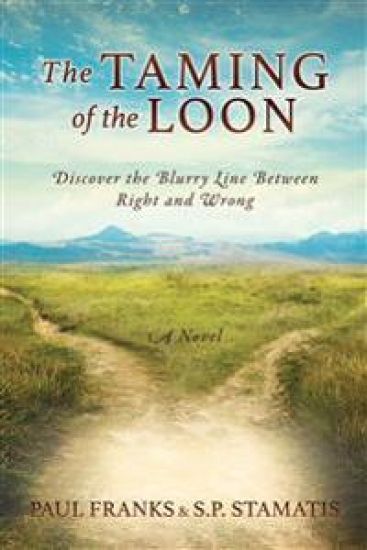
The Taming of the Loon

The Taming of the Loon

Paul Franks; Steven P Stamatis

Xulon Press
2022
pokkari
Torn between his Christian faith and Palestinian dream of a homeland, Famir is drawn to a terrorist plot in New York, calling attention to unresolved Israeli-Palestinian issues in the Middle-East. Will he do the right thing? Follow him and others in a relentless pursuit to reset their moral compass and the struggle for personal renewal in a modern setting of diminishing values. Searching for lasting values in an "everything is okay" culture, Father Stan Rybak assists in their struggle to recognize the blending of Good and Evil, an adventure toward awakening, awareness and renewal. The Taming of the Loon reads very smoothly with engaging dialogue that builds momentum to the story; really appealing and beautifully written. - Susan Anderson-Khleif, PhD The Taming of the Loon leads the reader down into...our unconscious shadows. Therein lies one's moral struggle of right and wrong...in this private wrestling arena one's true conscience emerges as an actionable behavior. - Paul J. Kachoris, M.D., Psychiatrist
Street Art New York 2000-2010

Street Art New York 2000-2010

Jaime Rojo; Steven P. Harrington

Prestel
2021
sidottu
New York is a street art Mecca, boasting a vast outdoor gallery which encompasses walls, fences, sidewalks and just about any other available surface. Featured in this dynamic collection are approximately 200 images of works by artists such as New Yorkers Swoon, Judith Supine, Dan Witz, Skewville, WK Interact, L.A.'s Shepard Fairey, Brazil's Os Gemeos, Denmark's Armsrock, France's Space Invader, C215, Mr. Brainwash, Germany's Herakut, London's Nick Walker and the infamous Banksy. This book offers a compelling portrait of the development of urban art in the noughties in one of its most important and supportive communities.
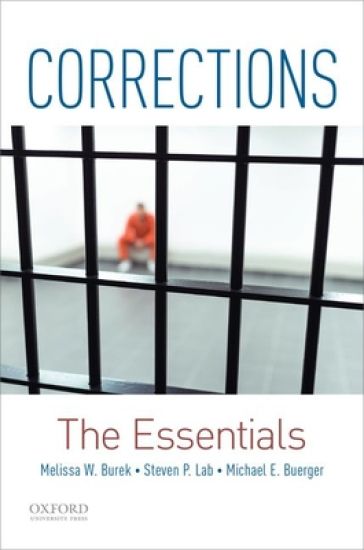
Corrections

Corrections

Melissa W. Burek; Steven P. Lab; Michael E. Buerger

Oxford University Press Inc
2020
nidottu
Corrections: The Essentials provides a concise presentation of corrections, covering the essential materials for understanding the history, development, and current operations of corrections in an understandable, non-complex discussion of the topics.
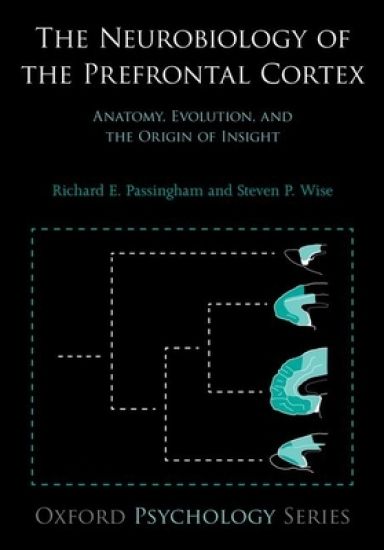
The Neurobiology of the Prefrontal Cortex

The Neurobiology of the Prefrontal Cortex

Richard E. Passingham; Steven P. Wise

Oxford University Press
2014
nidottu
The prefrontal cortex makes up almost a quarter of the human brain, and it expanded dramatically during primate evolution. The Neurobiology of the Prefrontal Cortex presents a new theory about its fundamental function. In this important new book, the authors argue that primate-specific parts of the prefrontal cortex evolved to reduce errors in foraging choices, so that particular ancestors of modern humans could overcome periodic food shortages. These developments laid the foundation for working out problems in our imagination, which resulted in the insights that allow humans to avoid errors entirely, at least at times. In the book, the authors detail which parts of the prefrontal cortex evolved exclusively in primates, how its connections explain why the prefrontal cortex alone can perform its function, and why other parts of the brain cannot do what the prefrontal cortex does. Based on an analysis of its evolutionary history, the book uses evidence from lesion, imaging, and cell-recording experiments to argue that the primate prefrontal cortex generates goals from a current behavioural context and that it can do so on the basis of single events. As a result, the prefrontal cortex uses the attentive control of behaviour to augment an older general-purpose learning system, one that evolved very early in the history of animals. This older system learns slowly and cumulatively over many experiences based on reinforcement. The authors argue that a new learning system evolved in primates at a particular time and place in their history, that it did so to decrease the errors inherent in the older learning system, and that severe volatility of food resources provided the driving force for these developments. Written by two leading brain scientists, The Neurobiology of the Prefrontal Cortex is an important contribution to our understanding of the evolution and functioning of the human brain.
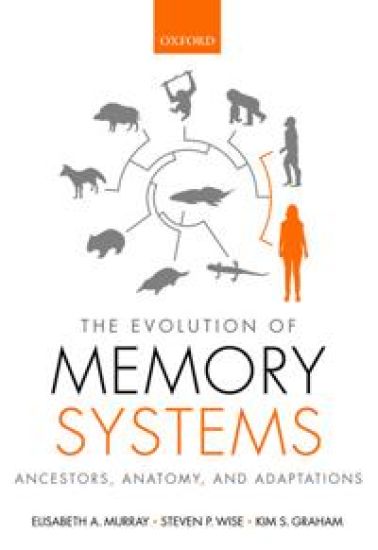
The Evolution of Memory Systems

The Evolution of Memory Systems

Elisabeth A. Murray; Steven P. Wise; Kim S. Graham

Oxford University Press
2017
nidottu
Current theories about human memory have been shaped by clinical observations and animal experiments. This doctrine holds that the medial temporal lobe subserves one memory system for explicit or declarative memories, while the basal ganglia subserves a separate memory system for implicit or procedural memories, including habits. Cortical areas outside the medial temporal lobe are said to function in perception, motor control, attention, or other aspects of executive function, but not in memory. 'The Evolution of Memory Systems' advances dramatically different ideas on all counts. It proposes that several memory systems arose during evolution and that they did so for the same general reason: to transcend problems and exploit opportunities encountered by specific ancestors at particular times and places in the distant past. Instead of classifying cortical areas in terms of mutually exclusive perception, executive, or memory functions, the authors show that all cortical areas contribute to memory and that they do so in their own ways-using specialized neural representations. The book also presents a proposal on the evolution of explicit memory. According to this idea, explicit (declarative) memory depends on interactions between a phylogenetically ancient navigation system and a representational system that evolved in humans to represent one's self and others. As a result, people embed representations of themselves into the events they experience and the facts they learn, which leads to the perception of participating in events and knowing facts. 'The Evolution of Memory Systems' is an important new work for students and researchers in neuroscience, psychology, and biology.
The Evolutionary Road to Human Memory

The Evolutionary Road to Human Memory

Elisabeth A. Murray; Steven P. Wise; Mary K. L. Baldwin; Kim S. Graham

Oxford University Press
2019
nidottu
We tend to think about memory in terms of the human experience, neglecting the fact that we can trace a direct line of descent from the earliest vertebrates to modern humans. But the evolutionary history that we share with other vertebrates has left a mark on modern memory, complemented by unique forms of memory that emerged in humans. This book tells an intriguing story about how evolution shaped human memory. It explains how a series of now-extinct ancestral species adapted to life in their world, in their time and place. As they did, new brain areas appeared, each of which supported an innovative form of memory that helped them gain an advantage in life. Through inheritance and modification across millions of years, these evolutionary developments created several kinds of memory that influence the human mind today. Then, during human evolution, yet another new kind of memory emerged: about ourselves and others. This evolutionary innovation ignited human imagination; empowered us to remember and talk about a personal past; and enabled the sharing of knowledge about our world, our culture, and ourselves. Through these developments, our long journey along the evolutionary road to human memory made it possible for every individual, day upon day, to add new pages to the story of a life: the remarkably rich record of experiences and knowledge that make up a human mind. Written in an engaging and accessible style, The Evolutionary Road to Human Memory will be enjoyable reading for anyone interested in the human mind.
The Neurobiology of the Prefrontal Cortex

The Neurobiology of the Prefrontal Cortex

Richard E. Passingham; Steven P. Wise

Oxford University Press
2012
sidottu
The prefrontal cortex makes up almost a quarter of the human brain, and it expanded dramatically during primate evolution. The Neurobiology of the Prefrontal Cortex presents a new theory about its fundamental function. In this important new book, the authors argue that primate-specific parts of the prefrontal cortex evolved to reduce errors in foraging choices, so that particular ancestors of modern humans could overcome periodic food shortages. These developments laid the foundation for working out problems in our imagination, which resulted in the insights that allow humans to avoid errors entirely, at least at times. In the book, the authors detail which parts of the prefrontal cortex evolved exclusively in primates, how its connections explain why the prefrontal cortex alone can perform its function, and why other parts of the brain cannot do what the prefrontal cortex does. Based on an analysis of its evolutionary history, the book uses evidence from lesion, imaging, and cell-recording experiments to argue that the primate prefrontal cortex generates goals from a current behavioural context and that it can do so on the basis of single events. As a result, the prefrontal cortex uses the attentive control of behaviour to augment an older general-purpose learning system, one that evolved very early in the history of animals. This older system learns slowly and cumulatively over many experiences based on reinforcement. The authors argue that a new learning system evolved in primates at a particular time and place in their history, that it did so to decrease the errors inherent in the older learning system, and that severe volatility of food resources provided the driving force for these developments. Written by two leading brain scientists, The Neurobiology of the Prefrontal Cortex is an important contribution to our understanding of the evolution and functioning of the human brain.
The Evolution of Memory Systems

The Evolution of Memory Systems

Elisabeth A. Murray; Steven P. Wise; Kim S. Graham

Oxford University Press
2016
sidottu
Current theories about human memory have been shaped by clinical observations and animal experiments. This doctrine holds that the medial temporal lobe subserves one memory system for explicit or declarative memories, while the basal ganglia subserves a separate memory system for implicit or procedural memories, including habits. Cortical areas outside the medial temporal lobe are said to function in perception, motor control, attention, or other aspects of executive function, but not in memory. 'The Evolution of Memory Systems' advances dramatically different ideas on all counts. It proposes that several memory systems arose during evolution and that they did so for the same general reason: to transcend problems and exploit opportunities encountered by specific ancestors at particular times and places in the distant past. Instead of classifying cortical areas in terms of mutually exclusive perception, executive, or memory functions, the authors show that all cortical areas contribute to memory and that they do so in their own ways-using specialized neural representations. The book also presents a proposal on the evolution of explicit memory. According to this idea, explicit (declarative) memory depends on interactions between a phylogenetically ancient navigation system and a representational system that evolved in humans to represent one's self and others. As a result, people embed representations of themselves into the events they experience and the facts they learn, which leads to the perception of participating in events and knowing facts. 'The Evolution of Memory Systems' is an important new work for students and researchers in neuroscience, psychology, and biology.
Hair Restoration, An Issue of Facial Plastic Surgery Clinics

Hair Restoration, An Issue of Facial Plastic Surgery Clinics

Raymond J. Konior; Steven P Gabel

Elsevier - Health Sciences Division
2014
sidottu
While every facial plastic surgeon is trained in hair restoration, unless one does it frequently in practice, there are techniques, tips, and approaches to be learned from experts in this field who focus solely on hair transplantation and restoration. Techniques, Complications, Medical Treatment, and Medical Diagnosis are covered for Donor Harvesting and Management of the Donor Site; Hairline Design and Frontal Hairline Restoration; Management of Advanced Hair Loss Patterns; Repair of the Unsuccessful Hair Restoration; Tissue Expansion for Scalp Reconstruction; Imposters of Andogenetic Alopecia: Diagnostic Pearls for the Hair Restoration Surgeon; and more. This clinically focused information is intended for the facial plastic surgeon whose practice is not a majority of hair restoration and for surgeons who might want to grow their hair practice. Editors Raymond Konior and Steven Gabel lead this review in Facial Plastic Surgery Clinics. When asked why hair transplantation and restoration is of compelling interest, Dr Konior explains that he decided to limit his practice solely to hair restoration because it is a life altering procedure for patients: "People cannot believe the outcome - they come to me post-restoration and are so happy with their new appearance, telling me how much their lives are changed. Whether for job or career or personal reasons, this procedure has a positive outcome for them.?
Waldenström Macroglobulinemia, An Issue of Hematology/Oncology Clinics of North America

Waldenström Macroglobulinemia, An Issue of Hematology/Oncology Clinics of North America

Jorge J Castillo; Efstathios Kastritis; Steven P Treon

Elsevier - Health Sciences Division
2018
sidottu
This issue of Hematology/Oncology Clinics, edited by Drs. Jorge J. Castillo, Efstathios Kastritis, and Steven P. Treon, will focus on Waldenström Macroglobulinemia. Topics include, but are not limited to, Genomics; Epigenomics; Flow cytometry; Marrow microenvironment; Familial Waldenstrom; MYD88 L265P and other MYD88 mutations; CXCR4 and other recurrent mutations; Diagnosis and differential diagnosis; Criteria to treat and treatment goals; Alkylators; Monoclonal antibodies; Proteasome inhibitors; BTK inhibitors; Transplant; and Novel approaches.
Victimology

Victimology

William G. Doerner; Steven P. Lab

Routledge
2020
sidottu
This book covers the scope of crime victims’ suffering in the U.S., offering a history of victims and the measurement of victimization, an explanation of the victim’s role in the criminal justice process, and a recounting of the issues crime victims face as a result of crime and the criminal justice process. Doerner and Lab, both well-regarded scholars, write compellingly about how the current criminal’s justice system can be transformed into a victim’s justice system. Theory is woven together with the description of each topic, and specific examples illustrate each point. The book goes on to address the full impact of victimization, and a final section details specific types of victimization, ranging from violent crimes, including child and elder abuse, to property crime, to crime in the school and in the workplace. The authors explain how obstacles hinder the pursuit of justice, and provide significant policy and programming suggestions to render the system more victim-friendly.Appropriate for undergraduate as well as early graduate students in Victimology courses in Criminology, Criminal Justice, Sociology, and Justice Studies programs, this book offers rich pedagogical features and online student resources as well as test bank, PowerPoint lecture slides, and sample syllabus for instructors.
Juvenile Justice

Juvenile Justice

John T. Whitehead; Steven P. Lab

TAYLOR FRANCIS LTD
2022
nidottu
Juvenile Justice: An Introduction, Tenth Edition, presents a comprehensive picture of juvenile offending, delinquency theories, and the ways juvenile justice actors and agencies react to delinquency. Whitehead and Lab offer evidence-based suggestions for successful interventions and treatment and examine the prospects for rebalancing the model of juvenile court. This new edition includes insightful analysis and the latest available statistics on juvenile crime and victimization, drug use, court processing, and corrections. Special attention is given to female involvement, disproportionate minority contact, and diversity issues. The text also includes extensive discussion of police shootings, the issue of race, probation reform, life sentences for juveniles, recent Supreme Court decisions, and reform suggestions from Currie and Feld. An essential text for undergraduate juvenile justice courses, this book offers rich pedagogical features and online resources. Each chapter enhances student understanding with Key Terms, a What You Need to Know section, and Discussion Questions. Links at key points in the text show students where to get the latest information.
Juvenile Justice

Juvenile Justice

John T. Whitehead; Steven P. Lab

TAYLOR FRANCIS LTD
2022
sidottu
Juvenile Justice: An Introduction, Tenth Edition, presents a comprehensive picture of juvenile offending, delinquency theories, and the ways juvenile justice actors and agencies react to delinquency. Whitehead and Lab offer evidence-based suggestions for successful interventions and treatment and examine the prospects for rebalancing the model of juvenile court. This new edition includes insightful analysis and the latest available statistics on juvenile crime and victimization, drug use, court processing, and corrections. Special attention is given to female involvement, disproportionate minority contact, and diversity issues. The text also includes extensive discussion of police shootings, the issue of race, probation reform, life sentences for juveniles, recent Supreme Court decisions, and reform suggestions from Currie and Feld. An essential text for undergraduate juvenile justice courses, this book offers rich pedagogical features and online resources. Each chapter enhances student understanding with Key Terms, a What You Need to Know section, and Discussion Questions. Links at key points in the text show students where to get the latest information.
Partial Differential Equations: An Introduction, 2e Student Solutions Manual

Partial Differential Equations: An Introduction, 2e Student Solutions Manual

Julie L. Levandosky; Steven P. Levandosky; Walter A. Strauss

John Wiley Sons Inc
2008
nidottu
Practice partial differential equations with this student solutions manual Corresponding chapter-by-chapter with Walter Strauss's Partial Differential Equations, this student solutions manual consists of the answer key to each of the practice problems in the instructional text. Students will follow along through each of the chapters, providing practice for areas of study including waves and diffusions, reflections and sources, boundary problems, Fourier series, harmonic functions, and more. Coupled with Strauss's text, this solutions manual provides a complete resource for learning and practicing partial differential equations.