
Kirjahaku
Etsi kirjoja tekijän nimen, kirjan nimen tai ISBN:n perusteella.
1000 tulosta hakusanalla Stuart Byng
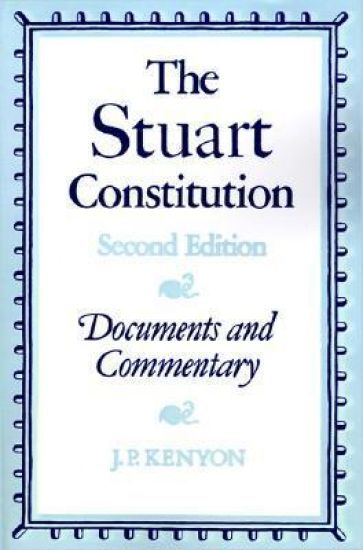
Published in 1966, The Stuart Constitution at once established itself as the standard documentary textbook for courses in English seventeenth-century history in schools (A-level), polytechnics, and universities, and one which at the same time offered an individual revisionist outlook on many of the problems involved. For the second edition Professor Kenyon has entirely rewritten his commentary to take account of the latest research in this field; he has thoroughly revised the structure of the book, and he has also strengthened the documentation in several important areas, notably the Interregnum, 1649–1660. The book is divided into four parts, the first three of which are devoted to the periods 1603–1640, 1640–1660 and 1660–1688 respectively. The fourth part deals with some of the general issues of government, at both central and local level, throughout the seventeenth century. One hundred and forty-six documents are included in all, and to aid the student reader speling and punctuation have been modernised. This volume forms a companion to the second edition of Professor Elton's The Tudor Constitution, and is likewise available in both hard and paper covers.

The Stuart Court and Europe
Cambridge University Press
1996
sidottu
This interdisciplinary collection examines the multiple ties that connected the Stuart court to Europe, and the ways in which these shaped English politics and political culture. Together, the essays demonstrate that even the domestic history of the period can only be understood fully by taking into account the international horizons, concerns and affiliations of the British ruling elite. The opening essays by Jonathan Scott develop a provocative overview of the whole period. The remaining contributions examine topics such as the European roots of common law thought; the nature of national identity; the use of visual display in conveying the grandeur of kingship; the religion of Charles II; and the role of Charles’s French mistress, the duchess of Portsmouth, in English and international politics. A concluding chapter by Geoffrey Parker suggests several new avenues for placing the British Isles within a European perspective.
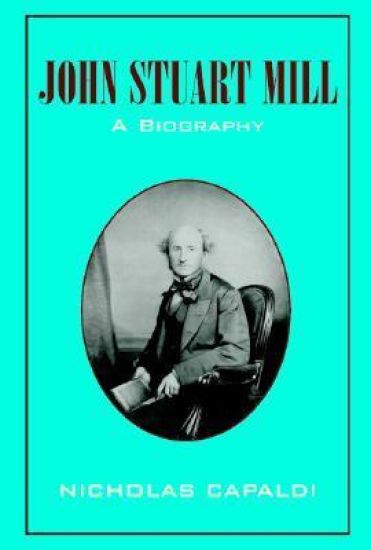
Nicholas Capaldi’s biography of John Stuart Mill traces the ways in which Mill’s many endeavours are related and explores the significance of Mill’s contribution to metaphysics, epistemology, ethics, social and political philosophy, the philosophy of religion, and the philosophy of education. He shows how Mill was groomed for his life by both his father James Mill, and Jeremy Bentham, the two most prominent philosophical radicals of the early nineteenth century. Yet Mill revolted against this education and developed friendships with both Thomas Carlyle and Samuel Taylor Coleridge who introduced him to Romanticism and political conservatism. A special feature of this biography is the attention devoted to his relationship with Harriet Taylor. No one exerted a greater influence than the woman he was eventually to marry. Nicholas Capaldi reveals just how deep her impact was on Mill’s thinking about the emancipation of women.
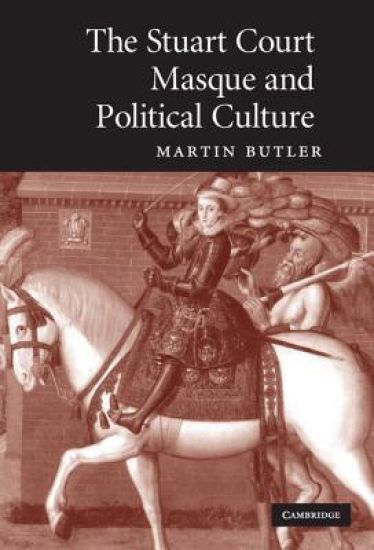
Court masques were multi-media entertainments, with song, dance, theatre, and changeable scenery, staged annually at the English court to celebrate the Stuart dynasty. They have typically been regarded as frivolous and expensive entertainments. This book dispels this notion, emphasizing instead that they were embedded in the politics of the moment, and spoke in complex ways to the different audiences who viewed them. Covering the whole period from Queen Anne's first masque at Winchester in 1603 to Salmacida Spolia in 1640, Butler looks in depth at the political functions of state festivity. The book contextualizes masque performances in intricate detail, and analyzes how they shaped, managed, and influenced the public face of the Stuart kingship. Butler presents the masques as a vehicle through which we can read the early Stuart court's political aspirations and the changing functions of royal culture in a period of often radical instability.





The Letters Of John Stuart Mill
John Stuart Mill; Hugh S. R. (EDT) Elliot; Mary Taylor
Kessinger Pub
2007
pokkari
Characters: 1 male, 5 female Multiple Sets Up-and-coming cartoonist Stuart fights to keep the lid on his mother's and aunts' simmering angst. But the family's secrets channel themselves into a bizarre shapeshifter that guzzles soda, communicates by fax, and spouts old German verse. Friedrich Schiller's classic tale of warring queens inspires this gothic romp through the weirder side of suburban America. "Grote has made a name for himself in recent years with scripts that explode the boundaries between the ordinary and the chimerical, the political and the aesthetic, the intimate and the dizzyingly cosmic."- Washington Post "An ingenious tale, and mined with offbeat, explosive devices." - Seattle Times "Maria/Stuart, by Brooklyn-based playwright Jason Grote, is a cleverly built, well-concealed pit trap. At first, the play seems like a pleasant stroll through a family of comical, middle-class eccentrics-in just a few steps, it plunges into a dark subterranean maze...Here's hoping this isn't the last we'll see of Jason Grote." -The Stranger "Written in true Grote form, Maria/Stuart explores-and redefines-the boundaries between reality and fantasy, ordinary and bizarre, chaos and normality. It's also darkly comical, witty and relevant."-Twin Cities Metro "Absolutely astonishing. Tremendous writing, incredible acting. And laughs. Big laughs." - DC Theatre Scene "Crazily entertaining comedy...surreal, witty, expertly performed. Maria/Stuart is a melange of intense, ludicrous, silly, common-garden-variety family hell. It is more than enough for a great night out at the theater." -MetroWeekly
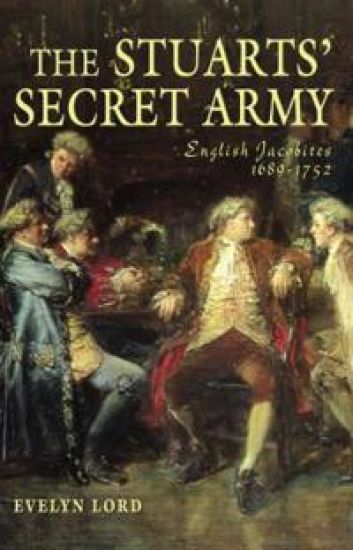
This book is unique in bringing together all strands of English Jacobism in an accessible chronological framework, highlighting key individuals, providing a biographical dictionary of less well known English Jacobites, an account of the major primary source material, and a gazetteer of places to visit. It will appeal to any member of the general public who is interested in the Stuart cause and the Jacobite rebellions as well as those who would like to know more about 18th century society in the great house and the tavern.
Author and feminist, Elizabeth Stuart Phelps Ward (1844-1911) was an early advocate of clothing reform for women, urging them to burn their corsets. This memoir originally published in 1896 and serialized, recounts anecdotes from her life in Massachusetts towns of Andover, Gloucester, Newton, and elsewhere. Over her long life she was friendly with: Celia Thaxter, Lucy Larcom, Oliver Wendell Holmes, Lydia Marie Childs, Whittier, Henry Wadsworth Longfellow and Harriet Beecher Stowe.
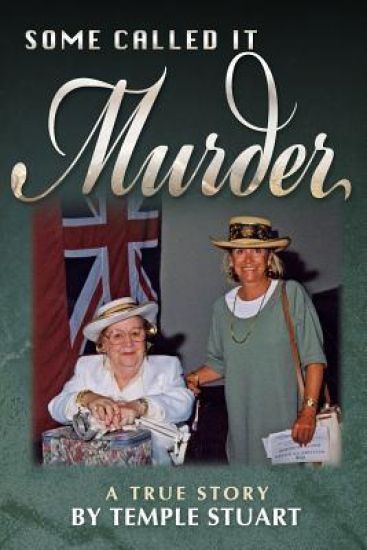
Some Called It Murder: A True Story by Temple Stuart
Temple Stuart
Hopscotchpublishing.com
2013
nidottu

The Day-Book of John Stuart Blackie, Selected and Transcribed from the Manuscript by His Nephew Archibald Stodart-Walker
John Stuart Blackie
Trieste Publishing
2018
nidottu