
Kirjahaku
Etsi kirjoja tekijän nimen, kirjan nimen tai ISBN:n perusteella.
1000 tulosta hakusanalla Stuart Howarth

The Letters Of John Stuart Mill
John Stuart Mill; Hugh S. R. (EDT) Elliot; Mary Taylor
Kessinger Pub
2007
pokkari


Characters: 1 male, 5 female Multiple Sets Up-and-coming cartoonist Stuart fights to keep the lid on his mother's and aunts' simmering angst. But the family's secrets channel themselves into a bizarre shapeshifter that guzzles soda, communicates by fax, and spouts old German verse. Friedrich Schiller's classic tale of warring queens inspires this gothic romp through the weirder side of suburban America. "Grote has made a name for himself in recent years with scripts that explode the boundaries between the ordinary and the chimerical, the political and the aesthetic, the intimate and the dizzyingly cosmic."- Washington Post "An ingenious tale, and mined with offbeat, explosive devices." - Seattle Times "Maria/Stuart, by Brooklyn-based playwright Jason Grote, is a cleverly built, well-concealed pit trap. At first, the play seems like a pleasant stroll through a family of comical, middle-class eccentrics-in just a few steps, it plunges into a dark subterranean maze...Here's hoping this isn't the last we'll see of Jason Grote." -The Stranger "Written in true Grote form, Maria/Stuart explores-and redefines-the boundaries between reality and fantasy, ordinary and bizarre, chaos and normality. It's also darkly comical, witty and relevant."-Twin Cities Metro "Absolutely astonishing. Tremendous writing, incredible acting. And laughs. Big laughs." - DC Theatre Scene "Crazily entertaining comedy...surreal, witty, expertly performed. Maria/Stuart is a melange of intense, ludicrous, silly, common-garden-variety family hell. It is more than enough for a great night out at the theater." -MetroWeekly

This book is unique in bringing together all strands of English Jacobism in an accessible chronological framework, highlighting key individuals, providing a biographical dictionary of less well known English Jacobites, an account of the major primary source material, and a gazetteer of places to visit. It will appeal to any member of the general public who is interested in the Stuart cause and the Jacobite rebellions as well as those who would like to know more about 18th century society in the great house and the tavern.
Author and feminist, Elizabeth Stuart Phelps Ward (1844-1911) was an early advocate of clothing reform for women, urging them to burn their corsets. This memoir originally published in 1896 and serialized, recounts anecdotes from her life in Massachusetts towns of Andover, Gloucester, Newton, and elsewhere. Over her long life she was friendly with: Celia Thaxter, Lucy Larcom, Oliver Wendell Holmes, Lydia Marie Childs, Whittier, Henry Wadsworth Longfellow and Harriet Beecher Stowe.
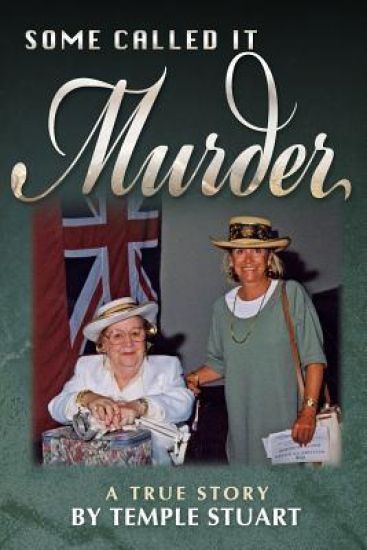
Some Called It Murder: A True Story by Temple Stuart
Temple Stuart
Hopscotchpublishing.com
2013
nidottu


The Day-Book of John Stuart Blackie, Selected and Transcribed from the Manuscript by His Nephew Archibald Stodart-Walker
John Stuart Blackie
Trieste Publishing
2018
nidottu


John Stuart Mill is one of the hallowed figures of the liberal tradition, revered for his defense of liberal principles and expansive personal liberty. By examining Mill's arguments in On Liberty in light of his other writings, however, Joseph Hamburger reveals a Mill very different from the "saint of rationalism" so central to liberal thought. He shows that Mill, far from being an advocate of a maximum degree of liberty, was an advocate of liberty and control--indeed a degree of control ultimately incompatible with liberal ideals. Hamburger offers this powerful challenge to conventional scholarship by presenting Mill's views on liberty in the context of his ideas about, in particular, religion and historical development. The book draws on the whole range of Mill's philosophical writings and on his correspondence with, among others, Harriet Taylor Mill, Auguste Comte, and Alexander Bain to show that Mill's underlying goal was to replace the traditional religious basis of society with a form of secular religion that would rest on moral authority, individual restraint, and social control. Hamburger argues that Mill was not self-contradictory in thus championing both control and liberty. Rather, liberty and control worked together in Mill's thought as part of a balanced, coherent program of social and moral reform that was neither liberal nor authoritarian. Based on a lifetime's study of nineteenth-century political thought, this clearly written and forcefully argued book is a major reinterpretation of Mill's ideas and intellectual legacy.
John Stuart Mill and Representative Government
Dennis F. Thompson
Princeton University Press
2015
pokkari
Although Mill regarded Considerations on Representative Government as a mature statement of his theory of democracy, critics have tended to treat it less seriously than most of his other major works. Dennis Thompson argues that this neglect has led to inadequate interpretations of Mill's thought on democracy. Drawing where appropriate on other writings by Mill, the author restores a balanced view by studying the structure of the theory expounded in Representative Government. Representative Government is shown to be more coherent and systematic than has generally been assumed. In the first two chapters the author examines separately Mill's views of political participation and competence. He then considers the philosopher's effort to combine participation and competence at any particular time in a theory of government and to reduce conflict between them over time in a theory of development. Basic features of Mill's view are subjected to critical scrutiny, and modifications are suggested to overcome the deficiencies noted. Throughout, Mill's claims are compared with the ideas and findings of recent social science, leading to the conclusion that his theory remains a valuable resource for contemporary thinking about democracy. Originally published in 1976. The Princeton Legacy Library uses the latest print-on-demand technology to again make available previously out-of-print books from the distinguished backlist of Princeton University Press. These editions preserve the original texts of these important books while presenting them in durable paperback and hardcover editions. The goal of the Princeton Legacy Library is to vastly increase access to the rich scholarly heritage found in the thousands of books published by Princeton University Press since its founding in 1905.

John Stuart Mill and Representative Government
Dennis F. Thompson
Princeton University Press
2016
sidottu
Although Mill regarded Considerations on Representative Government as a mature statement of his theory of democracy, critics have tended to treat it less seriously than most of his other major works. Dennis Thompson argues that this neglect has led to inadequate interpretations of Mill's thought on democracy. Drawing where appropriate on other writings by Mill, the author restores a balanced view by studying the structure of the theory expounded in Representative Government. Representative Government is shown to be more coherent and systematic than has generally been assumed. In the first two chapters the author examines separately Mill's views of political participation and competence. He then considers the philosopher's effort to combine participation and competence at any particular time in a theory of government and to reduce conflict between them over time in a theory of development. Basic features of Mill's view are subjected to critical scrutiny, and modifications are suggested to overcome the deficiencies noted. Throughout, Mill's claims are compared with the ideas and findings of recent social science, leading to the conclusion that his theory remains a valuable resource for contemporary thinking about democracy. Originally published in 1976. The Princeton Legacy Library uses the latest print-on-demand technology to again make available previously out-of-print books from the distinguished backlist of Princeton University Press. These editions preserve the original texts of these important books while presenting them in durable paperback and hardcover editions. The goal of the Princeton Legacy Library is to vastly increase access to the rich scholarly heritage found in the thousands of books published by Princeton University Press since its founding in 1905.

In the early draft of his Autobiography (London, 1873), John Stuart Mill described himself as “a pupil of Plato, and cast in the mould of his dialectics.” However, how Plato’s influence came about, to what extent, and with regard to which aspects of Mill’s thought, form questions that do not usually preoccupy Mill scholarship. To fill this gap in critical attention, this book draws upon a variety of primary sources to pay particular attention to Mill’s concern with reform, method, character, virtue, and happiness through his reading of the ancient Greeks—particularly Plato. At the same time, this book focuses on the intellectual relationship between father and son, studying their responses to the prevalent trends as to the worth of classical studies and of Platonic philosophy in nineteenth-century Britain. Not only does John Stuart Mill’s “intoxication” with ancient Greece manifest itself in all those aspects of his works already mentioned; but—what is most important—it also permeates his unvarying aim: the improvement of mankind through the improvement of its individual members.

This book offers a clear and highly readable introduction to the ethical and social-political philosophy of John Stuart Mill. Dale E. Miller argues for a "utopian" reading of Mill's utilitarianism. He analyses Mill's views on happiness and goes on to show the practical, social and political implications that can be drawn from his utilitarianism, especially in relation to the construction of morality, individual freedom, democratic reform, and economic organization. By highlighting the utopian thinking which lies at the heart of Mill's theories, Miller shows that rather than allowing for well-being for the few, Mill believed that a society must do everything in its power to see to it that each individual can enjoy a genuinely happy life if the happiness of its members is to be maximized. Miller provides a cogent and careful account of the main arguments offered by Mill, considers the critical responses to his work, and assesses its legacy for contemporary philosophy. Lucidly and persuasively written, this book will be a valuable resource for students and scholars seeking to understand the continued importance of Mill's thinking.

This book offers a clear and highly readable introduction to the ethical and social-political philosophy of John Stuart Mill. Dale E. Miller argues for a "utopian" reading of Mill's utilitarianism. He analyses Mill's views on happiness and goes on to show the practical, social and political implications that can be drawn from his utilitarianism, especially in relation to the construction of morality, individual freedom, democratic reform, and economic organization. By highlighting the utopian thinking which lies at the heart of Mill's theories, Miller shows that rather than allowing for well-being for the few, Mill believed that a society must do everything in its power to see to it that each individual can enjoy a genuinely happy life if the happiness of its members is to be maximized. Miller provides a cogent and careful account of the main arguments offered by Mill, considers the critical responses to his work, and assesses its legacy for contemporary philosophy. Lucidly and persuasively written, this book will be a valuable resource for students and scholars seeking to understand the continued importance of Mill's thinking.

Alison Plowden provides a study of the fascinating lives of the six princesses of the House of Stuart who lived through the violent social and political upheavals of the 17th century. Of these six princesses, one was the direct ancestress of the present British royal family, one was the mother of a king of England and one died in prison at the age of 14. Another became Madame de France and two were English queens regnant. The book describes the lives of these aunts and nieces, sisters and cousins, which were interwoven with the fortunes and misfortunes of their fathers and brothers, sons and husbands. Set against a backdrop of war, intrigue and high politics, these are stories of tragedy and conflict, intimate domestic drama, romance and adventure.

The regal courts of the English Stuart Kings, from James I (1603-1625) to the ill-fated James II (1685-1689), were magnificent affairs. In a country otherwise given to increasingly austere Puritan ways of living, the royal court shone with a brilliance usually associated with the courts of the Catholic kings of mainland Europe. They were centres of great culture, patronage, ceremony and politics. The real importance of the courts, though down-played for many years, is now beginning to be fully recognised and this first major study of the Stuart courts in England, Scotland and Ireland examines them in their full cultural and historical context. Scholars of international reputation and up and coming, younger scholars have been brought together to give us an insight into many aspects of the Stuart courts. This book includes essays on culture and patronage of the arts and social history. What was it really like at the court? What rules applied? How did the courtiers behave? Finally, the crucial interplay between court life and political life, and politics, is examined in detail. This book is a major contribution to a flourishing area of scholarship and will be required reading for anyone interested in seventeenth-century history, court studies or the arts in the early modern period.

'This is the most lucid and engaged account of Stuart Hall's work. Meticulously, and with an exemplary generosity, Helen Davis patiently unravels the threads of Hall's intellectual history. The result is a most useful and thoughtful book, which could prove to be indispensable for students of cultural studies' - Graeme Turner, University of Queensland Understanding Stuart Hall traces the development of one of the most influential and respected figures within cultural studies. Focusing on Stuart Hall's writings over a period of nearly fifty years, this volume offers students and academics a cogent and exploratory route through complex and overlapping areas of analysis. In her critical assessment of Hall's most important contributions to academic and public debate, Davis shows the extent to which his analyses of race and ethnicity have been informed by early studies of Marxism, class and 'societies structured in dominance'. Davis offers fresh insight into the formation of one of the most prolific, charismatic and controversial intellectuals of his generation. Despite having been branded a 'cultural pessimist', Stuart Hall has long been associated with encouraging new, cutting-edge scholarship within the field. This volume concludes with a discussion of Hall's most recent political and academic interventions and his continuing commitment to innovation within the visual arts.