Kirjojen hintavertailu. Mukana 11 627 466 kirjaa ja 12 kauppaa.

Kirjahaku

Etsi kirjoja tekijän nimen, kirjan nimen tai ISBN:n perusteella.

1000 tulosta hakusanalla Thomas Satchell

Thomas Reid's An Inquiry into the Human Mind on the Principles of Common Sense
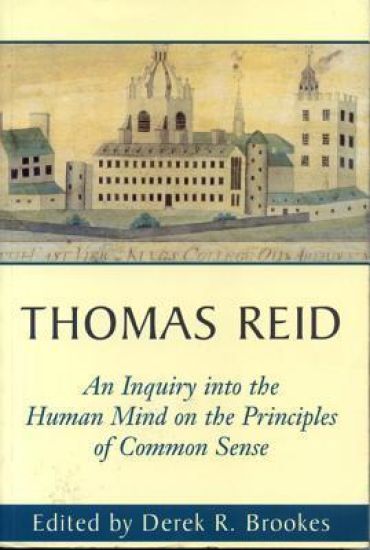
Thomas Reid's Inquiry has long been recognized as a classic philosophical text. Since its first publication in 1764, there have followed no less than forty editions. The proliferation of secondary literature further indicates that Reid's work is flourishing as never before. Yet Reid scholars have been acutely aware of proceeding without the full textual evidence. There exist thousands of unpublished manuscript pages in Reid's hand, many of which relate directly to the composition of Inquiry. Furthermore, no account has been taken of the successive alterations made to the four editions published in Reid's lifetime. The present edition, therefore, aims to present a complete, critically edited text of the Inquiry, accompanied by a judicious selection of manuscript evidence relating to its composition.The volume contains an editor preface presenting the raison d'etre for the edition followed by an introduction giving the central argument of the Inquiry by means of an historical and philosophical account of its formation; an account which also indicates the significance of the MSS contained in the section containing related documents. The critical text is based on the fourth life-time edition (1785), while the textual notes include bibliographical details and allusions, translations, references to secondary literature, and selected passages from Reid's MSS.
Thomas Reid's An Inquiry into the Human Mind on the Principles of Common Sense
Thomas Reid's Inquiry has long been recognized as a classic philosophical text. Since its first publication in 1764, there have followed no less than forty editions. The proliferation of secondary literature further indicates that Reid's work is flourishing as never before. Yet Reid scholars have been acutely aware of proceeding without the full textual evidence. There exist thousands of unpublished manuscript pages in Reid's hand, many of which relate directly to the composition of Inquiry. Furthermore, no account has been taken of the successive alterations made to the four editions published in Reid's lifetime. The present edition, therefore, aims to present a complete, critically edited text of the Inquiry, accompanied by a judicious selection of manuscript evidence relating to its composition.The volume contains an editor preface presenting the raison d'etre for the edition followed by an introduction giving the central argument of the Inquiry by means of an historical and philosophical account of its formation; an account which also indicates the significance of the MSS contained in the section containing related documents. The critical text is based on the fourth life-time edition (1785), while the textual notes include bibliographical details and allusions, translations, references to secondary literature, and selected passages from Reid's MSS.
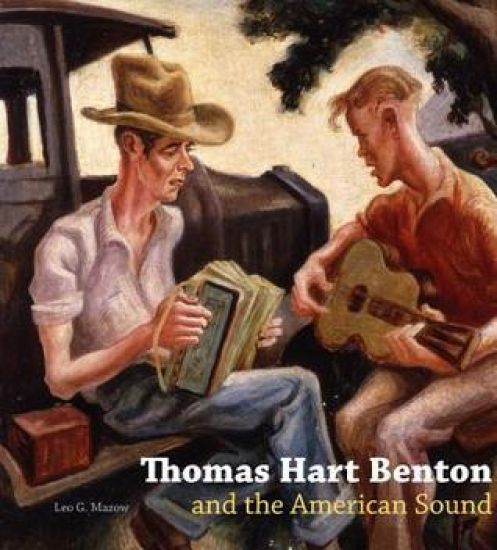
Thomas Hart Benton and the American Sound

Thomas Hart Benton and the American Sound

Leo G. Mazow

Pennsylvania State University Press
2012
sidottu
Alternately praised as “an American original” and lampooned as an arbiter of kitsch, the regionalist painter Thomas Hart Benton has been the subject of myriad monographs and journal articles, remaining almost as controversial today as he was in his own time. Missing from this literature, however, is an understanding of the profound ways in which sound figures in the artist’s enterprises. Prolonged attention to the sonic realm yields rich insights into long-established narratives, corroborating some but challenging and complicating at least as many. A self-taught and frequently performing musician who invented a harmonica tablature notation system, Benton was also a collector, cataloguer, transcriber, and distributor of popular music. In Thomas Hart Benton and the American Sound, Leo Mazow shows that the artist’s musical imagery was part of a larger belief in the capacity of sound to register and convey meaning. In Benton’s pictorial universe, it is through sound that stories are told, opinions are voiced, experiences are preserved, and history is recorded.
Thomas Traherne

Thomas Traherne

Spck

SPCK Publishing
2002
nidottu
Denise Inge introduces a selection from Thomas Traherne's writing in this, the third volume in this series on seventeenth century spiritual writers. This volume will contain some biographical detail and historical context, the story of the discovery of his work as well as a discussion of its literary and spiritual power. The main body of the anthology will cover both well known works such as a selection from the Centuries and also excerpts from newer discoveries, including a recent find from Lambeth Palace Library. Thomas Traherne 1636?-1674 was schooled at Brasenose College, Oxford, was ordainded and served in the village of Credenhill, Herefordshire.
A Year with Thomas Merton

A Year with Thomas Merton

Thomas Merton

SPCK Publishing
2005
nidottu
Daily reflections from the one of the most influential spiritual writers of the past century Thomas Merton is widely acclaimed as one of the most influential American spiritual writers of the past century. This volume of daily reflections draws from Merton's journals and papers to present, each day, a seasonally appropriate and thought-provoking insight or observation. Each month begins with one of Merton's delightful Zen-style pen-and-ink or black and white photographs.
Thomas: The Other Gospel

Thomas: The Other Gospel

Spck

SPCK Publishing
2007
nidottu
"Thomas, The Other Gospel" tells the story of the gospel from its discovery to its current reception among academics and in more popular circles. It provides a clear, comprehensive, non-technical guide through the scholarly maze of issues surrounding the Coptic text. Nick Perrin argues that the gospel derives not from the era of Jesus or even the apostles (as many have led us to believe), but from the late second century. He also argues that the gospel was originally written in Syriac and not 'in Greek as many other scholars believe. Thus the real value of the Gospel of Thomas lies not in what it does or does not say about the 'real Jesus' but in what it tells us about early Syriac Christianity. Perrin presents a sound and balanced, yet thoroughly persuasive, alternative explanation to revisionist accounts of Christian origins.
Thomas and the Gospels

Thomas and the Gospels

Mark Goodacre

SPCK Publishing
2012
nidottu
The Gospel of Thomas is the most controversial of the non-canonical gospels and the most important source outside the Gospels for our understanding of the historical Jesus and Christianity's origins. Mark Goodacre makes a detailed and compelling case that the author of The Gospel of Thomas is, after all, familiar with the Synoptic Gospels. He shows that the arguments for independence are inadequate and that the degree of agreement between Thomas and the Synoptics is far too great to be mediated by oral tradition. He suggests that Thomas features tell-tale signs of Matthew's and Luke's redactions and that the Gospel should be dated to the early to middle second century, when its author was looking for a means of lending the voice of his enigmatic Jesus an authoritative, Synopic-sounding legitimacy.
Thomas Aquinas

Thomas Aquinas

Brian Davies

SPCK Publishing
2017
pokkari
'The study of philosophy is that we may know not what men have thought, but what the truth of things is.' Thomas Aquinas (c. 1225-74) was one of the most influential philosophers of the Middle Ages, and his works continue to be widely read today. The leading classical proponent of natural theology and the founder of Thomism, he is regarded as one of the greatest Western thinkers of all time. Written by a world authority, this brief history begins with an engaging account of Aquinas's life and intellectual context. Thomas Aquinas goes on to explain the main contours of his thought for readers who may have no previous knowledge of him, or of academic philosophy and theology. It concludes with an informed assessment of the scale and significance of his legacy.
Thomas More

Thomas More

John Guy

SPCK Publishing
2019
pokkari
'If the English people were to be set a test to justify their history and civilization by the example of one man, then it is Sir Thomas More whom they would perhaps choose.' So commented The Times in 1978 on the 500th anniversary of More's birth. Twenty-two years later, Pope John Paul II proclaimed Thomas More the patron saint of politicians and people in public life, on the basis of his 'constant fidelity to legitimate authority and ... his intention to serve not power but the supreme ideal of justice'. In this fresh assessment of More's life and legacy, John Guy considers the factors that have given rise to such claims concerning More's significance. Who was the real Thomas More? Was he the saintly, self-possessed hero of conscience of Robert Bolt's A Man for All Seasons or was he the fanatical, heretic-hunting torturer of Hilary Mantel's Wolf Hall? Which of these images of More has the greater historical veracity? And why does this man continue to fascinate, inspire and provoke us today?
Thomas More

Thomas More

John Guy

SPCK Publishing
2017
sidottu
'If the English people were to be set a test to justify their history and civilization by the example of one man, then it is Sir Thomas More whom they would perhaps choose.' So commented The Times in 1978 on the 500th anniversary of More's birth. Twenty-two years later, Pope John Paul II proclaimed Thomas More the patron saint of politicians and people in public life, on the basis of his 'constant fidelity to legitimate authority and ... his intention to serve not power but the supreme ideal of justice'. In this fresh assessment of More's life and legacy, John Guy considers the factors that have given rise to such claims concerning More's significance. Who was the real Thomas More? Was he the saintly, self-possessed hero of conscience of Robert Bolt's A Man for All Seasons or was he the fanatical, heretic-hunting torturer of Hilary Mantel's Wolf Hall? Which of these images of More has the greater historical veracity? And why does this man continue to fascinate, inspire and provoke us today?
Thomas Cochrane and the Dragon Throne

Thomas Cochrane and the Dragon Throne

Andrew E. Adam

SPCK Publishing
2018
nidottu
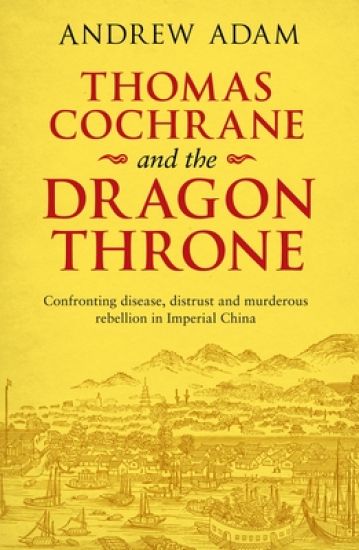
In 1897 Tom Cochrane, a young, newly-qualified Scottish medical missionary, arrived with his wife in Chaoyang, Inner Mongolia. For three years he laboured single-handed in a mud-floored dispensary, quickly realising his work was a drop in a sea of suffering. He became seized by the vision of a Western medical college and teaching hospital in Peking. In 1900 the Boxer Rebellion began. Rebels roamed the countryside. Their cry was: `Kill the foreigners! Kill them before breakfast!’ Over 30,000 converts were butchered in months, with hundreds of missionaries. The Cochranes escaped with their three young sons, but by 1901 Tom was back. In Peking he practised from mule stables amongst beggars and lepers. A powerful nobleman befriended him, and in 1903 his intervention brought a major cholera epidemic under control. The Imperial Grand Eunuch, right-hand man of the feared Empress Dowager, helped Tom to petition the Dragon Throne and obtain a substantial grant for his college. In 1906 he established the Peking Union Medical College. Today it stands in Beijing, prestigious and respected. Its origins forgotten, it remains one of countless seeds Christians planted in China.
Thomas J. Wise

Thomas J. Wise

University of Texas Press
1960
pokkari
Thomas James Wise (1859–1937), though destined to receive in his own lifetime practically every honor the world of letters could bestow, is remembered today as perhaps the greatest malefactor in all of literary history. From 1934 to 1957 various enquiries have implicated him first in the manufacture of more than fifty predated "original" editions of eminent Victorian authors, then in seven additional forgeries, later in countless piracies of other nineteenth-century work, and finally in repeated acts of vandalism upon forty-one seventeenth-century plays. It is fitting that Wise himself appears as a contributor to this volume. Included are his original introduction to the Browning Library, his letters to bookseller J. E. Cornish, his extraordinary letter to Sir Edmund Gosse, and a note to H. Buxton Forman. These Centenary Studies review the course of research over twenty-five years, designate topics requiring further investigation, and assess new evidence of Wise's villainies. One more forgery is identified, the provenance of others reexamined, the forger's method of purveying his wares closely appraised, his association with H. Buxton Forman and Sir Edmund Gosse more precisely defined, and the range of his activities summarized in an annotated handlist. The record includes at least 400 printings directly attributed to Wise, as well as 23 suppressed or abortive issues, and 29 others in which he seems to be somewhat involved. Through these perspectives the culprit appears even more contemptible and, possibly for this very reason, ever more intriguing as a cause célèbre in literary scholarship. The illustration on the cover of this book reproduces, through a magnifying glass, the peculiar question mark appearing in certain forgeries printed for Wise by the firm of Richard Clay & Sons. The mark may also implicate Wise in other irregular printings, including The Death of Balder.
Thomas Wolfe

Thomas Wolfe

Robert Raynolds

University of Texas Press
1965
nidottu
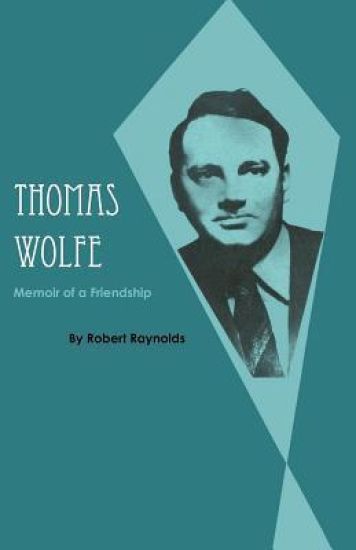
This is a story that no one else could tell. It tells how Thomas Wolfe and Robert Raynolds happened to meet, how they became friends, and how their friendship grew, survived a crisis, and continued until the death of Thomas Wolfe. "We met in the city," says Raynolds, "but Tom and I were both mountain-born and small-town bred; we were more at home with cows and rattlesnakes than with subways and city slickers, and we were very much at home with one another." The story is told with understanding, with humor, and with compassion. Robert Raynolds began writing it in 1942—four years after the death of his friend and companion novelist—and finished it twenty-three years later, in 1965. It is a responsible and considered memoir in honor of human friendship, and it brings the vivid character of Thomas Wolfe directly into the presence of the reader. The story is full of daily portraits of Thomas Wolfe. What did he look like in his room, pacing the floor, or writing? How did he appear on the streets of Brooklyn or Manhattan, day or night? Or walking in the morning in a pine forest, or running his hand gently over a block of marble in an abandoned quarry, or tramping fields of snow after midnight? What was it like to eat with him at night in New York, or at noon in a Vermont farmhouse, or at breakfast in a home made lively by the laughter and play of children? He was shy. "Why don't you find me a nice little wife?" he would ask Mrs. Raynolds. He was emotional, often speaking in the style of his writing: "And the whistle-wail of the great train. . ." He was profound, brooding after his break with his first publishers: could a man who had left a friend as he had left Maxwell Perkins ever be a "righteous man" again? This is a story of the plain and real Thomas Wolfe, of his human goodness, his bone-deep weariness in labor, his sudden joy in being understood and loved by a fellow man. And this is the story of how Robert Raynolds honored the grace of being a friend of Thomas Wolfe.
Thomas T. Wilson

Thomas T. Wilson

Sally Hayman; Peter Simpson

University of Washington Press
2004
sidottu
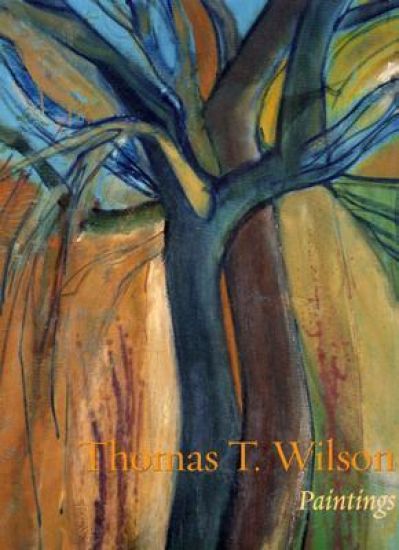
Thomas T. Wilson is described in the preface of this book as "probably the best-known unknown painter in the Northwest." Most of his early paintings still hang within the houses of his original buyers. Very few of his paintings are in public spaces, and the artist has never sought or received formal gallery representation. Thomas T. Wilson: Paintings brings the hidden career and life of a masterful Pacific Northwest artist to light.The bold lyricism and originality of Wilson's work is revealed in the lush farmlands of his native Illinois, his fascination with light and space in his tree compositions, and his vibrant landscapes and cloudscapes inspired by the dramatic environment of the Pacific Northwest. Wilson is also a prolific portraitist. He captured Seattle society after the dramatic impact of the 1962 World's Fair, a period which saw significant growth in the city's theater, opera, dance, music, and visual arts. Many of the people who were a part of this pre-Microsoft flourishing are Wilson's subjects. Even multiple generations within single families are represented in the painter's career. The artist also painted several self-portraits, and his works are unsparing progress reports of his life.Thomas Wilson's work is a valuable record of a society within the cultural world it helped to create. This collection of portraits, self-portraits, and landscapes promises to be a revelation to all those unfamiliar with the artist and his work.
Thomas Vinterberg's Festen (the Celebration)

Thomas Vinterberg's Festen (the Celebration)

C. Claire Thomson

University of Washington Press
2015
sidottu
Danish filmmaker Thomas Vinterberg's searing film Festen ("The Celebration") was the first film from the Dogme 95 stable. Adhering to Dogme's cinematic purity — no artificial lighting, no superficial action, no credit for the director, and only handheld cameras for equipment — Festen was a commercial and critical success, winning the Jury Prize at Cannes in 1998 and garnering worldwide attention.The film is set at the sixtieth birthday party of Helge, the wealthy patriarch of a large Danish family. The birthday festivities take a turn when Helge's son Christian raises a toast and denounces Helge for having raped and abused him as a child, along with his twin sister, who recently committed suicide. The film explores the escalating consequences of Christian's announcement, from the stunned dinner party's collective denial, to violence, to an unexpected catharsis.