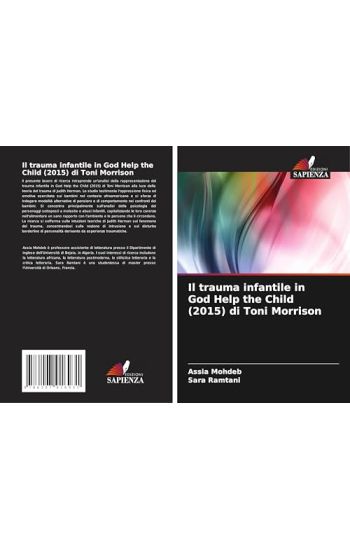
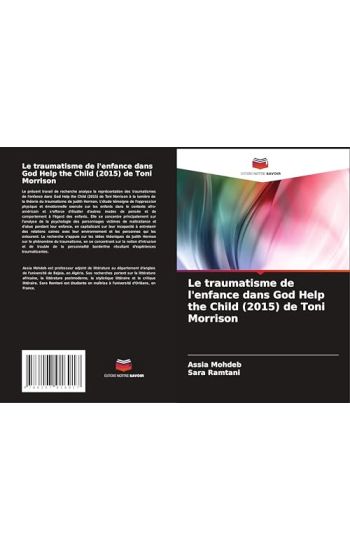
Il presente lavoro di ricerca intraprende un'analisi della rappresentazione del trauma infantile in God Help the Child (2015) di Toni Morrison alla luce della teoria del trauma di Judith Herman. Lo studio testimonia l'oppressione fisica ed emotiva esercitata sui bambini nel contesto afroamericano e si sforza di indagare modalit alternative di pensiero e di comportamento nei confronti dei bambini. Si concentra principalmente sull'analisi della psicologia dei personaggi sottoposti a molestie e abusi infantili, capitalizzando le loro carenze nell'alimentare un sano rapporto con l'ambiente e le persone che li circondano. La ricerca si sofferma sulle intuizioni teoriche di Judith Herman sul fenomeno del trauma, concentrandosi sulla nozione di intrusione e sul disturbo borderline di personalit derivante da esperienze traumatiche.
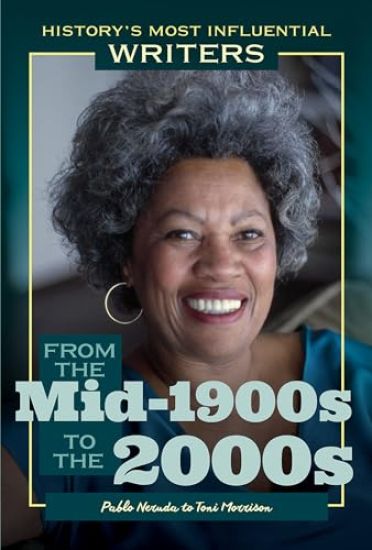
Over the course of his career, the Chilean poet Pablo Neruda was inspired by both romance and politics. The use of literature as a tool for social change is also apparent in the works of Toni Morrison, whose experiences as a Black woman in America influenced her art. Both Neruda and Morrison were awarded the Nobel Prize for literature in recognition of their powerful writing. In this volume, detailed biographies are paired with photographs of great writers of the late 20th century. Readers and aspiring writers will be fascinated by these influential people and the stories they told.
Le pr sent travail de recherche analyse la repr sentation des traumatismes de l'enfance dans God Help the Child (2015) de Toni Morrison la lumi re de la th orie du traumatisme de Judith Herman. L' tude t moigne de l'oppression physique et motionnelle exerc e sur les enfants dans le contexte afro-am ricain et s'efforce d' tudier d'autres modes de pens e et de comportement l' gard des enfants. Elle se concentre principalement sur l'analyse de la psychologie des personnages victimes de maltraitance et d'abus pendant leur enfance, en capitalisant sur leur incapacit entretenir des relations saines avec leur environnement et les personnes qui les entourent. La recherche s'appuie sur les id es th oriques de Judith Herman sur le ph nom ne du traumatisme, en se concentrant sur la notion d'intrusion et de trouble de la personnalit borderline r sultant d'exp riences traumatisantes.
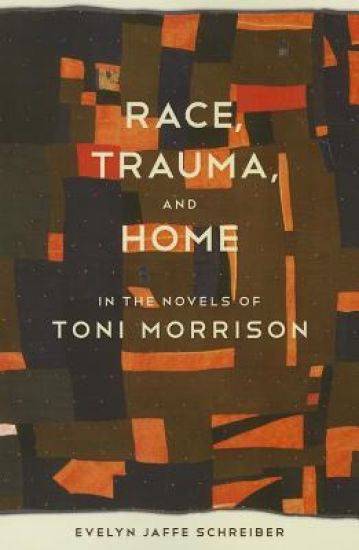
In this first interdisciplinary study of all nine of Nobel Laureate Toni Morrison's novels, Evelyn Jaffe Schreiber investigates how the communal and personal trauma of slavery embedded in the bodies and minds of its victims lives on through successive generations of African Americans. Approaching trauma from several cutting-edge theoretical perspectives - psychoanalytic, neurobiological, and cultural and social theories - Schreiber analyses the lasting effects of slavery as depicted in Morrison's work and considers the almost insurmountable task of recovering from trauma to gain subjectivity. With an innovative application of neuroscience to literary criticism, Schreiber explains how trauma, whether initiated by physical abuse, dehumanization, discrimination, exclusion, or abandonment, becomes embedded in both psychic and bodily circuits. Slavery and its legacy of cultural rejection create trauma on individual, familial, and community levels, and parents unwittingly transmit their trauma to their children through repetition of their bodily stored experiences. Concepts of ""home"" - whether a physical place, community, or relationship - are reconstructed through memory to provide a positive self and serve as a healing space for Morrison's characters. Remembering and retelling trauma within a supportive community enables trauma victims to move forward and attain a meaningful subjectivity and selfhood.Through careful analysis of each novel, Schreiber traces the success or failure of Morrison's characters to build or rebuild a cohesive self, starting with slavery and the initial postslavery generation, and continuing through the twentieth century, with a special focus on the effects of inherited trauma on children. When characters attempt to escape trauma through physical relocation, or to project their pain onto others through aggressive behavior or scapegoating, the development of selfhood falters. Only when trauma is confronted through verbalization and challenged with reparative images of home, can memories of a positive self overcome the pain of past experiences and cultural rejection.While the cultural trauma of slavery can never truly disappear, Schreiber argues that memories that reconstruct a positive self, whether created by people, relationships, a physical place, or a concept, help Morrison's characters to establish subjectivity. A groundbreaking interdisciplinary work, Schreiber's book unites psychoanalytic, neurobiological, and social theories into a full and richly textured analysis of trauma and the possibility of healing in Morrison's novels.
Reading, Learning, Teaching Toni Morrison draws on contemporary scholarship and Morrison’s own commentary to explicate all of her novels published to date, including her 2008 novel A Mercy. Morrison, the 1993 Nobel Prize winner, is an unabashedly confrontational author. Her profound and complex novels address problems such as slavery, violence, poverty, and sexual abuse. Morrison’s work encompasses a project of total cultural renewal: she re-imagines and reaffirms the experience of African Americans from the earliest days of slavery up to the present, avoiding stereotypes or oversimplification. She employs African and Western literary traditions and conventions as a basis for both structure and critique, re-writing some of the «master narratives» of American culture and history. This book analyzes Morrison’s novels in the context of African American history and literature, and provides supplemental material to guide teachers and students to understand and appreciate Morrison’s novels.
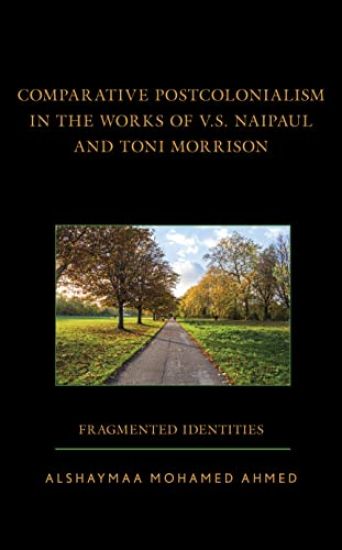
Comparative Postcolonialism in the Works of V.S. Naipaul and Toni Morrison: Fragmented Identities begins with an overview of its theoretical framework, highlighting the intersectional relationship between postcolonial literature and comparative literature. Tracing selected novels by Naipaul and Morrison, the book takes, as a starting point, Fanon’s three-phase journey of the decolonizing process. In the first phase of mimicry, Naipaul’s and Morrison’s earlier novels represent the assimilation of indigenous people into dominant hegemonic cultures. The second phase is envisioned as the re-narration or re-interpretation of the past and old legends of indigenous culture. Morrison succeeds in asserting that her ancestors’ past is the only way to celebrate a cultural identity, but Naipaul tends to criticize and neglect his past and his original, indigenous culture. The third phase marks the emergence of a revolutionary literature, in which Naipaul and Morrison guide their people to hybridity as a new way of becoming and resisting the hegemonic dichotomies in dominant societies.
Comparative Postcolonialism in the Works of V.S. Naipaul and Toni Morrison: Fragmented Identities begins with an overview of its theoretical framework, highlighting the intersectional relationship between postcolonial literature and comparative literature. Tracing selected novels by Naipaul and Morrison, the book takes, as a starting point, Fanon’s three-phase journey of the decolonizing process. In the first phase of mimicry, Naipaul’s and Morrison’s earlier novels represent the assimilation of indigenous people into dominant hegemonic cultures. The second phase is envisioned as the re-narration or re-interpretation of the past and old legends of indigenous culture. Morrison succeeds in asserting that her ancestors’ past is the only way to celebrate a cultural identity, but Naipaul tends to criticize and neglect his past and his original, indigenous culture. The third phase marks the emergence of a revolutionary literature, in which Naipaul and Morrison guide their people to hybridity as a new way of becoming and resisting the hegemonic dichotomies in dominant societies.