Kirjojen hintavertailu. Mukana 12 459 402 kirjaa ja 12 kauppaa.

Kirjahaku

Etsi kirjoja tekijän nimen, kirjan nimen tai ISBN:n perusteella.

1000 tulosta hakusanalla Virginia Hamilton

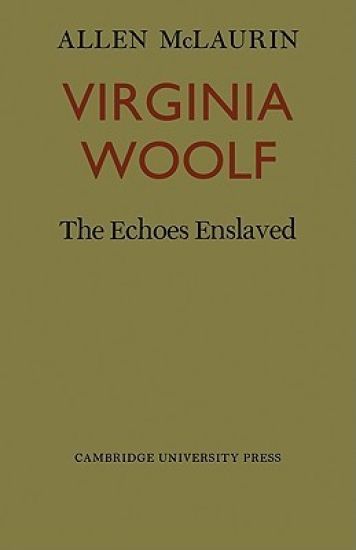
Virginia Woolf

Virginia Woolf

Allen McLaurin

Cambridge University Press
2010
pokkari
A study of the works of Virginia Woolf and of other 'Bloomsbury' writers, in particular Roger Fry. Dr McLaurin discusses the influence of Samuel Butler on the philosophy and especially the aesthetics of Bloomsbury, and the relationships between the writings of Virginia Woolf and Roger Fry, showing that in her novels she was grappling with the same ideas as Fry was in his art-criticism. He then explores the place of repetition in the whole process of art and examines the uses of repetition in the work of Virginia Woolf and others, notably the 'stream of consciousness' writers. The final section of the book draws these themes together in a study of To the Lighthouse. This book explains a great deal about Virginia Woolf's attitude to writing and her preoccupation with the techniques of painting, and makes intelligible much about her aims and methods by setting them in their social and historical context.
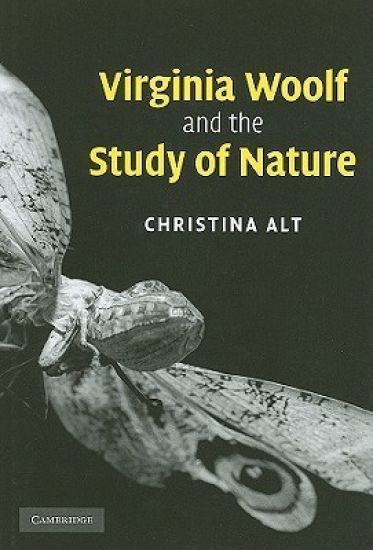
Virginia Woolf and the Study of Nature

Virginia Woolf and the Study of Nature

Christina Alt

Cambridge University Press
2010
sidottu
Reflecting the modernist fascination with science, Virginia Woolf's representations of nature are informed by a wide-ranging interest in contemporary developments in the life sciences. Christina Alt analyses Woolf's responses to disciplines ranging from taxonomy and the new biology of the laboratory to ethology and ecology and illustrates how Woolf drew on the methods and objectives of the contemporary life sciences to describe her own literary experiments. Through the examination of Woolf's engagement with shifting approaches to the study of nature, this work covers new ground in Woolf studies and makes an important contribution to the understanding of modernist exchanges between literature and science.
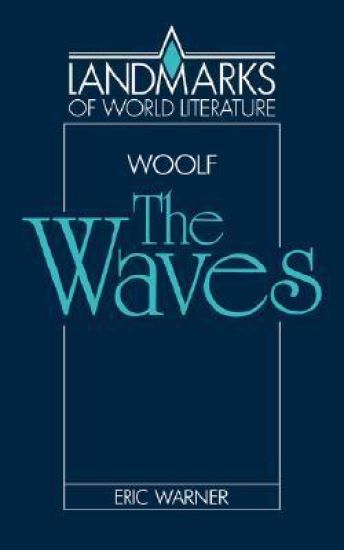
Virginia Woolf: The Waves

Virginia Woolf: The Waves

Virginia Woolf

Cambridge University Press
1986
pokkari
Eric Warner places The Waves in the context of Virginia Woolf's career and of the 'modern' age in which it was written. He examines how she came to write the novel, what her concerns were at the time, and how it is linked both in style and theme with her earlier, more accessible works. A final chapter explores the problematic relation of the book to the genre of the novel.
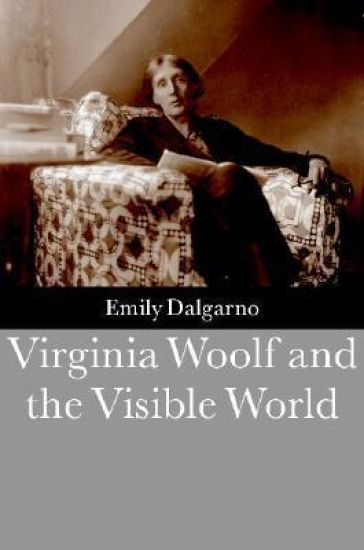
Virginia Woolf and the Visible World

Virginia Woolf and the Visible World

Emily Dalgarno

Cambridge University Press
2001
sidottu
In Virginia Woolf and the Visible World, Emily Dalgarno examines Woolf’s engagement with notions of the subject and codes of the visible. Dalgarno examines how Woolf’s writing engages with visible and non-visible realms of experience, and draws on ideas from the diverse fields of psychoanalytic theory, classical Greek tragedy, astronomy, photography and photojournalism. The solar eclipse of 1927 marks a dividing line in Woolf’s career, after which she portrayed the visible world in terms of light, and shifted her interest from painting to photography. Dalgarno offers textual analyses of Woolf’s individual works, including To the Lighthouse, The Waves and Three Guineas, arguing for the importance of her ongoing interest in Greek translation. In later chapters, she explores the theory of the subject that emerges from Woolf’s representation of the visible in her autobiography.
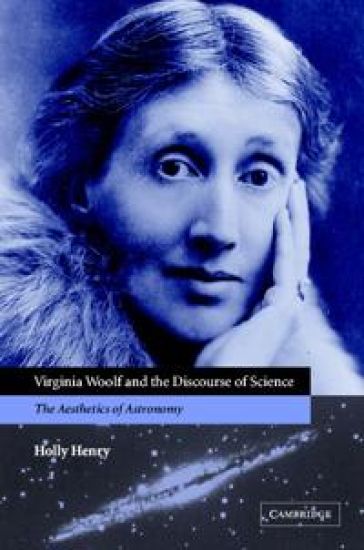
Virginia Woolf and the Discourse of Science

Virginia Woolf and the Discourse of Science

Holly Henry

Cambridge University Press
2003
sidottu
Holly Henry investigates how advances in astronomy in the early twentieth century had a shaping effect on Woolf’s literature and aesthetics as well as on the work of modernist British writers including Vita Sackville-West, H. G. Wells, Olaf Stapledon, Bertrand Russell, and T. S. Eliot. The 1920s and 30s witnessed a pervasive public fascination with astronomy that extended from the US, where Edwin Hubble in 1923 definitively determined that entire galaxies existed beyond the Milky Way, to England, where London’s intellectuals discussed Sir James Jeans’s popular astronomy books and the newly explored expanses of space. In re-evaluating the cultural context out of which Modernism emerged, Henry contends that Woolf, through her own fascination with astronomy, formulated a global vision that helped shape her fiction and her pacifist politics. Henry’s study includes examinations of unpublished scientific and literary archival material and sheds new light on Woolf’s texts and recent re-evaluations of Modernism.
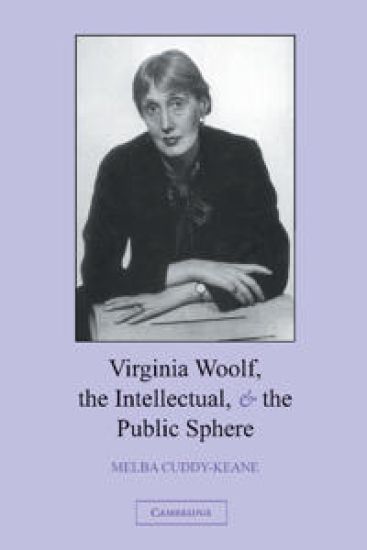
Virginia Woolf, the Intellectual, and the Public Sphere

Virginia Woolf, the Intellectual, and the Public Sphere

Melba Cuddy-Keane

Cambridge University Press
2003
sidottu
Virginia Woolf, the Intellectual, and the Public Sphere relates Woolf’s literary reviews and essays to early twentieth-century debates about the value of ‘highbrow’ culture, the methods of instruction in universities and adult education, and the importance of an educated public for the realization of democratic goals. By focusing on Woolf’s theories and practice of reading, Melba Cuddy-Keane refutes assumptions about Woolf’s modernist elitism, revealing instead a writer who was pedagogically oriented, publicly engaged and committed to the ideal of classless intellectuals working together in reciprocal exchange. Woolf emerges as a stimulating theorist of the unconscious, of dialogic reading, of historicist criticism, and of value judgments, while her theoretically-informed but accessible prose challenges us to reflect on academic writing today. Combining a wealth of historical detail with a penetrating analysis of Woolf’s essays, this study will alter our views of Woolf, of modernism, and of intellectual work.
Virginia Woolf and the Victorians

Virginia Woolf and the Victorians

Steve Ellis

Cambridge University Press
2007
sidottu
Criticism of Woolf is often polarised into viewing her work as either fundamentally progressive or reactionary. In this 2007 book, Steve Ellis argues that her commitment to anxiety about modernity coexists with a nostalgia and respect for aspects of Victorian culture threatened by radical social change. Ellis tracks Woolf's response to the Victorian era through her fiction and other writings, arguing that Woolf can be seen as more 'Post-Victorian' than 'modernist'. He explains how Woolf's emphasis on continuity and reconciliation related to twentieth-century debates about Victorian values, and he analyses her response to the First World War as the major threat to that continuity. This detailed and original investigation of the range of Woolf's writing attends to questions of cultural and political history and fictional structure, imagery and diction. It proposes a fresh reading of Woolf's thinking about the relationships between the past, present and future.
The Diary of Virginia Woolf, Volume 1: 1915-1919
"Nothing yet published about her so totally contradicts the legend of Virginia Woolf.... This] is a first chance to meet the writer in her own unguarded words and to observe the root impulses of her art without the distractions of a commentary" (New York Times). Edited and with a Preface by Anne Olivier Bell; Introduction by Quentin Bell; Index.
The Virginia Woolf Reader

The Virginia Woolf Reader

Virginia Woolf

Mariner Books
1984
sidottu
This rich introduction to the art of Virginia Woolf contains the complete texts of five short stories and eight essays, together with substantial excerpts from the longer fiction and nonfiction. An ideal volume for those encountering Woolf for the first time as well as for those already devoted to her work. Edited and with a Preface by Mitchell A. Leaska.
The Essays of Virginia Woolf, Vol. 5 1929-1932: The Virginia Woolf Library Authorized Edition
Spanning the years in which Virginia Woolf penned her classic novel The Waves and worked on Flush, the nonfiction pieces in this fifth volume provide further insight into Woolf's creative genius and showcase her supreme stylistic capability. The far-ranging essays and criticism collected here include ruminations on the romantic and literary lives of William Cowper and Christina Rossetti and an introduction to memoirs by the Women's Cooperative Guild that reveals Woolf's signature feminism. This collection also includes the entirety of The Common Reader: Second Series, the sequel to The Common Reader.