Kirjojen hintavertailu. Mukana 12 016 292 kirjaa ja 12 kauppaa.

Kirjahaku

Etsi kirjoja tekijän nimen, kirjan nimen tai ISBN:n perusteella.

1000 tulosta hakusanalla Virginia Woolf

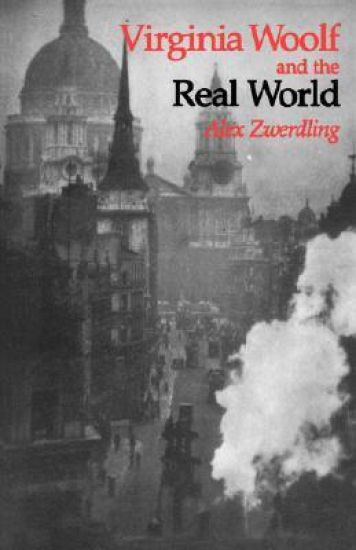
Virginia Woolf and the Real World

Virginia Woolf and the Real World

Alex Zwerdling

University of California Press
1987
pokkari
"The finest critical book on Virginia Woolf to date. Alex Zwerdling's large and subtle study places Virginia Woolf's world of class, politics, feminism, pacifism, and the family into firm historical perspective. The book leaves us with renewed appreciation for Woolf's work and for her mind." (Elaine Showalter, Princeton University). "Buried beneath piles of criticism Virginia Woolf has at last been dug out by Alex Zwerdling. Virginia Woolf and the Real World is the most enlightened account of the real woman to appear for years." (Noel Annan, The Observer). "A relief from the Bloomsbury fan dub: penetrating, learned, wide-ranging appreciation of Virginia Woolf in her social and political context, documenting what muscle and thought there was in her allegedly gossamer work." (Richard Mayne, Encounter). "A well written book that deals with a field of Woolf studies that badly needs dear thinking and dear expression ...I think it a most useful work and in every way first rate." (Quentin Bell).
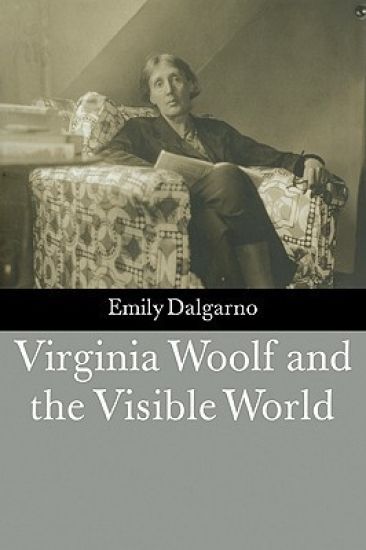
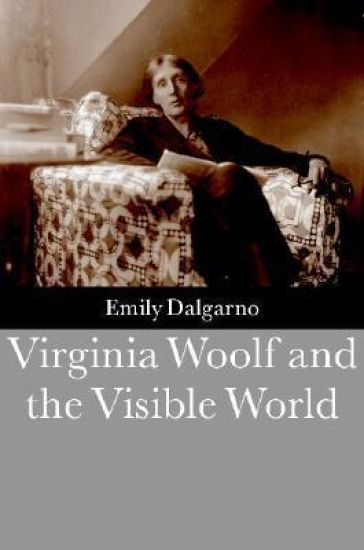
Virginia Woolf and the Visible World

Virginia Woolf and the Visible World

Emily Dalgarno

Cambridge University Press
2007
pokkari
In Virginia Woolf and the Visible World, Emily Dalgarno examines Woolf's engagement with notions of the subject and codes of the visible. Dalgarno examines how Woolf's writing engages with visible and non-visible realms of experience, and draws on ideas from the diverse fields of psychoanalytic theory, classical Greek tragedy, astronomy, photography and photojournalism. The solar eclipse of 1927 marks a dividing line in Woolf's career, after which she portrayed the visible world in terms of light, and shifted her interest from painting to photography. Dalgarno offers textual analyses of Woolf's individual works, including To the Lighthouse, The Waves and Three Guineas, arguing for the importance of her ongoing interest in Greek translation. In later chapters, she explores the theory of the subject that emerges from Woolf's representation of the visible in her autobiography.
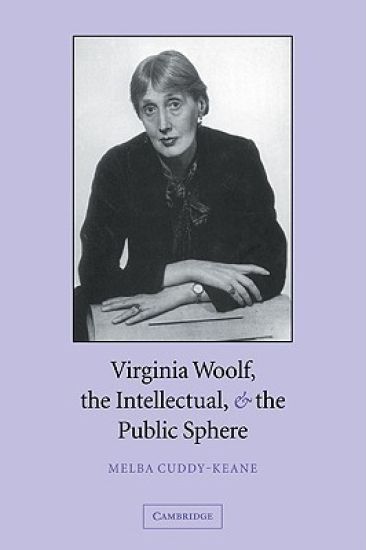
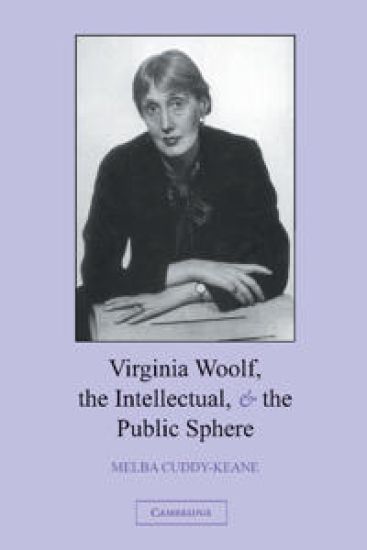
Virginia Woolf, the Intellectual, and the Public Sphere

Virginia Woolf, the Intellectual, and the Public Sphere

Melba Cuddy-Keane

Cambridge University Press
2007
pokkari
Virginia Woolf, the Intellectual, and the Public Sphere relates Woolf's literary reviews and essays to early twentieth-century debates about the value of 'highbrow' culture, the methods of instruction in universities and adult education, and the importance of an educated public for the realization of democratic goals. By focusing on Woolf's theories and practice of reading, Melba Cuddy-Keane refutes assumptions about Woolf's modernist elitism, revealing instead a writer who was pedagogically oriented, publicly engaged and committed to the ideal of classless intellectuals working together in reciprocal exchange. Woolf emerges as a stimulating theorist of the unconscious, of dialogic reading, of historicist criticism and of value judgments, while her theoretically informed but accessible prose challenges us to reflect on academic writing today. Combining a wealth of historical detail with a penetrating analysis of Woolf's essays, this 2003 study will alter our views of Woolf, of modernism and of intellectual work.
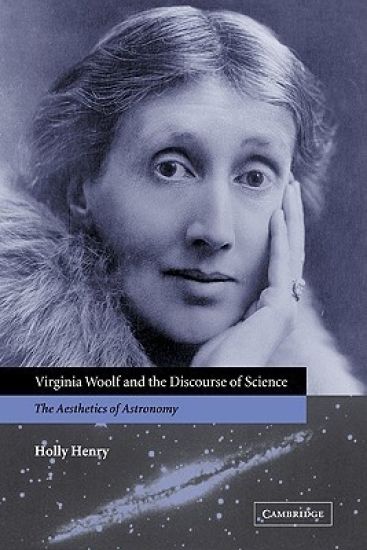
Virginia Woolf and the Discourse of Science

Virginia Woolf and the Discourse of Science

Henry Holly

Cambridge University Press
2009
pokkari
Holly Henry investigates how advances in astronomy in the early twentieth century had a shaping effect on Woolf's literature and aesthetics as well as on the work of modernist British writers including Vita Sackville-West, H. G. Wells, Olaf Stapledon, Bertrand Russell, and T. S. Eliot. The 1920s and 30s witnessed a pervasive public fascination with astronomy that extended from the US, where Edwin Hubble in 1923 definitively determined that entire galaxies existed beyond the Milky Way, to England, where London's intellectuals discussed Sir James Jeans's popular astronomy books and the newly explored expanses of space. In re-evaluating the cultural context out of which Modernism emerged, Henry contends that Woolf, through her own fascination with astronomy, formulated a global vision that helped shape her fiction and her pacifist politics. Henry's study includes examinations of scientific and literary archival material and sheds light on Woolf's texts and recent re-evaluations of Modernism.
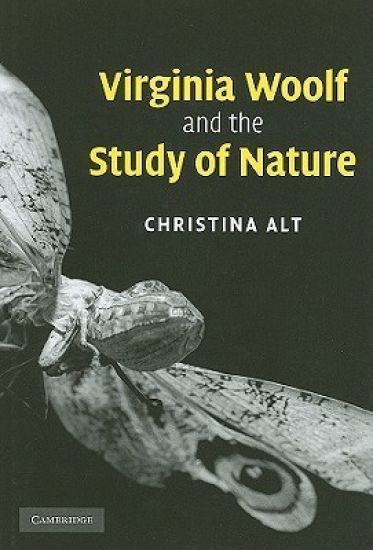
Virginia Woolf and the Study of Nature

Virginia Woolf and the Study of Nature

Christina Alt

Cambridge University Press
2010
sidottu
Reflecting the modernist fascination with science, Virginia Woolf's representations of nature are informed by a wide-ranging interest in contemporary developments in the life sciences. Christina Alt analyses Woolf's responses to disciplines ranging from taxonomy and the new biology of the laboratory to ethology and ecology and illustrates how Woolf drew on the methods and objectives of the contemporary life sciences to describe her own literary experiments. Through the examination of Woolf's engagement with shifting approaches to the study of nature, this work covers new ground in Woolf studies and makes an important contribution to the understanding of modernist exchanges between literature and science.
Virginia Woolf and the Visible World

Virginia Woolf and the Visible World

Emily Dalgarno

Cambridge University Press
2001
sidottu
In Virginia Woolf and the Visible World, Emily Dalgarno examines Woolf’s engagement with notions of the subject and codes of the visible. Dalgarno examines how Woolf’s writing engages with visible and non-visible realms of experience, and draws on ideas from the diverse fields of psychoanalytic theory, classical Greek tragedy, astronomy, photography and photojournalism. The solar eclipse of 1927 marks a dividing line in Woolf’s career, after which she portrayed the visible world in terms of light, and shifted her interest from painting to photography. Dalgarno offers textual analyses of Woolf’s individual works, including To the Lighthouse, The Waves and Three Guineas, arguing for the importance of her ongoing interest in Greek translation. In later chapters, she explores the theory of the subject that emerges from Woolf’s representation of the visible in her autobiography.
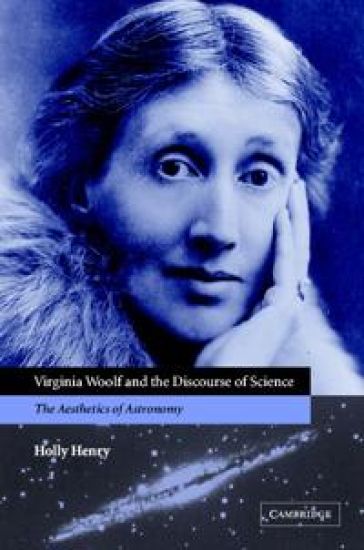
Virginia Woolf and the Discourse of Science

Virginia Woolf and the Discourse of Science

Holly Henry

Cambridge University Press
2003
sidottu
Holly Henry investigates how advances in astronomy in the early twentieth century had a shaping effect on Woolf’s literature and aesthetics as well as on the work of modernist British writers including Vita Sackville-West, H. G. Wells, Olaf Stapledon, Bertrand Russell, and T. S. Eliot. The 1920s and 30s witnessed a pervasive public fascination with astronomy that extended from the US, where Edwin Hubble in 1923 definitively determined that entire galaxies existed beyond the Milky Way, to England, where London’s intellectuals discussed Sir James Jeans’s popular astronomy books and the newly explored expanses of space. In re-evaluating the cultural context out of which Modernism emerged, Henry contends that Woolf, through her own fascination with astronomy, formulated a global vision that helped shape her fiction and her pacifist politics. Henry’s study includes examinations of unpublished scientific and literary archival material and sheds new light on Woolf’s texts and recent re-evaluations of Modernism.
Virginia Woolf, the Intellectual, and the Public Sphere

Virginia Woolf, the Intellectual, and the Public Sphere

Melba Cuddy-Keane

Cambridge University Press
2003
sidottu
Virginia Woolf, the Intellectual, and the Public Sphere relates Woolf’s literary reviews and essays to early twentieth-century debates about the value of ‘highbrow’ culture, the methods of instruction in universities and adult education, and the importance of an educated public for the realization of democratic goals. By focusing on Woolf’s theories and practice of reading, Melba Cuddy-Keane refutes assumptions about Woolf’s modernist elitism, revealing instead a writer who was pedagogically oriented, publicly engaged and committed to the ideal of classless intellectuals working together in reciprocal exchange. Woolf emerges as a stimulating theorist of the unconscious, of dialogic reading, of historicist criticism, and of value judgments, while her theoretically-informed but accessible prose challenges us to reflect on academic writing today. Combining a wealth of historical detail with a penetrating analysis of Woolf’s essays, this study will alter our views of Woolf, of modernism, and of intellectual work.
Virginia Woolf and the Victorians

Virginia Woolf and the Victorians

Steve Ellis

Cambridge University Press
2007
sidottu
Criticism of Woolf is often polarised into viewing her work as either fundamentally progressive or reactionary. In this 2007 book, Steve Ellis argues that her commitment to anxiety about modernity coexists with a nostalgia and respect for aspects of Victorian culture threatened by radical social change. Ellis tracks Woolf's response to the Victorian era through her fiction and other writings, arguing that Woolf can be seen as more 'Post-Victorian' than 'modernist'. He explains how Woolf's emphasis on continuity and reconciliation related to twentieth-century debates about Victorian values, and he analyses her response to the First World War as the major threat to that continuity. This detailed and original investigation of the range of Woolf's writing attends to questions of cultural and political history and fictional structure, imagery and diction. It proposes a fresh reading of Woolf's thinking about the relationships between the past, present and future.
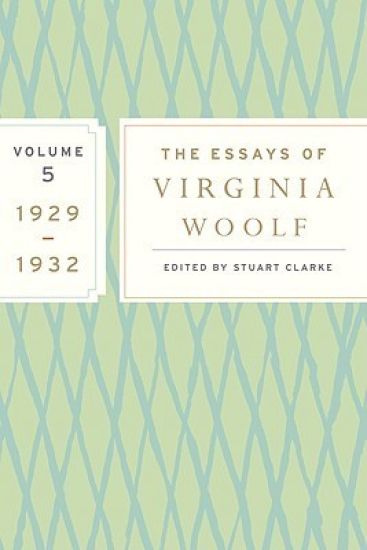
The Essays of Virginia Woolf, Vol. 5 1929-1932: The Virginia Woolf Library Authorized Edition
Spanning the years in which Virginia Woolf penned her classic novel The Waves and worked on Flush, the nonfiction pieces in this fifth volume provide further insight into Woolf's creative genius and showcase her supreme stylistic capability. The far-ranging essays and criticism collected here include ruminations on the romantic and literary lives of William Cowper and Christina Rossetti and an introduction to memoirs by the Women's Cooperative Guild that reveals Woolf's signature feminism. This collection also includes the entirety of The Common Reader: Second Series, the sequel to The Common Reader.
Virginia Woolf's Nose

Virginia Woolf's Nose

Hermione Lee

Princeton University Press
2007
pokkari
What choices must a biographer make when stitching the pieces of a life into one coherent whole? How do we best create an accurate likeness of a private life from the few articles that linger after death? How do we choose what gets left out? This intriguing and witty collection of essays by an internationally acclaimed biographer looks at how biography deals with myths and legends, what goes missing and what can't be proved in the story of a life. Virginia Woolf's Nose presents a variety of case-studies, in which literary biographers are faced with gaps and absences, unprovable stories and ambiguities surrounding their subjects. By looking at stories about Percy Bysshe Shelley's shriveled, burnt heart found pressed between the pages of a book, Jane Austen's fainting spell, Samuel Pepys's lobsters, and the varied versions of Virginia Woolf's life and death, preeminent biographer Hermione Lee considers how biographers deal with and often utilize these missing body parts, myths, and contested data to "fill in the gaps" of a life story. In "Shelley's Heart and Pepys's Lobsters," an essay dealing with missing parts and biographical legends, Hermione Lee discusses one of the most complicated and emotionally charged examples of the contested use of biographical sources. "Jane Austen Faints" takes five competing versions of the same dramatic moment in the writer's life to ask how biography deals with the private lives of famous women. "Virginia Woolf's Nose" looks at the way this legendary author's life has been translated through successive transformations, from biography to fiction to film, and suggests there can be no such thing as a definitive version of a life. Finally, "How to End It All" analyzes the changing treatment of deathbed scenes in biography to show how biographical conventions have shifted, and asks why the narrators and readers of life-stories feel the need to give special meaning and emphasis to endings. Virginia Woolf's Nose sheds new light on the way biographers bring their subjects to life as physical beings, and offers captivating new insights into the drama of "life-writing". Virginia Woolf's Nose is a witty, eloquent, and funny text by a renowned biographer whose sensitivity to the art of telling a story about a human life is unparalleled--and in creating it, Lee articulates and redefines the parameters of her craft.
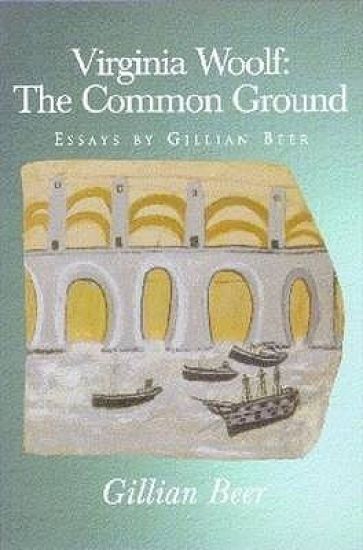
Virginia Woolf: The Common Ground

Virginia Woolf: The Common Ground

Gillian Beer

Edinburgh University Press
1996
nidottu
This book for the first time brings together Gillian Beer's essays on Virginia Woolf. Widely recognised as a leading authority on Woolf and a sophisticated critic of modernism and fiction, Beer's essays make fascinating reading. Beer demonstrates, through close investigative textual readings, how Woolf's conceptualisations of history and narrative are intimately bound up with her ways of thinking about women, writing and social and sexual relations.
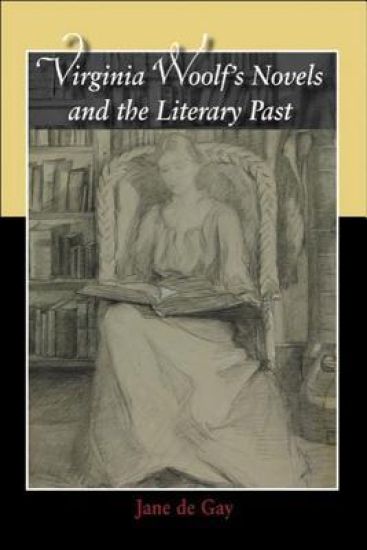
Virginia Woolf's Novels and the Literary Past

Virginia Woolf's Novels and the Literary Past

Jane De Gay

Edinburgh University Press
2006
sidottu
The first book to explore Virginia Woolf's preoccupation with the literary past and its profound impact on the content and structure of her novels. It analyses Woolf's reading and writing practices via her essays, diaries and reading notebooks and presents chronological studies of eight of her novels, exploring how Woolf's intensive reading surfaced in her fiction. The book sheds light on Woolf's varied and intricate use of literary allusions; examines ways in which Woolf revisited and revised plots and tropes from earlier fiction; and looks at how she used parody as a means both of critical comment and homage. Key Features * The first book-length study of intertextuality in Virginia Woolf's novels; * Offers a challenging and provocative new perspective on Woolf's art as a novelist; * Develops detailed close readings offering fresh insights into individual works; * Presents complex ideas in a lucid and accessible fashion.
Virginia Woolf's Novels and the Literary Past

Virginia Woolf's Novels and the Literary Past

Jane De Gay

Edinburgh University Press
2007
nidottu
REVIEWS FROM HARDBACK EDITION: 'A number of interesting and powerful themes emerge in this study of Virginia Woolf's relation to the literary past...The strong account of Woolf's relation to tradition in Virginia Woolf's Novels and the Literary Past will surely facilitate further study of the gender politics of Modernism.' - Times Literary Supplement 'An important intervention at a time in which there is particular interest in Woolf's relationship to the past.' Professor Laura Marcus, University of Sussex 'Essential and intellectually provocative reading for Woolf scholars and for common readers alike.' Vara Neverow, University of Connecticut Now available in paperback, this is the first book to explore Virginia Woolf's preoccupation with the literary past and its profound impact on the content and structure of her novels. It analyses Woolf's reading and writing practices via her essays, diaries and reading notebooks and presents chronological studies of eight of her novels, exploring how Woolf's intensive reading surfaced in her fiction. The book sheds light on Woolf's varied and intricate use of literary allusions; examines ways in which Woolf revisited and revised plots and tropes from earlier fiction; and looks at how she used parody as a means both of critical comment and homage. Key Features * The first book-length study of intertextuality in Virginia Woolf's novels * Offers a challenging and provocative new perspective on Woolf's art as a novelist * Develops detailed close readings offering fresh insights into individual works * Presents complex ideas in a lucid and accessible fashion
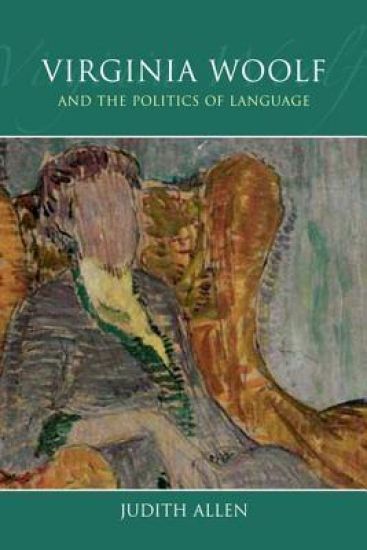
Virginia Woolf and the Politics of Language

Virginia Woolf and the Politics of Language

Judith Allen

Edinburgh University Press
2010
sidottu
In the context of today's significant struggles with 'fundamentalisms', media consolidation, and the stifling of dissent, Allen's close readings of Woolf's writings focus on their relevance to our current political situation. Judith Allen approaches Woolf as a theorist of language as well as a theorist of reading, and shows how her writing strategies--sometimes single, resonant words--function to express and enact her politics. Allen also shows how Woolf's complex arguments serve to awaken her readers to the lack of transparency in the dissemination of information, the complexities and power of language, and the urgent need for critical thinking. Key Features *Close readings of Woolf's essays include 'Montaigne,' A Room of One's Own, 'Craftsmanship, Three Guineas and 'Thoughts on Peace in an Air Raid' * Sources range from Michel de Montaigne to the Dixie Chicks, from the Northcliffe Press newspaper empire of World War I to today's mainstream newspapers, Rupert Murdoch's empire, satirical news shows like The Colbert Report and The Daily Show, and social media and the blogosphere
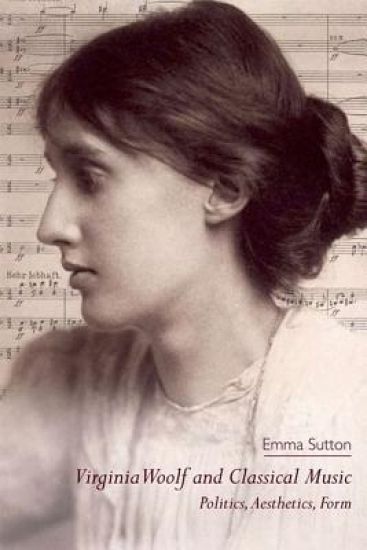
Virginia Woolf and Classical Music

Virginia Woolf and Classical Music

Emma Sutton

Edinburgh University Press
2013
sidottu
Virginia Woolf, by her own admission, spent her 'youth' in Covent Garden Opera House, as an adult listened almost daily to recordings and broadcasts of classical music, and stated, in 1940, that 'I think of all my books as music before I write them,' This groundbreaking study explores the formative influence of classical music on Woolf's writing, illustrating the importance of music to Woolf's domestic, social and creative lives. Discussing all the novels as well as selected essays and short fiction, Emma Sutton offers detailed commentaries on Woolf's numerous allusions to classical repertoire and to composers including Bach, Mozart, Beethoven and Wagner. Sutton explores Woolf's interest in the politics of music, illustrating Woolf's attention to nationalism, class, anti-Semitism and gender in her portraits of musical performance and consumption. The study also examines Woolf's responses to musical aesthetics, exploring the way in which genres including Romantic opera and the string quartet influenced the structure and formal qualities of Woolf's prose. The analysis of music's role in Woolf's aesthetics and fiction is complemented by critical discussion of her musical education, her extensive consumption of music at public performances and at home, and her friendships and acquaintance with musicians including Ethel Smyth, Nadia Boulanger, Ralph Vaughan Williams and Bruno Walter. In addition, Woolf's enduring, protean interest in music is contextualised within the aesthetic experiments of the Bloomsbury group and her Modernist contemporaries. Key Features *The first book-length study on Woolf and (classical) music, incorporating groundbreaking research *Innovative close readings of all Woolf's novels, and of selected essays and short fiction; unprecedented extended readings of the musical allusions and sub-texts *Places the fiction in fresh biographical, aesthetic and socio-political contexts (eg explores relations between the novels, pre-war musicology and nationalism) *Accessibly written: aimed at advanced undergraduates as well as postgraduates and the scholarly community
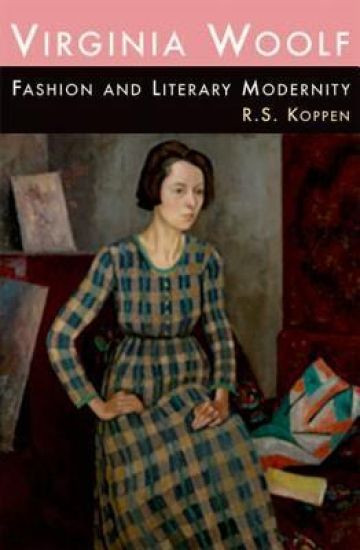
Virginia Woolf, Fashion and Literary Modernity

Virginia Woolf, Fashion and Literary Modernity

R. S. Koppen

Edinburgh University Press
2009
sidottu
Virginia Woolf, Fashion and Literary Modernity places Woolf's writing in the context of sartorial practice from the Victorian period to the 1930s, and theories of dress and fashion from Thomas Carlyle to Walter Benjamin, Wyndham Lewis and J.C. Flugel. Bringing together studies in fashion, body culture and modernism, the book explores the modern fascination with sartorial fashion as well as with clothes as objects, signs, things, and embodied practice. Fashion was deeply implicated with the nineteenth-century modern and remained in focus for the modernities that continued to be proclaimed in the early decades of the following century. Clothing connects with the modernist topoi of the threshold, the trace and the interface; it is the place where character becomes image and where relations between subject and object, organic and inorganic play themselves out in a series of encounters and ruptures. Clothes also facilitate explorations in modern materialism, for instance as informing surrealist attempts to think the materiality of things outside the system of commodities and their fetishisation. Woolf's work as cultural analyst and writer of fiction provides illuminating illustrations of all of these aspects, "thinking through clothes" in representations of the present, investigations of the archives of the past, and projections for the future. Key Features: *Contributes new research to Woolf and Modernism studies *Explores the significance of textual representations of dress and sartorial fashion in modernist literature *Interdisciplinary approach which brings together studies of fashion, culture and literature *Adds a specific author focused analysis to current work on cultural embodiment and performance
Virginia Woolf and the Writing Self

Virginia Woolf and the Writing Self

Makiko Minow-Pinkeyr

Edinburgh University Press
2018
sidottu
Makiko Minow-Pinkney's "Virginia Woolf and the Problem of the Subject" (1987) was a pathbreaking investigation of the relations between psychoanalysis, feminism and modernism in Woolf's writings. Two decades later it remains a central reference point in the field, much cited by critics and consistently featuring on student reading lists. This volume of selected essays brings together some central sections of that earlier book, including both its theoretical framework and its striking analysis of Orlando, and essays published since in which Minow-Pinkney extends her Kristevan and Lacanian approach to the question of Woolf's subjectivity and its relationship to her writing. The approach itself is refined in important new theoretical directions, and it is then extended into a variety of exciting new areas such as Walter Benjamin's theory of translation, modernist technology, postmodern theory, Japanese modernism, and the curious contemporary phenomenon of fictional biographies of Virginia Woolf.Woolf's major novels such as "Mrs Dalloway", "To the Lighthouse" and "The Waves" are explored in startling new ways, but less well-known corners of the Woolf canon such as "Evening over Sussex" and "Carlyle's House" are illuminated too. Minow-Pinkney has been one of the major practitioners of a literary theory-oriented approach to Virginia Woolf, and these essays represent the lifetime summation of her distinguished work in the field. Key features: reprints a substantial section from the author's seminal but now unavailable 1987 study of Woolfian subjectivity; refines the author's Kristevan-Lacanian theoretical framework in new directions through such concepts as 'the Thing' (Kristeva), 'the Imaginary father' (Kriteva), 'the Real' (Lacan) and the Freudian problematic of mourning and melancholia; and addresses exciting new areas such as Walter Benjamin's theory of translation, modernist technology, postmodern theory, Japanese modernism, and the contemporary phenomenon of fiction.
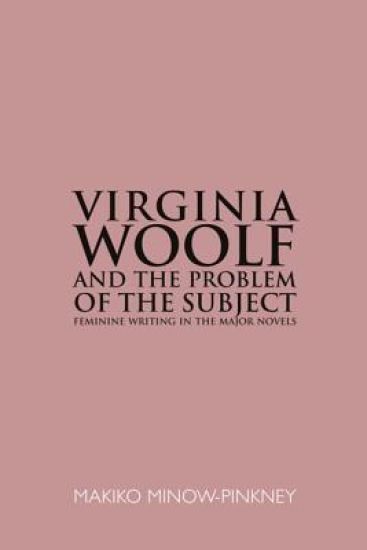
Virginia Woolf and the Problem of the Subject

Virginia Woolf and the Problem of the Subject

Makiko Minow-Pinkney

Edinburgh University Press
2010
nidottu
This classic study shows that Woolf's most experimental writing is far from being a flight from social commitment into arcane modernism. Rather, it can be best seen as a feminist subversion of the deepest formal principles of a patriarchal social order: the very definitions of narrative, writing and the subject. In a series of subtle readings of five major novels - Jacob's Room, Mrs. Dalloway, To the Lighthouse, Orlando and The Waves - closely informed by psychoanalytic theory, Makiko Minow-Pinkney presents Woolf as a committed feminist whose politics emerged as an aspect of her experimentation with language and form.