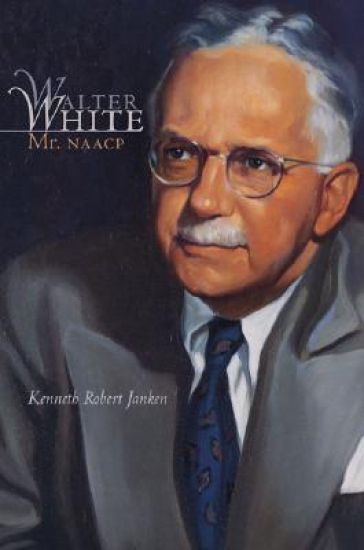
Walter White (1893-1955) was among the nation's preeminent champions of civil rights. With blond hair and blue eyes, he could ""pass"" as white even though he identified as African American, and his physical appearance allowed him to go undercover to investigate more than 40 lynchings and race riots in the years following World War I. As executive secretary of the NAACP from 1931 until his death in 1955, White promoted the Harlem Renaissance and led influential national campaigns against lynching, segregation in the military, and racism in Hollywood movies. In this first scholarly biography, Kenneth Robert Janken considers the man who embodied many contradictions. Walter White gained access to white elite culture, establishing friendships with Eleanor Roosevelt and numerous congressmen and Supreme Court justices, but he ultimately considered himself - and was considered by many - an organization man, ""Mr. NAACP.
The varied career of Walter Hines Page affected many facets of the American political and social milieu from the end of Reconstruction through World War I. A North Carolinian, Page was one of the first southerners after Reconstruction to argue that sectional hostility was needless, and he constantly worked to restore national union and frequently acted as an interpreter for the North and the South. As a journalist, publisher, reformer, president-maker, and ambassador, he strove to assure both North and South that the southerner was basically an American, that southern problems were national ones, and that education and hard work could recreate the Union.As a young man, Page found the South too stifling to give scope to his ambitions. He left it for good at the age of twenty-nine to make a brilliant career as editor and book publisher in the North. He served as editor of Forum, Atlantic Monthly, and World's Work. Later he founded the publishing firm Doubleday, Page & Company. As a magazine editor he wrote about the problems of the South; as a book publisher he introduced many southern writers to the nation; as a member of several of the most powerful philanthropic boards he sought funds to improve education and public health in the South. As a result of his early support of Woodrow Wilson for the presidency, Page was appointed ambassador to the Court of St. James's from which he fervently advocated the Allied cause.Throughly researching both American and British government documents and private papers, and using interviews with Page's contemporaries, Cooper reinterprets and establishes the significance of Page's career.A UNC Press Enduring Edition -- UNC Press Enduring Editions use the latest in digital technology to make available again books from our distinguished backlist that were previously out of print. These editions are published unaltered from the original, and are presented in affordable paperback formats, bringing readers both historical and cultural value.
In this life of Walter Clark, the author tells of an antebellum boyhood on a Carolina plantation and a long career of involvement in the bitterest sociopolitical battles the state of North Carolina has known, which won Clark a national reputation as a liberal noted for his straight thinking and his clear speaking.A UNC Press Enduring Edition -- UNC Press Enduring Editions use the latest in digital technology to make available again books from our distinguished backlist that were previously out of print. These editions are published unaltered from the original, and are presented in affordable paperback formats, bringing readers both historical and cultural value.
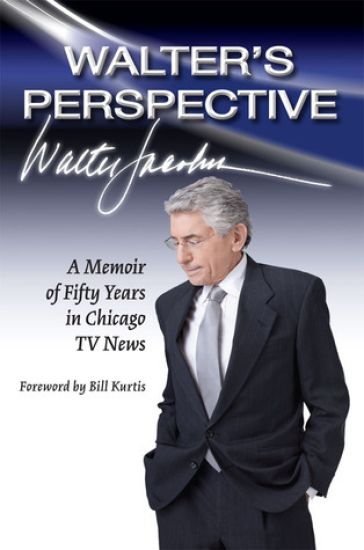
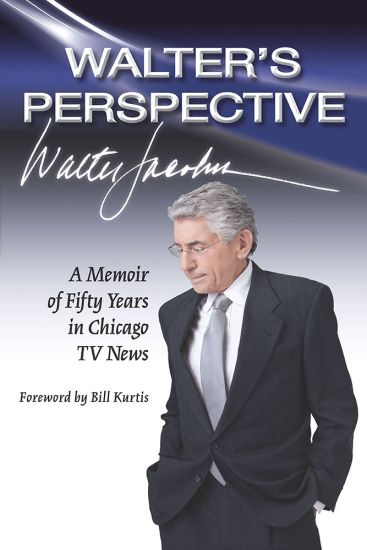
Walter Jacobson's highly readable book Walter's Perspective: A Memoir of Fifty Years in Chicago TV News provides a unique glimpse into the rough-and-tumble Chicago news business as seen through the eyes of one of its legendary players. From his first news job working as a legman for Daily News columnist Jack Mabley in the 1950s to his later role as a news anchor and political commentator at CBS-owned WBBM, Jacobson battled along the front lines of an industry undergoing dramatic changes. While it is ultimately Jacobson's story, a memoir of a long and distinguished (and sometimes highly controversial) career, it is also an insider's account of the inner workings of Chicago television news, including the ratings games, the process of defining news and choosing stories, the media's power and its failures, and the meddling by corporate and network executives. As a reporter, Jacobson was regularly contentious and confrontational. He was fired on a number of occasions and was convicted of libeling tobacco company Brown and Williamson, resulting in a multimillion-dollar federal court judgment against him and CBS. Yet it was this gutsy attitude that put him at the top of the news game, enabling him to get inside information on Chicago government and politics, and helped him become the first local television reporter to be granted a visa to visit Communist China. With an engaging writing style, Jacobson relates these experiences and much more. He recollects his interactions with Chicago mayors Richard J. and Richard M. Daley, Jane Byrne, Harold Washington, and Rahm Emanuel; recounts his coverage of such fascinating news stories as the violent 1968 Democratic National Convention and the execution of convicted mass murderer John Wayne Gacy; and recalls his reporting on and interviews with Louis Farrakhan, governors George Ryan and Rod Blagojevich, and Barack Obama. More than a memoir, Walter's Perspective is the extraordinary journey of one reporter whose distinctive career followed the changing face of Chicago's local news.
Walter Jacobson’s highly readable book Walter’s Perspective: A Memoir of Fifty Years in Chicago TV News provides a unique glimpse into the rough-and-tumble Chicago news business as seen through the eyes of one of its legendary players. From his first news job working as a legman for Daily News columnist Jack Mabley in the 1950s to his later role as a news anchor and political commentator at CBS-owned WBBM, Jacobson battled along the front lines of an industry undergoing dramatic changes. While it is ultimately Jacobson’s story, a memoir of a long and distinguished (and sometimes highly controversial) career, it is also an insider’s account of the inner workings of Chicago television news, including the ratings games, the process of defining news and choosing stories, the media’s power and its failures, and the meddling by corporate and network executives.
The aim in this edition of SCOTT'S POEMS has been to give a correct text, with such portions of Scott's notes as are likely to be useful or interesting to the general reader, and with fuller and better pictorial illustrations than are to be found in any former edition. The volume contains all the poems (not the plays, which are seldom, if ever, read nowadays, unless as mere literary curiosities), with the exception of a few bits of personal or occasional verse which Scott himself would never have printed, and which are not worth preserving. The original contributions to the Border Minstrelsy are included, except Scott's portion of Thomas the Rhymer (the Third Part only), which could not well be separated from the rest Of the Songs scattered through the novels and plays, the best of such as are comparatively independent of the context are given, together with all the poetical mottoes written by Scott himself for the heading of chapters.
The aim in this edition of SCOTT'S POEMS has been to give a correct text, with such portions of Scott's notes as are likely to be useful or interesting to the general reader, and with fuller and better pictorial illustrations than are to be found in any former edition. The volume contains all the poems (not the plays, which are seldom, if ever, read nowadays, unless as mere literary curiosities), with the exception of a few bits of personal or occasional verse which Scott himself would never have printed, and which are not worth preserving. The original contributions to the Border Minstrelsy are included, except Scott's portion of Thomas the Rhymer (the Third Part only), which could not well be separated from the rest Of the Songs scattered through the novels and plays, the best of such as are comparatively independent of the context are given, together with all the poetical mottoes written by Scott himself for the heading of chapters.
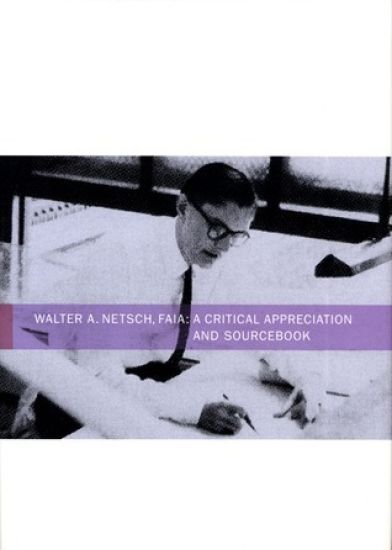
Northwestern University Library presents the first monograph devoted to the architect Walter Netsch, an early partner in Skidmore, Owings and Merrill and chief designer of the U.S.Air Force Academy and Cadet Chapel. This illustrated book includes a detailed chronology, biography, essays about his work and field theory design aesthetics, and statements by Netsch from 1954 to 2006.
Walter Charles Mycroft (1890-1959) was the film critic of the Evening Standard from 1922-1927, and also a founding member of London's Film Society. In 1928, he was appointed Head of the Scenario Department—and then Director of Production—at British International Pictures (later Associated British Pictures). In 1941 Mycroft was sacked following the death of the company's Managing Director and the requisition of Elstree studios by the British Government for war purposes. After that his career went into steady decline, although after the Second World War he worked for nearly a decade as Scenario Adviser to Robert Clark, who ran the rebuilt Elstree studios. This long-lost memoir, which Mycroft wrote mainly in the 1940s, offers a detailed account of the vagaries and complex economic vicissitudes of British film production in the 1930s. Mycroft also recalls how he selected film stories for directors Harry Lachman, E. A. Dupont and Alfred Hitchcock, and he reveals, for the first time, the true story behind Hitchcock's departure from British International Pictures. Mycroft also provides incisive portraits of British film industry captains: the charismatic Alexander Korda, C. M. Woolf, the rising J. Arthur Rank, and above all John Maxwell, the shrewd iconoclastic Scots lawyer who built Associated British into the largest and most financially successful film corporation in pre-war Britain. The memoirs conclude with the death of Maxwell and Mycroft's fall from grace at Elstree. The volume is supplemented by four appendixes consisting of Mycroft's earlier writings on the aesthetics and business of film production, along with a filmography of over 200 films on which he worked. This memoir provides both scholars and the general reader with new and fascinating insights into the worlds of British journalism during the first two decades of the twentieth century and of British film production during the 1930s. Walter Mycroft: The Time of My Life will be of interest not only to scholars of British journalism a
Why would the sprawling thirteenth-century French prose Lancelot-Grail Cycle have been attributed to Walter Map, a twelfth-century writer from the Anglo-Welsh borderlands known for his stinging satire, religious skepticism, ghost stories, and irrepressible wit? And why, though the attribution is spurious, is it not, in some ways, implausible? Joshua Byron Smith sets out to answer these and other questions in the first English-language monograph on Walter Map-and in so doing, he offers a new explanation for how narratives about the pre-Saxon inhabitants of Britain, including King Arthur and his knights, first circulated in England. Smith contends that it was inventive clerics like Walter, and not traveling minstrels or professional translators, who popularized these stories. Smith examines Walter's only surviving work, the De nugis curialium, to demonstrate that it is not the disheveled text that scholars have imagined but rather five separate works in various stages of completion. This in turn provides new evidence to support his larger contention, that ecclesiastical networks of textual exchange played a major role in exporting Welsh literary material into England. Medieval readers incorrectly envisioned Walter withdrawing ancient Latin documents about the Holy Grail from a monastery and compiling them in order to compose the Lancelot-Grail Cycle. In this detail they were wrong, Smith acknowledges, but a model of literary transmission that is not vernacular and popular but Latinate and ecclesiastical demands our serious consideration.
A journalist and a political philosopher of international repute, Walter Lippman was the author of more than twenty books, scores of essays, and countless newspaper editorials, articles, and columns. There can be no doubt that during the last half century he exercised considerable influence on American public and official opinion regarding international as well as domestic politics. His syndicated column "Today and Tomorrow" regularly appeared in the New York Herald Tribune from 1931 to 1967. It was carried by a large number of other newspapers in the United States and abroad. The present work attempts to discover and state Lippmann's philosophy of international politics as it developed over the years 1913 to 1963. The book brings out the evolution of his thought on such basic questions as human nature, nation-states and nationalism, the national interest, alliances, the balance of power, idealism and realism, regionalism, the universal society, and the enforcement of international peace. Lippmann's general theory of government is examined. Also presented are his views on topical questions such as the Atlantic Community, NATO, the current French rivalry with the "Anglo-Saxons," the place of Germany in Europe, the containment of Castro's Cuba, the future of Formosa, and America's stake in the battle for the minds of men in Asia and Africa. Necessarily, the author refers to major events and developments in international politics during the past half century. On important problems and issues the views of Lippmann's contemporaries, as well as those of distinguished statesmen and philosophers of the past, have been placed alongside his own in order to indicate his connection with the main currents of thought on the subjects under discussion. Thus, while the book concerns Lippmann primarily, it contains useful references to other writers, debates, and schools of thought. The importance of Lippmann's penetrating thought on problems of world politics grew with the destructive potential of national power confrontations. This careful study is therefore a timely one, and should be of interest to professional and also lay students of international politics.
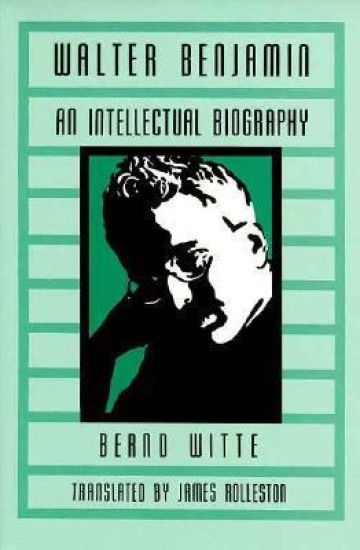
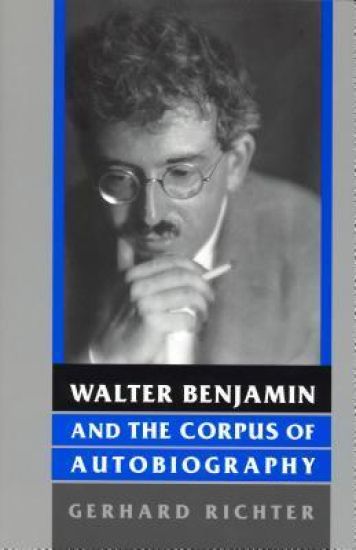
Walter Benjamin is considered one of the most significant writers and theorists in 20th-century Western culture. The author of this work shows that Benjamin's engagement with the political cannot be understood in terms of unified concepts, but rather should be understood from his language.
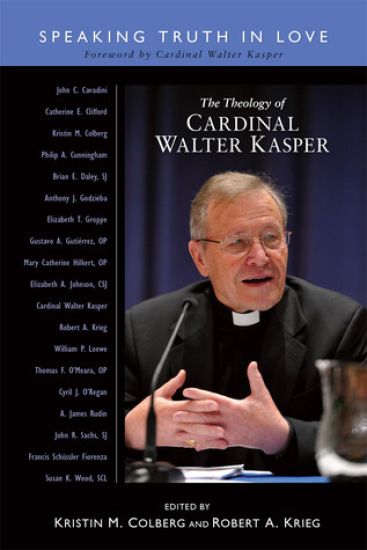
Cardinal Walter Kasper's contributions to theology, ecumenism, Jewish-Christian relations, and the pastoral life of the church have shaped Catholicism in the twentieth and twenty-first centuries. Acknowledging this, Pope Francis has praised Kasper's “profound and serene” theology. In The Theology of Cardinal Walter Kasper: Speaking Truth in Love, leading theologians from across the United States and Canada explore the full scope of Kasper’s thought on topics such as the character of ecumenical and interreligious dialogue, Christology, theological method, and the nature of the church-world relationship. Kasper himself presents four previously unpublished texts: on the interpretation of Vatican II, on forgiveness, on Christian hope, and on the approach to theology today. This volume originated at a conference, at which Kasper was an active participant, in honor of his eightieth birthday. It provides an introduction to Kasper's thought and also an overview of major issues in contemporary Catholic theology.
A portrait of the trailblazing film producer whose career spanned five decades.The long, colorful career of Walter Wanger (1894-1968) is one of Hollywood’s greatest untold stories. An intellectual and a socially conscious movie executive who produced provocative message movies and glittering romantic melodramas, Wanger’s career started at Paramount studios in the 1920s and led him to work at virtually every major studio as either a contract producer or an independent. He produced a series of American film classics, including Queen Christina, Stagecoach, Foreign Correspondent, and Invasion of the Body Snatchers, as well as a few notable flops, such as Cleopatra. This comprehensive biography brings to life a distinctive film personality and offers a new appreciation of the role of the producer in the history of American cinema.
The development and pervasiveness of modern atheism as well as secularization poses an acute challenge to Christian theology. Theologians have either ignored this challenge or have sought to meet it in a variety of ways. Throughout his theological career, Walter Kasper (1933-) has maintained that theology has the mutual tasks of exposition of the Christian faith and of responding to contemporary challenges to this faith. In his seminal work The God of Jesus Christ (1982), he argues that the proper Christian response to modern atheism is the confession of the Trinity. In making this response, Kasper begins to chart a course for all future Christian apologetics, for all efforts to give an account of Christian hope (1 Peter 3:15).