

Kirjahaku
Etsi kirjoja tekijän nimen, kirjan nimen tai ISBN:n perusteella.
1000 tulosta hakusanalla Wayne Clark
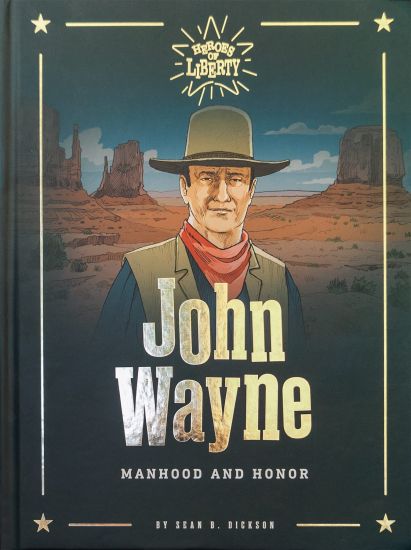
Born Marion Morrison, the other kids would taunt him about his name as he was growing up. This was one of the reasons he became so tough. He didn't go looking for trouble, but if it came, he never backed down.
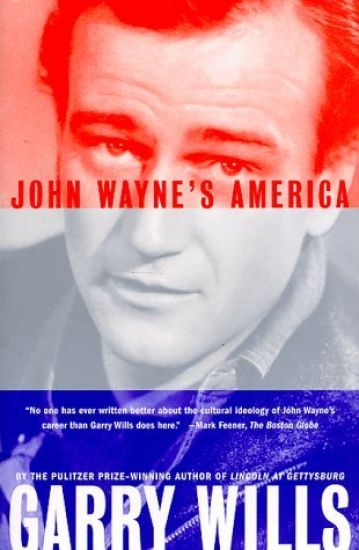
The Pulitzer Prize-winning author of Lincoln at Gettysburg brings his eloquence, wit, and on-target perceptions of American life and politics to this fascinating, well-drawn protrait of a twentieth-century hero. In this work of great originalitythe biography of an ideaGarry Wills shows how John Wayne came to embody Amercian values and influenced our cultoure to a degree unmatched by any other public figure of his time. In Wills's hands, Waynes story is tranformed into a compelling narrative about the intersection of popular entertainment and political realities in mid-twentieth-century America.
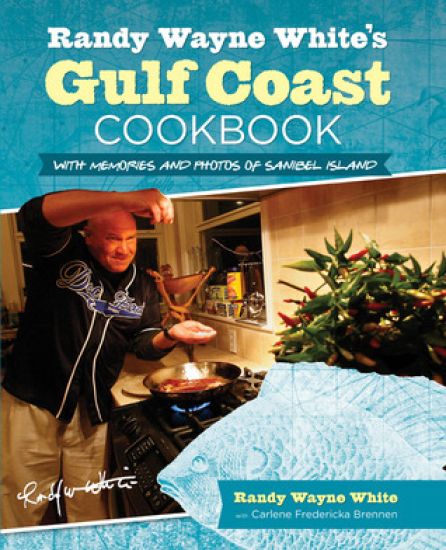
Randy Wayne White's Gulf Coast Cookbook
Randy Wayne White; Carlene Brennen
Globe Pequot Press
2014
pokkari
Randy Wayne White's thirteen years as a full-time, light-tackle fishing guide at Tarpon Bay Marina, Sanibel Island, on Florida's Gulf Coast, inspired many of the characters and stories in his New York Times best-selling Doc Ford series. The second edition of Randy Wayne White's Gulf Coast Cookbook pairs more than 125 recipes with photos of the real Tarpon Bay and the most appetizing food-related passages from this acclaimed writer's essays and novels. The result is a veritable memoir of food and adventure, true friends and favorite characters, all in an enjoyable presentation promising satisfying food, drink-and reading.
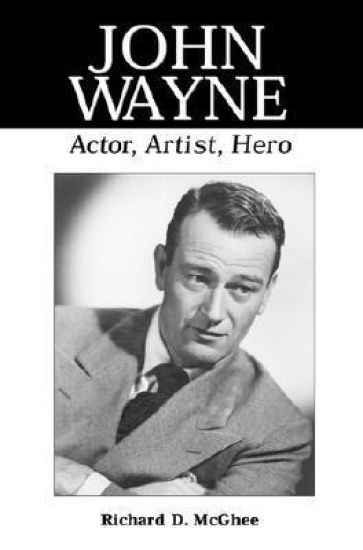
After the death of Marion Morrison, known as John Wayne, in 1979, President Jimmy Carter said that Wayne "was bigger than life. In an age of few heroes, he was the genuine article. But he was more than a hero; he was a symbol of many of the qualities that made America great." The first section of this study concentrates on Wayne's style of work and sphere of action as an actor: The man who works for a living and is concerned with his audience and the constraints of his immediate environment. The second section examines the artist: the man who lives in his art, who disappears into his character as an archetype of human fears and desires. Analyses of films that have made Wayne a hero are presented in the third section. A comprehensive filmography and numerous photographs are included.
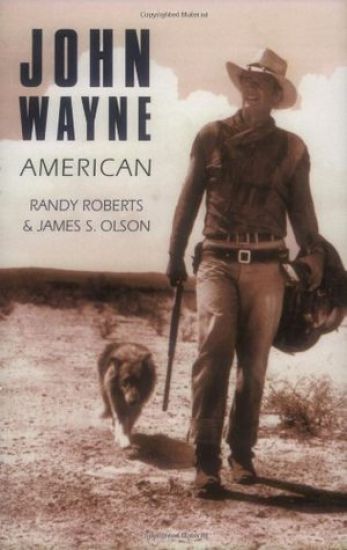
"John Wayne remains a constant in American popular culture. Middle America grew up with him in the late 1920s and 1930s, went to war with him in the 1940s, matured with him in the 1950s, and kept the faith with him in the 1960s and 1970s. . . . In his person and in the persona he so carefully constructed, middle America saw itself, its past, and its future. John Wayne was his country's alter ego." Thus begins John Wayne: American, a biography bursting with vitality and revealing the changing scene in Hollywood and America from the Great Depression through the Vietnam War. During a long movie career, John Wayne defined the role of the cowboy and soldier, the gruff man of decency, the hero who prevailed when the chips were down. But who was he, really? Here is the first substantive, serious view of a contradictory private and public figure.
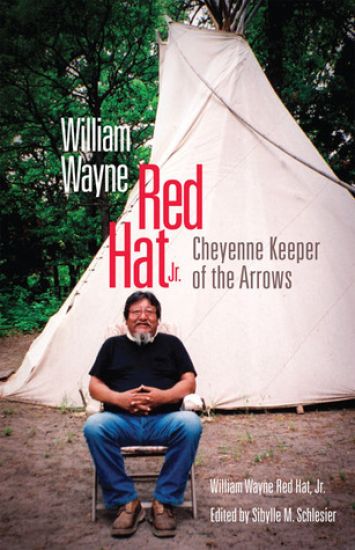
A tribal leader preserves Cheyenne history, beliefs, and cultureAs Keeper of the Arrows, William Wayne Red Hat, Jr., is charged with protecting one of the most sacred possessions of the Cheyenne people and serves his tribe as a revered cultural authority. The Arrow Keeper also oversees and maintains the tribe's spiritual connection to the land.Sibylle Schlesier - whose father, anthropologist Karl Schlesier, was a close associate of Red Hat's family - recorded and transcribed this memoir of Bill Red Hat's life. Through his words, we meet an intelligent, humble man who cares deeply about the perpetuation of his people's cultural identity and the preservation of their beliefs. His descriptions of ceremonies and traditions will serve as a guide to help keep them alive for posterity. Red Hat conveys an oral tradition that preserves stories and memories of his people as well as accounts of historical events passed down within his family.
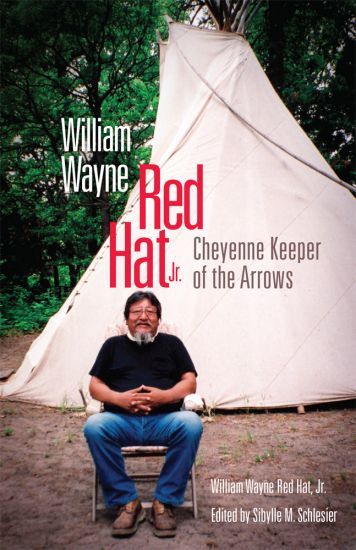
As Keeper of the Arrows, William Wayne Red Hat, Jr., is charged with protecting one of the most sacred possessions of the Cheyenne people and serves his tribe as a revered cultural authority. The Arrow Keeper also oversees and maintains the tribe’s spiritual connection to the land.Sibylle Schlesier—whose father, anthropologist Karl Schlesier, was a close associate of Red Hat’s family—recorded and transcribed this memoir of Bill Red Hat’s life. Through his words, we meet an intelligent, humble man who cares deeply about the perpetuation of his people’s cultural identity and the preservation of their beliefs. His descriptions of ceremonies and traditions will serve as a guide to help keep them alive for posterity. Red Hat conveys an oral tradition that preserves stories and memories of his people as well as accounts of historical events passed down within his family.
John Wayne was the most popular and the most durable star in film history. He was also a national legend, a folk hero, and a powerful symbol of the American Dream. Levy evaluates Wayne's film oeuvre by comparing him with other major stars of his generation and demonstrates that of all American actors, he came closest to the notion of 'actor-as-auteur.'
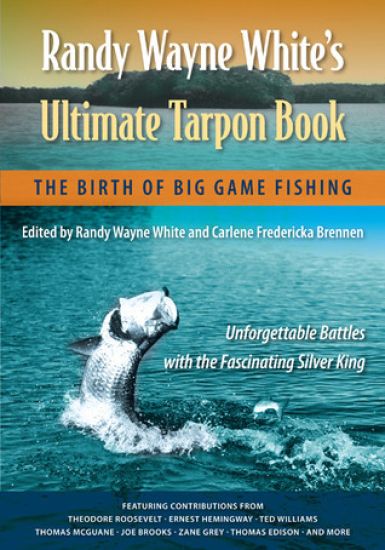
Randy Wayne White's Ultimate Tarpon Book
University Press of Florida
2012
nidottu
When William Halsey Wood landed the first big tarpon ever caught on rod and reel, news quickly spread. This 1885 event changed the face and fabric of sports fishing and helped make Southwest Florida a mecca for anglers from all parts of the world. Today, the silver king remains one of the most sought-after of all game fish.Randy Wayne White's Ultimate Tarpon Book offers everything you could ever want to know about the origins of big game fishing, told in the words of those who were there. Zane Grey and Theodore Roosevelt fished for tarpon, so did Ernest Hemingway, Thomas Edison, Frederic Remington, and many others. The stories and narratives they wrote based on their experiences--along with those of more than 100 other contributors, including some of the best outdoor writers of our time--are presented here. The book includes information on the pioneer tarpon guides, the historic tarpon lodges, the innkeepers, the outfitters, the boat builders, and the scientists that made Fort Myers the greatest big game fishing resort in the country.Randy Wayne White spent thirteen years as a professional tarpon guide, and Carlene Fredericka Brennen tournament fished for fifteen years for the silver king. For decades they have been collecting books, research papers, and popular literature on the tarpon. The best of their catch is presented here, complete with stories, commentary, and an introduction by White. The result is a book that no serious angler can be without!
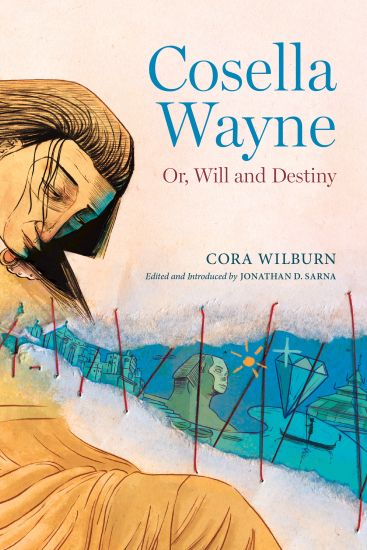
The first novel written and published in English by an American Jewish woman. Published serially in the spiritualist journal Banner of Light in 1860, Cosella Wayne, or Will and Destiny is the first coming-of-age novel to depict Jews in the United States and transforms what we know about the history of early American Jewish literature. The novel never appeared in book form, went unmentioned in Jewish newspapers of the day, and studies of nineteenth-century American Jewish literature ignore it completely. Yet the novel anticipates central themes of American Jewish writing: intermarriage, generational tension, family dysfunction, Jewish-Christian relations, immigration, poverty, the place of women in Jewish life, the nature of romantic love, and the tension between destiny and free will. The narrative recounts a relationship between an abusive Jewish father and the rebellious daughter he molested as well as that daughter's efforts at finding a place in the complex social fabric of nineteenth-century America. It is also unique in portraying such themes as an unmarried Jewish woman's descent into poverty, her forlorn years as a starving orphaned seamstress, her apostasy and return to Judaism, and her quest to be both Jewish and a spiritualist at one and the same time. Jonathan Sarna, who introduces the volume, discovered Cosella Wayne while pursuing research at the Israel Institute for Advanced Studies in Jerusalem. This edition is supplemented with Cora Wilburn's recently rediscovered diary, selections from which are reprinted in the appendix. Together, these materials help to situate Cosella Wayne within the life and times of one of nineteenth-century American Jewry's least known and yet most prolific female authors.
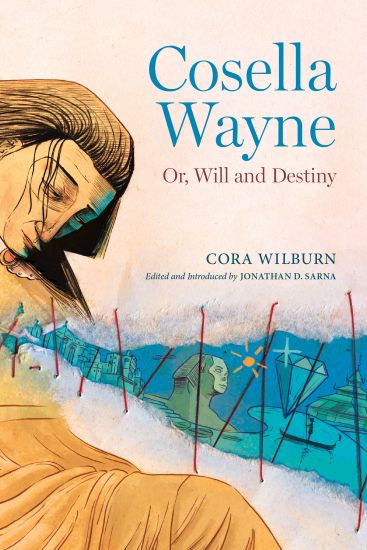
The first novel written and published in English by an American Jewish woman. Published serially in the spiritualist journal Banner of Light in 1860, Cosella Wayne, or Will and Destiny is the first coming-of-age novel to depict Jews in the United States and transforms what we know about the history of early American Jewish literature. The novel never appeared in book form, went unmentioned in Jewish newspapers of the day, and studies of nineteenth-century American Jewish literature ignore it completely. Yet the novel anticipates central themes of American Jewish writing: intermarriage, generational tension, family dysfunction, Jewish-Christian relations, immigration, poverty, the place of women in Jewish life, the nature of romantic love, and the tension between destiny and free will. The narrative recounts a relationship between an abusive Jewish father and the rebellious daughter he molested as well as that daughter's efforts at finding a place in the complex social fabric of nineteenth-century America. It is also unique in portraying such themes as an unmarried Jewish woman's descent into poverty, her forlorn years as a starving orphaned seamstress, her apostasy and return to Judaism, and her quest to be both Jewish and a spiritualist at one and the same time. Jonathan Sarna, who introduces the volume, discovered Cosella Wayne while pursuing research at the Israel Institute for Advanced Studies in Jerusalem. This edition is supplemented with Cora Wilburn's recently rediscovered diary, selections from which are reprinted in the appendix. Together, these materials help to situate Cosella Wayne within the life and times of one of nineteenth-century American Jewry's least known and yet most prolific female authors.
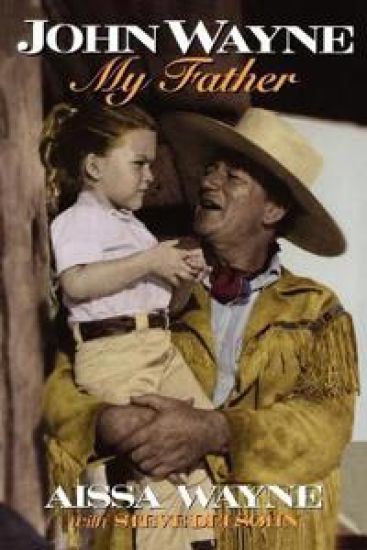
In John Wayne: My Father, Aissa Wayne delves into her father's childhood, his film career, and his life off the screen. The result is an affecting portrait that offers a new perspective on one of America's most enduring hero's humanity.
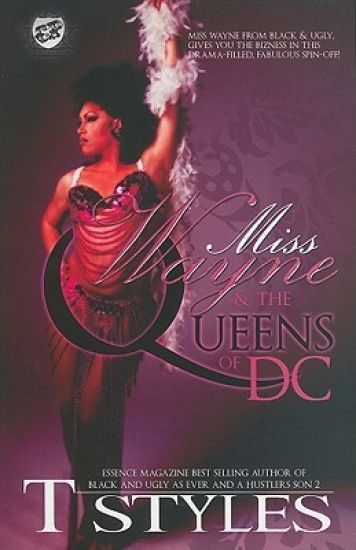
Miss Wayne & The Queens of DC (The Cartel Publications Presents)
T Styles
Cartel Publications
2010
pokkari

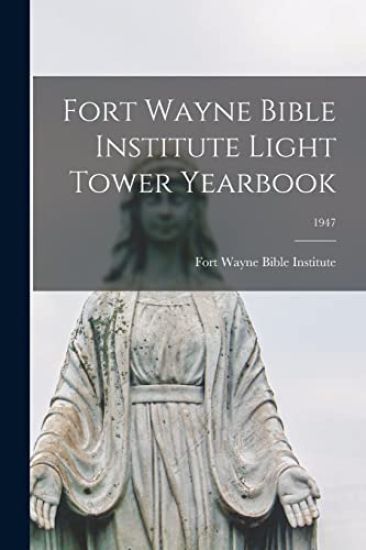
Fort Wayne Bible Institute Light Tower Yearbook; 1947
Fort Wayne Bible Institute
Hassell Street Press
2021
nidottu
This work has been selected by scholars as being culturally important and is part of the knowledge base of civilization as we know it.This work is in the public domain in the United States of America, and possibly other nations. Within the United States, you may freely copy and distribute this work, as no entity (individual or corporate) has a copyright on the body of the work.Scholars believe, and we concur, that this work is important enough to be preserved, reproduced, and made generally available to the public. To ensure a quality reading experience, this work has been proofread and republished using a format that seamlessly blends the original graphical elements with text in an easy-to-read typeface.We appreciate your support of the preservation process, and thank you for being an important part of keeping this knowledge alive and relevant.
Fort Wayne Bible Institute Light Tower Yearbook; 1935
Fort Wayne Bible Institute
Hassell Street Press
2021
nidottu
Fort Wayne Bible Institute The Bible Vision; August, 1943, Vol VII, No 6
Fort Wayne Bible Institute
Hassell Street Press
2021
nidottu
This work has been selected by scholars as being culturally important and is part of the knowledge base of civilization as we know it.This work is in the public domain in the United States of America, and possibly other nations. Within the United States, you may freely copy and distribute this work, as no entity (individual or corporate) has a copyright on the body of the work.Scholars believe, and we concur, that this work is important enough to be preserved, reproduced, and made generally available to the public. To ensure a quality reading experience, this work has been proofread and republished using a format that seamlessly blends the original graphical elements with text in an easy-to-read typeface.We appreciate your support of the preservation process, and thank you for being an important part of keeping this knowledge alive and relevant.