

Kirjahaku
Etsi kirjoja tekijän nimen, kirjan nimen tai ISBN:n perusteella.
1000 tulosta hakusanalla William A. Cook





Stanley K. Sheinbaum: A 20th Century Knight's Quest for Peace, Civil Liberties and Economic Justice
William a. Meis Jr; Stanley K. Sheinbaum
Fairtree
2012
nidottu

A Key to the Solar Compass, and Surveyor's Companion; Comprising All the Rules Necessary for Use in the Field
William a Burt
Trieste Publishing
2018
nidottu

Christian Science; An Exposition of Mrs. Eddy's Wonderful Discovery, Including Its Legal Aspects; A Plea for Children and Other Helpless Sick
William A Purrington
Trieste Publishing
2018
nidottu

House for Hope was the first attempt to use process theology to explain the possibilities of hope for our era. William Beardslee made a radical interpretation of Jesus Christ from the perspectives of Whiteheadian philosophy and panentheistic theology, all while being firmly based in the Judeo-Christian tradition. Here now in reprint, Beardslee's way of restructuring our imagination continues to allow us to be both modern individuals and have hope.

The Description for this book, Person and God in a Spanish Valley, will be forthcoming.

From grappling with a band of miners who kidnap his bride to a running battle with Colonel Mackenzie, or "Bad Hand" as the natives called him, this book is one heart pounding adventure after another. When the princess is killed by Mackenzie and Charlie's hopes for the future are seemingly ground to dust, he goes rogue, forming a band of like minded raiders. During one of his attacks on a caravan, he saves the beautiful and intelligent teacher Rebecca and finds he may actually be able to love again. Will he find his soul mate and exact revenge on Mackenzie?


From the monarchical terror of the Middle Ages to the mangled Europe of the twenty-first century, A People's History of Modern Europe tells the history of the continent through the deeds of those whom mainstream history tries to forget. Europe provided the perfect conditions for a great number of political revolutions from below. The German peasant wars of Thomas Müntzer, the bourgeois revolutions of the eighteenth century, the rise of the industrial worker in England, the turbulent journey of the Russian Soviets, the role of the European working class throughout the Cold War, student protests in 1968 and through to the present day, when we continue to fight to forge an alternative to the barbaric economic system. By focusing on the role of women, trade unions and students, this history sweeps away the tired platitudes of the privileged upon which our current understanding is based, providing an opportunity to see our history differently.
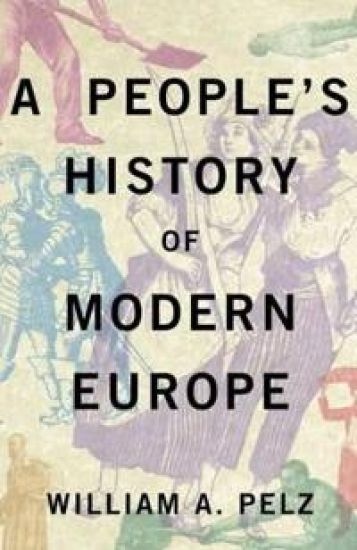
From the monarchical terror of the Middle Ages to the mangled Europe of the twenty-first century, A People's History of Modern Europe tells the history of the continent through the deeds of those whom mainstream history tries to forget. Europe provided the perfect conditions for a great number of political revolutions from below. The German peasant wars of Thomas Müntzer, the bourgeois revolutions of the eighteenth century, the rise of the industrial worker in England, the turbulent journey of the Russian Soviets, the role of the European working class throughout the Cold War, student protests in 1968 and through to the present day, when we continue to fight to forge an alternative to the barbaric economic system. By focusing on the role of women, trade unions and students, this history sweeps away the tired platitudes of the privileged upon which our current understanding is based, providing an opportunity to see our history differently.
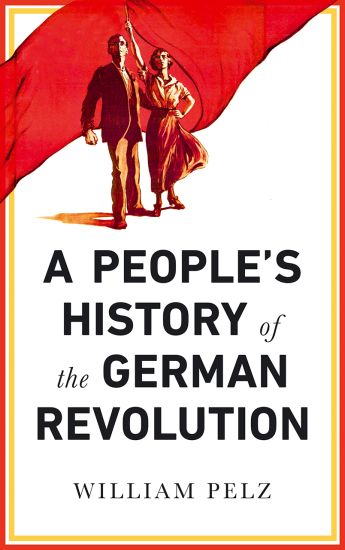
In October 1918, war-weary German sailors mutinied when the Imperial Naval Command ordered their engagement in one final, fruitless battle with the British Royal Navy. This revolt, in the dying embers of the First World War, quickly erupted into a full scale revolution that toppled the monarchy and inaugurated a period of radical popular democracy. The establishment of the Weimar Republic in 1919 ended the revolution, relegating all but its most prominent leaders to a historical footnote. In A People's History of the German Revolution, William A. Pelz cuts against the grain of mainstream accounts that tend to present the revolution as more of a 'collapse', or just a chaotic interregnum that preceded the country's natural progression into a republic. Going beyond the familiar names of Karl Liebknecht, Rosa Luxemburg or Clara Zetkins, Pelz explores the revolution from the bottom up, focusing on the active role that women, rank-and-file activists, and ordinary workers played in its events. Rejecting the depiction of agency as exclusively in the hands of international actors like Woodrow Wilson or in those of German elites, he makes the compelling case that, for a brief period, the actions of the common people shaped a truly revolutionary society.
In October 1918, war-weary German sailors mutinied when the Imperial Naval Command ordered their engagement in one final, fruitless battle with the British Royal Navy. This revolt, in the dying embers of the First World War, quickly erupted into a full scale revolution that toppled the monarchy and inaugurated a period of radical popular democracy. The establishment of the Weimar Republic in 1919 ended the revolution, relegating all but its most prominent leaders to a historical footnote. In A People's History of the German Revolution, William A. Pelz cuts against the grain of mainstream accounts that tend to present the revolution as more of a 'collapse', or just a chaotic interregnum that preceded the country's natural progression into a republic. Going beyond the familiar names of Karl Liebknecht, Rosa Luxemburg or Clara Zetkins, Pelz explores the revolution from the bottom up, focusing on the active role that women, rank-and-file activists, and ordinary workers played in its events. Rejecting the depiction of agency as exclusively in the hands of international actors like Woodrow Wilson or in those of German elites, he makes the compelling case that, for a brief period, the actions of the common people shaped a truly revolutionary society.



A Martin Genealogy Tied to the History of Germanna, Virginia
William A Martin
Heritage Books
2018
pokkari
This book contains a short history of Germanna and Germantown, Virginia; the small band of miners and their families who founded them; and the circumstances of their travel from the Nassau-Siegen District in Germany. Specifically covered is the family of John Joseph Martin (Johann Jost Merten). He was born May 24, 1691 in Muesen, Nassau-Siegen, Germany, and emigrated from Germany in 1713 with the first Germanna colony of 1714; his ancestry goes back to the 1500s. Martin's descendants are covered at great length, and the major allied families of Ehresmann, Fischbach/Fishback, Heimbach, Knieling/Kneiling, Moore, Otterbach/Utterback, Richter/Rector, Stuell/Still, Turner, Wendling, and Zachmann are covered to at least three generations in the appendix. Two indexes provide easy access to the names of people and places found in the text.
