Kirjojen hintavertailu. Mukana 11 699 587 kirjaa ja 12 kauppaa.

Kirjahaku

Etsi kirjoja tekijän nimen, kirjan nimen tai ISBN:n perusteella.

1000 tulosta hakusanalla "Protest"

Environmental Protest in Western Europe

Environmental Protest in Western Europe

Christopher Rootes

Oxford University Press
2003
sidottu
The rise of environmentalism has been one of the more remarkable developments in the politics of western societies in recent decades. However, as environmental awareness has become more generalized, the forms of expression of environmental concern have changed. Established environmental movement organizations have become embedded in policy networks, but, in some countries, there has been a resurgence of environmental radicalism. New groups, adopting innovative tactics, have mounted spectacular and disruptive protests. These developments pose interesting questions for social scientists and policy-makers. Has the institutionalization of established environmental organizations demobilized their supporters and reduced them to a passive, credit-card waving 'conscience' constituency? Has direct participation in environmental protest become the specialized activity of smaller numbers of people? Has there been a decline in the total volume of environmental protest, or is it merely that the forms of protest have changed? Have the protest repertoires of established groups moderated over time, or have they been stimulated by the emergence of more radical groups to adopt more challenging tactics? Has environmental protest become more confrontational? Do protests employ different repertoires of action according to the issues at stake? How does the incidence of protest vary over time and from one country to another? Is there evidence of a Europeanization of either the issues or the forms of environmental protest? These are some of the questions this volume addresses. Based upon an analysis of the protest events reported in one quality newspaper in each of eight countries during the ten years 1988 to 1997, this is the first systematically comparative study of environmental protest in a representative cross-section of EU member states. It breaks entirely new ground in the study of environmental politics in Europe and is a major contribution to the study of protest events.
From Protest to Parties

From Protest to Parties

Adrienne LeBas

Oxford University Press
2011
sidottu
Why do strong opposition party organizations emerge in some democratizing countries, while parties in others remain weak or fragmented? Does polarization undermine democratization, or might it play an important role in party-building? From Protest to Parties examines differences in opposition party strength in hybrid regimes in Africa. These political systems, which mix democratic and authoritarian characteristics, are a novel terrain in which to study party formation and organizational development. In order to understand why some parties are able to transcend ethnic cleavages, LeBas points to differences in past patterns of authoritarian rule. Where authoritarian states relied on alliances with corporate actors, notably organized labor, they unintentionally armed their allies, providing them with structures and resources that could later be used to mobilize large constituencies and effectively challenge the state. From Protest to Parties also suggests that conflict can help build the institutions necessary for democracy just as surely as it can endanger them. Opposition parties are more likely to maintain their organizational cohesion and the commitment of activists when they use strategies and appeals that escalate conflict and re-orient social boundaries around the lines of partisan affiliation. Polarization forges stronger parties, but it also increases the likelihood of violence and authoritarian retrenchment. From Protest to Parties draws upon an in-depth analysis of three countries in Anglophone Africa: Zimbabwe, Zambia, and Kenya. Though these countries share similar institutions and electoral rules, opposition party development takes a different route in each. In addition to providing a unique window into the politics of mobilization and protest in closed political regimes, the book sheds light on how the choices of political elites affect organizational development.
From Protest to Parties

From Protest to Parties

Adrienne LeBas

Oxford University Press
2013
nidottu
Why do strong opposition party organizations emerge in some democratizing countries, while those in others remain weak or quickly fragment on ethnic lines? From Protest to Parties provides an explanation for differences in opposition party strength in democratizing regimes in Africa that remain far from democratic. The book argues that strong parties benefit from pre-existing mobilizing structures that transcend ethnic and other cleavages. These mobilizing structures are a legacy of authoritarian rule. Where authoritarian states relied on alliances with corporate actors, notably organized labor, they unintentionally armed their allies, providing them with structures and resources that could later be used to effectively challenge the state. Secondly, opposition parties are more likely to maintain their organizational cohesion and the commitment of activists when they use strategies and appeals that escalate conflict and reorient social boundaries around the lines of partisan affiliation. Polarization forges stronger parties, but it also increases the likelihood of violence and authoritarian retrenchment. From Protest to Parties draws upon an in-depth analysis of three countries in Anglophone Africa: Zimbabwe, Zambia and Kenya. Though these countries share similar institutional frameworks, including electoral rules, opposition party development takes a different route in each. In addition to providing a unique window into the politics of mobilization and protest in closed political regimes, the book sheds light on how the choices of political elites affect organizational development.
Radical Protest and Social Structure

Radical Protest and Social Structure

Michael Schwartz

University of Chicago Press
1988
nidottu
"Michael Schwartz's book is really three books in one—an analysis of the structural changes that produced one of the most oppressive social systems the world has known (the one-crop cotton tenancy economy and the system of institutionalized racism and authoritarian one-party politics that was required to preserve the fragile economic arrangement); a theoretical analysis of the origins, mobilization, and outcome of insurgent challenges; and a meticulous application of that theory to the rise and collapse of the Populist movement."—Craig Jenkins, Theory and Society
Accommodating Protest

Accommodating Protest

Arlene MacLeod

Columbia University Press
1993
pokkari
This book explores the puzzling phenomenon of new veiling practices among lower middle class women in Cairo, Egypt. Although these women are part of a modernizing middle class, they also voluntarily adopt a traditional symbol of female subordination. How can this paradox be explained? An explanation emerges which reconceptualizes what appears to be reactionary behavior as a new style of political struggle--as accommodating protest. These women, most of them clerical workers in the large government bureaucracy, are ambivalent about working outside the home, considering it a change which brings new burdens as well as some important benefits. At the same time they realize that leaving home and family is creating an intolerable situation of the erosion of their social status and the loss of their traditional identity. The new veiling expresses women's protest against this. MacLeod argues that the symbolism of the new veiling emerges from this tense subcultural dilemma, involving elements of both resistance and acquiescence.
Playful Protest

Playful Protest

Kristie Soares

UNIVERSITY OF ILLINOIS PRESS
2023
sidottu
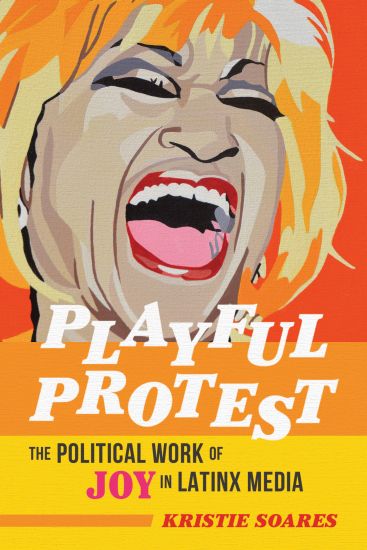
Pleasure-based politics in Puerto Rican and Cuban pop culture Joy is a politicized form of pleasure that goes beyond gratification to challenge norms of gender, sexuality, race, and class. Kristie Soares focuses on the diasporic media of Puerto Rico and Cuba to examine how music, public activist demonstrations, social media, sitcoms, and other areas of culture resist the dominant stories told about Latinx joy. As she shows, Latinx creators compose versions of joy central to social and political struggle and at odds with colonialist and imperialist narratives that equate joy with political docility and a lack of intelligence. Soares builds her analysis around chapters that delve into gozando in salsa music, precise joy among the New Young Lords Party, choteo in the comedy ¿Qué Pasa U.S.A.?, azúcar in the life and death of Celia Cruz, dale as Pitbull’s signature affect, and Alexandria Ocasio-Cortez’s use of silliness to take seriously political violence. Daring and original, Playful Protest examines how Latinx creators resist the idea that joy only exists outside politics and activist struggle.
Playful Protest

Playful Protest

Kristie Soares

UNIVERSITY OF ILLINOIS PRESS
2023
nidottu
Pleasure-based politics in Puerto Rican and Cuban pop culture Joy is a politicized form of pleasure that goes beyond gratification to challenge norms of gender, sexuality, race, and class. Kristie Soares focuses on the diasporic media of Puerto Rico and Cuba to examine how music, public activist demonstrations, social media, sitcoms, and other areas of culture resist the dominant stories told about Latinx joy. As she shows, Latinx creators compose versions of joy central to social and political struggle and at odds with colonialist and imperialist narratives that equate joy with political docility and a lack of intelligence. Soares builds her analysis around chapters that delve into gozando in salsa music, precise joy among the New Young Lords Party, choteo in the comedy ¿Qué Pasa U.S.A.?, azúcar in the life and death of Celia Cruz, dale as Pitbull’s signature affect, and Alexandria Ocasio-Cortez’s use of silliness to take seriously political violence. Daring and original, Playful Protest examines how Latinx creators resist the idea that joy only exists outside politics and activist struggle.
Vietnam Protest Theatre

Vietnam Protest Theatre

Nora M. Alter

Indiana University Press
1996
sidottu
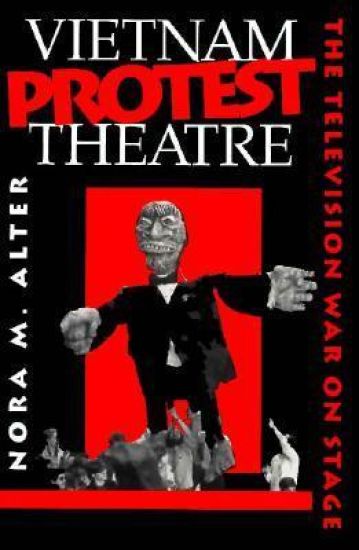
". . . a thoughtful and important treatment of the international tensions of the period as they were embodied in theatre practice. It is the only book of its kind on the subject, and a valuable source of production information." —Theatre Journal " . . . an excellent discussion of the aesthetics of theater." —Choice The escalation of the war in Vietnam in the mid-1960s unleashed worldwide protest. Playwrights grappled with the complexities of post-imperialist politics and with the problems of creating effective political theatre in the television age. The ephemeral theatre these writers created, today little-known and rarely studied, provides an important window on a complex moment in culture and history.
From Protest to Challenge, Volume 5

From Protest to Challenge, Volume 5

Thomas G. Karis; Gail M. Gerhart

Indiana University Press
1997
sidottu
"The essays are meticulous and carefully documented accounts which maintain the standard of excellence set by the previous volumes, all of which belong in every library." —Choice "Based on extensive documentary archives collected by these researchers, and augmented by interviews with virtually all of the significant antiapartheid activists, this volume covers a formative period in the struggle against white minority rule, 1964-1979." —Africa Today " . . . a substantial achievement . . . a wonderful resource for future generations of scholars." —South African Historical Journal "Karis and Gerhart's fifth volume is an invaluable addition to their earlier documentary history of the national liberation struggle in South Africa, and includes a priceless collection of new primary historical sources. It ignites vivid flashes of memory . . . " —from the Foreword by Nelson Mandela Volume 5 of this magnificent historical record continues the indispensable study of the struggle for freedom and justice in South Africa. In addition to extensive background essays, it includes formal documents, underground and ephemeral materials, and statements written in exile or in Robben Island prison that have not previously been published.
Polite Protest

Polite Protest

Richard B. Pierce

Indiana University Press
2005
sidottu
This history of the black community of Indianapolis in the 20th century focuses on methods of political action—protracted negotiations, interracial coalitions, petition, and legal challenge—employed to secure their civil rights. These methods of "polite protest" set Indianapolis apart from many Northern cities. Richard B. Pierce looks at how the black community worked to alter the political and social culture of Indianapolis. As local leaders became concerned with the city's image, black leaders found it possible to achieve gains by working with whites inside the existing power structure, while continuing to press for further reform and advancement. Pierce describes how Indianapolis differed from its Northern cousins such as Milwaukee, Chicago, and Detroit. Here, the city's people, black and white, created their own patterns and platforms of racial relations in the public and cultural spheres.
From Protest to Challenge, Volume 6

From Protest to Challenge, Volume 6

Gail M. Gerhart; Clive L. Glaser

Indiana University Press
2010
sidottu
From Protest to Challenge is a multi-volume chronicle of the struggle to achieve democracy and end racial discrimination in South Africa. Beginning in 1882 during the heyday of European imperialism, these volumes document the history of race conflict, protest, and political mobilization by South Africa's black majority. Volume 6 takes up the story in 1980 and examines the crucial decade that preceded the collapse of the apartheid system. As with earlier volumes in the series, it combines narrative with a wealth of primary source materials that record the words of the men and women who shaped South Africa's complex history.
Rural Protest and the Making of Democracy in Mexico, 1968–2000

Rural Protest and the Making of Democracy in Mexico, 1968–2000

Dolores Trevizo

Pennsylvania State University Press
2011
sidottu
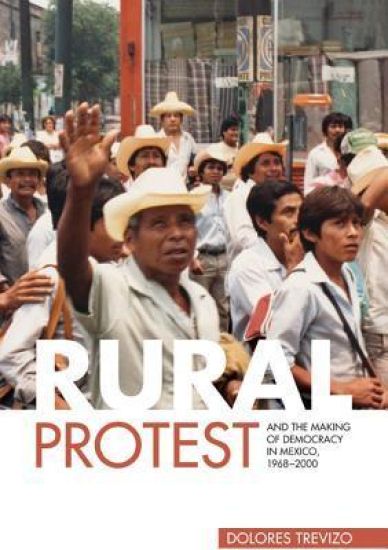
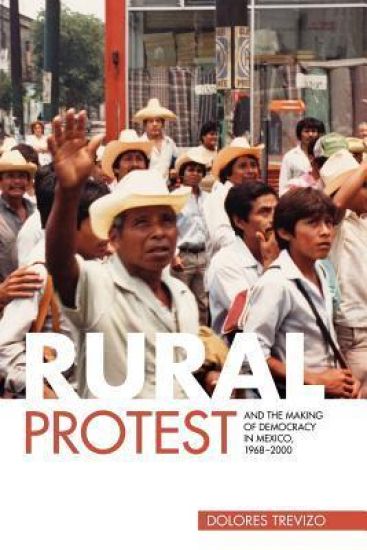
When the PRI fell from power in the elections of 2000, scholars looked for an explanation. Some focused on international pressures, while others pointed to recent electoral reforms. In contrast, Dolores Trevizo argues that a more complete explanation takes much earlier democratizing changes in civil society into account. Her book explores how largely rural protest movements laid the groundwork for liberalization of the electoral arena and the consolidation of support for two opposition parties, the PAN on the right and the PRD on the left, that eventually mounted a serious challenge to the PRI. She shows how youth radicalized by the 1968 showdown between the state and students in Mexico City joined forces with peasant militants in nonviolent rural protest to help bring about needed reform in the political system. In response to this political effervescence in the countryside, agribusinessmen organized in peak associations that functioned like a radical social movement. Their countermovement formulated the ideology of neoliberalism, and they were ultimately successful in mobilizing support for the PAN. Together, social movements and the opposition parties nurtured by them contributed to Mexico’s transformation from a one-party state into a real electoral democracy nearly a hundred years after the Revolution.
Rural Protest and the Making of Democracy in Mexico, 1968–2000

Rural Protest and the Making of Democracy in Mexico, 1968–2000

Dolores Trevizo

Pennsylvania State University Press
2013
pokkari
When the PRI fell from power in the elections of 2000, scholars looked for an explanation. Some focused on international pressures, while others pointed to recent electoral reforms. In contrast, Dolores Trevizo argues that a more complete explanation takes much earlier democratizing changes in civil society into account. Her book explores how largely rural protest movements laid the groundwork for liberalization of the electoral arena and the consolidation of support for two opposition parties, the PAN on the right and the PRD on the left, that eventually mounted a serious challenge to the PRI. She shows how youth radicalized by the 1968 showdown between the state and students in Mexico City joined forces with peasant militants in nonviolent rural protest to help bring about needed reform in the political system. In response to this political effervescence in the countryside, agribusinessmen organized in peak associations that functioned like a radical social movement. Their countermovement formulated the ideology of neoliberalism, and they were ultimately successful in mobilizing support for the PAN. Together, social movements and the opposition parties nurtured by them contributed to Mexico’s transformation from a one-party state into a real electoral democracy nearly a hundred years after the Revolution.
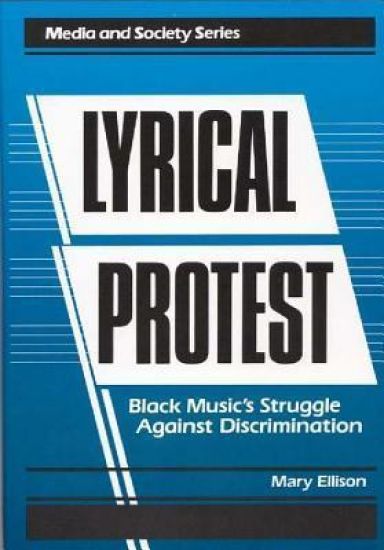
Lyrical Protest

Lyrical Protest

Mary Ellison

Praeger Publishers Inc
1989
sidottu
In this powerful new study Mary Ellison demonstrates the unique role of black music as an articulation of black aspirations and fears, and as a reaction to a range of social, economic, and political realities. She reveals black music as a soundtrack for life in all its complexity. Through a very close examination of lyrics, musical style, and form in black music throughout history, Ellison brings to light a genre of music varied in its intentions and impact; a catalyst for activism and a stimulus for changing attitudes. The book is organized around topical issues and explores such themes as black power, revolution, socialism, black feminism, and world peace.One of the few books on music and social change to deal specifically with black music, this volume begins by tracing all black music to its African roots. In subsequent chapters, the author illustrates how these roots are evident in the lyrics of black music written in the United States, the West Indies, and West Africa. The book is organized around topical issues and explores such themes as black power, revolution, socialism, black feminism, and world peace. Students and scholars of popular culture, black studies, sociology, and political science will find Lyrical Protest a source of stimulating ideas.
Peasant Protest and Social Change in Colonial Korea

Peasant Protest and Social Change in Colonial Korea

Gi-Wook Shin

University of Washington Press
1997
sidottu
The period from 1876 to 1946 in Korea marked a turbulent time when the country opened its market to foreign powers, became subject to Japanese colonialism, and was swept into agricultural commercialization, industrialization, and eventually postcolonial revolutionary movements. Gi-Wook Shin examines how peasants responded to these events, and to their own economic and political circumstances, with protests that shaped the course of postwar revolution in the north and reform in the south. Utilizing interviews, documentary research, and statistical analysis, Shin analyzes variation in peasant activism and its historical, political, and socioeconomic roots, and offers a major revisionist interpretation. The study contributes to an understanding of Korea's rural political economy during the colonial era, Japanese agricultual policy, and the historical legacy of colonialism for post war social and political change in Korea.
Peasant Protest and Social Change in Colonial Korea

Peasant Protest and Social Change in Colonial Korea

Gi-Wook Shin

University of Washington Press
2014
pokkari
The period from 1876 to 1946 in Korea marked a turbulent time when the country opened its market to foreign powers, became subject to Japanese colonialism, and was swept into agricultural commercialization, industrialization, and eventually postcolonial revolutionary movements. Gi-Wook Shin examines how peasants responded to these events, and to their own economic and political circumstances, with protests that shaped the course of postwar revolution in the north and reform in the south. Utilizing interviews, documentary research, and statistical analysis, Shin analyzes variation in peasant activism and its historical, political, and socioeconomic roots, and offers a major revisionist interpretation. The study contributes to an understanding of Korea's rural political economy during the colonial era, Japanese agricultual policy, and the historical legacy of colonialism for post war social and political change in Korea.
The Protest Singer: An Intimate Portrait of Pete Seeger
A spirited and intimate look at American icon and activist Pete Seeger. Throughout his life, Pete Seeger transformed a classic American musical style into a form of peaceful protest against war, segregation, and nuclear weapons. Drawing on his extensive talks with Seeger, Alec Wilkinson delivers a first hand look at Seeger's unique blend of independence and commitment, charm, courage, energy, and belief in human equality and American democracy. We see Seeger as a child, instilled with a love of music by his parents; as a teenager, hearing real folk music for the first time; as a young adult, singing with Woody Guthrie. And finally, Seeger the man marching with the Rev. Martin Luther King in Selma, standing up to McCarthyism, and fighting for his beloved Hudson River. The gigantic life captured in this slender volume is truly an American anthem.
Political Protest and Street Art

Political Protest and Street Art

Lyman Chaffee

Praeger Publishers Inc
1993
sidottu
This first cross-national book-length study of street art as political protest and communication focuses on art forms traditionally used by collectives and state interests in the Hispanic world--posters, wallpaintings, graffiti, murals, shirts, buttons, and stickers, for example. Professor Chaffee examines the motives behind the use of street art as propaganda and seeks to explain how it is effective. Using field research and a sociopolitical approach, he assesses contemporary street art in Spain, the Basque country, Argentina, and Brazil. He shows how street art is a barometer of popular conflicts and sentiments across the political spectrum. This comparative analysis is intended for students, teachers, and professionals in the fields of communication, political science, history, and popular culture.
Rural Protest in the Weimar Republic

Rural Protest in the Weimar Republic

Jonathan Osmond

Palgrave Macmillan
1993
nidottu
This is a study of the radical peasant trade union which thrived in parts of south and west Germany in the 1920s. The Free Peasantry, as it was known, challenged the authority of the state through food delivery strikes, a separatist putsch which ended in bloodshed.