Kirjojen hintavertailu. Mukana 11 717 486 kirjaa ja 12 kauppaa.

Kirjahaku

Etsi kirjoja tekijän nimen, kirjan nimen tai ISBN:n perusteella.

1000 tulosta hakusanalla ART WIEDERHOLD

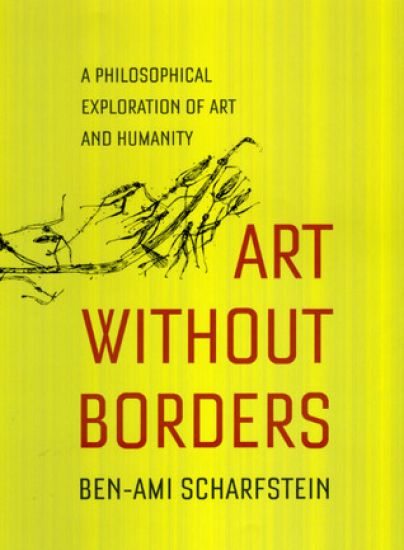
Art Without Borders

Art Without Borders

Ben-Ami Scharfstein

University of Chicago Press
2009
sidottu
People all over the world make art and take pleasure in it, and they have done so for millennia. But acknowledging that art is a universal part of human experience leads us to some big questions: Why does it exist? Why do we enjoy it? And how do the world's different art traditions relate to art and to each other? "Art Without Borders" is an extraordinary exploration of those questions, a profound and personal meditation on the human hunger for art and a dazzling synthesis of the whole range of inquiry into its significance. Esteemed thinker Ben-Ami Scharfstein's encyclopedic erudition is here brought to bear on the full breadth of the world of art. He draws on neuroscience and psychology to understand the way we both perceive and conceive of art, including its resistance to verbal exposition. Through examples of work by Indian, Chinese, European, African, and Australian artists, "Art Without Borders" probes the distinction between accepting a tradition and defying it through innovation, which leads to a consideration of the notion of artistic genius. Continuing in this comparative vein, Scharfstein also examines the mutual influence of European and non-European artists. Then, through a comprehensive evaluation of the world's major art cultures, he shows how all of these individual traditions are gradually, but haltingly, conjoining into a single current of universal art. Finally, he concludes by looking at the ways empathy and intuition can allow members of one culture to appreciate the art of another. Lucid, learned, and incomparably rich in thought and detail, "Art Without Borders" is a monumental accomplishment, on par with the artistic achievements Scharfstein writes about so lovingly in its pages.
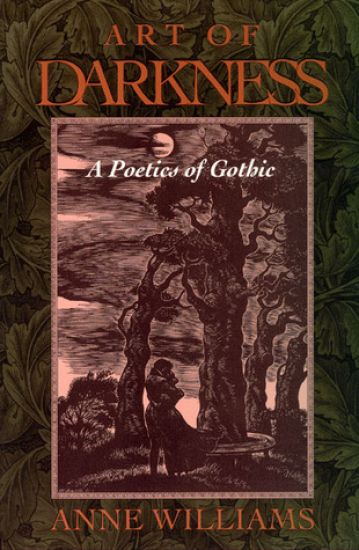
Art of Darkness

Art of Darkness

Anne Williams

University of Chicago Press
1995
nidottu
This text aims to describe the principles governing Gothic literature. Ranging across five centuries of fiction, drama and verse - including tales as diverse as Horace Walpole's "The Castle of Otranto", Shelley's "Frankenstein", Coleridge's "The Rime of the Ancient Mariner" and Freud's "The Mysteries of Enlightenment", Anne Williams proposes three new premises: that Gothic is poetic, not novelistic, in nature; that there are two parallel Gothic traditions - Male and Female; and that the Gothic and the Romantic represent a single literary tradition. Building on the psychoanalytic and feminist theory of Julia Kristeva, Williams argues that Gothic conventions, such as the haunted castle and the family curse, signify the fall of the patriarchal family; Gothic is therefore "poetic" in Kristeva's sense because it reveals those "others" most often identified with the female. Williams identifies distinct Male and Female Gothic traditions. In the Male plot, the protagonist faces a cruel, violent and supernatural world, without hope of salvation. The Female plot, by contrast, asserts the power of the mind to comprehend a world which, though mysterious, is ultimately sensible. By showing how Coleridge and Keats used both Male and Female Gothic, Williams challenges accepted notions about gender and authorship among the Romantics.
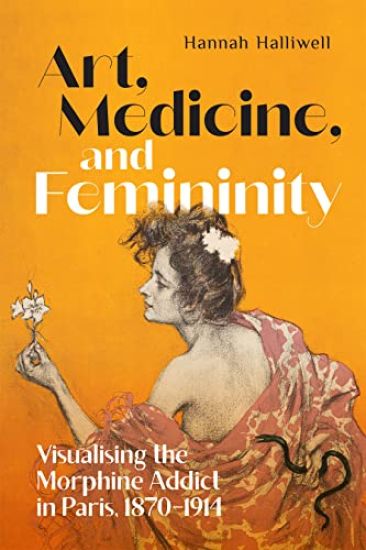
Art, Medicine, and Femininity

Art, Medicine, and Femininity

Hannah Halliwell

MCGILL-QUEEN'S UNIVERSITY PRESS
2023
sidottu
“Paris is the centre of the cult,” wrote Robert Hichens in Felix, his 1902 novel on the rising number of morphine addictions in Europe. In Paris, artists depicted the morphine addict numerous times, yet they disregarded the reality of France’s addiction problem: male medical professionals made up the highest proportion of people who used morphine habitually. In oil paintings, caricatures, and lithographs, artists such as Pablo Picasso, Eugène Grasset, and Théophile Steinlen almost always depicted the morphine addict as a deviant female figure.Artists sensationalized addiction to elicit shock and stand out in the crowded Parisian art market. Their artworks show influences from contemporary medical texts on addiction and artistic depictions of sex workers, lesbians, and other women deemed socially deviant. These images proliferated in French society, creating false narratives about who was or could become addicted to drugs and setting a precedent for the visualization of drug addiction. Hannah Halliwell links the feminization of addiction to broader anxieties in late nineteenth-century France – the defeat by Prussia in 1871, concerns about social decadence, a declining population, and a rising feminist movement.Art, Medicine, and Femininity presents a new understanding of the history of addiction and substance use and its intersection with art and gender.
Art de la Bande Dessinée

Art de la Bande Dessinée

Coloring Bandit

Coloring Bandit
2017
pokkari
L'art est le experssion des pensees, des emotions, des idees et des sentiments. L'art est une activite naturelle chez les enfants. Un moyen populaire d'expression artistique est la coloration. La coloration est la liberte parce qu'il n'y a pas de regles a suivre. Les enfants sont libres d'etre aussi creatifs et imaginatifs qu'ils peuvent l'etre. Encouragez la coloration aujourd'hui
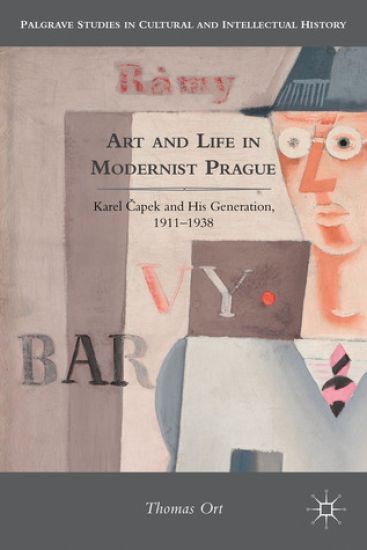
Art and Life in Modernist Prague

Art and Life in Modernist Prague

T. Ort

Palgrave Macmillan
2013
sidottu
In most contemporary historical writing the picture of modern life in Habsburg Central Europe is a gloomy story of the failure of rationalism and the rise of protofascist movements. This book tells a different story, focusing on the Czech writers and artists distinguished by their optimistic view of the world in the years before WWI.
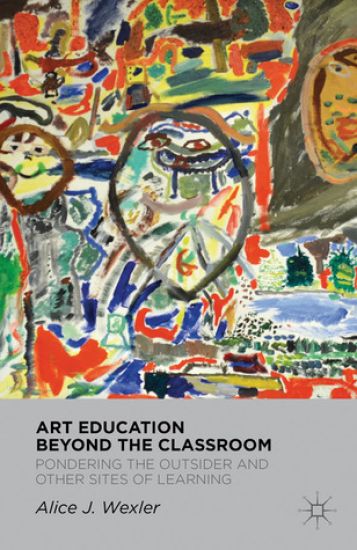
Art Education Beyond the Classroom

Art Education Beyond the Classroom

A. Wexler

Palgrave Macmillan
2012
sidottu
By focusing on children and adults with disabilities, each contributor offers critical research which challenges the non-transferable divide between us and them , encouraging art teachers, therapists, critics, and general readers alike to uncover their biases regarding the nature of art and education.
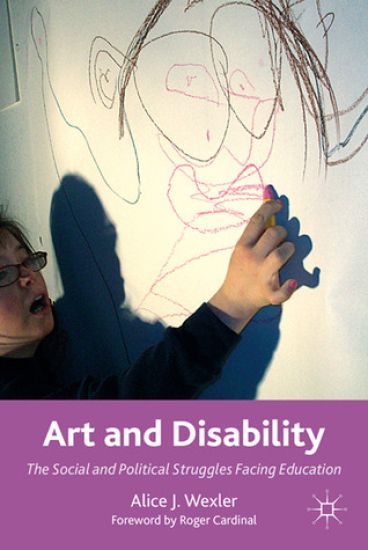
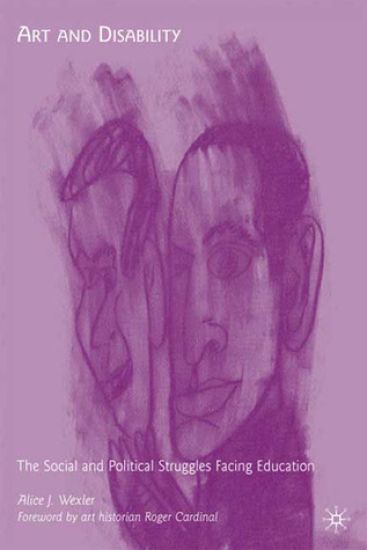
Art and Disability

Art and Disability

A. Wexler

Palgrave Macmillan
2011
nidottu
Wexler argues that the arts are most effective when they are in service of social growth, critical to identity formation. This book balances theory with practical knowledge and offers critical research that challenges the biases regarding the nature of art and education.
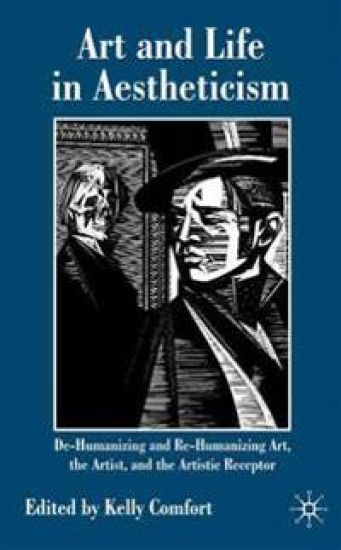
Art and Life in Aestheticism

Art and Life in Aestheticism

Kelly Comfort

Palgrave Macmillan
2008
sidottu
Art for art's sake addresses the relationship between art and life. Although it has long been argued that aestheticism aims to de-humanize art, this volume seeks to consider the counterclaim that such de-humanization can also lead to re-humanization and to a deepened relationship between the aesthetic sphere and the world at large.
Art and Disability

Art and Disability

A. Wexler

Palgrave Macmillan
2009
sidottu
Wexler argues that the arts are most effective when they are in service of social growth, critical to identity formation. This book balances theory with practical knowledge and offers critical research that challenges the biases regarding the nature of art and education.
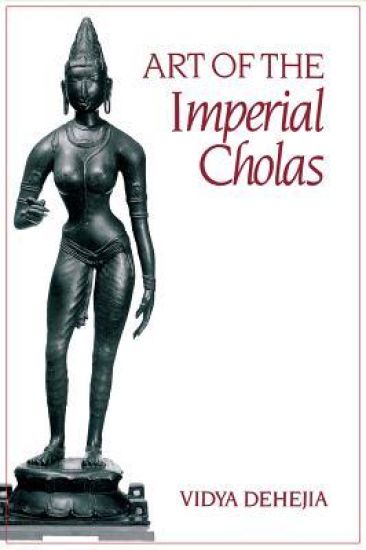
Art of the Imperial Cholas

Art of the Imperial Cholas

Vidya Dehejia

Columbia University Press
1990
sidottu
The rule of the Chola dynasty in South India between the ninth and thirteenth centuries was a period of unparalleled creativity in Indian art. Known as the Golden Age of Tamil Culture, the Chola period produced dynamic royal personalities who shaped the artistic activity of theirtimes. Art of the Imperial Cholas examines the dynasty's architectural and sculptural achievements, which stand among the masterpieces of India.
Art and Technics

Art and Technics

Lewis Mumford; Casey Nelson Blake

Columbia University Press
2000
pokkari
Lewis Mumford - architectural critic, theorist of technology, urbanologist, city planner, cultural critic, historian, biographer, and philosopher - was the author of more than thirty influential books, many of which expounded his views on the perils of urban sprawl and a society obsessed with "technics." Featuring a new introduction by Casey Nelson Blake, this classic text provides the essence of Mumford's views on the distinct yet interpenetrating roles of technology and the arts in modern culture. Mumford contends that modern man's overemphasis on technics has contributed to the depersonalization and emptiness of much of twentieth-century life. He issues a call for a renewed respect for artistic impulses and achievements. His repeated insistence that technological development take the Human as its measure - as well as his impassioned plea for humanity to make the most of its "splendid potentialities and promise" and reverse its progress toward anomie and destruction - is ever more relevant as the new century dawns.
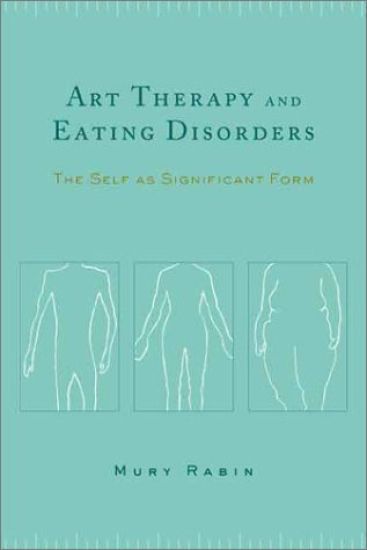
Art Therapy and Eating Disorders

Art Therapy and Eating Disorders

Mury Rabin

Columbia University Press
2003
sidottu
Art Therapy and Eating Disorders is a step-by-step approach to a new and extremely promising technique for treating people with eating disorders-children as well as adults, male and female sufferers alike-that has proven to be a crucial aid to identification, prevention, and intervention. Mury Rabin demonstrates how her award-winning art therapy technique, known as Phenomenal and Nonphenomenal Body Image Tasks or "PNBIT," can be used by clinicians other than art therapists and shows its effectiveness in combination with diverse therapeutic techniques. Unlike traditional therapy programs that treat symptoms, this technique focuses on root causes and consists of a series of tasks-some phenomenal: weight recording, mirror viewing, and body dimension estimates; others not: chromatic family line drawings and body image mandalas. The book includes five case studies that illustrate how the PNBIT technique functions in practice.
Art Therapy and Eating Disorders

Art Therapy and Eating Disorders

Mury Rabin

Columbia University Press
2003
pokkari
Art Therapy and Eating Disorders is a step-by-step approach to a new and extremely promising technique for treating people with eating disorders-children as well as adults, male and female sufferers alike-that has proven to be a crucial aid to identification, prevention, and intervention. Mury Rabin demonstrates how her award-winning art therapy technique, known as Phenomenal and Nonphenomenal Body Image Tasks or "PNBIT," can be used by clinicians other than art therapists and shows its effectiveness in combination with diverse therapeutic techniques. Unlike traditional therapy programs that treat symptoms, this technique focuses on root causes and consists of a series of tasks-some phenomenal: weight recording, mirror viewing, and body dimension estimates; others not: chromatic family line drawings and body image mandalas. The book includes five case studies that illustrate how the PNBIT technique functions in practice.
Art’s Claim to Truth

Art’s Claim to Truth

Gianni Vattimo

Columbia University Press
2008
sidottu
First collected in Italy in 1985, Art's Claim to Truth is considered by many philosophers to be one of Gianni Vattimo's most important works. Newly revised for English readers, the book begins with a challenge to Plato, Aristotle, Kant, and Hegel, who viewed art as a metaphysical aspect of reality rather than a futuristic anticipation of it. Following Martin Heidegger's interpretation of the history of philosophy, Vattimo outlines the existential ontological conditions of aesthetics, paying particular attention to the works of Kandinsky, which reaffirm the ontological implications of art. Vattimo then builds on Hans-Georg Gadamer's theory of aesthetics and provides an alternative to a rationalistic-positivistic criticism of art. This is the heart of Vattimo's argument, and with it he demonstrates how hermeneutical philosophy reaffirms art's ontological status and makes clear the importance of hermeneutics for aesthetic studies. In the book's final section, Vattimo articulates the consequences of reclaiming the ontological status of aesthetics without its metaphysical implications, holding Aristotle's concept of beauty responsible for the dissolution of metaphysics itself. In its direct engagement with the works of Gadamer, Heidegger, and Luigi Pareyson, Art's Claim to Truth offers a better understanding of the work of Vattimo and a deeper knowledge of ontology, hermeneutics, and the philosophical examination of truth.
Art’s Claim to Truth

Art’s Claim to Truth

Gianni Vattimo

Columbia University Press
2010
pokkari
First collected in Italy in 1985, Art's Claim to Truth is considered by many philosophers to be one of Gianni Vattimo's most important works. Newly revised for English readers, the book begins with a challenge to Plato, Aristotle, Kant, and Hegel, who viewed art as a metaphysical aspect of reality rather than a futuristic anticipation of it. Following Martin Heidegger's interpretation of the history of philosophy, Vattimo outlines the existential ontological conditions of aesthetics, paying particular attention to the works of Kandinsky, which reaffirm the ontological implications of art. Vattimo then builds on Hans-Georg Gadamer's theory of aesthetics and provides an alternative to a rationalistic-positivistic criticism of art. This is the heart of Vattimo's argument, and with it he demonstrates how hermeneutical philosophy reaffirms art's ontological status and makes clear the importance of hermeneutics for aesthetic studies. In the book's final section, Vattimo articulates the consequences of reclaiming the ontological status of aesthetics without its metaphysical implications, holding Aristotle's concept of beauty responsible for the dissolution of metaphysics itself. In its direct engagement with the works of Gadamer, Heidegger, and Luigi Pareyson, Art's Claim to Truth offers a better understanding of the work of Vattimo and a deeper knowledge of ontology, hermeneutics, and the philosophical examination of truth.
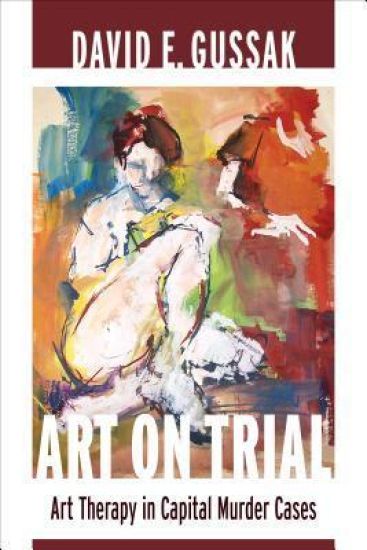
Art on Trial

Art on Trial

David E. Gussak

Columbia University Press
2013
sidottu
A man kidnaps his two children, murders one, and attempts to kill the other. The prosecution seeks the death penalty, while the defense employs an unusual strategy to avoid the sentence. The defendant's attorneys turn to more than 100 examples of his artwork, created over many years, to determine whether he was mentally ill at the time he committed the crimes. Detailing an outstanding example of the use of forensic art therapy in a capital murder case, David Gussak, an art therapist contracted by the defense to analyze the images that were to be presented as evidence, recounts his findings and his testimony in court, as well as the future implications of his work for criminal proceedings. Gussak describes the role of the art therapist as an expert witness in a murder case, the way to use art as evidence, and the conclusions and assessments that professionals can draw from a defendant's artworks. He examines the effectiveness of expert testimony as communicated by the prosecution, defense, and court, and weighs the moral, ethical, and legal consequences of relying on such evidence. For professionals and general readers, this gripping volume presents a convincing account of the ability of art to reflect a damaged and dangerous psyche. A leading text on an emerging field, Art on Trial demonstrates the practical applications of an innovative approach to clinical assessment and treatment.
Art on Trial

Art on Trial

David E. Gussak

Columbia University Press
2015
pokkari
A man kidnaps his two children, murders one, and attempts to kill the other. The prosecution seeks the death penalty, while the defense employs an unusual strategy to avoid the sentence. The defendant's attorneys turn to more than 100 examples of his artwork, created over many years, to determine whether he was mentally ill at the time he committed the crimes. Detailing an outstanding example of the use of forensic art therapy in a capital murder case, David Gussak, an art therapist contracted by the defense to analyze the images that were to be presented as evidence, recounts his findings and his testimony in court, as well as the future implications of his work for criminal proceedings. Gussak describes the role of the art therapist as an expert witness in a murder case, the way to use art as evidence, and the conclusions and assessments that professionals can draw from a defendant's artworks. He examines the effectiveness of expert testimony as communicated by the prosecution, defense, and court, and weighs the moral, ethical, and legal consequences of relying on such evidence. For professionals and general readers, this gripping volume presents a convincing account of the ability of art to reflect a damaged and dangerous psyche. A leading text on an emerging field, Art on Trial demonstrates the practical applications of an innovative approach to clinical assessment and treatment.
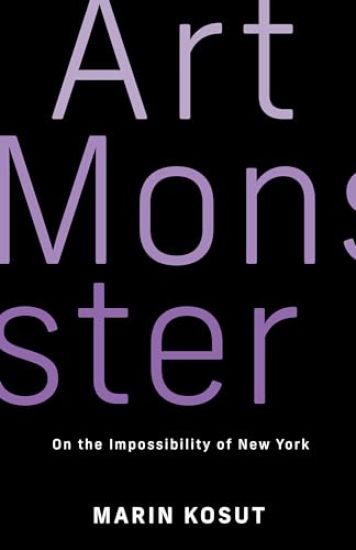
Art Monster

Art Monster

Marin Kosut

Columbia University Press
2024
sidottu
Why do people choose the life of an artist, and what happens when they find themselves barely scraping by? Why does New York City, even in an era of hypergentrification, still beckon to aspiring artists as a place to make art and remake yourself?Art Monster takes readers to the margins of the professional art world, populated by unseen artists who make a living working behind the scenes in galleries and museums while making their own art to little acclaim. Writing in a style that is by turns direct and poetic, personal and lyrical, Marin Kosut reflects on the experience of dedicating your life to art and how the art world can crush you. She examines the push toward professionalization, the devaluing of artistic labor, and the devastating effects of gentrification on cultural life. Her nonlinear essays are linked by central themes—community, nostalgia, precarity, alienation, estrangement—that punctuate working artists’ lives. The book draws from ten years of fieldwork among artists and Kosut’s own experiences curating and cofounding artist-run spaces in Bushwick, Bedford-Stuyvesant, and Chinatown. At once ethnography, memoir, tirade, and love letter, Art Monster is a street-level meditation on the predicament of artists in the late capitalist metropolis.