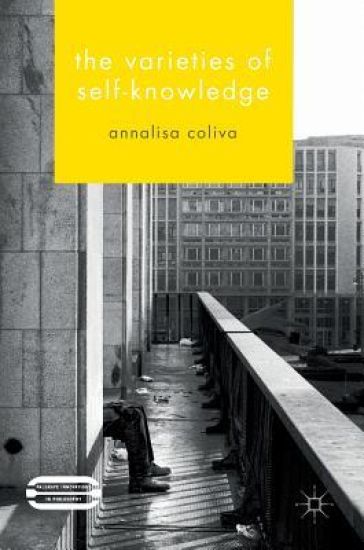
This book explores the idea that self-knowledge comes in many varieties. We “know ourselves” through many different methods, depending on whether we attend to our propositional attitudes, our perceptions, sensations or emotions. Furthermore, sometimes what we call “self-knowledge” is not the result of any substantial cognitive achievement and the characteristic authority we grant to our psychological self-ascription is a conceptual necessity, redeemed by unravelling the structure of several interlocking concepts. This book critically assesses the main contemporary positions held on the epistemology of self-knowledge. These include robust epistemic accounts such as inner sense views and theory-theories; weak epistemic accounts such as transparency theories and rational internalism and externalism; as well as expressivist and constitutivist approaches. The author offers an innovative “pluralist” position on self-knowledge, emphasizing the complexity of the phenomenon and its resistance to any “monistic” treatment, to pose new and intriguing philosophical challenges.
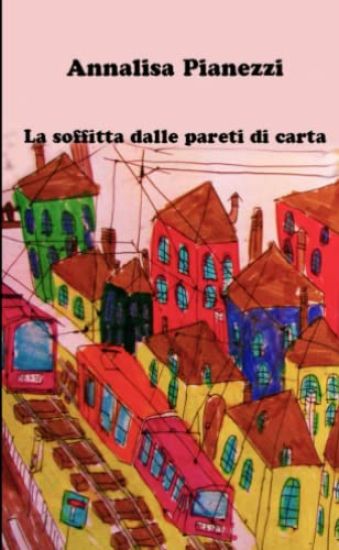
un romanzo ipnotico: Cadono nidi da alberi che non esistono. Poco oltre un salice piegato dal vento; sembra inchinarsi al lago per chiedere clemenza. Un libro ritrovato, un vicolo cieco. Il lago come uno specchio. Il ventre vuoto come una parete spoglia
Dalle ricerche della Media Education alle esperienze regionali italiane, ai progetti nazionali europei, il rapporto tra il linguaggio cinematografico ed i contesti educativi ha fatto scaturire risultati pedagogici fecondi; uno spostamento dall'interesse prettamente cognitivo al coinvolgimento emotivo stata una delle conseguenze della riflessione sul "piacere", quale aspetto centrale della fruizione dei media, cos come sul valore della creativit . Tra le varie esperienze possibili che intrecciano le potenzialit del linguaggio cinematografico agli ambiti di apprendimento, questa ricerca si focalizza sul caso degli Istituti penitenziari, luogo di confine e contesto educativo, dove il cinema ha saputo penetrare, portato da scelte istituzionali o iniziative individuali, dove rimasto per un'unica esperienza o si trasformato in una costante nei piani pedagogici annuali, dove diventato un'opera compiuta, corto o lungometraggio, oppure stato un'uscita fantastica al cinematografo, un'ora d'aria.
Dalle ricerche della Media Education alle esperienze regionali italiane, ai progetti nazionali europei, il rapporto tra il linguaggio cinematografico ed i contesti educativi ha fatto scaturire risultati pedagogici fecondi; uno spostamento dall'interesse prettamente cognitivo al coinvolgimento emotivo stata una delle conseguenze della riflessione sul "piacere", quale aspetto centrale della fruizione dei media, cos come sul valore della creativit . Tra le varie esperienze possibili che intrecciano le potenzialit del linguaggio cinematografico agli ambiti di apprendimento, questa ricerca si focalizza sul caso degli Istituti penitenziari, luogo di confine e contesto educativo, dove il cinema ha saputo penetrare, portato da scelte istituzionali o iniziative individuali, dove rimasto per un'unica esperienza o si trasformato in una costante nei piani pedagogici annuali, dove diventato un'opera compiuta, corto o lungometraggio, oppure stato un'uscita fantastica al cinematografo, un'ora d'aria.
IRDA EDIZIONI Nella poesia di Annalisa Simonte si avverte l'incentivo iniziale da cui sono nate le sue composizioni, si sente che la sua anima ricca di vita interiore, di una risonanza che diviene per lei una ragione di cose belle e nobili, che ispirano alti pensieri e commuovono il cuore e l'immaginazione, piena com' la sua mente di ricordi. La sua squisita facolt di percezione le permette di raccogliere nelle sue parole l'eredit del passato pur nella profonda diversit di contenuto spirituale, ma sempre rivelando un uguale fervore che aiuta il lettore a penetrare nel suo mondo. In esso la poetessa rivela momenti di vera gioia espressiva, i palpiti del suo cuore, le sue riflessioni, per un momentaneo rifugiarsi in un ricordo rassicurante della sua giovinezza, del suo mare pieno di silenzi, di solitudini, ma anche di affascinanti tramonti.
Qualche suggerimento alla fantasia di Nonni e Genitori per i racconti della "buona notte". Un raccontino zoo-geografico da somministrare a piccole dosi alla sera prima della nanna, quando tutti i bimbi stanno buoni e tutti i grandi vorrebbero tornare bambini. Sogni d'oro!
The book discusses the links between primary commodity prices and the OECD rate of unemployment. In particular it formalises and estimates a macroeconomic model which by endogenizing both the OECD rate of unemployment and primary commodity prices, is capable of accounting for the feedback running from the primary market back to the OECD economy. Simulations are also performed to provide insights into the propagation mechanism of an oil price shock and the role played by the various factors to determine the final effect.
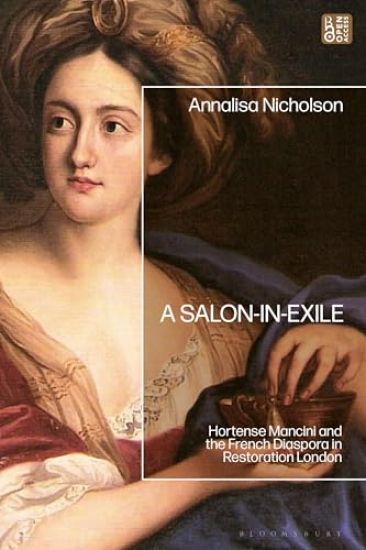
This open access book re-evaluates the influence of the Ancien régime salons, which were the foremost cultural centres in early modern France. Presided over by women, these salons carved out spaces for poetry recitals, performances, and scientific lectures amid polite conversation, enabling mixed-gender intellectual exchange. But what happened when salon attendees were banished from France and exported the salon to a new national audience? How did visitors of different creeds and nationalities share this space? In other words, what happened when the salon model itself went into exile? In A Salon-in-Exile, Annalisa Nicholson explores the translation of the salon from France to England in the late-17th century via the first book-length study of the Mazarin salon. Hosted by Hortense Mancini (Duchess of Mazarin) and Charles de Saint-Évremond, the Mazarin salon quickly became one of the most celebrated salons in Europe and the most vibrant Francophone community in London.Across the chapters, Nicholson examines the establishment of the Mazarin salon in 1676 and the activities that it offered – from conversation and gambling to performance and literary collaboration. As a space that brought together the capital’s community of French and European exiles with Restoration London’s elite, the salon fostered engagement with European thought, French literature, and epicurean philosophy to wield an authoritative influence on continental culture in England. Attending to this oral and written exchange, A Salon-in-Exile provides a new account of co-existence and collaboration in early modern society with analysis of a wide-ranging corpus spanning letters, memoirs, plays, operas, and essays. By investigating what happens when the model of the salon moved beyond France's borders, Nicholson argues that the salon transformed into a distinctively pan-European space that accommodated its multilingual and multi-confessional membership.The ebook editions of this book are available open access under a CC BY-NC-ND 4.0 licence on bloomsburycollections.com. Open access was funded by UKRI.
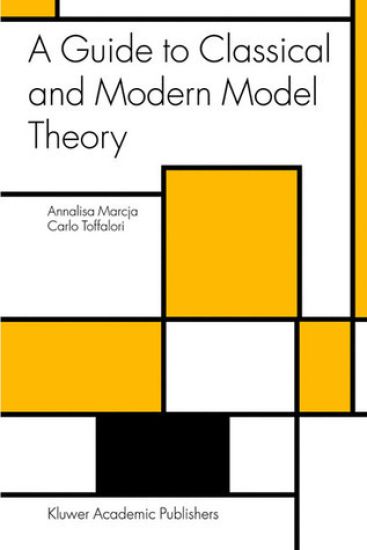
Since its birth, Model Theory has been developing a number of methods and concepts that have their intrinsic relevance, but also provide fruitful and notable applications in various fields of Mathematics. It is a lively and fertile research area which deserves the attention of the mathematical world. This volume: -is easily accessible to young people and mathematicians unfamiliar with logic; -gives a terse historical picture of Model Theory; -introduces the latest developments in the area; -provides 'hands-on' proofs of elimination of quantifiers, elimination of imaginaries and other relevant matters. A Guide to Classical and Modern Model Theory is for trainees and professional model theorists, mathematicians working in Algebra and Geometry and young people with a basic knowledge of logic.
This work focuses on the persistence of the 'Gates of Hades' iconographic theme among the peoples of the ancient Mediterranean. The analysis considers both the written tradition and the iconographic evidence surviving in funerary contexts, showing how the idea of the nether world among the eastern civilizations constituted a background for Greek and Etruscan imaginary. The chronological period considered begins with Egyptian tombs of the Ancient Kingdom and moves on to concentrate on the period between the 7th and 5th centuries B. C., when the 'Gates of Hades' theme appears in Etruscan and Lydian necropoleis and on Attic vase painting.
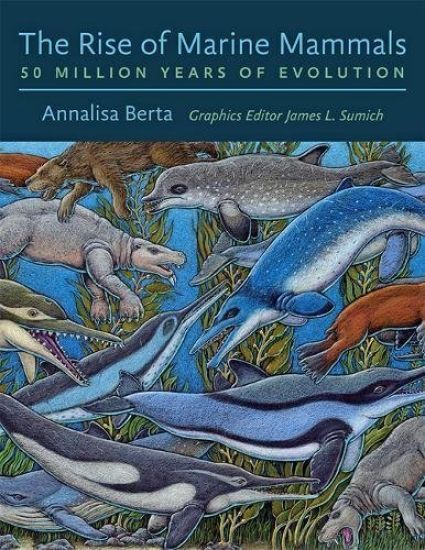
Marine mammals have long captured the attention of humans. Ancient peoples etched seals and dolphins on the walls of Paleolithic caves; today, engineers develop microprocessors to track these denizens of the deep. This groundbreaking book from highly respected marine mammal paleontologist Annalisa Berta delves into the story of the extraordinary adaptations that gave the world these amazing animals. The Rise of Marine Mammals reveals remarkable fossil record discoveries that shed light on the origins, relationships, and diversification of marine mammals. Focusing on evolution and paleobiology, Berta provides an overview of marine mammal species diversity, enhanced with gorgeous life restorations by Carl Buell, Robert Boessenecker, William Stout, and Ray Troll and extensive line drawings by graphics editor James L. Sumich. The book also considers ongoing conservation challenges, demonstrating how the fossil record of adaptation in response to past environmental shifts may illuminate the way that marine mammals respond to global climate change. This invaluable biological framework is essential for helping us understand how best to protect and conserve today's polar bears, whales, dolphins, seals, and fellow warm-blooded ocean dwellers. The Rise of Marine Mammals also describes exciting breakthroughs that rely on new techniques of study, including 3-D imaging, and molecular, finite element, and morphometric analyses, which have enhanced scientists' understanding of everything from the anatomy of fetal whales to the genes behind limb loss in cetaceans. Mammalogists, paleontologists, and marine scientists will find Berta's insights absorbing, while developmental and molecular biologists, geneticists, and ecologists exploring integrative research approaches will benefit from her fresh perspective.
Unearthing the amazing hidden stories of women who changed paleontology forever.For centuries, women have played key roles in defining and developing the field of vertebrate paleontology. Yet very little is known about these important paleontologists, and the true impacts of their contributions have remained obscure. In Rebels, Scholars, Explorers, Annalisa Berta and Susan Turner celebrate the history of women "bone hunters," delving into their fascinating lives and work. At the same time, they explore how the discipline has shaped our understanding of the history of life on Earth.Berta and Turner begin by presenting readers with a review of the emergence of vertebrate paleontology as a science, emphasizing the contributions of women to research topics and employment. This is followed by brief biographical sketches and explanations of early discoveries by women around the world over the past 200 years, including those who who held roles as researchers, educators, curators, artists, and preparators. Forging new territory, Berta and Turner highlight the barriers and challenges faced by women paleontologists, describing how some managed to overcome those obstacles in order to build careers in the field. Finally, drawing on interviews with a diverse group of contemporary paleontologists, who share their experiences and offer recommendations to aspiring fossil hunters, they provide perspectives on what work still needs to be done in order to ensure that women's contributions to the field are encouraged and celebrated. Uncovering and relating lost stories about the pivotal contributions of women in vertebrate paleontology doesn't just make for enthralling storytelling, but also helps ensure a richer and more diverse future for this vibrant field. Illuminating the discoveries, collections, and studies of fossil vertebrates conducted by women in vertebrate paleontology, Rebels, Scholars, Explorers will be on every paleontologist's most-wanted list and should find a broader audience in the burgeoning sector of readers from all backgrounds eager to learn about women in the sciences.
Sensor networks comprise of a number of sensors installed across a spatially distributed network, which gather information and periodically feed a central server with the measured data. The server monitors the data, issues possible alarms and computes fast aggregates. As data analysis requests may concern both present and past data, the server is forced to store the entire stream. But the limited storage capacity of a server may reduce the amount of data stored on the disk. One solution is to compute summaries of the data as it arrives, and to use these summaries to interpolate the real data. This work introduces a recently defined spatio-temporal pattern, called trend cluster, to summarize, interpolate and identify anomalies in a sensor network. As an example, the application of trend cluster discovery to monitor the efficiency of photovoltaic power plants is discussed. The work closes with remarks on new possibilities for surveillance enabled by recent developments in sensing technology.
Your children don't see the Holy Ghost, but that doesn't mean they can't feel His presence. With heart-warming illustrations, The Holy Ghost Is Like a Blanket depicts characteristics of the Holy Ghost by comparing them to objects children remember and relate to. These meaningful analogies will help your little ones recognize the Holy Ghost as a real influence in their lives.
Help your little ones recognize the joy, responsibility, and importance of being baptized. I Want to Be Baptized' from the same author and illustrator who brought you The Holy Ghost Is like a Blanket' depicts what baptism really means for children' s lives by comparing it to objects they remember and relate to. Turn to these heartwarming illustrations and meaningful analogies next time a child asks you about baptism.
Time has passed since S lvei was discharged from the hospital for her coma. It has been several months since her fathers death, and her mother has considered remarrying. S lvei is not pleased, and her new friend Leopold does not seem to help either. He pulls her into a fantastical world where she is tested, and must find a way to save not only herself, but her new step sister. Will they outwit the creatures of this strange dimension?
On a rainy day, like any other... S lvei is shot into a strange new world; where nothing is as it should be and everything is lovely... Or so it seems. Her only problem is she cannot stop unrequited love. Come escape to a world of action and fantasy. Will S lvei ever make it back to the real world?