Kirjojen hintavertailu. Mukana 11 342 296 kirjaa ja 12 kauppaa.

Kirjahaku

Etsi kirjoja tekijän nimen, kirjan nimen tai ISBN:n perusteella.

1000 tulosta hakusanalla Arthur Harduin

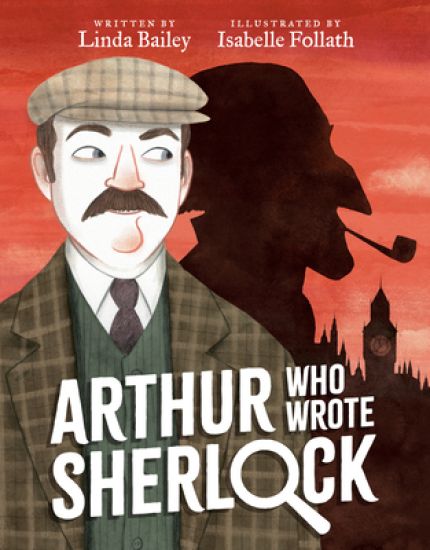
Arthur Who Wrote Sherlock

Arthur Who Wrote Sherlock

Linda Bailey

Tundra Books (NY)
2022
sidottu
The adventures of Sir Arthur Conan Doyle, creator of the legendary Sherlock Holmes, come to life in this inspiring picture book biography. What if you wrote a story about a detective, and he became the most famous detective ever? Wouldn't that be wonderful? Or . . . would it? Arthur has always loved stories. Even as he grew up poor, endured hardships at school and experienced danger on the high seas, Arthur was always thrilled and inspired by stories. Eventually, he writes his own, and after many years of struggle as a writer, he finally finds success with a series of mystery stories starring his genius detective, Sherlock Holmes. But is it possible for a character to become too successful? Too popular? And if that happens to Arthur, will he really throw his greatest literary creation . . . over a cliff? From the author of Mary Who Wrote Frankenstein comes a riveting and humorous picture book about the incredible life of Arthur Conan Doyle: doctor, adventurer, tireless campaigner for justice . . . and creator of the world's most famous detective
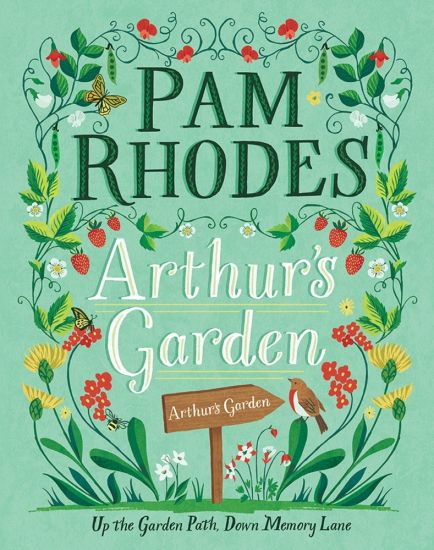
Arthur's Garden

Arthur's Garden

Pam Rhodes

Lion Books
2019
sidottu
"As I stand at my kitchen sink and look across at what we optimistically call our herb garden, to one side I see an old wooden sign on which are carved the words 'Arthur's Garden'. Arthur doesn't live here. My wonderful great-uncle died nearly thirty years ago having spent most of his long life in the Victorian terraced house in which his mother had brought up eleven children. The sign had stood in the garden there for decades, a gift to the man who'd always cherished that small patch of Kent, creating a riot of glorious colour which lit up the row of long, narrow strips that tumbled down to a line of back gates from which you could look across the lane to the local coal yard below." In Arthur's Garden, Pam Rhodes collates a heart-warming collection of songs and poems, advice and tit bits about the glorious, very ordinary, English garden - told through the life of her Uncle Arthur. This is a gardening book, with a story.
Arthur Hugh Clough

Arthur Hugh Clough

John Schad

Liverpool University Press
2005
nidottu
Swinburne called him a bad poet, Tennyson called him dull, Saintsbury called him thin. John Schad celebrates Clough the anti-poet, a loving laureate of the extraordinary dull, who is so thin we can see through, or beyond him. Clough, argues Schad, never gets in the way of the world, or worlds, of which he writes. And these worlds are many: ranging from the orthodox world of the Anglican Oxford that Clough famously abandons, through the turbulent worlds of Paris and Rome that Clough visits in the wake of the revolutionary events of 1848, to the quietly desperate world of Clough’s final years. For Schad, though, Clough’s defining world is the very strange world of continental thought, a world which makes him a most un-Victorian Victorian.
Arthur, High King of Britain

Arthur, High King of Britain

Morpurgo Michael

Egmont Books Ltd
2002
nidottu
As the sea sweeps in, the boy is suddenly cut off in his attempt to walk round the Scilly Isles from Great Ganilly to St Martin's. Having given up hope of survival, he finds himself waking up beside a warm fire with the man, Arthur Pendragon, and his dog, Bercelet, who have rescued him. Arthur tells him the incredible story of his life while the seawater dries out of boy's clothes. His tale begins with his legendary pulling of the sword from the stone, his leadership of an army to defeat the Saxons and his celebrated court at Camelot. From then on, he tells of the great and tragic love between himself, Guinevere and Lancelot and the numerous deeds and adventures of the knights of the Round Table. Finally, the curse of Morgana Le Fey come true and Arthur's son, Mordred, kills him, but not before he can watch Bedivere return Excalibur to the Lady of the Lake. After the wonders of the story, the boy returns home, looking forward to surprising his family with his adventure - but time in the cave where Arthur hibernates until it is time for him to rule again has stood still, and the boy's family have not even noticed he was gone.
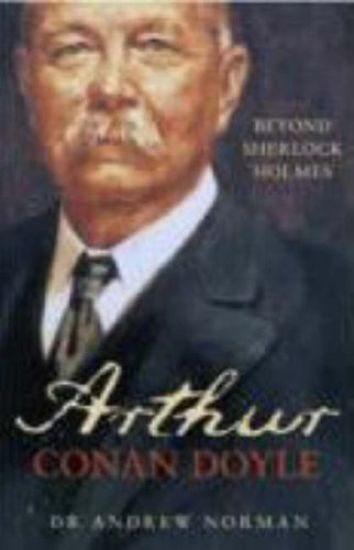
Arthur Conan Doyle

Arthur Conan Doyle

Andrew Norman

The History Press Ltd
2007
sidottu
In the year 1900, Sir Arthur Conan Doyle was at the height of his success. A qualified doctor, he was the creator of master detective "Sherlock Holmes". In 1916, Sir Arthur Conan Doyle declared that he believed in spiritualism, and he also professed to believe in fairies. This work traces the story of Sir Arthur Conan Doyles strange beliefs.
Arthur Conan Doyle

Arthur Conan Doyle

Andrew Norman

Tempus Publishing Ltd
2008
nidottu
In the year 1900, Sir Arthur Conan Doyle was at the height of his success. A qualified doctor who had travelled widely, a keen and able sportsman, chronicler of the South African war, writer of historical novels, champion of the oppressed and, most notably, the creator of that honourable, brave, scientific and eminently sensible master detective Sherlock Holmes. Every new Holmes story was greeted with great anticipation and confidence, in the knowledge that however complex the crime, the supremely intelligent and logical detective would solve it. It therefore came as a great surprise to his readers when in 1916 Sir Arthur Conan Doyle declared that he believed in spiritualism.And when, in 1922, Doyle published a book in which he professed to believe in fairies, his devotees were nonplussed. How could the creator of the inexorably logical Sherlock Holmes claim to believe in something as vague and unproven as the paranormal? In this fascinating study of the life of the creator of one of the greatest detectives of all time, Dr Andrew Norman traces the story of Sir Arthur Conan Doyle's strange beliefs. Can it be that Doyle's alcoholic father holds the key to the unanswered questions about his son? What was Doyle's involvement in the infamous Cottingley fairy affair? By delving into medical records and the writings of Doyle himself, Dr Norman unravels a mystery as exciting as any of the cases embarked upon by Sherlock Holmes, but in this case about the author himself.
Arthur Conan Doyle

Arthur Conan Doyle

Andrew Norman

The History Press Ltd
2009
nidottu
In the year 1900, Sir Arthur Conan Doyle was at the height of his success. A qualified doctor, he was the creator of master detective Sherlock Holmes. In 1916, Sir Arthur Conan Doyle declared that he believed in spiritualism, and he also professed to believe in fairies. This work traces the story of Sir Arthur Conan Doyle's strange beliefs.
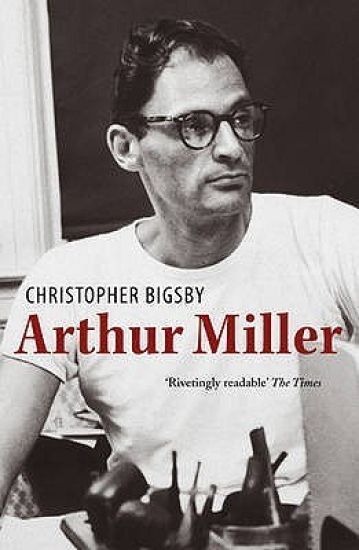
Arthur Miller

Arthur Miller

Christopher Bigsby

Weidenfeld Nicolson
2009
pokkari
Biography of one of the greatest of modern playwrights, Arthur Miller (1915-2005).This is the long-awaited biography of one of the twentieth century's greatest playwrights whose postwar decade of work earned him international critical and popular acclaim.Arthur Miller was a prominent figure in American literature and cinema for over sixty years, writing a wide variety of plays - including The Crucible, A View from the Bridge, All My Sons, and Death of a Salesman - which are still performed, studied and lauded throughout the world.Born in 1915 to moderately affluent Jewish-American parents, Miller wrote during a fascinating time in American history. The Great Depression was a period of deprivation for many that left an indelible mark on the national psyche, and, like many, Miller found hope for the beleaguered common man in Communism. The Second World War elevated the common man to war hero, but when the Cold War subsequently began, the ugly elements of American conservatism freely persecuted writers and artists who had embraced Communism. Miller was among them. His refusal to give evidence against others to the notorious House Un-American Activities Committee in 1956 gave him a heroic role to play. In that same year, Arthur Miller momentously married the young actress Marilyn Monroe, a marriage that remains famous to this day. Christopher Bigsby's gripping, meticulously researched biography, based on boxes of papers made available to him before Miller's death, offers new insights into their marriage, and sheds new light on how their relationship informed Miller's subsequent great plays. After his death in 2005, many respected actors, directors and producers paid tribute to Miller, calling him 'the last great practitioner of the American stage'. Christopher Bigsby's supremely authoritative biography does full justice to Miller's life and art.
Arthur Lismer, Visionary Art Educator

Arthur Lismer, Visionary Art Educator

Angela N. Grigor

McGill-Queen's University Press
2002
sidottu
Arthur Lismer, well-known member of the Group of Seven, was also one of Canada's most innovative educators. Using previously untapped correspondence and papers as well as interviews with Lismer's teaching colleagues, child students, and art students, Angela Nairne Grigor examines Lismer's Arts and Crafts Movement background in his native England, the evolution of the humanistic ideas and ideals that guided his work as both an artist and a teacher, and his international influence as an educator. She gives a vivid portrait of his approach to teaching in an illustrious fifty-year career that took him from Toronto to Halifax, Montreal, New York, Australia, New Zealand, and South Africa, and during which he played a pivotal role in the development of some of Canada's most important art schools and museums. Lismer pioneered new progressive ideas in art education through his work with children as educational supervisor at the Art Gallery of Toronto and, later, at Montreal's Museum of Fine Arts. In exploring Lismer's development as an educator, Grigor traces the history of art education in twentieth-century Canada and charts changing attitudes towards children and art. Lismer emerges as an artist with a social conscience who captured the hearts and minds of the thousands who heard him speak or were fortunate enough to have been his students. Arthur Lismer, Visionary Art Educator includes over a dozen drawings from Lismer's teaching and lecture notes that have not been previously published.
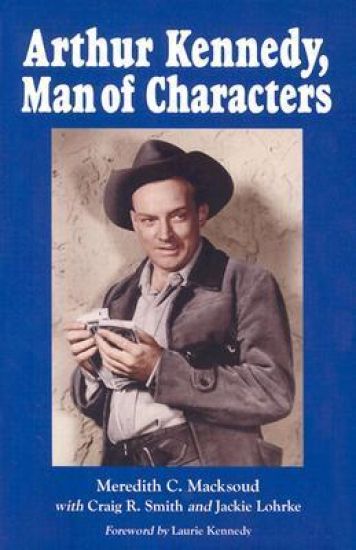
Arthur Kennedy, Man of Characters
"Basically, all parts are character parts. The problem of the actor is to protect the differences in a character: to identify that the character being portrayed has his own personality traits. He has to find things within himself to establish these differences. I'm best when I portray not good guys, or bad guys, but human guys. These are the people I understand." Arthur Kennedy's words speak volumes about the kind of actor he was, one sought by both Hollywood and Broadway to be in dramas involving real people struggling with real problems. His many talents were recognized with several Academy Award nominations and the winning of a Golden Globe and a Tony award. This work covers Kennedy's film and stage career, film-by-film and play-by-play, and provides pictures, synopses, and commentary for each one. Acting anecdotes from Kennedy himself or from his peers in film and on stage, such as Errol Flynn, Elia Kazan, James Cagney, Ida Lupino, Humphrey Bogart, and many others, bedizen the commentary. Among the films and plays included are Joy in the Morning, Henry IV Part I, Strange Alibi, High Sierra, Bad Men, Desperate Journey, Cheyenne, The Window and Champion.
Arthur Kaufmann

Arthur Kaufmann

Olimpiu G. Urcan; Peter Michael Braunwarth

McFarland Co Inc
2012
pokkari
This biography explores the life and chess career of Arthur Kaufmann, an early 20th century Romanian-born grandmaster-level player. A contemporary of luminaries such as Capablanca, Reti, Schlechter, Spielmann, and Tartakower, Kaufmann remained an enigma despite his high level play. Through an analysis of primary sources, including correspondence, diaries and other archival material, Kaufmann's chess career is reconstructed in detail. His tournament and match play games from the early 1890s to the 1910s are explored, as are his little known matches against some of the top players of his time and his participation in the Trebitsch memorials in wartime Vienna. The book also offers an unprecedented account of Kaufmann's close relationship with Arthur Schnitzler, the famed Austrian dramatist, whose diary offers important clues to Kaufmann's life and work as a philosopher. There is a collection of 71 Kaufmann games with detailed annotations and diagrams.
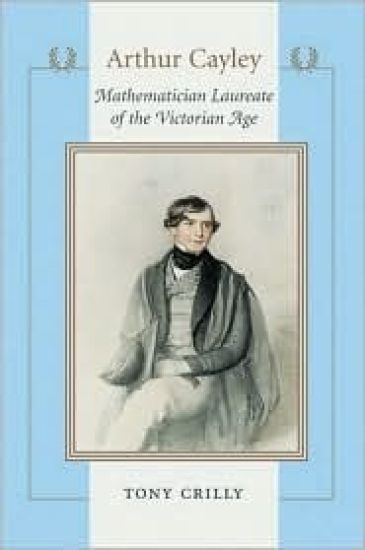
Arthur Cayley

Arthur Cayley

Tony Crilly

Johns Hopkins University Press
2006
sidottu
Arthur Cayley (1821-1895) was one of the most prolific and important mathematicians of the Victorian era. His influence still pervades modern mathematics, in group theory (Cayley's theorem), matrix algebra (the Cayley-Hamilton theorem), and invariant theory, where he made his most significant contributions. Yet Cayley's life has been overlooked by historians, who have lavished far more attention on lesser figures. Mathematician and biographer Tony Crilly, the world's leading authority on Cayley, rectifies this oversight with the first definitive account of his life. Born in England, Cayley spent his childhood in St. Petersburg, where his father was a commercial agent. After returning to England in 1828, Cayley received a first-rate education. As an undergraduate at Trinity College in Cambridge, he was named "Senior Wrangler," the top mathematics student of his year. After graduating, he found himself at the vanguard of the revolution in British mathematics which included William Rowan Hamilton, George Boole, and James Joseph Sylvester. At the same time, needing a reliable income, he trained for the bar and became a barrister at Lincoln's Inn in 1849. Though a successful lawyer, Cayley devoted all his free time to mathematics and confirmed his reputation as one of the era's leading minds with a procession of brilliant articles on key aspects in pure mathematics. Only after 1863, when he was appointed to the Sadleirian Chair at Cambridge, could he fully pursue mathematical investigations, and he continued to publish influential papers until his death. Comprehensive and elegantly composed, this biography makes clear the scope of Arthur Cayley's prodigious achievements, firmly enshrining him as the "Mathematician Laureate of the Victorian Age."
Arthur's Cat

Arthur's Cat

Johan Leynaud

Eerdmans Books for Young Readers
2026
sidottu
"A profoundly thoughtful look at the push and pull needed to forge a truly deep bond."--Kirkus Reviews (STARRED REVIEW) An overeager boy and his skittish cat find new ways to connect in this humorous picture book about boundaries and personal space. Arthur adores his cat. He's wild about Zeffo. But Zeffo? Not so much. Arthur would love to brush Zeffo's fur, turn him into Super Cat, and jump into the clouds. But Zeffo would love some space. One day Arthur gives Zeffo a big hug--and owwww Arthur cries, Zeffo runs away, and the days and nights pass. Maybe Arthur needs a new and different way to connect with his cat. With hilariously outlandish--yet deeply relatable--scenes of a boy and his cat, author-illustrator Johan Leynaud shares a warm, lighthearted SEL story of friendship, boundaries, and personal growth. Like Arthur, young readers will discover how love can mean giving freedom instead of taking control. Translated from French by Sarah Ardizzone.
Arthur O. Lovejoy and the Quest for Intelligibility

Arthur O. Lovejoy and the Quest for Intelligibility

Wilson Daniel J.

The University of North Carolina Press
2012
nidottu
Lovejoy (1873-1962) was America's foremost historian of ideas, a major participant in the philosophical debates of the twentieth century, and a prominent advocate of academic freedom. The product of an emotionally unsettled childhood and an evangelical father, Lovejoy reacted against his father by postulating the certainty of self-sufficient reason. He believed that only the principles of reason could order the world and so make our universe intelligible.Originally published in 1980.A UNC Press Enduring Edition -- UNC Press Enduring Editions use the latest in digital technology to make available again books from our distinguished backlist that were previously out of print. These editions are published unaltered from the original, and are presented in affordable paperback formats, bringing readers both historical and cultural value.