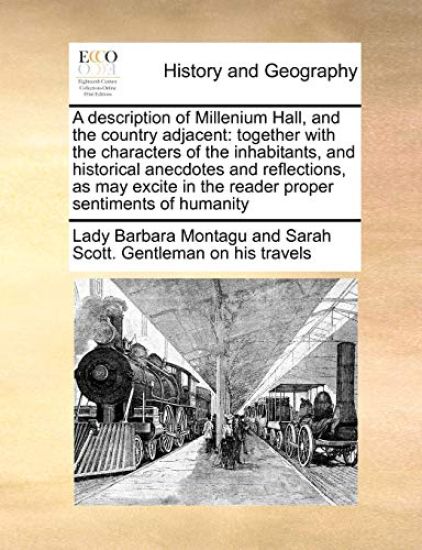
The 18th century was a wealth of knowledge, exploration and rapidly growing technology and expanding record-keeping made possible by advances in the printing press. In its determination to preserve the century of revolution, Gale initiated a revolution of its own: digitization of epic proportions to preserve these invaluable works in the largest archive of its kind. Now for the first time these high-quality digital copies of original 18th century manuscripts are available in print, making them highly accessible to libraries, undergraduate students, and independent scholars.Rich in titles on English life and social history, this collection spans the world as it was known to eighteenth-century historians and explorers. Titles include a wealth of travel accounts and diaries, histories of nations from throughout the world, and maps and charts of a world that was still being discovered. Students of the War of American Independence will find fascinating accounts from the British side of conflict. ++++The below data was compiled from various identification fields in the bibliographic record of this title. This data is provided as an additional tool in helping to insure edition identification: ++++British LibraryT059855Gentleman on his travels = Lady Montagu and Sarah Scott.Dublin: printed for Peter Wilson, 1763. 4],282, 2]p.; 12
Innovation Processes in Medical Education is the first empirical study to investigate the barriers to successful educational change. Using a qualitative case study approach, it examines the factors that have either supported or impeded change in four medical schools: Case Western Reserve, University of Illinois, McMaster University, and Michigan State University. Following an overview of the historical forces that led to the current structure of the medical school curriculum; the authors discuss their research methodology and data, and analyze their attempts at innovation in each of the four cases, examining the relative merits of each effort. A matrix is developed that will help medical school innovators establish implementation strategies by showing them how to arrive at optimal strategies based on the specific context in which they work.
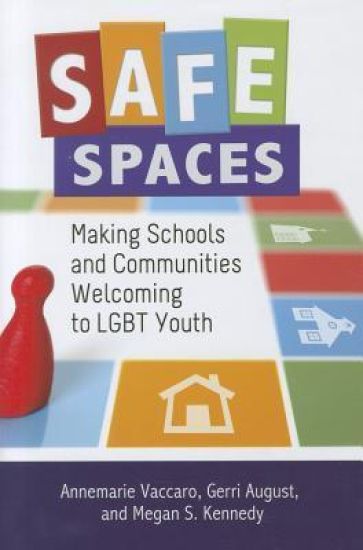
Based on extensive research, recent events, and numerous first-person accounts, this revealing book illuminates both the challenges and triumphs of lesbian, gay, bisexual, and transgender youth, and offers effective strategies for combating LGBT marginalization in our nation's schools and communities.Safe Spaces: Making Schools and Communities Welcoming to LGBT Youth is the first book to offer a comprehensive view of the complex lives of LGBT youth of all ages, from kindergarten through college. Drawing on a wealth of research collected from first-person accounts of students, family, educators, and community members, the authors not only chronicle the struggles of LGBT youth but also describe models of inclusive school and community environments.The authors address the breadth of experiences of LGBT youth—in and out of the classroom, at home and in the community, and in personal interactions with allies and antagonists. They also reveal how these young people, their friends and families, teachers, and dedicated allies stem the tide of LGBT exclusion. Most important, Safe Spaces offers action steps for readers who want to make their own homes, schools, and communities safe and welcoming spaces for LGBT youth.
Upon his retirement from active service as a Justice of the Supreme Court of Virginia in 2011, Lawrence L. Koontz, Jr. had completed more than four decades of service to citizens of the Commonwealth of Virginia. In order to recognize that service and help preserve Justice Koontz legacy as one of the outstanding jurists in Virginia and the United States, the Salem/Roanoke County Bar Association instituted this project to collect all of Justice Koontz's published opinions, both from his tenure as a Justice of the Supreme Court and as an inaugural member of the Court of Appeals of Virginia. The first volume to be produced by the Opinions Project includes opinions, concurrences and dissents authored by Justice Koontz during the first five years of his service on the Court of Appeals. During this time, he served as Chief Judge of the Court, having been elected to that position following the sudden and untimely death of E. Ballard Baker, the first Chief Judge of the Court.
Genesis 18:12 tells us, "Sarah laughed." Of courseshe did God's promise was unbelievable froma human perspective. Isaac was born out of thelaughter of disbelief. Have any of God's promisesbrought you to laughter?The book of 1 Chronicles gives us a perspectiveon the history of God's people, showing howimportant it was for God's people to trace theirroots and cling to their ancestral ties. Even todaythere is a universal human need to belong. Thisbook illustrates that the stories we tell today formour future while reflecting our history.For those of you who are interested in climbingyour family tree, we hope our genealogy familytrees will help you.
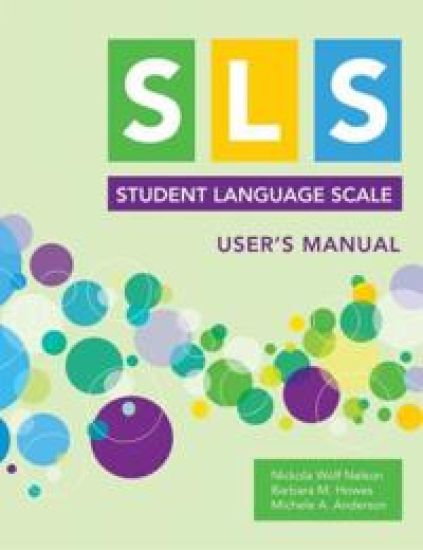
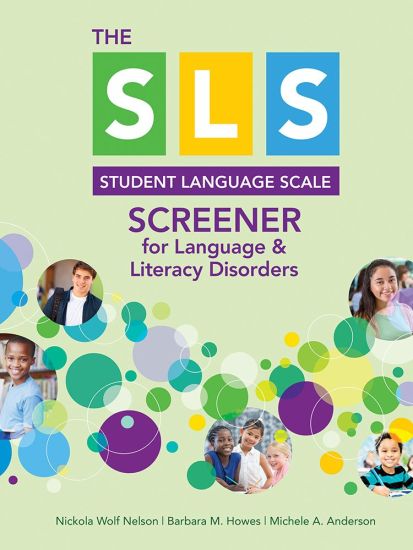
For use on its own or with the Test of Integrated Language and Literacy Skills™ (TILLS™), the Student Language Scale reliably screens students from ages 6-18 years for language and literacy disorders, including dyslexia. Filled out by parents, teachers, and students in just three minutes or less, the 12-question screener is a quick, cost-effective way to see how students are performing on academic tasks as compared to their same-age peers. This concise User’s Manual shows you how to effectively use the SLS to:• Screen for language/literacy disorders by gathering teachers’ and parents’ ratings of students. When teachers or parents rate more than two areas on items 1-8 less than 5, SLS results indicate the student is at risk and needs further assessment.• Gather input about a struggling student’s strengths and needs from multiple sources—a key requirement of IDEA • Enhance home–school communication by gaining new insight into the student’s performance and the parent’s perspective, whether or not there are concernsYou’ll get reader-friendly guidance on how to administer the SLS with teachers, parents, and students; a complete guide to the technical data supporting the SLS; and three examples that show how the SLS can help you make sound decisions about followup for students who need it. Whether used with an entire classroom or with individual students, the SLS is the tool you need to quickly gather valuable information about strengths and needs—and plan next steps for students at risk for disorders.
An ideal companion to the groundbreaking TILLS test! Screen with SLS, and then follow up and diagnose with TILLS.For use on its own or with the Test of Integrated Language and Literacy Skills™ (TILLS™), the Student Language Scale (SLS) reliably screens students ages 6—18 years for language/literacy disorders, including dyslexia. Filled out by parents, teachers, and students, the screener is a quick, cost-effective way to see how students are performing on academic tasks as compared to their same-age peers. Use the SLS to:Screen for language/literacy disorders, including dyslexia, by gathering teachers' and parents' ratings of students Gather input about a struggling student's strengths and needs from multiple sourcesEnhance home—school communication by gaining new insight into the student's performance and the teacher's and the parents' and student's perspectives on it, whether or not everyone agrees and whether or not there are concerns Whether used with an entire classroom or with individual students, the SLS is the tool you need to quickly gather valuable information about strengths and needs—and plan next steps for students at risk for disorders.Why use the SLS?Expert developed: The SLS developers are highly respected for their test-building skills and evidence-based work in the field of language and literacy assessment and school social work. Fast and easy: The three-part SLS can be completed in just 3 minutes or less. Administration and scoring is simple—a pencil and paper are all you need.Strong sensitivity and specificity. Sensitivity of the SLS to risk of language/literacy disorder is .90 for teachers and .85 for parents, and specificity (correct identification of typical learners) is .90 for teachers and .83 for parents.Cost effective. The SLS helps you screen effectively at a lower cost than comparable tools on the market. Simple scoring: The 12-item rating scale section of the SLS incorporates descriptive statements that are rated on a scale of 1 to 7 from not good to very good. The first eight items on the scale ask about core language and literacy abilities that represent the 2 language levels x 4 language modalities assessed with TILLS. When teachers or parents rate more than two areas on items 1-8 as less than 5, SLS screening results indicate the student is at risk and needs further assessment. Perfect for use with TILLS!: The SLS is an ideal companion to the groundbreaking TILLS test, which assesses oral and written language skills in students ages 6—18 years. Gather teacher and parent ratings for whole classes of students with the SLS, and if results indicate that a student is at risk, follow up with TILLS assessment and other forms of language/literacy assessment. What's in this kit?: One SLS User's Manual One gummed tablet of 50 TILLS™ Student Language Scale forms One SLS Quick Start Guide with basic instructions on administering and scoring
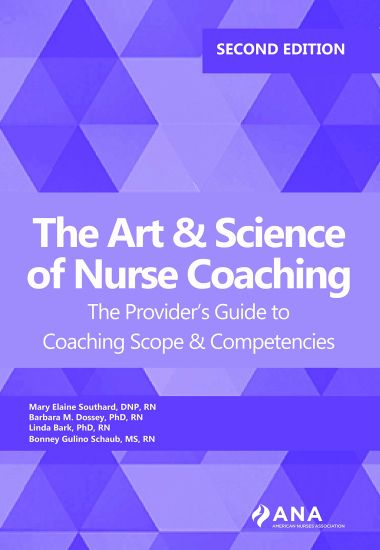
The nurse-client relationship is at the core of quality nursing care. Nurse coaching is a structured, relationship-centered approach that promotes achievement of client goals. This new edition of The Art and Science of Nurse Coaching: The Provider’s Guide to Coaching Scope and Competencies teaches RNs how to interact with clients in a skilled, purposeful, and results-oriented way. Grounded in the principles and core values of professional nursing, these newly updated nurse coaching competencies can be integrated into any setting or specialty area of practice.This book provides strategies to help you:- Create a safe space for coaching conversations.- Provide a structure for further coaching sessions.- Explore client readiness for change.- Assist clients to identify goals, select action steps, evaluate progress, and sustain life changes.- Learn the importance of coaching clients becoming aware of their challenges and celebrating their accomplishments.- Learn new, valuable ways to assist clients to adopt effective, sustainable life-changing behaviours.The Art and Science of Nurse Coaching: The Provider’s Guide to Coaching Scope and Competencies, Second Edition is an essential resource for nurses seeking to support clients on their healthcare journey to achieve desired goals for health and healing or transition for peaceful dying.
This book unveils an ignored aspect of the Brazilian history: how the colonization of the country shaped the sexuality of its indigenous population. Based on textual research, the authors show how the government and religious institutions gradually imposed the family model considered as "normal" to Brazilian indigenous gays through forced labor, punishment, marriages with non-indigenous and other methods. However, such disciplinary practices didn’t prevent the resistance of the natives whose sexuality operates out of the hegemonic model, and the book also analyzes the impact of these forms of dissent on the development of indigenous movements, interethnic relations and indigenous policies in Brazil. Building upon Post-Colonial and Queer theories, the authors present a historical overview of the ideas and practices employed by the religious and governmental authorities to repress homosexuality among indigenous peoples since the beginning of the colonization process, on the 16th century. They also show how this process of colonization of indigenous sexualities goes beyond the formal colonization period, which ended with the Brazilian Independence in 1822, and is part of a wider process of compulsory heterosexualization and heteronormativity of native peoples, based on scientific, theological, social and cultural assumptions that inspired religious, civilizing, academic and political practices throughout Brazilian history.
This book unveils an ignored aspect of the Brazilian history: how the colonization of the country shaped the sexuality of its indigenous population. Based on textual research, the authors show how the government and religious institutions gradually imposed the family model considered as "normal" to Brazilian indigenous gays through forced labor, punishment, marriages with non-indigenous and other methods. However, such disciplinary practices didn’t prevent the resistance of the natives whose sexuality operates out of the hegemonic model, and the book also analyzes the impact of these forms of dissent on the development of indigenous movements, interethnic relations and indigenous policies in Brazil. Building upon Post-Colonial and Queer theories, the authors present a historical overview of the ideas and practices employed by the religious and governmental authorities to repress homosexuality among indigenous peoples since the beginning of the colonization process, on the 16th century. They also show how this process of colonization of indigenous sexualities goes beyond the formal colonization period, which ended with the Brazilian Independence in 1822, and is part of a wider process of compulsory heterosexualization and heteronormativity of native peoples, based on scientific, theological, social and cultural assumptions that inspired religious, civilizing, academic and political practices throughout Brazilian history.