Kirjojen hintavertailu. Mukana 11 518 949 kirjaa ja 12 kauppaa.

Kirjahaku

Etsi kirjoja tekijän nimen, kirjan nimen tai ISBN:n perusteella.

1000 tulosta hakusanalla Ben Ray Redman

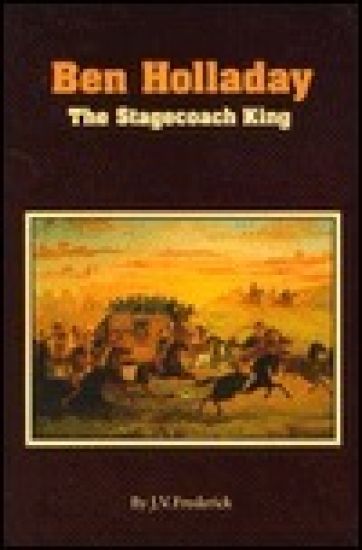
Ben Holladay

Ben Holladay

J. V. Frederick

University of Nebraska Press
1989
pokkari
The red and black Concord stagecoaches that crossed the West in the 1860s, known to the Indians as "fire boxes," have been celebrated in Mark Twain's fiction and John Ford's films. Predating the transcontinental railroads, they provided vital lines of communication to the East during the Civil War and opened to development the newly settled regions beyond the Missouri River. From 1862 to 1866 Ben Holladay owned and operated a network of stagecoach lines from Kansas to California, the main one following the central mail route between Atchison and Salt Lake City established by the U.S. government in 1848, and other lines branching into the mining country of California and Montana and Idaho territories. In spite of bad weather, primitive roads, holdups by highwaymen, and trouble with Indians, Holladay's coaches delivered passengers and mail on schedule. J. V. Frederick describes in fascinating detail the organization and operation of a vast transportation empire ruled by a man with executive genius and a gambler's instincts. Although Holladay forbade drinking and profanity on the job, he commanded the loyalty of his drivers, whom he dressed in broad-brimmed sombreros, corduroys trimmed with velvet, and high-heeled boots. He sold out just before the Union Pacific Railroad was completed and until his death in 1887 remained popular with Americans, who named racehorses and cigars after him.
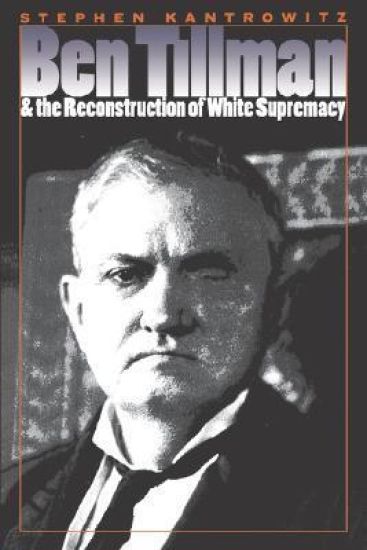
Ben Tillman and the Reconstruction of White Supremacy

Ben Tillman and the Reconstruction of White Supremacy

Kantrowitz Stephen

The University of North Carolina Press
2000
nidottu
Through the life of Benjamin Ryan Tillman (1847-1918), South Carolina's self-styled agrarian rebel, this book traces the history of white male supremacy and its discontents from the era of plantation slavery to the age of Jim Crow. As an anti-Reconstruction guerrilla, Democratic activist, South Carolina governor, and U.S. senator, Tillman offered a vision of reform that was proudly white supremacist. In the name of white male militance, productivity, and solidarity, he justified lynching and disfranchised most of his state's black voters. His arguments and accomplishments rested on the premise that only productive and virtuous white men should govern and that federal power could never be trusted. Over the course of his career, Tillman faced down opponents ranging from agrarian radicals to aristocratic conservatives, from woman suffragists to black Republicans. His vision and his voice shaped the understandings of millions and helped create the violent, repressive world of the Jim Crow South. Friend and foe alike--and generations of historians--interpreted Tillman's physical and rhetorical violence in defense of white supremacy as a matter of racial and gender instinct. This book instead reveals that Tillman's white supremacy was a political program and social argument whose legacies continue to shape American life. |Through the life of Benjamin R.Tillman (1847-1918), South Carolina's notorious agrarian rebel, this book traces white male supremacy from plantation slavery to the age of Jim Crow. As an anti-Reconstruction guerrilla, governor, and U.S. senator, he offered a vision of reform that was proudly white supremacist. This book argues that Tillman's white supremacy was a political program and social argument whose legacies continue to shape American life.
Ben Behind His Voices

Ben Behind His Voices

Randye Kaye

Rowman Littlefield Publishers
2017
nidottu
When readers first meet Ben, he is a sweet, intelligent, seemingly well-adjusted youngster. Fast forward to his teenage years, though, and Ben's life has spun out of control. Ben is swept along by an illness over which he has no control_one that results in runaway episodes, periods of homelessness, seven psychotic breaks, seven hospitalizations, and finally a diagnosis and treatment plan that begins to work. Schizophrenia strikes an estimated 1 in 100 people worldwide by some estimates, and yet understanding of the illness is lacking. Through Ben's experiences, and those of his mother and sister, who supported Ben through every stage of his illness and treatment, readers gain a better understanding of schizophrenia, as well as mental illness in general, and the way it affects individuals and families. Ben Behind His Voices encourages families to stay together and find strength while accepting the reality of a loved one's illness; it illustrates the delicate balance between letting go and staying involved. It honors the courage of anyone who suffers with mental illness and is trying to improve his life and participate in his own recovery. Ben Behind His Voices also reminds professionals in the psychiatric field that every patient who comes through their doors has a life, one that he has lost through no fault of his own. It shows what goes right when professionals treat the family as part of the recovery process, and help them find support, education, and acceptance. And it reminds readers that those who suffer from mental illness, and their families, deserve respect, concern, and dignity.
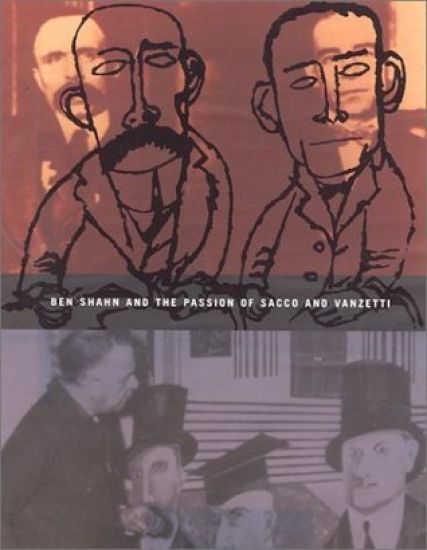
Ben Shahn and "The Passion of Sacco and Vanzetti"
Between 1931 and 1932, painter Ben Shahn (1898–1969) created a series of twenty-three gouaches and temperas on the infamous trial of Nicola Sacco and Bartolomeo Vanzetti. Sacco and Vanzetti were arrested in 1920 for the murder of a guard during a robbery of a shoe factory in South Braintree, Massachusetts. The two men were Italian immigrants as well as committed anarchists. Their radicalism and their ethnicity, far more than the ambiguous evidence in the case, became the basis for the prosecution against them. In 1927, Sacco and Vanzetti were executed. Theirs was one of the most controversial trials of the twentieth century.Identifying strongly with these men, Ben Shahn returned again and again to this subject. Spanning the early 1930s up through the end of his career, in 1967, he also produced paintings, an ink drawing, three serigraphs, and a mosaic mural on the trial.From May through August 2001, the Jersey City Museum will present all paintings in existence from the 1931–32 series—17 in all—as a first-time event. Many of Shahn’s other Sacco and Vanzetti works will also be displayed. The exhibit will place the art within the context of the trial itself, as it will include photographs from the courtroom and the newspapers of the day.With its twelve color and thirty-two black-and-white illustrations, Ben Shahn and “The Passion of Sacco and Vanzetti” brings the exhibit—and the trial—to life. The catalog will include articles exploring such topics as the artist’s strong identification with the two men on trial; the 1930–32 series’ critical reception from the 1930s to today; and a historical overview of the case itself.
Ben Shahn's New Deal Murals

Ben Shahn's New Deal Murals

Linden Diana

Wayne State University Press
2015
sidottu
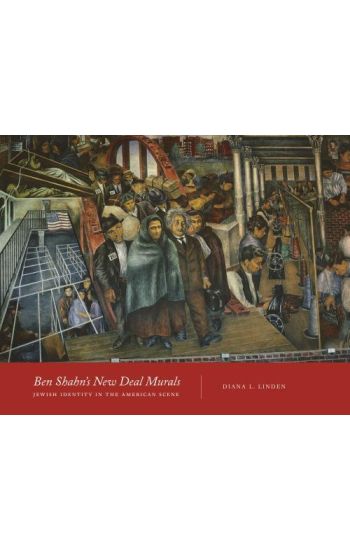
Lithuanian-born artist Ben Shahn learned fresco painting as an assistant to Diego Rivera in the 1930s and created his own visually powerful, technically sophisticated, and stylistically innovative artworks as part of the New Deal Arts Project’s national mural program. In Ben Shahn’s New Deal Murals: Jewish Identity in the American Scene author Diana L. Linden demonstrates that Shahn mined his Jewish heritage and left-leaning politics for his style and subject matter, offering insight into his murals’ creation and their sometimes complicated reception by officials, the public, and the press. In four chapters, Linden presents case studies of select Shahn murals that were created from 1933 to 1943 and are located in public buildings in New York, New Jersey, and Missouri. She studies Shahn’s famous untitled fresco for the Jersey Homesteads—a utopian socialist cooperative community populated with former Jewish garment workers and funded under the New Deal—Shahn’s mural for the Bronx Post Office, a fresco Shahn proposed to the post office in St. Louis, and a related one-panel easel painting titled The First Amendment located in a Queens, New York, Post Office. By investigating the role of Jewish identity in Shahn’s works, Linden considers the artist’s responses to important issues of the era, such as President Roosevelt’s opposition to open immigration to the United States, New York’s bustling garment industry and its labor unions, ideological concerns about freedom and liberty that had signifcant meaning to Jews, and the encroachment of censorship into American art.Linden shows that throughout his public murals, Shahn literally painted Jews into the American scene with his subjects, themes, and compositions. Readers interested in Jewish American history, art history, and Depression-era American culture will enjoy this insightful volume.
Ben Jonson's London

Ben Jonson's London

Fran C. Chalfant

University of Georgia Press
2008
pokkari
Ben Jonson was a Londoner. He lived there from infancy, left for only brief periods of travel, and used various locales in or near London as the settings for eleven of his seventeen plays. Ben Jonson's London opens with a discussion of the purpose, scope, and success of Jonson's use of London settings as Placenames. Chalfant demonstrates that Ben Jonson brought the same judicious, erudite, and dramatically functional insight to his handling of London topography-from overall settings to very brief mentions-as he did to his well-known use of classical, mythological, and iconographical detail.
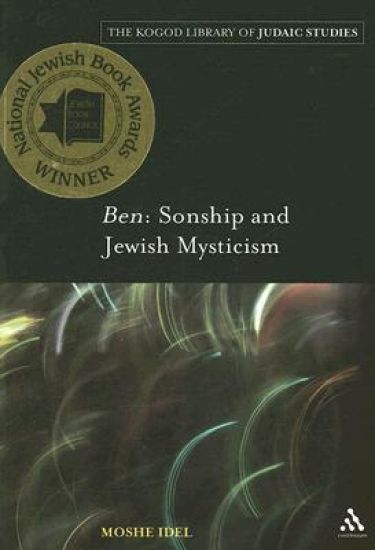
Ben: Sonship and Jewish Mysticism

Ben: Sonship and Jewish Mysticism

Moshe Idel

Continuum International Publishing Group Ltd.
2008
sidottu
While many aspects of Sonship have been analyzed in books on Judaism, this book constitutes the first attempt to address the category of Sonship in Jewish mystical literature as a whole - a category much more vast than ever imagined. Idel's aim is to point out the many instances where Jewish thinkers, especially the mystics among them, resorted to concepts of Sonship and their conceptual backgrounds, and thus to show the existence of a wide variety of understandings of hypostatic sons in Judaism. By this survey, not only can the mystical forms of Sonship in Judaism be better understood, but the concept of Sonship in religion in general can also be enriched. "The Kogod Library of Judaic Studies" aims to publish new research in all areas of Judaic studies with the potential to both enrich and deepen the understanding of Jewish culture and history and to influence and mould Jewish life and philosophy. The series reflects the existence of plural Jewish identities and streams involved in a lively and continuous multi-vocal religious discourse, and in creating a cultural mosaic.
Ben: Sonship and Jewish Mysticism

Ben: Sonship and Jewish Mysticism

Moshe Idel

Continuum International Publishing Group Ltd.
2008
nidottu
While many aspects of Sonship have been analyzed in books on Judaism, this book constitutes the first attempt to address the category of Sonship in Jewish mystical literature as a whole - a category much more vast than ever imagined. Idel's aim is to point out the many instances where Jewish thinkers, especially the mystics among them, resorted to concepts of Sonship and their conceptual backgrounds, and thus to show the existence of a wide variety of understandings of hypostatic sons in Judaism. By this survey, not only can the mystical forms of Sonship in Judaism be better understood, but the concept of Sonship in religion in general can also be enriched. "The Kogod Library of Judaic Studies" aims to publish new research in all areas of Judaic studies with the potential to both enrich and deepen the understanding of Jewish culture and history and to influence and mould Jewish life and philosophy. The series reflects the existence of plural Jewish identities and streams involved in a lively and continuous multi-vocal religious discourse, and in creating a cultural mosaic.
Ben Rothery's Weird and Wonderful Animals

Ben Rothery's Weird and Wonderful Animals

Ben Rothery

Tilbury House Publishers
2024
sidottu
From the bearded vulture, which is the only animal on the planet whose diet consists exclusively of bones, to the microscopic tardigrade that can survive for up to 30 years without food or water, this book focuses on our planet's most bizarre and extraordinary beasts."This is how every child wants to learn about animals. The illustrations are breathtakingly beautiful, dynamic, hyper-realistic and strong inform and color. Every page is captivating. It seems that the animals can fly up or jump away."--from the jury awarding Hidden Planet the Dutch literature prize THE SILVER BRUSH, 2021
Ben Sadler

Ben Sadler

Hurtwood Press
2025
nidottu
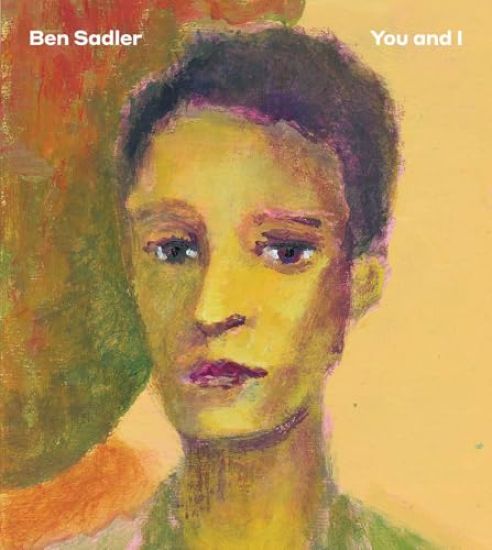
Two series of small, colourful paintings by Birmingham (UK) based artist Ben Sadler, inspired by a curious cast of imaginary visitors to an imaginary exhibition. Featuring a foreword by Deborah Kermode, a text by Catherine O’Flynn and an interview by Ceri Hand. Ben Sadler’s colourful paintings of imaginary people are full of personality, eclectic states of mind and varying degrees of intrigue. These are consistently charming, sometimes amusing and occasionally heart-breaking portraits of ordinary and extraordinary people. The publication features two bodies of work: You and I (2024) and Exclamations! (2023), both of which present small paintings corresponding to each letter of the alphabet (though the letters U and I are curiously missing from the series You and I). Sadler’s starting point was the idea of visitors to an imaginary exhibition – who are they, what kinds of people are they, and what thoughts might be going through their minds? Such musings are explored in celebrated Birmingham-based author Catherine O’Flynn’s text – a piece of creative writing commissioned especially for the publication, along with a foreword by Deborah Kermode, Chief Executive and Artistic Director of Midlands Arts Centre (MAC), Birmingham, and an interview by London-based creative coach, podcaster and public speaker Ceri Hand. Born in Birmingham (UK) in 1977, where he lives and works today, Ben Sadler studied at the Ruskin School of Art, Oxford, and the Royal College of Art, London. He is one half of the artist duo Juneau Projects, alongside Philip Duckworth.
Ben Gest: Photographs

Ben Gest: Photographs

Catherine M. Sousloff; Hamza Walker

Renaissance Society at the University of Chicago
2007
sidottu
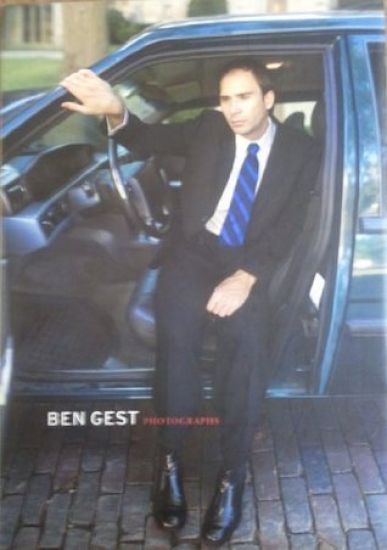
This catalogue contains full-page reproductions of the entire body of work presented in Gest's 2006 Renaissance Society exhibition. In this series, Gest captured his lone sitters at the chance interstices of deep reflection, when the self dwells in thought. The construction of the self as it happens before Gest's camera serves to question the construction of that self in reality. Gest uses digital photography to monumentalize photography's ability to capture such fleeting moments. Each photograph is seamlessly constructed from hundreds of digital images of the sitter and their surroundings. The photographs' initial straightforward appearance can only be maintained at a cursory glance. Gest's subtle and not so subtle exaggerations of proportion and perspective quickly betray the images as mannerist constructions. This makes Gest's work susceptible to the discourse of post-photography, which is dominated by the means rather than the ends of photography. Gest however is adamant that the means he employs should in no way be mistaken for their meaning, stating, "That the image is made and manipulated digitally is neither here nor there. Digital photography simply allows me to make the picture I want." In her essay, Catherine Sousloff, Professor of History of Art and Visual Culture at the University of California, Santa Cruz, analyzes Gest's work in relation to historical protraiture and the visual construction of modern subjectivities. The catalogue also includes the transcript of an interview between Ben Gest and Hamza Walker.