Kirjojen hintavertailu. Mukana 12 595 353 kirjaa ja 12 kauppaa.

Kirjahaku

Etsi kirjoja tekijän nimen, kirjan nimen tai ISBN:n perusteella.

1000 tulosta hakusanalla Benjamin Walters

One-Way Street and Other Writings

One-Way Street and Other Writings

Walter Benjamin

Penguin Classics
2009
pokkari
Walter Benjamin - philosopher, essayist, literary and cultural theorist - was one of the most original writers and thinkers of the twentieth century. This new selection brings together Benjamin's major works, including 'One-Way Street', his dreamlike, aphoristic observations of urban life in Weimar Germany; 'Unpacking My Library', a delightful meditation on book-collecting; the confessional 'Hashish in Marseille'; and 'The Work of Art in the Age of Mechanical Reproduction', his seminal essay on how technology changes the way we appreciate art. Also including writings on subjects ranging from Proust to Kafka, violence to surrealism, this is the essential volume on one of the most prescient critical voices of the modern age. Contains: 'Unpacking My Library'; 'One-Way Street'; 'The Work of Art in the Age of Mechanical Reproduction'; 'Brief History of Photography'; 'Hashish in Marseille'; 'On the Critique of Violence'; 'The Job of the Translator'; 'Surrealism'; 'Franz Kafka' and 'Picturing Proust'.
Unpacking My Library

Unpacking My Library

Walter Benjamin

PENGUIN BOOKS LTD
2025
nidottu
90 Classic titles celebrating 90 years of Penguin Books‘Every sort of passion verges on chaos, I know, but what the collecting passion verges on is a chaos of memories.’From intimate musings on his book collection, to a dream-like trip through the bustling streets of Marseille, each of these essays offers a compelling journey into the mind of one of the twentieth century’s most influential philosophers.
The Work of Art in the Age of Mechanical Reproduction

The Work of Art in the Age of Mechanical Reproduction

Walter Benjamin; Harry Zohn

Lulu.com
2018
sidottu
Walter Benjamin discusses whether art is diminished by the modern culture of mass replication, arriving at the conclusion that the aura or soul of an artwork is indeed removed by duplication. In an essay critical of modern fashion and manufacture, Benjamin decries how new technology affects art. The notion of fine arts is threatened by an absence of scarcity; an affair which diminishes the authenticity and essence of the artist's work. Though the process of art replication dates to classical antiquity, only the modern era allows for a mass quantity of prints or mass production. Given that the unique aura of an artist's work, and the reaction it provokes in those who see it, is diminished, Benjamin posits that artwork is much more political in significance. The style of modern propaganda, of the use of art for the purpose of generating raw emotion or arousing belief, is likely to become more prevalent versus the old-fashioned production of simpler beauty or meaning in a cultural or religious context.
The Work of Art in the Age of Mechanical Reproduction

The Work of Art in the Age of Mechanical Reproduction

Walter Benjamin; Harry Zohn

Lulu.com
2018
pokkari
Walter Benjamin discusses whether art is diminished by the modern culture of mass replication, arriving at the conclusion that the aura or soul of an artwork is indeed removed by duplication. In an essay critical of modern fashion and manufacture, Benjamin decries how new technology affects art. The notion of fine arts is threatened by an absence of scarcity; an affair which diminishes the authenticity and essence of the artist's work. Though the process of art replication dates to classical antiquity, only the modern era allows for a mass quantity of prints or mass production. Given that the unique aura of an artist's work, and the reaction it provokes in those who see it, is diminished, Benjamin posits that artwork is much more political in significance. The style of modern propaganda, of the use of art for the purpose of generating raw emotion or arousing belief, is likely to become more prevalent versus the old-fashioned production of simpler beauty or meaning in a cultural or religious context.
The Arcades Project

The Arcades Project

Walter Benjamin

The Belknap Press
2002
nidottu
"To great writers," Walter Benjamin once wrote, "finished works weigh lighter than those fragments on which they labor their entire lives." Conceived in Paris in 1927 and still in progress when Benjamin fled the Occupation in 1940, The Arcades Project (in German, Das Passagen-Werk) is a monumental ruin, meticulously constructed over the course of thirteen years--"the theater," as Benjamin called it, "of all my struggles and all my ideas." Focusing on the arcades of nineteenth-century Paris-glass-roofed rows of shops that were early centers of consumerism--Benjamin presents a montage of quotations from, and reflections on, hundreds of published sources, arranging them in thirty-six categories with descriptive rubrics such as "Fashion," "Boredom," "Dream City," "Photography," "Catacombs," "Advertising," "Prostitution," "Baudelaire," and "Theory of Progress." His central preoccupation is what he calls the commodification of things--a process in which he locates the decisive shift to the modern age.The Arcades Project is Benjamin's effort to represent and to critique the bourgeois experience of nineteenth-century history, and, in so doing, to liberate the suppressed "true history" that underlay the ideological mask. In the bustling, cluttered arcades, street and interior merge and historical time is broken up into kaleidoscopic distractions and displays of ephemera. Here, at a distance from what is normally meant by "progress," Benjamin finds the lost time(s) embedded in the spaces of things.
On Hashish

On Hashish

Walter Benjamin

The Belknap Press
2006
nidottu
Walter Benjamin's posthumously published collection of writings on hashish is a detailed blueprint for a book that was never written--a "truly exceptional book about hashish," as Benjamin describes it in a letter to his friend Gershom Scholem. A series of "protocols of drug experiments," written by himself and his co-participants between 1927 and 1934, together with short prose pieces that he published during his lifetime, On Hashish provides a peculiarly intimate portrait of Benjamin, venturesome as ever at the end of the Weimar Republic, and of his unique form of thought.Consciously placing himself in a tradition of literary drug-connoisseurs from Baudelaire to Hermann Hesse, Benjamin looked to hashish and other drugs for an initiation into what he called "profane illumination." At issue here, as everywhere in Benjamin's work, is a new way of seeing, a new connection to the ordinary world. Under the influence of hashish, as time and space become inseparable, experiences become subtly stratified and resonant: we inhabit more than one plane in time. What Benjamin, in his contemporaneous study of Surrealism, calls "image space" comes vividly to life in this philosophical immersion in the sensuous.This English-language edition of On Hashish features a section of supplementary materials--drawn from Benjamin's essays, letters, and sketches--relating to hashish use, as well as a reminiscence by his friend Jean Selz, which concerns a night of opium-smoking in Ibiza. A preface by Howard Eiland discusses the leading motifs of Benjamin's reflections on intoxication.
Berlin Childhood around 1900

Berlin Childhood around 1900

Walter Benjamin

The Belknap Press
2006
nidottu
Begun in Poveromo, Italy, in 1932, and extensively revised in 1938, Berlin Childhood around 1900 remained unpublished during Walter Benjamin’s lifetime, one of his “large-scale defeats.” Now translated into English for the first time in book form, on the basis of the recently discovered “final version” that contains the author’s own arrangement of a suite of luminous vignettes, it can be more widely appreciated as one of the masterpieces of twentieth-century prose writing.Not an autobiography in the customary sense, Benjamin’s recollection of his childhood in an upper-middle-class Jewish home in Berlin’s West End at the turn of the century becomes an occasion for unified “expeditions into the depths of memory.” In this diagram of his life, Benjamin focuses not on persons or events but on places and things, all seen from the perspective of a child—a collector, flâneur, and allegorist in one. This book is also one of Benjamin’s great city texts, bringing to life the cocoon of his childhood—the parks, streets, schoolrooms, and interiors of an emerging metropolis. It reads the city as palimpsest and labyrinth, revealing unexpected lyricism in the heart of the familiar.As an added gem, a preface by Howard Eiland discusses the genesis and structure of the work, which marks the culmination of Benjamin’s attempt to do philosophy concretely.
The Writer of Modern Life

The Writer of Modern Life

Walter Benjamin

The Belknap Press
2006
nidottu
Walter Benjamin's essays on the great French lyric poet Charles Baudelaire revolutionized not just the way we think about Baudelaire, but our understanding of modernity and modernism as well. In these essays, Benjamin challenges the image of Baudelaire as late-Romantic dreamer, and evokes instead the modern poet caught in a life-or-death struggle with the forces of the urban commodity capitalism that had emerged in Paris around 1850. The Baudelaire who steps forth from these pages is the flâneur who affixes images as he strolls through mercantile Paris, the ragpicker who collects urban detritus only to turn it into poetry, the modern hero willing to be marked by modern life in its contradictions and paradoxes. He is in every instance the modern artist forced to commodify his literary production: "Baudelaire knew how it stood with the poet: as a flâneur he went to the market; to look it over, as he thought, but in reality to find a buyer." Benjamin reveals Baudelaire as a social poet of the very first rank.The introduction to this volume presents each of Benjamin's essays on Baudelaire in chronological order. The introduction, intended for an undergraduate audience, aims to articulate and analyze the major motifs and problems in these essays, and to reveal the relationship between the essays and Benjamin's other central statements on literature, its criticism, and its relation to the society that produces it.
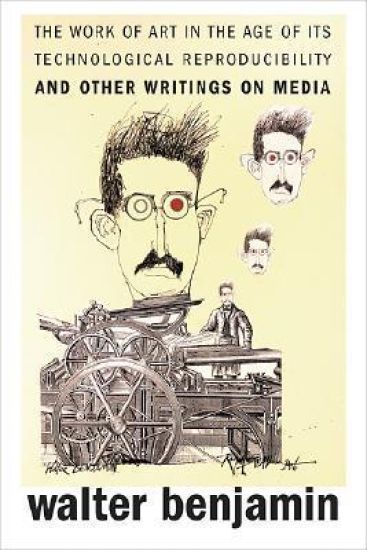
The Work of Art in the Age of Its Technological Reproducibility, and Other Writings on Media
Walter Benjamin’s famous “Work of Art” essay sets out his boldest thoughts—on media and on culture in general—in their most realized form, while retaining an edge that gets under the skin of everyone who reads it. In this essay the visual arts of the machine age morph into literature and theory and then back again to images, gestures, and thought.This essay, however, is only the beginning of a vast collection of writings that the editors have assembled to demonstrate what was revolutionary about Benjamin’s explorations on media. Long before Marshall McLuhan, Benjamin saw that the way a bullet rips into its victim is exactly the way a movie or pop song lodges in the soul.This book contains the second, and most daring, of the four versions of the “Work of Art” essay—the one that addresses the utopian developments of the modern media. The collection tracks Benjamin’s observations on the media as they are revealed in essays on the production and reception of art; on film, radio, and photography; and on the modern transformations of literature and painting. The volume contains some of Benjamin’s best-known work alongside fascinating, little-known essays—some appearing for the first time in English. In the context of his passionate engagement with questions of aesthetics, the scope of Benjamin’s media theory can be fully appreciated.
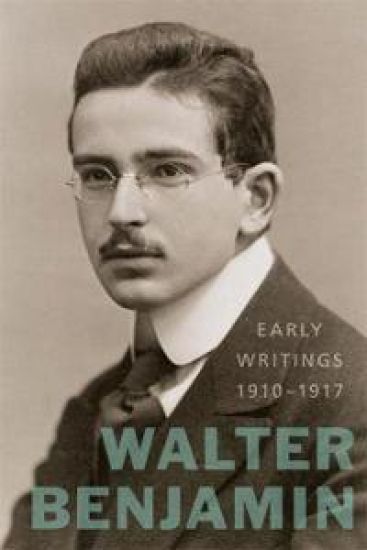
Early Writings (1910–1917)

Early Writings (1910–1917)

Walter Benjamin

The Belknap Press
2011
sidottu
Walter Benjamin became a published writer at the age of seventeen. Yet the first stirrings of this most original of critical minds—penned during the years in which he transformed himself from the comfortable son of a haute-bourgeois German Jewish family into the nomadic, uncompromising philosopher-critic we have since come to appreciate—have until now remained largely unavailable in English. Early Writings, 1910-1917 rectifies this situation, documenting the formative intellectual experiences of one of the twentieth century's most resolutely independent thinkers.Here we see the young Benjamin in his various roles as moralist, cultural critic, school reformer, and poet-philosopher. The diversity of interest and profundity of thought characteristic of his better-known work from the 1920s and 30s are already in evidence, as we witness the emergence of critical projects that would occupy Benjamin throughout his intellectual career: the role of the present in historical remembrance, the relationship of the intellectual to political action, the idea of truth in works of art, and the investigation of language as the veiled medium of experience. Even at this early stage, a recognizably Benjaminian way of thinking comes into view—a daring, boundary-crossing enterprise that does away with classical antitheses in favor of the relentlessly-seeking critical consciousness that produced the groundbreaking works of his later years. With the publication of these early writings, our portrait of one of the most significant intellects of the twentieth century edges closer to completion.
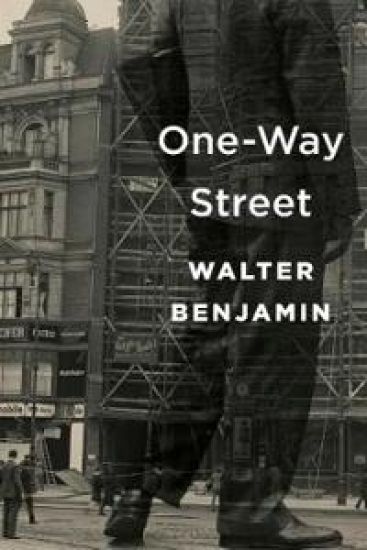
One-Way Street

One-Way Street

Walter Benjamin

The Belknap Press
2016
nidottu
One-Way Street is a thoroughfare unlike anything else in literature—by turns exhilarating and bewildering, requiring mental agility and a special kind of urban literacy. Presented here in a new edition with expanded notes, this genre-defying meditation on the semiotics of late-1920s Weimar culture offers a fresh opportunity to encounter Walter Benjamin at his most virtuosic and experimental, writing in a vein that anticipates later masterpieces such as “On the Concept of History” and The Arcades Project.Composed of sixty short prose pieces that vary wildly in style and theme, One-Way Street evokes a dense cityscape of shops, cafes, and apartments, alive with the hubbub of social interactions and papered over with public inscriptions of all kinds: advertisements, signs, posters, slogans. Benjamin avoids all semblance of linear narrative, enticing readers with a seemingly random sequence of aphorisms, reminiscences, jokes, off-the-cuff observations, dreamlike fantasias, serious philosophical inquiries, apparently unserious philosophical parodies, and trenchant political commentaries. Providing remarkable insight into the occluded meanings of everyday things, Benjamin time and again proves himself the unrivalled interpreter of what he called “the soul of the commodity.”Despite the diversity of its individual sections, Benjamin’s text is far from formless. Drawing on the avant-garde aesthetics of Dada, Constructivism, and Surrealism, its unusual construction implies a practice of reading that cannot be reduced to simple formulas. Still refractory, still radical, One-Way Street is a work in perpetual progress.
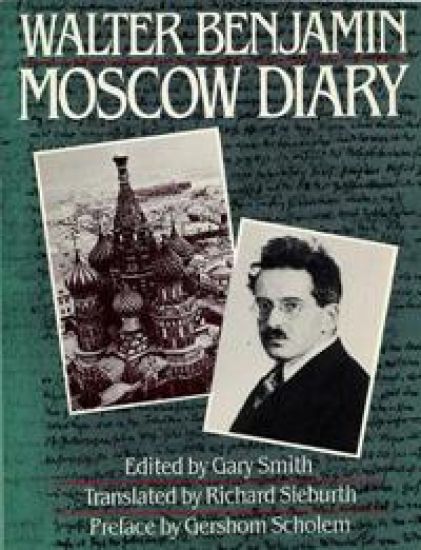
Moscow Diary

Moscow Diary

Walter Benjamin

Harvard University Press
1986
nidottu
The life of the German-Jewish literary critic and philosopher Walter Benjamin (1892–1940) is a veritable allegory of the life of letters in the twentieth century. Benjamin’s intellectual odyssey culminated in his death by suicide on the Franco–Spanish border, pursued by the Nazis, but long before he had traveled to the Soviet Union. His stunning account of that journey is unique among Benjamin’s writings for the frank, merciless way he struggles with his motives and conscience.Perhaps the primary reason for his trip was his affection for Asja Lacis, a Latvian Bolshevik whom he had first met in Capri in 1924 and who would remain an important intellectual and erotic influence on him throughout the twenties and thirties. Asja Lacis resided in Moscow, eking out a living as a journalist, and Benjamin’s diary is, on one level, the account of his masochistic love affair with this elusive—and rather unsympathetic—object of desire. On another level, it is the story of a failed romance with the Russian Revolution; for Benjamin had journeyed to Russia not only to inform himself firsthand about Soviet society, but also to arrive at an eventual decision about joining the Communist Party. Benjamin’s diary paints the dilemma of a writer seduced by the promises of the Revolution yet unwilling to blinker himself to its human and institutional failings.Moscow Diary is more than a record of ideological ambivalence; its literary value is considerable. Benjamin is one of the great twentieth-century physiognomists of the city, and his portrait of hibernal Moscow stands beside his brilliant evocations of Berlin, Naples, Marseilles, and Paris. Students of this particularly interesting period will find Benjamin’s eyewitness account of Moscow extraordinarily illuminating.
Origin of the German Trauerspiel

Origin of the German Trauerspiel

Walter Benjamin

Harvard University Press
2019
nidottu
Origin of the German Trauerspiel was Walter Benjamin’s first full, historically oriented analysis of modernity. Readers of English know it as “The Origin of German Tragic Drama,” but in fact the subject is something else—the play of mourning. Howard Eiland’s completely new English translation, the first since 1977, is closer to the German text and more consistent with Benjamin’s philosophical idiom.Focusing on the extravagant seventeenth-century theatrical genre of the trauerspiel, precursor of the opera, Benjamin identifies allegory as the constitutive trope of the Baroque and of modernity itself. Allegorical perception bespeaks a world of mutability and equivocation, a melancholy sense of eternal transience without access to the transcendentals of the medieval mystery plays—though no less haunted and bedeviled. History as trauerspiel is the condition as well as subject of modern allegory in its inscription of the abyssal.Benjamin’s investigation of the trauerspiel includes German texts and late Renaissance European drama such as Hamlet and Calderón’s Life Is a Dream. The prologue is one of his most important and difficult pieces of writing. It lays out his method of indirection and his idea of the “constellation” as a key means of grasping the world, making dynamic unities out of the myriad bits of daily life. Thoroughly annotated with a philological and historical introduction and other explanatory and supplementary material, this rigorous and elegant new translation brings fresh understanding to a cardinal work by one of the twentieth century’s greatest literary critics.
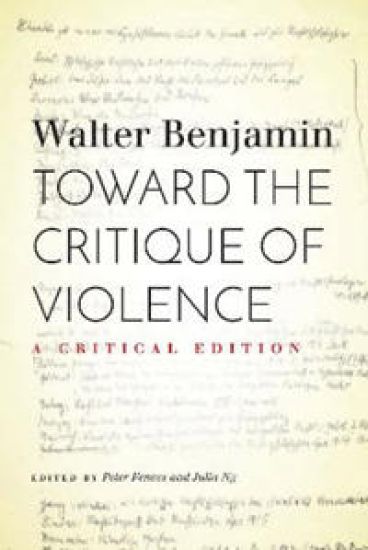
Toward the Critique of Violence

Toward the Critique of Violence

Walter Benjamin

Stanford University Press
2021
sidottu
Marking the centenary of Walter Benjamin's immensely influential essay, "Toward the Critique of Violence," this critical edition presents readers with an altogether new, fully annotated translation of a work that is widely recognized as a classic of modern political theory. The volume includes twenty-one notes and fragments by Benjamin along with passages from all of the contemporaneous texts to which his essay refers. Readers thus encounter for the first time in English provocative arguments about law and violence advanced by Hermann Cohen, Kurt Hiller, Erich Unger, and Emil Lederer. A new translation of selections from Georges Sorel's Reflections on Violence further illuminates Benjamin's critical program. The volume also includes, for the first time in any language, a bibliography Benjamin drafted for the expansion of the essay and the development of a corresponding philosophy of law. An extensive introduction and afterword provide additional context. With its challenging argument concerning violence, law, and justice—which addresses such topical matters as police violence, the death penalty, and the ambiguous force of religion—Benjamin's work is as important today as it was upon its publication in Weimar Germany a century ago.
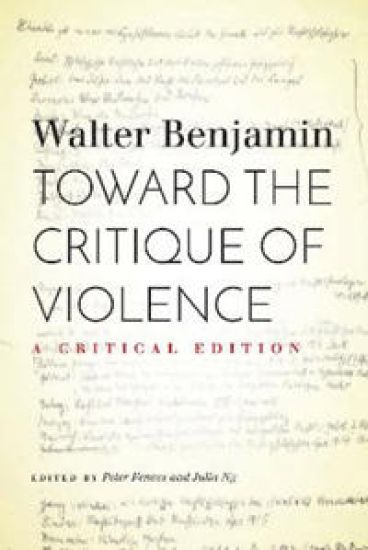
Toward the Critique of Violence

Toward the Critique of Violence

Walter Benjamin

Stanford University Press
2021
pokkari
Marking the centenary of Walter Benjamin's immensely influential essay, "Toward the Critique of Violence," this critical edition presents readers with an altogether new, fully annotated translation of a work that is widely recognized as a classic of modern political theory. The volume includes twenty-one notes and fragments by Benjamin along with passages from all of the contemporaneous texts to which his essay refers. Readers thus encounter for the first time in English provocative arguments about law and violence advanced by Hermann Cohen, Kurt Hiller, Erich Unger, and Emil Lederer. A new translation of selections from Georges Sorel's Reflections on Violence further illuminates Benjamin's critical program. The volume also includes, for the first time in any language, a bibliography Benjamin drafted for the expansion of the essay and the development of a corresponding philosophy of law. An extensive introduction and afterword provide additional context. With its challenging argument concerning violence, law, and justice—which addresses such topical matters as police violence, the death penalty, and the ambiguous force of religion—Benjamin's work is as important today as it was upon its publication in Weimar Germany a century ago.
Reflections: Essays, Aphorisms, Autobiographical Writings
"This book is just that: reflections of a highly polished mind that uncannily approximate the century's fragments of shattered traditions." -- Time A companion volume to Illuminations, the first collection of Walter Benjamin's writings, Reflections presents a further sampling of his wide-ranging work. Here Benjamin evolves a theory of language as the medium of all creation, discusses theater and surrealism, reminisces about Berlin in the 1920s, recalls conversations with Bertolt Brecht, and provides travelogues of various cities, including Moscow under Stalin. Benjamin moves seamlessly from literary criticism to autobiography to philosophical-theological speculations, cementing his reputation as one of the greatest and most versatile writers of the twentieth century.
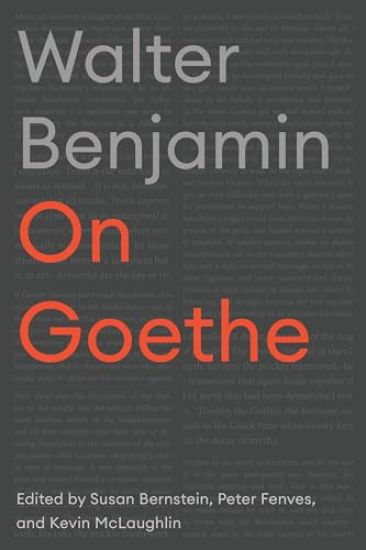
On Goethe

On Goethe

Walter Benjamin

STANFORD UNIVERSITY PRESS
2025
sidottu
On Goethe contains the full range of Walter Benjamin's reflections on the central figure in modern German culture. The writings in this volume—newly translated, fully annotated, and framed by an extensive introduction—display a variety of styles and cover a vast array of topics. The collection revolves around two strikingly different essays. Whereas "Goethe's Elective Affinities" develops a theory of critique in which a work is illuminated wholly from within itself, an article Benjamin wrote on Goethe for the Soviet Encyclopedia represents his first large-scale attempt to elaborate a historical-materialist methodology. The other thirty translations stand in similarly productive tension with one another. Some are concerned with concepts of beauty and categories of the aesthetic, others with the relation of art to politics and the status of "classical authors" in contemporary culture, and still others with what remains of humanistic traditions in the wake of their disappearance under fascist regimes and what synthesis is required for the construction of a historical object. The volume provides a glimpse into the laboratory of Benjamin's thought, while granting readers a series of insights into the epochal phenomena that gather around the name "Goethe."
On Goethe

On Goethe

Walter Benjamin

STANFORD UNIVERSITY PRESS
2025
pokkari
On Goethe contains the full range of Walter Benjamin's reflections on the central figure in modern German culture. The writings in this volume—newly translated, fully annotated, and framed by an extensive introduction—display a variety of styles and cover a vast array of topics. The collection revolves around two strikingly different essays. Whereas "Goethe's Elective Affinities" develops a theory of critique in which a work is illuminated wholly from within itself, an article Benjamin wrote on Goethe for the Soviet Encyclopedia represents his first large-scale attempt to elaborate a historical-materialist methodology. The other thirty translations stand in similarly productive tension with one another. Some are concerned with concepts of beauty and categories of the aesthetic, others with the relation of art to politics and the status of "classical authors" in contemporary culture, and still others with what remains of humanistic traditions in the wake of their disappearance under fascist regimes and what synthesis is required for the construction of a historical object. The volume provides a glimpse into the laboratory of Benjamin's thought, while granting readers a series of insights into the epochal phenomena that gather around the name "Goethe."
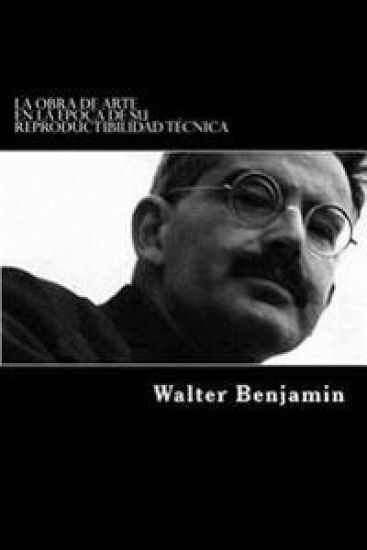
La Obra De Arte En La Epoca De Su Reproductibilidad Tecnica (Spanish Edition)

La Obra De Arte En La Epoca De Su Reproductibilidad Tecnica (Spanish Edition)

Walter Benjamin

Createspace Independent Publishing Platform
2016
nidottu
Publicado originalmente en la revista Zeitschrift f r Sozialforschung, es un ensayo de 1936 escrito por el cr tico cultural marxista Walter Benjamin en el tiempo en que Adolf Hitler ya era Canciller de Alemania en un esfuerzo por describir una teor a del arte que ser a til para la formulaci n de demandas revolucionarias en la pol tica del arte. En la ausencia de cualquier valor ritual o tradicional, el arte en la poca de su reproductibilidad t cnica estar a basado en la pr ctica de la pol tica.